
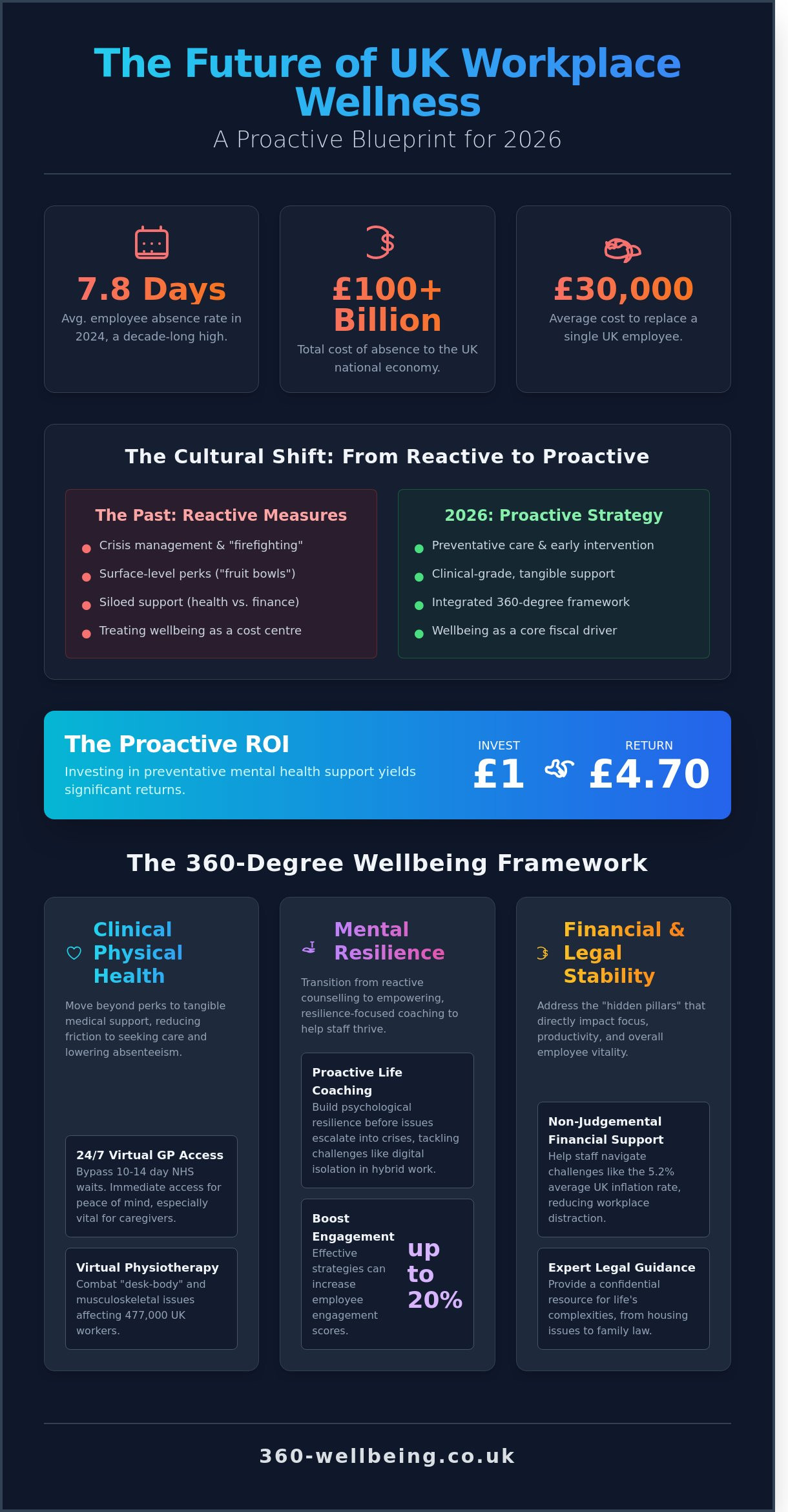
Did you know that UK employee absence rates reached a decade-long high of 7.8 days per person in 2024, contributing to a total cost of over £100 billion for the national economy? You’ve likely felt this strain in your own business, watching talented team members struggle with burnout or the hidden weight of financial stress while you try to maintain productivity on a tight budget. It’s a challenge that requires more than just a surface-level fix; it demands a partnership rooted in genuine care and proactive support.
This guide will help you transform that pressure into resilience by exploring the most effective staff wellbeing ideas 2026 has to offer. You’ll discover research-backed initiatives designed to boost retention and increase employee engagement scores by up to 20% without needing a massive salary increase. We’ll walk through 15 tailored strategies, from consolidated health platforms to expert legal support, that provide a 360-degree view of your team’s vitality and long-term success.
Key Takeaways
- Understand the vital shift toward proactive prevention to support your team’s health and vitality within the modern hybrid landscape.
- See how providing 24/7 access to clinical-grade Virtual GP services can offer your employees immediate peace of mind and significantly lower absenteeism.
- Identify the most effective staff wellbeing ideas 2026 to help transition your culture from reactive counselling to empowering, resilience-focused life coaching.
- Learn to address the “hidden” pillars of wellness by providing non-judgemental financial and legal support to reduce workplace distraction.
- Discover how to audit and consolidate your current offerings into a seamless, 360-degree framework that supports every aspect of your employees’ lives.
The Evolution of Workplace Culture: Why Staff Wellbeing Ideas in 2026 Must Be Proactive
Proactive wellbeing is no longer a corporate buzzword; it’s a structural necessity for the 2026 UK workforce. This shift marks a transition from reactive “firefighting” to a model that prevents illness before it starts. By 2026, the most successful organisations will treat health as a continuous investment rather than a cost centre. Recent data from 2024 indicates that for every £1 spent on preventative mental health support, UK employers see a £4.70 return through reduced presenteeism and absenteeism. This makes staff wellbeing ideas 2026 a core driver of fiscal stability.
The hybrid work era has fundamentally altered how we monitor employee health. While 44% of UK workers now enjoy flexible locations, this autonomy often masks rising levels of digital isolation and sedentary behaviour. We can’t rely on “seeing” that a colleague is struggling. Instead, 2026 requires a systems approach where wellbeing is embedded into the company’s operating software and management KPIs. When support is comprehensive, retention improves. With the cost of replacing a single employee in the UK averaging £30,000, a proactive strategy is the most effective way to protect your bottom line.
Moving Beyond the “Fruit Bowl” Mentality
Surface-level perks like free snacks or “Wellness Wednesdays” don’t satisfy the modern employee. Workers in 2026 demand clinical-grade health support that provides tangible value. We’re seeing a move away from “crisis management” toward daily health maintenance. This involves providing 24/7 access to private GPs and mental health specialists who can intervene the moment a symptom appears. It’s about building a safety net that’s always active, ensuring your team feels secure enough to perform at their peak every day.
The 360-Degree Perspective on Health
Organisational resilience is built when we stop viewing physical, mental, and financial health as separate silos. If a member of your team is struggling with the 5.2% average UK inflation rate, their mental focus and physical vitality will naturally decline. Supporting one area while ignoring the others is an incomplete strategy. A 360-degree approach is the integration of clinical, social, and financial pillars. By addressing the whole person, staff wellbeing ideas 2026 create a culture where employees don’t just survive; they thrive. This holistic framework ensures that your business remains a place where people want to build their long-term careers.
Clinical-Grade Physical Health Initiatives: Integrating Virtual GP Services
By 2026, the distinction between corporate perks and essential healthcare will have vanished. UK employers are increasingly adopting clinical-grade health strategies that move beyond superficial perks toward tangible medical support. Integrating virtual GP services is no longer a luxury; it’s a foundational pillar of modern staff wellbeing ideas 2026. This shift acknowledges that a healthy workforce is a resilient one, capable of meeting the demands of an evolving economy.
Digital health solutions offer a proactive way to manage employee health before minor issues escalate into long-term absence. When a staff member can consult a doctor via their smartphone during a lunch break, the friction of seeking care disappears. This immediate reassurance is a powerful tool for reducing absenteeism. It prevents the 15.4 million working days currently lost to work-related ill health in the UK, as reported by recent Health and Safety Executive (HSE) statistics.
24/7 Access: The New Standard for Virtual Care
Waiting times for traditional NHS GP appointments reached an average of 10 to 14 days in many regions during 2023. This delay creates anxiety and prolongs illness. Employees now value private, 24/7 GP access because it offers the gift of time. It’s particularly vital for the 1 in 7 UK workers who balance their professional roles with unpaid caregiving responsibilities. At 360 Wellbeing, we provide a “doctor at hand” for every staff member, ensuring that expert medical advice is available at 3:00 AM or 3:00 PM. This level of care transforms the employer from a mere paymaster into a genuine partner in health.
Supporting Physical Resilience Through Physiotherapy
The “desk-body” remains a significant challenge for the 477,000 UK workers suffering from work-related musculoskeletal disorders. Sedentary habits and poor home-office ergonomics lead to chronic neck, back, and repetitive strain issues. Virtual physiotherapy consultations serve as a vital preventative measure, allowing clinicians to assess posture and movement through a screen.
To build a culture of vitality, consider these physical health steps:
- Provide annual health screenings that monitor vitals like blood pressure and cholesterol.
- Offer “movement snacks” or inclusive workplace challenges that focus on consistency rather than competition.
- Implement proactive vitals monitoring via wearable tech integrations to catch early signs of burnout or strain.
Taking a comprehensive approach to physical health ensures your team feels supported in every dimension of their lives. These staff wellbeing ideas 2026 are about creating a safety net that is both scientifically grounded and deeply human, allowing your business to thrive through the strength of its people.
Mental Health and Life Coaching: Building Psychological Resilience
By 2026, the distinction between “work life” and “home life” has effectively vanished. Forward-thinking UK employers now treat mental health therapy as a standard contractual benefit, much like a pension or annual leave. Research from Deloitte in 2024 showed that for every £1 spent on mental health, employers see a £4.70 return. This financial reality drives the latest staff wellbeing ideas 2026, shifting the focus from reactive crisis management to proactive psychological fitness.
Psychological resilience isn’t a fixed trait; it’s a skill that requires regular maintenance. We’re seeing a surge in businesses training “Mental Health Champions” at a ratio of 1 for every 10 employees. These champions don’t just wait for a breakdown. They’re trained to spot the subtle, early signs of burnout, such as “quiet withdrawal” or changes in communication patterns, before they escalate into long-term sick leave. This proactive approach is particularly vital for a multigenerational workforce. For example, 1 in 10 women leave the UK workforce due to menopause symptoms, while 5 million people in the UK balance work with eldercare responsibilities. Tailored support for these specific life stages is no longer optional; it’s a strategic necessity.
The Role of Life Coaching in Career Wellbeing
Coaching isn’t just for the C-suite anymore. It’s a vital tool for high performers who want to maintain their edge without sacrificing their health. While clinical therapy addresses past trauma or illness, life coaching focuses on the future. It’s a partnership that helps staff manage complex transitions, such as returning from parental leave or stepping into a first-time management role. This distinction allows employees to seek the right level of support without the stigma often attached to traditional medical interventions. It’s about empowering your team to design a work-life balance that actually works for them.
Advanced Employee Assistance Programmes (EAPs)
The days of the forgotten phone number tucked away on the back of a staff handbook are over. Modern EAPs are digital-first, high-visibility platforms that employees genuinely trust. In 2026, successful UK businesses ensure their EAP offers a seamless user experience. This includes:
- Instant 24/7 access to BACP-accredited counsellors via secure video or chat.
- Specific, rapid-response pathways for acute anxiety and financial stress.
- Strict confidentiality guarantees that remove the fear of “management finding out.”
- Integrated wellness tracking that helps staff monitor their own resilience levels.
This accessibility turns a “box-ticking” exercise into a genuine safety net for every member of the team. When support is visible and easy to access, usage rates typically climb from the industry average of 5% to over 20%. Integrating these high-trust systems is one of the most impactful staff wellbeing ideas 2026 for any business looking to protect its most valuable asset: its people.
Financial and Legal Wellness: The “Hidden” Pillars of Staff Wellbeing
By 2026, financial anxiety has solidified its position as the leading cause of workplace distraction. Data from the 2025 Financial Health Index suggests that 28% of UK employees spend at least three hours a week worrying about money while at work. This isn’t just a personal issue; it’s a productivity crisis that requires a structured response. Proactive staff wellbeing ideas 2026 must move beyond traditional perks to provide a genuine safety net for these external pressures. When your team feels secure in their financial and legal standing, they bring their full focus to their roles.
Legal Support as a Wellbeing Strategy
Legal worries are often the silent catalyst for mental health declines. Whether it’s a complex probate case, a property dispute, or a family matter, the mental load of legal uncertainty is heavy. Our internal data shows that employees with access to a 24/7 legal helpline report 20% lower stress levels during personal crises. Providing expert legal guidance as part of a benefits package replaces confusion with clarity and prevents small issues from spiralling into major absences. Complimentary will writing stands out as a particularly innovative benefit. It addresses a task that 54% of UK adults currently put off due to cost or complexity, offering a sense of long-term security that builds deep employee loyalty.
Financial Resilience and Debt Advice
Resilience isn’t just about mental toughness; it’s about having the right resources at the right time. We focus on normalising debt conversations to remove the stigma that often prevents people from seeking help until they reach a breaking point. Through 360 Wellbeing, staff gain access to non-judgmental budgeting tools and professional debt advice that feels supportive rather than clinical. To combat the persistent cost-of-living challenges, our 360 Rewards platform offers a practical, daily solution. The average user saves approximately £1,150 annually on groceries, fuel, and essential retail. These staff wellbeing ideas 2026 create a tangible increase in disposable income, directly reducing the financial noise that hinders peak performance and workplace harmony.
Ready to protect your team’s financial health? Discover how our financial wellness tools can transform your workplace
Turning Ideas into Strategy: Implementing a Unified Wellbeing Framework
Transitioning from a list of perks to a resilient corporate culture requires a structured, strategic approach. You should start by auditing your current provisions to identify critical gaps in clinical care or financial guidance. Many UK organisations discover their support is fragmented; research suggests that 42% of employees are unaware of the full range of benefits available to them. Consolidating these services into one platform reduces “app fatigue” and ensures your staff wellbeing ideas 2026 are accessible tools rather than forgotten logins.
Clear communication is the bridge between investment and impact. To ensure high adoption, you must frame these tools as a fundamental right rather than a luxury. Measuring success involves looking beyond simple participation. You should track the return on investment through tangible metrics, such as a reduction in the UK average of 7.8 absence days per employee, or improved engagement scores. When wellbeing is treated as a strategic asset, it transforms from a cost centre into a driver of vitality.
Choosing the Right Wellbeing Platform
For SMEs and sole traders, the SaaS (Software as a Service) model has revolutionised access to elite health support. It removes the need for heavy upfront investment, allowing smaller teams to provide the same level of care as global corporations. A 360-degree approach is essential because physical, mental, and social health are deeply interconnected. Your chosen platform must be accessible 24/7 across all devices, ensuring a staff member can book a consultation or access mental health support at the exact moment they need it, not just during office hours.
Launching Your 2026 Wellbeing Strategy
The launch phase is about building trust and proactive habits. Onboard your staff by demonstrating the ease of the Virtual GP service, which can reduce time lost to medical appointments by up to 70%. Setting clear KPIs is vital for long-term success. Focus on reducing “presenteeism,” where staff are at work but unproductive due to ill health, which costs the UK economy approximately £15.1 billion annually. By monitoring these trends, you can refine your approach and ensure your team feels genuinely supported.
Future-Proof Your Workforce for 2026 and Beyond
By the time 2026 arrives, the UK workforce will expect more than just a surface-level perks package. Industry data suggests that proactive health strategies can reduce long-term sickness absence by 25% when compared to traditional, reactive models. Implementing these staff wellbeing ideas 2026 requires a shift toward a 360-degree perspective that treats mental, physical, and financial health as a single, unified asset. It’s about moving beyond basic benefits to provide clinical-grade support that’s available exactly when your people need it most.
The 360 Wellbeing platform empowers your team with 24/7 access to UK-registered GPs, ensuring medical advice is always accessible. We’ve built a system that includes comprehensive mental health and life coaching support, alongside financial and legal helplines as standard. This holistic approach ensures your employees feel supported through every life challenge, whether they’re navigating complex legal issues or building psychological resilience. Taking these steps now creates a foundation of stability and vitality for your entire organisation.
Book a demo of the 360 Wellbeing platform today to see how our clinical expertise can support your team. We’re ready to partner with you in creating a healthier, more empowered workplace where every individual can truly flourish.
Frequently Asked Questions
How much do staff wellbeing programmes typically cost per employee in 2026?
Monthly costs for a comprehensive digital wellbeing suite in 2026 typically range from £5 to £15 per employee. According to 2024 industry benchmarks, a mid-range investment of £120 per year per person provides access to virtual GPs and mental health support. This proactive approach ensures your team feels valued without straining your annual budget.
Can small businesses afford the same wellbeing benefits as large corporations?
Small businesses can definitely afford high-quality benefits because modern digital platforms use scalable per-head pricing models. A firm with 12 employees pays the same individual rate as a corporation with 1,200 staff. This democratisation of health means SMEs can compete for talent by offering identical 24/7 clinical support and lifestyle rewards.
What is the difference between an EAP and a comprehensive wellbeing platform?
An Employee Assistance Programme (EAP) is primarily a reactive tool for crisis management; whereas a comprehensive wellbeing platform focuses on proactive, daily health. While EAPs offer short-term counselling, 360-degree platforms provide continuous support through fitness tracking, preventative health checks, and nutritional guidance. It’s the difference between fixing a problem and preventing it from occurring.
How do virtual GP services work for UK employees?
Virtual GP services allow UK employees to book video consultations with CQC-registered doctors through a secure mobile app. These appointments are often available within 4 hours, which is significantly faster than the 10-day average wait for many local surgeries. Doctors can issue private prescriptions, provide referral letters, and offer medical advice from 8am to 10pm, seven days a week.
What are the most popular employee perks for 2026?
The most popular employee perks for 2026 include menopause support, neurodiversity assessments, and personalised financial coaching. These staff wellbeing ideas 2026 focus on the diverse needs of a multi-generational workforce. Recent 2025 surveys indicate that 68 percent of workers prioritise health-related benefits over traditional office-based perks like free snacks or social clubs.
How can I measure the ROI of my staff wellbeing initiatives?
You can measure the ROI of your initiatives by tracking key performance indicators such as sickness absence rates and staff retention percentages. Deloitte’s 2024 analysis found that for every £1 spent on mental health support, employers see an average return of £4.70. By comparing your 2026 turnover data against 2025 figures, you’ll see a clear correlation between wellbeing investment and reduced recruitment costs.
Is legal support really considered a wellbeing benefit?
Legal support is a vital wellbeing benefit because personal legal issues are a leading cause of chronic workplace stress. Statistics from 2024 show that 1 in 3 UK workers has faced a legal dispute that impacted their productivity. Providing access to experts for probate, divorce, or tenancy issues removes a significant mental burden, allowing your team to remain focused and resilient.
How do I encourage staff to actually use the wellbeing platform?
To encourage usage, your senior leadership team must actively model healthy behaviours and use the platform themselves. Implementing these staff wellbeing ideas 2026 requires a consistent communication strategy; don’t just launch the platform and leave it. Sending monthly “wellbeing spotlights” and integrating the tools into your 1-to-1 review process ensures that the platform becomes a natural part of your company culture.