
Is the familiar pattern of rising absenteeism and disengaged teams leaving you searching for impactful staff wellbeing ideas? Perhaps your existing wellness perks aren’t landing, or the budget for a grand new programme simply isn’t there-especially when trying to support a dispersed hybrid workforce. This is a common challenge for UK employers, but it signals a crucial opportunity to build a more resilient and supportive workplace culture that moves beyond the fruit bowl to create real, lasting change.
That’s why we’ve created this comprehensive 2026 employer’s guide. We believe that true wellbeing is a strategic asset, not a luxury. Inside, you will discover a library of over 50 actionable, budget-conscious initiatives tailored to create genuine impact. From supporting mental health to fostering financial security and social connection, consider this your roadmap to building a happier, more productive team and a thriving 360-degree wellbeing culture.
Key Takeaways
- Discover why the 2026 workplace demands a shift from reactive perks to proactive care, moving beyond compliance to build genuine team resilience.
- Learn to build a comprehensive 360-degree wellbeing strategy that addresses the four key pillars: mental, physical, social, and financial health.
- Implement high-impact, low-cost staff wellbeing ideas, from “micro-wellbeing” habits to empowering employee-led passion projects that require zero budget.
- Move beyond surface-level gestures by learning how to audit your culture and appoint Wellbeing Champions to drive meaningful, lasting change.
Why Staff Wellbeing Ideas Matter More in 2026
In 2026, the conversation around employee health has fundamentally evolved. Gone are the days of reactive perks and superficial gestures. Today, true workplace wellness is understood as a comprehensive, 360-degree concept that nurtures the whole person across four key pillars: their physical, mental, social, and financial health. This shift from optional benefits to proactive care has been accelerated by landmark changes like the 2025 Employment Rights Act, making a strategic approach to wellbeing a non-negotiable for forward-thinking UK businesses.
The financial argument is just as compelling. The hidden costs of presenteeism-where employees are physically at work but mentally disengaged and underproductive-and long-term sickness absence can quietly erode a company’s bottom line. A “one-size-fits-all” approach with a generic gym membership or a weekly fruit bowl simply doesn’t work for a diverse, multi-generational workforce with varying needs and pressures. To build genuine resilience and loyalty, organisations need tailored staff wellbeing ideas that resonate with every member of the team.
The ROI of Employee Wellness
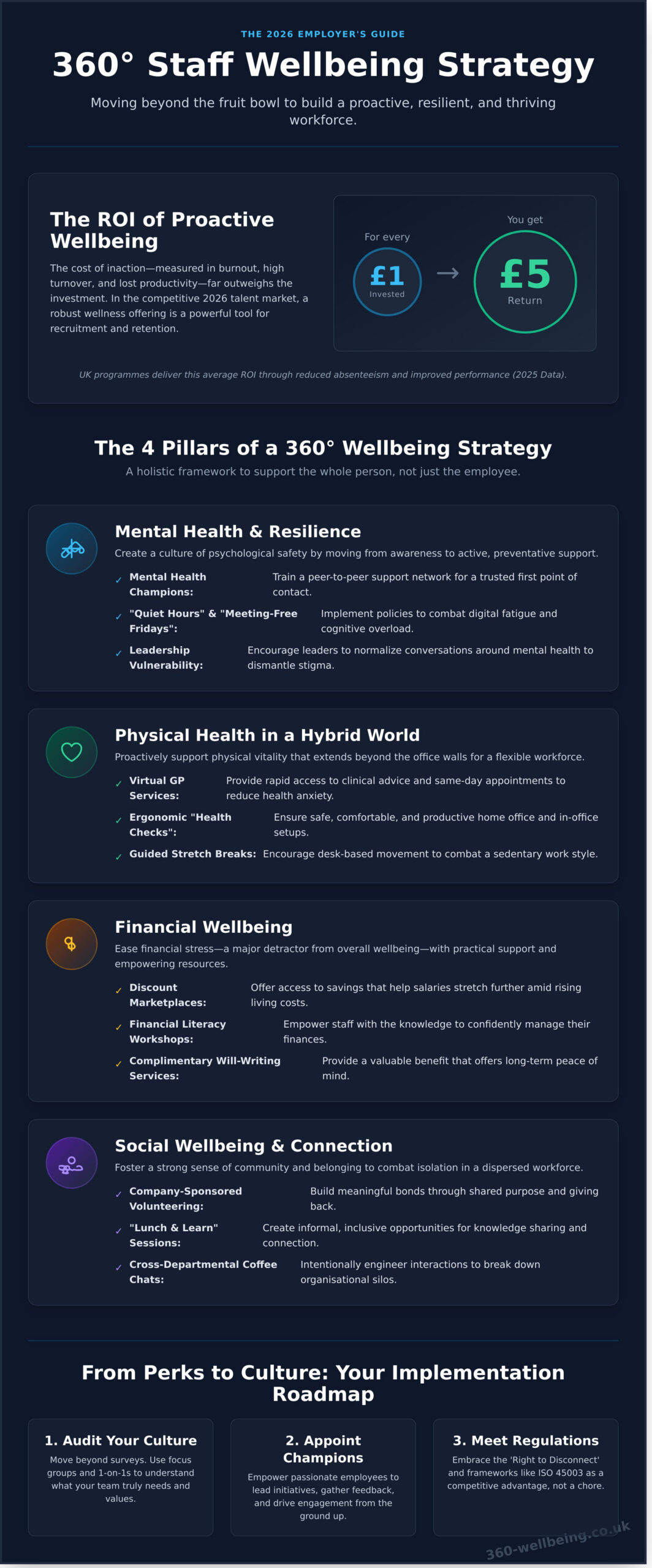
The cost of doing nothing-measured in burnout, high turnover, and lost productivity-far outweighs the investment in a structured wellbeing programme. In the competitive 2026 talent market, a robust wellness offering is a powerful tool for both recruitment and retention, signalling that you are an employer who genuinely cares. Based on 2025 data, comprehensive UK wellbeing programmes now deliver an average return on investment of £5 for every £1 spent through reduced absenteeism and improved performance.
The 2026 Regulatory Landscape
New employment laws have solidified the importance of employee health, with mandates around the “right to disconnect” and proactive mental health support becoming standard. Leading organisations are adopting frameworks like ISO 45003 to manage psychosocial risks, turning a legal obligation into a competitive advantage. This regulatory shift means small businesses are no longer just competing on salary; they are now judged on the quality and sincerity of their commitment to employee wellbeing.
The 4 Pillars of a 360-Degree Wellbeing Strategy
Truly impactful staff wellbeing ideas are rarely one-off perks. They are part of a comprehensive, 360-degree strategy built on a deep understanding of what your people truly need. To create a culture where every team member can thrive, it’s essential to build your initiatives on four interconnected pillars: mental, physical, financial, and social health. This holistic approach ensures you are supporting the whole person, not just the employee.
Mental Health and Resilience
Moving beyond awareness posters, modern wellbeing means providing active, preventative mental health support. This starts by empowering your team with a peer-to-peer network of trained Mental Health Champions who can offer a listening ear. To combat digital fatigue and cognitive overload, consider implementing practical policies like “Quiet Hours” for focused work or “Meeting-Free Fridays.” Crucially, when leaders share their own vulnerabilities and normalise conversations around mental health, it dismantles stigma and builds a culture of genuine psychological safety.
Physical Health in a Hybrid World
In an era of flexible working, supporting physical vitality requires a proactive approach that extends beyond the office walls. Encourage desk-based movement with guided stretch breaks and offer ergonomic “health checks” to ensure home office setups are safe and comfortable. A key element in reducing health-related anxiety is providing rapid access to clinical advice. This is where tools like Virtual GP services for UK businesses provide immense value, offering same-day appointments and medical peace of mind without the stress of travel or long waits.
Financial and Social Wellbeing
Financial stress and social isolation are two of the biggest detractors from workplace wellbeing. You can provide immediate relief by offering access to discount marketplaces that help stretch the monthly paycheck further amid the rising cost-of-living. Complement this with empowering resources like financial literacy workshops or complimentary will-writing services. To foster connection, focus on inclusive social activities that build meaningful bonds. Simple but effective ideas include:
- Company-sponsored volunteering days.
- Casual “lunch and learn” sessions on diverse topics.
- Cross-departmental coffee chats to break down silos.
These initiatives nurture a strong sense of community, and you can find a wealth of other wellbeing activities for the workplace online to find inspiration that suits your team’s unique culture and budget.
Low-Cost Staff Wellbeing Ideas for Immediate Impact
Fostering a culture of genuine care doesn’t require a significant financial investment; it requires intentionality. Some of the most effective staff wellbeing ideas are built on small, consistent actions that create a supportive and proactive environment. These micro-wellbeing initiatives demonstrate a commitment that goes beyond grand gestures, weaving health and resilience into the very fabric of the workday. These foundational practices are a vital component of a broader corporate health strategy, explored in depth within this comprehensive guide to workplace wellness, and they build a powerful foundation of daily positive reinforcement.
Daily and Weekly Micro-Habits
Integrating small, positive habits into daily and weekly routines can have a profound cumulative effect on team morale and health. The key is to make them simple, accessible, and consistent.
- Walking Meetings: For internal one-to-one catch-ups that don’t require screen sharing, suggest taking the conversation outside. A 20-minute walk can boost creativity, reduce sedentary time, and offer a refreshing change of scenery.
- The “Three Good Things” Practice: Begin a team huddle by asking everyone to share three positive things-no matter how small-from the past day. This simple psychological exercise, rooted in positive psychology, shifts focus towards gratitude and builds collective resilience.
- Encourage “Micro-Breaks”: Proactively champion the 20-20-20 rule to prevent digital eye strain: every 20 minutes, look at something 20 feet away for 20 seconds. This small act protects vision and helps reset focus.
Cultural and Environmental Wins
Your workplace environment-both physical and digital-sends constant signals to your team. With a few thoughtful tweaks, you can ensure those signals promote health, connection, and psychological safety at virtually no cost.
- Create an “Inspiration Library”: Designate a small shelf for colleagues to lend and borrow books related to personal growth, industry innovation, or even fiction. This encourages a culture of learning and can be expanded by inviting staff to host informal “Passion Project” talks on their hobbies.
- Hydration Challenges & Fruit Mondays: Simple nudges can make a big difference. A team-wide hydration challenge or providing a weekly bowl of fresh fruit are low-cost, visible ways to support physical health.
- Digital “Watercooler” Channels: In Slack or Teams, create dedicated channels for non-work chat (e.g., #pets, #gardening, #good-news). This is crucial for remote and hybrid teams, offering a space to build the informal social bonds that are vital for a strong, connected culture.
Strategic Initiatives: Moving Beyond Perks to Professional Support
While free fruit and office yoga are pleasant gestures, they cannot solve systemic issues like clinical burnout or chronic stress. True organisational resilience is built on a foundation of professional, accessible support. The most impactful staff wellbeing ideas move beyond superficial perks to provide a genuine safety net that protects your team’s physical and mental health, ensuring they have expert help the moment they need it.
This strategic approach addresses the root causes of absenteeism and disengagement by integrating clinical care and proactive coaching directly into your company’s support structure. It sends a clear message: we are invested in your total, long-term wellbeing.
Clinical and Professional Safety Nets
A “perk” is a bonus; a clinical benefit is a necessity. Providing 24/7 virtual access to UK-registered GPs allows employees to bypass long NHS waiting times, getting diagnoses and prescriptions quickly to reduce time off work. This immediate support system is crucial. For instance, rapid access to expert physiotherapy can address musculoskeletal issues before they escalate, preventing minor strains from becoming long-term absences.
Life Coaching and Proactive Growth
Effective wellbeing support isn’t just for crisis moments. By shifting from a reactive model to proactive life coaching, you empower employees to build resilience and navigate challenges with confidence. This includes specialised guidance through major life transitions like new parenthood, menopause, or bereavement. This 360-degree support fosters a culture of “Total Wellness,” where every individual feels equipped to thrive both personally and professionally.
Implementing these comprehensive staff wellbeing ideas doesn’t have to be an administrative burden. A modern, centralised wellbeing platform simplifies everything, giving HR teams a single point of management and employees a single, intuitive portal to access the care they need. By investing in this integrated framework, you’re not just offering benefits; you’re building a healthier, more resilient, and more productive organisation. Discover how a tailored strategy can transform your workplace at 360-wellbeing.co.uk.
How to Implement Your 2026 Wellbeing Roadmap
Having a list of inspiring staff wellbeing ideas is the first step; turning them into a living, breathing part of your company culture is the next. A successful wellbeing strategy isn’t a one-off initiative but a long-term commitment built on a clear, structured roadmap. This ensures your investment delivers genuine, lasting value to both your team and your bottom line.
Transforming your vision into reality requires a thoughtful, human-centric approach. Here’s a four-step framework to build sustainable momentum:
- Audit your current culture: Before you act, listen. Use confidential surveys and focus groups to understand your team’s specific pressure points and desires. This data provides the foundation for a tailored strategy, ensuring you invest in support your people will actually use and appreciate.
- Appoint Wellbeing Champions: Empower passionate employees at all levels to become advocates for your programme. Champions can help drive engagement, gather feedback, and normalise conversations around mental and physical health, making wellbeing a shared responsibility.
- Start small, scale fast: Avoid overwhelming your team (and your budget). Launch one accessible, low-cost initiative, like a weekly guided meditation session, alongside one strategic, high-impact benefit, such as access to a digital GP service. This creates immediate positive impact while building towards a comprehensive framework.
- Measure and iterate: A great strategy evolves. Continuously track key metrics to understand what’s working and where you can improve. This isn’t just about numbers; it’s about being responsive to your team’s changing needs.
Launching Your Wellbeing Platform
Effective onboarding is crucial for engagement. Clearly communicate the ‘what’ and ‘why’ behind each benefit, using town halls, email campaigns, and manager-led sessions to demonstrate how to access support. By integrating these resources into a single, easy-to-use platform, you remove friction and encourage uptake. Consistent communication keeps wellbeing on the agenda, reinforcing its importance as a core part of your culture and your wider Small business employee benefits packages.
Measuring Success and ROI
To prove the value of your wellbeing programme, focus on both quantitative and qualitative data. Track key metrics like employee Net Promoter Score (eNPS), reduction in sick days, and benefit utilisation rates. Complement this with regular, informal “Wellbeing Check-ins” to gather personal stories and feedback. This 360-degree view demonstrates a powerful return on investment and guides future improvements. Ready to build a healthier, more resilient team? Book a demo with 360 Wellbeing to see how we automate your staff support.
From Ideas to Impact: Your Wellbeing Strategy Starts Here
As we look towards 2026, it’s clear that employee wellbeing has moved from a ‘nice-to-have’ to a core business strategy. The most resilient organisations will be those that build a comprehensive culture of care, moving beyond isolated perks to a holistic approach. Implementing the right staff wellbeing ideas is about creating a supportive ecosystem where every individual can thrive, not just survive.
Putting these principles into practice requires a partner you can trust. The 360 Wellbeing platform is designed to provide that foundational support. Trusted by SMEs and Sole Traders across the UK, we offer your team proactive care with 24/7 access to UK-registered GPs and comprehensive Mental Health & Life Coaching, ensuring professional, compassionate help is always within reach.
Explore the 360 Wellbeing Platform for your team and discover how to build a healthier, more engaged, and truly resilient workforce. Your journey towards a thriving workplace culture starts today.
Frequently Asked Questions About Staff Wellbeing
What are some low-cost staff wellbeing ideas for small businesses?
Effective wellbeing support doesn’t require a large budget. Many impactful staff wellbeing ideas focus on culture and flexibility. Consider introducing flexible start and finish times, organising team walks during lunch, or creating a dedicated quiet space for focus and decompression. Celebrating non-work achievements and encouraging open conversations about mental health can also foster a supportive environment at a minimal cost, proving that a proactive approach to wellness is accessible to all businesses.
How do you measure the success of a staff wellbeing program?
Measuring success requires a comprehensive view beyond simple satisfaction. Key metrics include tracking employee turnover and absenteeism rates, as a decrease often signals improved wellbeing. Use confidential pulse surveys to gauge stress levels and morale over time. Analysing the uptake of specific benefits, like counselling services or workshops, provides direct insight into engagement. A successful program demonstrates a tangible, positive impact on both your people and your business performance.
What is the difference between employee perks and employee benefits?
While often used interchangeably, benefits and perks serve different functions. Benefits form a core part of an employee’s compensation package and address fundamental needs, such as private medical insurance, pension schemes, and life assurance. Perks are non-contractual extras designed to enhance the workplace culture and daily experience, like free fruit, subsidised gym memberships, or team social events. A truly holistic wellbeing strategy effectively integrates both to provide comprehensive support.
How can I support the wellbeing of remote and hybrid workers?
Supporting a distributed team requires intentional effort to combat isolation and promote work-life balance. Offer a modest stipend (e.g., £150-£200) for ergonomic home office equipment and provide access to digital mental health resources. Champion a ‘right to disconnect’ policy to protect personal time. Fostering social connection is also key; schedule regular virtual coffee breaks or online team-building activities to ensure everyone feels included, seen, and valued, no matter where they work.
What should be included in a 360-degree wellbeing strategy?
A true 360-degree strategy provides comprehensive, proactive support across all facets of an employee’s life. It must address four key pillars: mental wellbeing (access to therapy and mindfulness resources), physical wellbeing (ergonomic support, nutrition advice), financial wellbeing (workshops, access to impartial guidance), and social wellbeing (initiatives that build community and belonging). This integrated approach ensures you are caring for the whole person, building resilience and fostering a thriving workplace.
How do I encourage staff to actually use the wellbeing benefits we offer?
Driving engagement starts with destigmatising support and demonstrating leadership buy-in. When senior leaders openly use and advocate for wellbeing initiatives, it sends a powerful message. Communicate regularly what is available and how to access it confidentially. Appointing voluntary ‘Wellbeing Champions’ within teams can also build trust and awareness from the ground up. Finally, ask for feedback and be prepared to tailor your offerings to what your team truly values and needs.
Can wellbeing initiatives really reduce employee absenteeism?
Absolutely. A significant portion of absenteeism is linked to stress, burnout, and poor mental health. By proactively providing resources like mental health support, stress management workshops, and promoting a healthy work-life balance, you address the root causes of absence. This preventative approach not only helps reduce sick days but also tackles ‘presenteeism’-where employees are physically present but not productive. Investing in wellbeing is a direct investment in your team’s resilience and attendance.
Who should be responsible for wellbeing in the workplace?
Workplace wellbeing is a shared responsibility that thrives when fully integrated into the company culture. Senior leadership is responsible for championing the strategy and allocating resources. HR plays a crucial role in designing and implementing the framework. However, line managers are vital for day-to-day support, fostering psychological safety within their teams. Ultimately, employees are also empowered to engage with resources and contribute to a positive, healthy, and supportive environment for all.