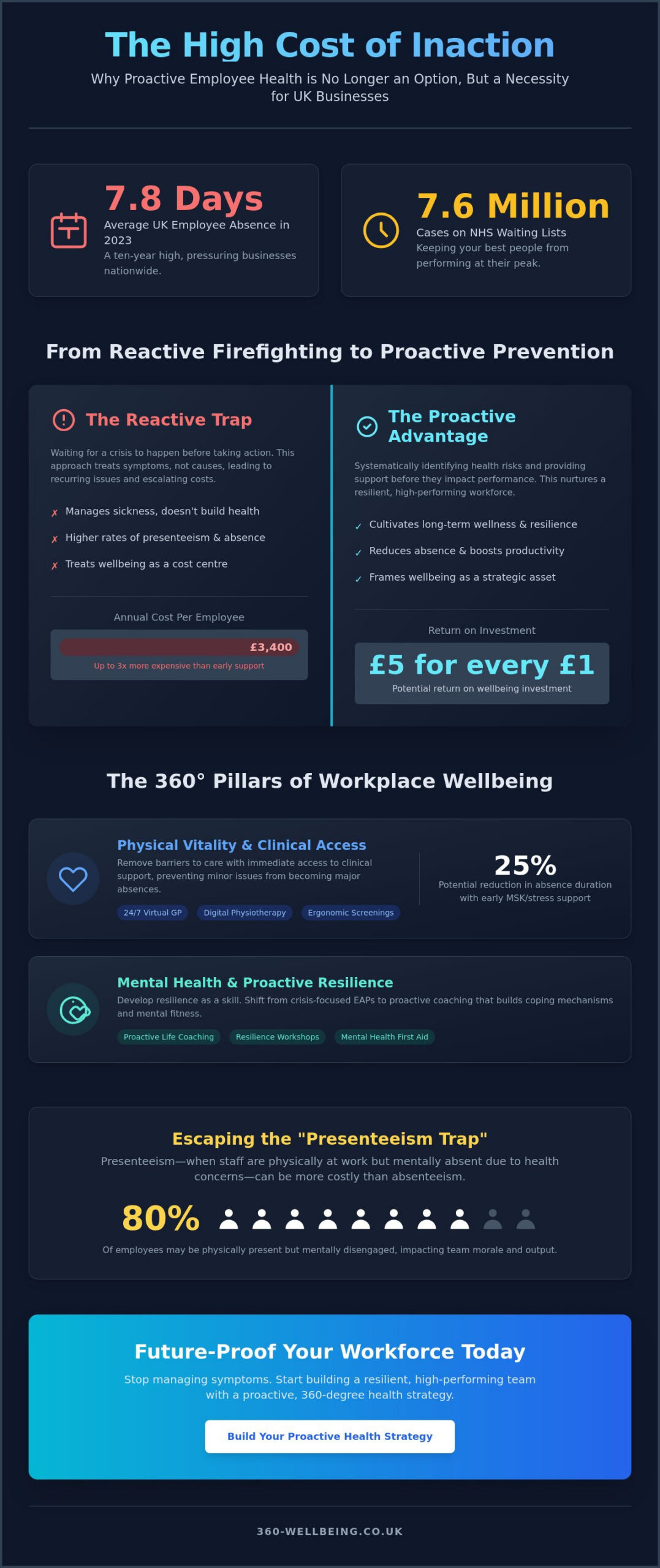
In 2023, the CIPD reported that UK employee absence hit a ten-year high of 7.8 days per person, a trend that continues to pressure modern businesses. You’re likely seeing the ripple effects of this in your own teams, where the hidden cost of presenteeism and record NHS waiting lists, which stood at 7.6 million cases in late 2024, keep your best people from performing at their peak. It’s time to change the narrative. By shifting your focus toward proactive employee health management, you can stop managing symptoms and start nurturing a resilient, high-performing workforce.
We understand that navigating these complex health challenges feels overwhelming, but you don’t have to do it alone. This guide provides a clear, compassionate roadmap to transition from reactive crisis management to a comprehensive 360-degree health strategy. You’ll learn how to reduce absenteeism and lower your recruitment costs by treating wellbeing as a strategic asset rather than a line item. We’ll explore a holistic framework for 2026 that integrates physical, mental, and social health into a single, unified path toward organizational harmony.
Key Takeaways
- Understand how to transition from reactive “firefighting” to a 360-degree prevention model that fosters long-term organizational resilience.
- Discover why proactive employee health management is a vital strategic investment, offering a potential £5 return for every £1 spent on wellbeing.
- Learn to integrate physical clinical screenings with proactive mental health coaching to provide a comprehensive support system for your entire team.
- Identify practical steps to audit your current health offerings and effectively frame wellbeing as a strategic business asset rather than a cost centre.
- Explore how a unified health ecosystem, featuring 24/7 Virtual GP access, can provide the immediate clinical reassurance needed to future-proof your workforce.
What is Proactive Employee Health Management?
The traditional model of workplace wellbeing is often built on reaction. An employee becomes unwell, takes a leave of absence, and the business then scrambles to provide support. In the UK market of 2026, this “firefighting” approach is no longer sustainable. With NHS waiting lists for elective care and mental health support projected to remain under significant pressure, businesses must step into a more active role. Proactive employee health management is the fundamental shift from treating illness to cultivating wellness. It focuses on a 360-degree perspective that integrates three core pillars: health promotion to build resilience, early intervention to catch issues early, and health protection to ensure the working environment itself isn’t a source of harm.
There’s a vital distinction between providing standard employee benefits and implementing a managed health strategy. A standard benefit might be a generic gym discount or an insurance policy that sits in a drawer until a crisis hits. A managed strategy, however, is a living part of your corporate culture. It uses data and clinical expertise to create a tailored path for every individual. This approach treats employee health as a strategic asset rather than a line-item expense. By moving toward this model, you ensure that your team isn’t just surviving the work week but is actually thriving within it.
This methodology requires a comprehensive analysis and design of human and organizational work levels to ensure that the structure of the job itself supports long-term vitality. When health is managed proactively, it creates a sense of safety and order that benefits both the person and the bottom line.
The Reactive vs. Proactive Spectrum
Waiting for a sick note to arrive is an expensive gamble that most UK firms can’t afford. Research shows that reactive care costs employers roughly £3,400 per employee annually, which is often 3x more than the cost of early support. Proactive employee health management is the systematic identification of health risks before they impact performance. This approach is the only way to escape the “Presenteeism Trap,” where 80% of staff may be physically at their desks but mentally absent due to lingering health concerns or stress.
The Strategic Importance of Early Intervention
Early clinical advice can drastically change the trajectory of common conditions. For musculoskeletal (MSK) issues or stress, accessing professional guidance within 48 hours can reduce the duration of an absence by up to 25%. Virtual health tools are essential here, as they provide immediate reassurance to anxious employees and prevent minor symptoms from escalating. This proactive stance isn’t just about productivity; it’s about your Duty of Care. It ensures you remain legally compliant while offering a modern, compassionate partnership that values every team member’s total wellness.
The 360-Degree Pillars of Workplace Wellbeing
True proactive employee health management requires a shift in perspective. It’s no longer enough to offer a standard insurance policy and hope for the best. Instead, businesses must build a framework that supports the whole person. This means looking at the intersections of physical, mental, and financial health to catch problems before they escalate into long-term absence. When these pillars are integrated, you create a safety net that doesn’t just catch people when they fall, but keeps them standing strong.
Physical Vitality and Clinical Access
Modern physical health support is about removing the friction between an employee and a clinician. In the UK, the average wait for a routine GP appointment can now exceed two weeks. By providing 24/7 Virtual GP access, you save your staff from the “8 am scramble” and reduce the three hours of productivity typically lost to travel and waiting rooms. This immediate access allows for early intervention in minor ailments before they require hospital treatment.
Musculoskeletal (MSK) issues remain a leading cause of UK work-related ill health. Integrating digital physiotherapy and ergonomic screenings helps prevent the chronic back and neck pain that often stems from sedentary desk work. Using anonymised health data allows you to spot these trends early. If 35% of your team is seeking help for repetitive strain, it’s a clear signal to audit your workstation setups without ever compromising individual privacy.
Mental Health and Proactive Resilience
Resilience isn’t a fixed trait; it’s a skill that can be developed. While traditional Employee Assistance Programmes (EAPs) focus on crisis counseling, proactive life coaching offers a different path. Coaching helps employees set boundaries, manage time, and build healthy habits before they reach a breaking point. It’s the difference between treating a wound and preventing the injury in the first place.
Managers play a vital role here. By 2026, burnout is projected to impact 82% of the UK workforce at least once a year. Leaders must be trained to spot the subtle signs of “quiet withdrawal” or increased irritability. Creating a psychologically safe environment means health is discussed as a standard part of performance reviews. Following research-based recommendations about designing work ensures that your team feels empowered to speak up before they burn out.
The Financial Link to Physical Health
You can’t treat mental or physical health in a vacuum. Data shows that 70% of mental health issues in the UK are exacerbated by financial stress. Whether it’s the rising cost of living or unexpected legal hurdles, personal worries don’t stay at the front door. They manifest as insomnia, high blood pressure, and decreased focus.
- Debt Helplines: Providing confidential advice helps employees regain control over their finances.
- Legal Support: Access to experts for housing or family disputes removes a significant cognitive load.
- Internal Resource: For more detail, see our Financial Support for Employees guide.
Addressing these root causes is a core component of proactive employee health management. When you remove the weight of financial anxiety, you’re not just helping their bank balance; you’re protecting their heart health and mental clarity. Explore how to tailor your wellness strategy to include these vital support systems and create a truly resilient workforce.
Measuring the ROI: Reactive Costs vs. Proactive Gains
Shifting from a reactive stance to a proactive employee health management strategy isn’t just a clinical choice; it’s a financial necessity. When businesses wait for a crisis to occur, they’re already paying for it. The hidden costs of poor health are staggering. Recruitment for a single mid-level role in the UK often exceeds £3,000, while the lost productivity during the training of a replacement can double that figure. By the time an employee reaches the point of long-term sick leave, the business has already absorbed the costs of their declining output and the added pressure on their immediate team.
The data supporting early intervention is compelling. According to Deloitte’s 2024 analysis of workplace wellbeing, employers see an average return of £4.70 for every £1 spent on proactive health initiatives. This nearly five-fold return stems from reduced staff turnover and a sharper, more engaged workforce. 360 Wellbeing views this through a 360-degree perspective, where clinical triage serves as the first line of defence. By providing immediate access to medical experts at the first sign of a symptom, companies can break the “Sickness Absence Cycle” before it gains momentum. This approach transforms wellbeing from an overhead cost into a strategic asset.
- Reduced Attrition: Proactive care keeps experienced talent in the business.
- Lower Recruitment Spend: Healthier cultures experience fewer vacancies.
- Enhanced Productivity: Clinical support resolves health issues faster, returning employees to full capacity sooner.
Absenteeism vs. Presenteeism
While an empty desk is easy to spot, the cost of presenteeism is often far higher. Presenteeism occurs when employees are physically present but mentally or physically unwell, leading to a significant drop in cognitive performance. Research indicates that poor sleep, nutrition, and lack of movement directly impair decision-making and creativity. A UK-based SME recently demonstrated the power of intervention by using a virtual health platform to provide 24/7 clinical access. Within 12 months, they reduced their total sick days by 20%, as employees addressed minor ailments before they required time off. This proactive habit-building ensures your team isn’t just showing up, they’re performing at their peak.
Retention and the Modern Employee
The UK talent market has shifted. For Gen Z and Millennial workers, who will comprise 75% of the global workforce by 2025, health benefits are no longer a “nice to have.” Recent surveys show that 44% of Gen Z employees have turned down roles based on a company’s lack of wellbeing support. These workers prioritise comprehensive health packages over marginal salary increases. By adopting an “Expert Caregiver” persona, your business builds deep brand loyalty. You aren’t just an employer; you’re a partner in their vitality. This supportive culture creates a resilient Employer Value Proposition that attracts top-tier talent and keeps them engaged for the long term.
Implementing a Proactive Health Framework in Your Business
Building a resilient workforce starts with an honest audit of your current provision. Most UK businesses rely on reactive models where support only triggers after an employee reaches a breaking point. To transition toward proactive employee health management, you must evaluate if your benefits are fragmented or truly comprehensive. A 2024 Deloitte report found that mental health-related absences cost UK employers £51 billion annually, yet early interventions yield an average return of £4.70 for every £1 spent. This data helps secure leadership buy-in by reframing wellbeing as a strategic asset that protects the bottom line rather than a discretionary cost center.
Successful implementation requires a unified platform that weaves physical, mental, and financial support into a single narrative. When tools are scattered across different providers, staff utilization drops because the “friction of use” is too high. By consolidating these services, you create a seamless journey for the individual. You’ll need to communicate these benefits with clinical clarity and human warmth, ensuring every team member knows exactly how to access support before a minor concern escalates into a chronic issue. Constant evolution is vital; use anonymous pulse surveys to gather feedback and refine your strategy every quarter.
Overcoming Implementation Barriers
The most common hurdle is the “too busy” objection. In fast-paced environments, employees feel they can’t spare an hour for a seminar. We solve this by offering digital-first tools designed for 10-minute micro-breaks. Confidentiality is another significant barrier. Many workers hesitate to use internal HR resources for sensitive issues. Using an independent third-party platform like 360 Wellbeing builds immediate trust, as employees know their data is protected by clinical standards. To drive culture from the ground up, train “Health Champions” within different departments. these peer leaders humanize the proactive employee health management strategy and encourage daily engagement.
Integrating Health into Daily Operations
Proactive health shouldn’t be an “extra” task; it must be the path of least resistance. This means moving beyond one-off webinars toward 24/7 accessibility. For remote and flexible workers, the ability to book a consultation at 9:00 PM is a game-changer for stress reduction. A core component of this accessibility is understanding What is a Virtual GP? and how it removes the traditional barriers of waiting weeks for a local appointment. By making professional advice available instantly, you normalize health-seeking behaviors as part of the standard working day.
Ready to transform your workplace culture? Start by booking a comprehensive wellbeing audit with our expert team today.
Future-Proofing with 360 Wellbeing
The 360 Wellbeing platform delivers a unified health ecosystem designed specifically for the UK workforce. It moves beyond reactive fixes by integrating every aspect of care into a single, accessible hub. This approach to proactive employee health management ensures that small businesses with 5 staff members or large enterprises with over 500 can maintain a consistent standard of care as they scale. By centralising health data and support services, you eliminate the fragmented experience that often prevents employees from seeking help early.
One of the most valued features of our ecosystem is the 24/7 Virtual GP. In an era where NHS wait times for routine appointments can often stretch beyond two weeks, providing immediate clinical reassurance is a game-changer. Employees can speak with a qualified doctor from their home or office, reducing absenteeism and preventing minor symptoms from escalating into chronic issues. This service provides a safety net that operates around the clock, ensuring help is always a few taps away.
Holistic support means looking at the person, not just the patient. Our platform includes mental health therapy sessions to build psychological resilience and manage stress before it leads to burnout. We also include practical benefits such as complimentary will writing. While it might seem unrelated to health, financial and legal peace of mind is a cornerstone of mental stability. These diverse tools work together to create a workplace where people feel truly seen and supported.
The 360-Degree Perspective
Our commitment to Total Wellness balances clinical expertise with human empathy. We believe that health is a state of vitality, not just the absence of illness. To support the social pillar of health, our 360 Rewards marketplace offers a discount marketplace that helps employees’ salaries go further. This reduces financial pressure while encouraging social engagement outside the office. We are a partner in your long-term success, not just a software provider.
Next Steps for UK Employers
Starting your journey toward proactive employee health management is a simple, structured process. We utilise a per-employee subscription model, which makes high-quality care predictable and affordable for businesses of any size. This model ensures you only pay for the coverage you need while maintaining the ability to scale up instantly as your headcount grows.
The onboarding process is designed to be seamless. We handle the technical setup and provide communication materials to help your team understand their new benefits. Transitioning to proactive care shouldn’t be a burden on your HR department; it should be the solution to their biggest challenges. To see the platform in action and understand how it can fit your specific business needs, you can Book a demo of the 360 Wellbeing platform today.
Secure Your Team’s Vitality for 2026 and Beyond
Transitioning to proactive employee health management is the most significant investment you can make in your company’s future. Deloitte’s 2024 analysis reveals that UK businesses achieve an average return of £4.70 for every £1 spent on early wellbeing interventions. By focusing on the 360-degree pillars of health, you reduce the £56 billion annual cost of poor mental health to the UK economy while fostering a culture of genuine care. It’s a move that transforms your workplace from a space of mere productivity into a hub of resilience and shared success.
Our team acts as your dedicated partner in this journey. We provide 24/7 access to UK-registered GPs, ensuring your staff get the clinical expertise they need without the wait. This is paired with comprehensive mental health support, life coaching, and integrated tools for financial and legal wellness. We’ve designed every feature to offer a sense of completeness, giving your employees the tools to thrive in every area of their lives.
Empower your team with 360-degree proactive health support
Investing in your people is the surest path to a vibrant, future-proof business.
Frequently Asked Questions
What is the difference between an EAP and proactive health management?
An Employee Assistance Programme (EAP) typically functions as a reactive safety net for when problems arise, whereas proactive employee health management focuses on preventing those issues before they start. While an EAP might offer six sessions of counselling after a burnout event, a proactive approach uses data to identify stress triggers early. This 360-degree strategy integrates daily wellness habits and early clinical screenings to maintain a healthy workforce year-round.
Can proactive health management really reduce my insurance premiums?
Yes, investing in these strategies can lead to lower Private Medical Insurance (PMI) premiums by reducing the frequency and severity of claims. According to Deloitte’s 2022 Mental Health and Employers report, UK businesses see an average return of £5.30 for every £1 invested in wellbeing. By identifying chronic conditions like hypertension early, you prevent the high-cost acute treatments that cause insurers to hike annual renewal rates.
How do I encourage staff to actually use the wellbeing platform?
High engagement starts with visible leadership participation and clear communication of the personal benefits to every staff member. Data from 2024 industry surveys shows that platforms see a 40% increase in usage when managers actively share their own wellness goals. We recommend using gamification and monthly challenges to keep the experience fresh, ensuring the platform feels like a supportive companion rather than a corporate chore.
Is proactive health management suitable for small businesses or sole traders?
Proactive employee health management is highly effective for small businesses because the impact of a single absence is often greater in smaller teams. Since the average UK worker takes 7.8 days of sick leave annually, costing employers roughly £1,200 per person, prevention is a vital financial safeguard. Small firms can access scalable digital tools that provide the same clinical-grade GP access and mental health support as global corporations.
What clinical qualifications do the Virtual GPs have?
Every Virtual GP is a General Medical Council (GMC) registered doctor with extensive experience in the UK’s National Health Service. These clinicians typically have at least 5 years of post-qualification experience and operate within Care Quality Commission (CQC) regulated frameworks. This ensures your team receives the same high standard of clinical care and diagnostic accuracy they’d expect from an in-person consultation at a local surgery.
How does financial advice count as “health management”?
Financial advice is a pillar of health because money worries are a primary driver of chronic stress and physical illness. The Money and Pensions Service reported in 2023 that 1 in 4 UK workers lose sleep over their finances, which directly impacts immune function and mental clarity. By providing expert guidance on debt or savings, you address the root cause of anxiety, creating a more resilient and focused workforce.
What is ISO 45003 and does it apply to my business?
ISO 45003 is the first global standard providing guidance on managing psychosocial risks in the workplace, published in June 2021. It applies to every business regardless of size, offering a framework to identify factors like excessive workload or poor communication that damage mental health. Following this standard helps you meet your legal Duty of Care under the Health and Safety at Work Act 1974 while fostering a supportive culture.
How do I measure the success of a proactive health program?
Success is measured through a combination of quantitative data like reduced sickness absence rates and qualitative feedback from employee engagement surveys. You should track the Value on Investment (VOI) by looking at staff retention levels, which often improve by 15% after implementing comprehensive support. We help you analyse these metrics quarterly to refine your strategy, ensuring your health initiatives deliver both human vitality and measurable business growth.