With over five million working days lost to mental ill-health by March 2026 alone, the stakes for UK employers have never been higher. Managing long term sickness absence often feels like a delicate balancing act between genuine empathy and operational necessity. You likely worry about the impact on your team’s productivity or the daunting complexity of employment tribunals, all while trying to stay in touch without feeling intrusive. It’s a common struggle, and it’s one that requires a professional partner who understands the human element behind the HR data.
We’re here to help you bridge the gap between clinical absence and a successful, sustainable return to work. You’ll learn how to navigate the latest legislative changes, including the removal of SSP waiting days, while building a culture of durability and care. This article provides a clear, compassionate step-by-step process for absence management that protects your business productivity and empowers your employees to return with confidence. We’ll look at everything from legal compliance under the Employment Rights Act 2025 to practical ways you can support holistic recovery from the very first day.
Key Takeaways
- Identify the critical four-week threshold and understand how 2026 Statutory Sick Pay changes impact your legal obligations.
- Implement a structured, step-by-step process for managing long term sickness absence that balances operational needs with a compassionate, human touch.
- Utilize early intervention tools like 24/7 Virtual GP access and mental health support to provide immediate care and prevent absence escalation.
- Design effective phased return-to-work programmes through collaborative consultations that prioritize an employee’s readiness and long-term durability.
- Foster a proactive culture of total wellbeing by empowering Mental Health Champions to spot early warning signs and provide foresight into team health.
Understanding Long Term Sickness Absence in the UK
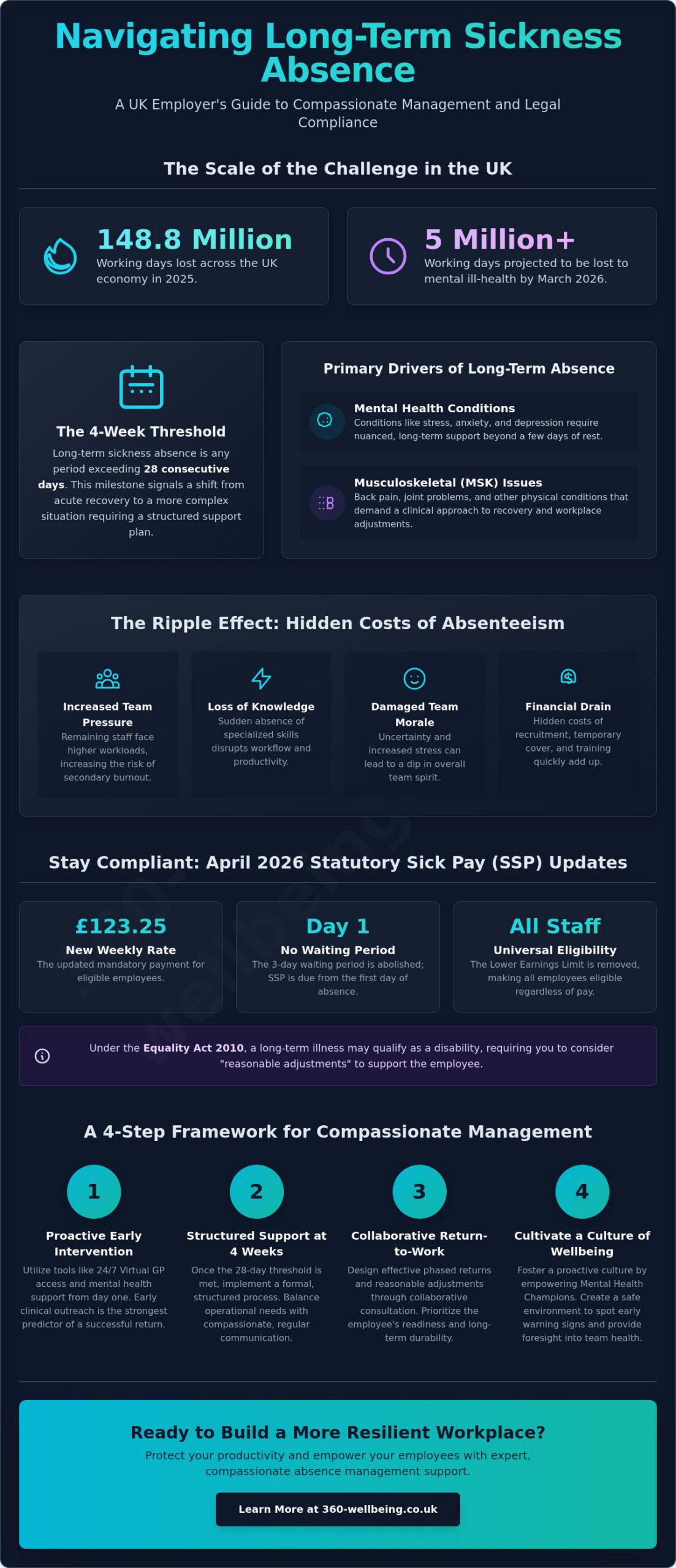
In 2025, the UK economy felt the weight of 148.8 million lost working days, a figure that highlights the deep connection between individual health and collective productivity. While many absences are short lived, those that stretch beyond a few weeks require a different level of care and strategy. Understanding the foundational principles of UK sick leave policies is the first step toward creating a workplace that values both the person and their professional output. Effective management isn’t just about following a checklist; it’s about fostering a partnership that supports recovery while maintaining the steady rhythm of your business operations.
The 4-Week Milestone
Long-term sickness absence is defined as any period exceeding 28 consecutive days. Crossing this one month threshold isn’t just a calendar event; it’s a signal that the situation has moved from an acute recovery phase to something more complex. At this stage, managing long term sickness absence requires a fundamental shift in perspective. You’re no longer simply managing a temporary gap in the rota; you’re supporting a journey back to wellness. In 2026, the primary drivers of these extended absences continue to be mental health conditions and musculoskeletal (MSK) issues. These conditions are rarely solved with a few days of rest. They require nuanced, long-term support and a clinical understanding of the recovery process to ensure the employee feels capable of returning to their duties.
Economic and Cultural Impact
The true costs of absenteeism go far beyond the direct expense of Statutory Sick Pay. For small teams, the impact is felt in the sudden loss of specialized knowledge and the increased pressure placed on remaining staff. This often creates a ripple effect where morale dips and the risk of secondary burnout rises among the rest of the workforce. By maintaining a panoramic viewpoint on staff health, you can see these patterns before they become systemic failures. The hidden expenses of recruitment and temporary cover can quickly drain a budget, making absence management a cornerstone of long-term business durability. It’s helpful to view wellbeing not as a luxury, but as a professional necessity that protects your most valuable assets.
Early intervention remains the strongest predictor of whether an employee will successfully return to their role. Waiting until the 28-day mark to reach out is often too late. Proactive outreach and clinical support within the first few weeks can prevent a temporary health hurdle from becoming a permanent career exit. It’s about foresight; providing the right care at the right time ensures that both the business and the employee can move forward together with confidence and clarity.
The Legal Framework: Rights, Responsibilities, and Compliance
For many small business owners, the legal landscape surrounding health can feel like a maze of potential pitfalls. It’s natural to worry about employment tribunals or accidentally overstepping boundaries, but these regulations exist to provide a safety net for both you and your team. Clear boundaries actually foster a sense of security. When you understand your obligations, you can focus on the human side of managing long term sickness absence without the weight of legal uncertainty holding you back. Compliance isn’t just a hurdle; it’s the foundation of a fair and durable workplace.
As of April 2026, Statutory Sick Pay (SSP) regulations have undergone significant changes to better protect workers. The weekly rate is now £123.25, and the previous three-day waiting period has been abolished. This means employees are entitled to SSP from their very first day of absence. Additionally, the Lower Earnings Limit has been removed, making all staff eligible regardless of their weekly pay. While you cannot recover these costs from HMRC, staying compliant ensures you avoid costly disputes later on. If you’re feeling overwhelmed by these administrative shifts, accessing expert legal support can provide the clarity you need to move forward with confidence.
Navigating Disability and Reasonable Adjustments
Under the Equality Act 2010, a long-term illness may legally qualify as a disability if it has a substantial, adverse effect on an employee’s ability to carry out normal day-to-day activities for at least 12 months. This triggers a legal duty to consider “reasonable adjustments.” These don’t always require a large budget. Simple changes like phased return hours, modified equipment, or a temporary redistribution of minor tasks can be incredibly effective. The key is the interactive process; you must talk with your employee to discover what they truly need to succeed. This collaborative approach turns a legal requirement into a powerful tool for retention.
Data Privacy and Medical Records
Handling health data requires a delicate touch and strict adherence to UK GDPR. Information about an employee’s condition is “special category data” and must be treated with the highest level of confidentiality. When managing long term sickness absence, you might need a medical report from their GP. You must always obtain written consent before requesting this, and the employee has the right to see the report before you do. Training your managers to handle this sensitive information with professional empathy ensures that privacy is maintained without sacrificing the support the employee needs. Fit notes are your guide here; they tell you what an employee *can* do, rather than just what they can’t, helping you plan for a safe and sustainable return.
Strategic Early Intervention: The Role of Digital Health
Wait times for essential care are often the biggest hurdle when managing long term sickness absence. While the NHS provides vital services, the current pressure on the system often means that employees face weeks or even months of uncertainty before receiving a diagnosis or starting treatment. For an employer, this waiting period is a vacuum where productivity drops and employee anxiety climbs. Digital health solutions act as a bridge, offering immediate clinical expertise that keeps the recovery process moving forward rather than stalling in a queue. By providing rapid access to care, you show your team that their health is a professional necessity and a human entitlement.
Bridging the NHS Wait-Time Gap
Access to a 24/7 Virtual GP provides instant reassurance for an employee who might be struggling at any hour of the day. This rapid access allows for private prescriptions and specialist referrals that significantly shorten the diagnostic journey. As outlined in the UK Government guidance on sick leave, managing these periods effectively requires clear communication and support. Digital health platforms provide a safety net for employees during long-term leave. When managing long term sickness absence, removing the stress of a long wait for a doctor’s appointment empowers your staff to focus entirely on their durability and return.
Holistic Support Beyond Clinical Care
Recovery is rarely just about a physical or mental diagnosis; it’s often entangled with social and financial pressures. An Employee Assistance Programme (EAP) offers a panoramic viewpoint on an individual’s health by addressing the stressors that clinical care might miss. For instance, there is a clear link between debt worries and slow recovery times. Providing financial support for employees can alleviate the recovery-blocking anxiety that keeps people away from work longer than necessary. This proactive approach ensures that the underlying factors of an absence are addressed before they lead to a total breakdown in workplace harmony.
Physical health is equally critical, especially for musculoskeletal issues which remain a leading cause of absence. Targeted Physiotherapy ensures that employees receive the specific exercises and guidance they need for a safe return to physical duties. When you combine this with Life Coaching to rebuild professional confidence, you create a unified narrative of total wellness. It’s about looking out for the long-term interests of your team. This methodical approach ensures that when your employees do return, they aren’t just filling a seat; they are truly ready to thrive again.
Designing a Supportive Return-to-Work Programme
Designing a return-to-work programme is the most critical phase in the entire journey of managing long term sickness absence. It is the moment where clinical recovery meets professional reality. A successful return isn’t just about the employee showing up on Monday morning; it’s about creating a structured environment where they can rebuild their durability without the fear of relapse. For small teams, this transition requires careful planning to maintain workplace harmony and ensure that the returning colleague feels like a valued contributor rather than a burden. You aren’t just filling a vacancy; you’re restoring a partnership.
To make this process manageable and methodical, follow these five essential steps:
- Step 1: Pre-return consultation. Meet before the official start date to discuss readiness and any specific anxieties. This is a discovery session, not a formal interview.
- Step 2: Agree on a Phased Return-to-Work (PRTW). Start with reduced hours or lighter duties, gradually increasing the workload over a period of four to six weeks.
- Step 3: Implement adjustments. Ensure physical or environmental changes, such as ergonomic equipment or software modifications, are ready before they arrive.
- Step 4: 90-day check-ins. Schedule formal reviews at the 30, 60, and 90-day marks to track progress and identify any emerging hurdles.
- Step 5: Success review. At the end of the 90 days, evaluate if the return is sustainable or if further long-term adjustments are necessary.
The Phased Return Framework
A phased return is about more than just a shorter working week. It involves a strategic reintroduction of tasks, starting with those that carry less pressure or cognitive load. This approach helps the employee regain their professional confidence while you manage team expectations. It’s vital to communicate with the wider team about the returning colleague’s capacity without disclosing sensitive health data. This transparency prevents resentment and ensures everyone understands that a gradual return is a business-critical strategy for long-term retention. You can find out more about supporting your team through our comprehensive employee support services.
Addressing the Mental Barrier
Even when an employee is physically ready, the psychological hurdle of returning after a long absence can be daunting. Return-to-work anxiety is a common experience, especially if the original absence was related to stress or mental health. Providing access to our Life Coaching or specialized Mental Health Support can help individuals rebuild their professional identity. Using EAP counselling during this time ensures they have a safe, confidential space to process the transition. The goal is to make the employee feel empowered and supported, rather than monitored or judged. When an individual feels that their wellbeing is viewed as an essential human entitlement, they are far more likely to remain committed to the business for the long term.
Cultivating a Culture of Total Wellbeing
The journey of managing long term sickness absence doesn’t end when an employee returns to their desk; it evolves into a continuous strategy of prevention and care. Shifting from a reactive posture to a proactive vision of vitality is the hallmark of a forward-thinking business. While previous sections of this guide focused on the mechanics of return and the legalities of leave, the ultimate goal is to create an environment where long-term absence becomes a rarity rather than a recurring challenge. When you view health through a panoramic lens, you begin to see that wellbeing is a professional necessity and an essential human entitlement, not a luxury reserved for large corporations.
One of the most effective ways to foster this culture is through the introduction of Mental Health Champions. these are individuals within your team trained to spot the early warning signs of burnout, anxiety, or social isolation. By identifying these factors before they escalate into a clinical crisis, your business gains the foresight needed to intervene early. This peer-to-peer support system creates a sense of safety and order, ensuring that no one feels they have to struggle in silence until a total breakdown occurs. It’s about building a community that looks out for the long-term interests of every member.
Proactive Vitality and Resilience
Building resilience into your HR strategy requires a move away from fragmented support. Many SMEs struggle to provide the same level of care as global firms, but a unified platform bridges this gap. By offering 360-degree care that integrates mental, physical, and social health, you provide your staff with the tools they need to maintain their own durability. There is a direct link between this holistic support and staff retention. When employees know they have 24/7 access to clinical expertise and emotional guidance, their commitment to the business grows. You aren’t just managing a process; you’re investing in the human energy that drives your success.
A Partnership for Success
Positioning your business as a modern, compassionate employer is a powerful differentiator in the 2026 talent market. It shows that you are a partner in your employees’ health journeys, looking beyond the immediate contract to their long-term wellness. Implementing a comprehensive wellbeing platform is the logical next step for any business that wants to move past the stress of absence management. This methodical approach ensures that your team remains healthy, balanced, and productive, even when facing the pressures of a high-speed work environment.
Discover how our Employee Wellbeing Platform can transform your absence management. By choosing a proactive path, you protect your business productivity while ensuring your team feels truly supported. Let’s work together to build a workplace where health and harmony are the standard, not the exception.
Building a Resilient Future for Your Workforce
Effective workplace health management is about more than just compliance; it’s about building a partnership rooted in trust and foresight. By understanding the critical four-week milestone and implementing a structured, phased return, you transform a complex challenge into an opportunity for growth and retention. We’ve explored how early intervention through digital health and a clear legal framework can protect your business while providing the compassionate care your team deserves. Managing long term sickness absence doesn’t have to be a source of stress when you have the right tools and professional support in place.
Our platform is designed specifically for SMEs and sole traders, ensuring you can provide corporate-level care without the administrative burden. With 24/7 access to UK-registered GPs and holistic mental health and life coaching support, you can address the root causes of absence before they impact your team’s harmony. It’s about moving toward a proactive vision of vitality where every employee feels valued as a whole person.
Empower your team with 360 Wellbeing today and take the first step toward a more durable, positive workplace. You have the power to turn health challenges into stories of recovery and success.
Frequently Asked Questions
How long is considered long-term sickness absence in the UK?
Sickness absence is generally classified as long-term in the UK once it exceeds 28 consecutive days. This four week milestone is a significant point in your management strategy, as it often indicates that the employee is dealing with a more complex health issue rather than a minor illness. Recognizing this threshold early helps you transition from basic tracking to a more supportive, individualized care plan.
Can I dismiss an employee who is on long-term sick leave?
Yes, dismissal is possible as a last resort, but it must be handled with extreme care to avoid unfair dismissal or discrimination claims. You must first demonstrate that you’ve followed a fair procedure, including investigating the medical outlook and exploring all reasonable adjustments or alternative roles. It’s essential to maintain an open dialogue and show that the business can no longer reasonably support the absence before taking this step.
What are reasonable adjustments for long-term sickness?
Reasonable adjustments are practical changes to an employee’s work environment or duties that help them return to work safely. These might include ergonomic office equipment for physical issues, phased return-to-work hours, or a temporary redistribution of high-pressure tasks. The goal is to provide the durability needed for a sustainable return. Consulting directly with the individual ensures these adjustments are tailored to their specific recovery journey and clinical needs.
Do employees on long-term sick leave still accrue holiday?
Employees continue to accrue their statutory holiday entitlement even while they are away on long-term sick leave. This is a legal right that remains in place regardless of how long the absence lasts. Individuals can also request to take their paid holiday during their sickness period, which can sometimes provide financial relief. Managing this correctly ensures you remain compliant with UK employment law while supporting the employee’s wider financial wellbeing.
How often should I contact an employee on long-term sick leave?
You should maintain regular contact, but the frequency and method should be agreed upon with the employee early in their absence. While there’s no fixed legal rule, a monthly check-in is common for managing long term sickness absence effectively. The focus of these conversations should be on the individual’s wellbeing and any support you can provide, rather than pressuring them for a specific return date, which helps maintain workplace harmony.
What happens if an employee is unable to return to their original role?
If a medical professional confirms that an employee can’t return to their original duties, you must consider redeployment to a more suitable alternative role within the business. This might involve training the individual for a different position that accommodates their health limitations. If no such role exists and all adjustments have been exhausted, you may eventually need to discuss ill-health retirement or a fair termination of the contract based on capability.
Is a return-to-work meeting legally required in the UK?
While not a strict statutory requirement, holding return-to-work meetings is considered best practice and is often a requirement of a company’s internal sickness policy. These meetings provide a vital opportunity to assess whether the individual is truly ready to resume their duties and if any new adjustments are needed. It establishes a partnership between the employer and employee, ensuring the transition back to the workplace is safe, supported, and durable.
How can a Virtual GP help with long-term sickness absence?
A Virtual GP speeds up the recovery process by providing 24/7 access to clinical expertise, bypassing long NHS waiting times. This rapid access allows for quicker diagnosis, private prescriptions, and specialist referrals, which are essential for managing long term sickness absence proactively. By offering this as a benefit, you provide a safety net that helps employees address health issues before they become permanent barriers to their professional success.