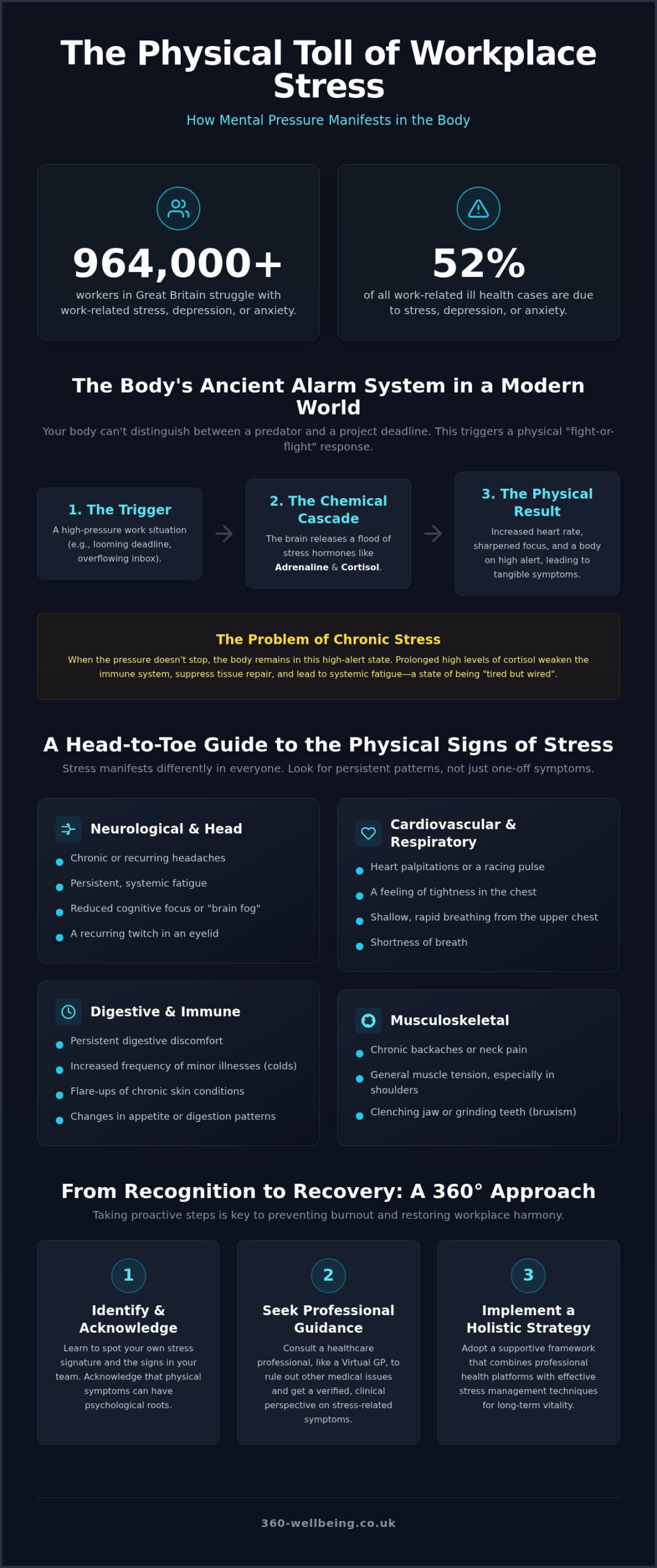
Did you know that over 964,000 workers in Great Britain are currently struggling with work-related stress, depression, or anxiety? This staggering figure, confirmed by the latest HSE statistics, accounts for 52% of all work-related ill health cases, proving that effective stress management in UK workplaces is no longer a luxury but a fundamental necessity for every business. It’s easy to dismiss a lingering headache or persistent fatigue as the result of a late night, yet these physical signals are often the body’s way of sounding a silent alarm before burnout takes hold.
We understand how difficult it can be to distinguish between a minor seasonal illness and the chronic physical toll of a high-pressure environment. You deserve a workplace where health is viewed holistically, and this guide is designed to help you bridge that gap. By reading on, you’ll learn to identify the subtle and overt physical manifestations of stress to protect your health and support your team’s wellbeing. We will provide a clear breakdown of stress-related symptoms, explain the 2025 HSE Management Standards, and offer actionable strategies to use professional health platforms to improve productivity and restore harmony to your professional life.
Key Takeaways
- Uncover the biological triggers that turn mental pressure into physical pain, ranging from chronic headaches to persistent digestive issues.
- Identify the link between physical symptoms and reduced cognitive focus to implement proactive stress management in the workplace uk and avoid the costly trap of presenteeism.
- Adopt a supportive framework for spotting the silent signs of burnout in your team, ensuring you provide help before a health crisis occurs.
- Learn how a holistic approach to recovery, supported by professional health platforms like virtual GPs, creates a sustainable path toward long-term vitality and workplace harmony.
The Biological Reality: Why Stress Manifests Physically
Stress is often discussed as a mental state, yet it’s fundamentally a physical event designed to ensure our survival. This ancient mechanism, known as the “fight-or-flight” response, was originally evolved to help our ancestors escape immediate physical dangers like predators. In a modern office, however, your body can’t always distinguish between a sabre-toothed tiger and a looming project deadline or an overflowing inbox. When you perceive a threat, your brain triggers a cascade of chemical changes that prepare you for action, regardless of whether you’re in a boardroom or a forest. This biological mismatch is why effective stress management in the workplace uk is so critical for long-term health.
When these ancient systems are activated by modern triggers, the nervous system remains in a state of high alert. This isn’t just an emotional feeling; it’s a systemic physiological shift that affects everything from your heart rate to your digestion. If the source of the pressure isn’t resolved, the body remains stuck in this defensive posture, leading to the phenomenon of somatisation. This is where mental distress manifests as genuine, tangible physical pain, creating a bridge between our psychological experiences and our physical reality.
The Role of Cortisol and the Nervous System
When pressure builds, your autonomic nervous system shifts into high gear. It releases a flood of adrenaline and cortisol, hormones that increase your heart rate and sharpen your focus to help you handle a crisis. While this temporary boost is functional for meeting a one-off target, problems arise when the stress doesn’t stop. Chronic activation of the body’s stress response means your system never returns to its resting state.
Persistent work pressure creates a hormonal imbalance where high levels of cortisol circulate through your bloodstream for weeks or months, leading to systemic fatigue and weakened immunity. This constant chemical presence is biologically damaging, as it suppresses essential functions like tissue repair and immune response to keep you in a state of readiness. It’s a state of being “tired but wired” that eventually breaks down the body’s natural resilience and durability.
Psychosomatic Symptoms vs. Physical Illness
The term “psychosomatic” is frequently misunderstood and often carries an unfair stigma. It doesn’t mean your symptoms are imaginary or “all in your head.” Instead, it refers to the very real process of your mind influencing your physical health. You might experience chronic backaches, digestive issues, or skin flare-ups that are directly tied to your emotional state. These symptoms are part of a feedback loop; physical pain increases your mental anxiety, which in turn makes the physical sensation feel even more intense.
Distinguishing between a routine virus and a stress-related condition can be difficult without expert guidance. Because the symptoms are physically real, they require professional clinical verification. This is why we recommend consulting a professional, such as a Virtual GP, to rule out underlying medical issues and ensure your stress management in the workplace uk strategy is grounded in clinical reality. Recognising that your physical pain has a psychological root is a powerful first step toward a more holistic and complete recovery.
A Head-to-Toe Guide to the Physical Signs of Stress
Stress doesn’t arrive with a convenient label. It often disguises itself as routine tiredness, a minor seasonal bug, or the natural result of a busy week. Identifying these common physical signs of stress requires a systematic approach because everyone possesses a unique “stress signature.” One person might experience persistent digestive discomfort while another develops a recurring twitch in their eyelid. Tracking the frequency and duration of these signals is vital. If a tension headache lasts for several weeks during a specific project, it’s likely a signal from your nervous system rather than a simple lack of hydration. These symptoms often fluctuate based on the specific demands of your role, making it essential to observe patterns over a standard working month.
Cardiovascular and Respiratory Indicators
Acute pressure often triggers heart palpitations or a worrying tightness in the chest. These sensations can be frightening, often mimicking more serious cardiac events, which only adds to your internal anxiety. You might also notice you’re taking shallow, rapid breaths from the upper chest. This thoracic breathing reduces blood oxygen levels and keeps your body in a state of high alarm. Over time, the strain of constant pressure can lead to sustained high blood pressure, a clinical risk that demands proactive stress management in the workplace uk to prevent long-term damage to your cardiovascular health.
Musculoskeletal and Digestive Disruptions
Your muscles often act as a physical map of your mental state. Tension headaches are a classic sign, frequently caused by subconscious jaw clenching, known as bruxism, throughout the working day. This constant contraction leads to chronic pain in the neck and shoulders that doesn’t resolve with rest alone. Below the surface, your gut is highly sensitive to adrenaline and cortisol. You might experience “stomach knots,” bloating, or sudden changes in digestion such as IBS flare-ups. These aren’t just minor inconveniences; they are clear indicators that your body is prioritising survival over basic maintenance and nutrient absorption.
Skin, Hair, and Immune System Changes
The skin is often the final place where internal pressure becomes visible to the outside world. Stress-related breakouts, eczema flares, or unexplained itchy rashes can appear when your body’s inflammatory response is overstimulated. Perhaps the most disruptive sign is a weakened immune barrier. If you find yourself catching every cold that circles the office, your system may be struggling to maintain its usual defences. Under chronic cortisol exposure, the body’s production of lymphocytes is suppressed, which directly reduces the immune system’s efficacy and leaves you vulnerable to frequent, lingering illnesses that can hinder effective stress management in the workplace uk.
The Impact of Chronic Stress on Workplace Performance
Physical symptoms don’t exist in a vacuum; they directly bleed into professional output. When an employee is battling chronic tension or digestive distress, their cognitive resources are being diverted to manage that discomfort. This leads to a noticeable decline in memory, focus, and the ability to process complex information. It’s not simply a matter of “pushing through.” A brain under the influence of persistent cortisol struggle is biologically less capable of strategic thinking. This creates a ripple effect where individual health issues begin to erode the overall health of the business culture, turning a vibrant team into a group of individuals merely trying to survive the day.
This reality often leads to the presenteeism trap. This is a state where staff are physically at their desks but are unable to perform effectively due to lingering health issues. Presenteeism is frequently more damaging than absenteeism because it’s harder to track and can lead to a culture of quiet exhaustion. When physical fatigue sets in, the risk of workplace errors and safety accidents increases significantly. A tired body cannot maintain the precision required for high-stakes tasks, making robust stress management in the workplace uk a vital safety protocol rather than just a HR checkbox.
The Hidden Cost of Absenteeism
Minor physical ailments often serve as a mask for deeper employee burnout. A sudden spike in “migraine days” or “seasonal flu” might actually be the body’s way of forcing a break that the mind refuses to take. According to the latest HSE statistics, 22.1 million working days were lost in the UK due to work-related stress, depression, or anxiety in 2024/2025. This absenteeism represents a massive financial burden for UK businesses, particularly when health neglect leads to high staff turnover. For a broader look at how this affects your bottom line, see our Financial Support for Employees guide.
Physical Fatigue and Decision-Making
A sharp, strategic mind requires a rested body. Without adequate recovery, leadership capabilities begin to fray, often manifesting as reduced patience and poor impulse control. Poor sleep hygiene, frequently driven by workplace anxiety, prevents the brain from clearing out the metabolic waste accumulated during the day. This makes it nearly impossible to maintain the emotional intelligence needed for modern management. Integrating tools like Life Coaching into your stress management in the workplace uk strategy can help leaders identify these energy drains and rebuild the physical durability needed for long-term success.
Checklist: Spotting Physical Signs of Stress in Your Team
Managers often occupy a unique vantage point to witness the first physical ripples of burnout. In 2026, the benchmark for effective management has shifted away from rigid performance tracking toward a model of empathetic support. By observing subtle changes in health trends, you can intervene before a team member reaches a point of crisis. High-quality stress management in the workplace uk isn’t about being a medical expert; it’s about being an attentive colleague who recognizes when someone’s physical durability is flagging. Regular 1-to-1 wellbeing check-ins should be a preventative staple, allowing you to catch these signals in a safe, private setting.
Observational Cues for Managers
Look for shifts in non-verbal communication during meetings or daily interactions. A team member who usually has an upright, engaged posture might begin to slump or avoid eye contact. You might also notice a sudden increase in reliance on caffeine or more frequent nicotine breaks, which often signal a desperate attempt to manage energy levels or “take a minute” to cope with rising pressure. If you see someone rubbing their temples or taking frequent breaks for headaches, don’t ignore it. Approach them privately and sensitively, using open-ended observations like, “I’ve noticed you’ve seemed quite tired this week, is there anything we can do to support you?”
Creating a Culture of Openness
A supportive environment is built on the foundation of psychological safety. You can reinforce this by regularly reminding staff of the tools available to them, such as an Employee Assistance Programme (EAP). This serves as a vital safety net, providing a confidential space for staff to address the underlying causes of their physical symptoms. We also encourage managers to promote the use of a 24/7 Virtual GP. Accessing professional medical advice early can prevent minor physical signals from escalating into long-term sickness.
During your next 1-to-1 wellbeing check-in, consider using these five questions to guide a supportive conversation:
- How have your energy levels been throughout the working day?
- Have you found it easy to switch off and get quality sleep lately?
- Are you experiencing any persistent physical discomfort, like headaches or tension?
- Do you feel you have the right balance of support to manage your current workload?
- Is there one thing we could change this week to help reduce your physical pressure?
Identifying red flag combinations, such as visible chest tightness paired with extreme withdrawal, requires immediate and urgent support. To ensure your team has the right tools for recovery, explore how to implement a comprehensive EAP that prioritises both physical and mental health. This proactive approach turns stress management in the workplace uk into a tangible benefit that protects your most valuable assets: your people.
From Recognition to Recovery: Taking a 360-Degree Approach
Once you’ve identified the physical signatures of pressure, the focus must shift from observation to meaningful action. Seeking professional medical advice is the essential first step in any recovery journey. It’s the bridge between recognizing a problem and implementing a clinical solution that actually works. Stress is a multifaceted challenge that requires a panoramic viewpoint to resolve effectively, ensuring that the body and mind are treated as a single, unified system rather than separate issues.
At 360 Wellbeing, we integrate physical and mental health support seamlessly to ensure that no part of an individual’s health is left behind. This unified narrative of wellness is crucial because physical pain and mental distress are deeply intertwined. For instance, while mental health support addresses the psychological triggers of burnout, Physiotherapy plays a vital role in treating the somatic effects of stress, such as chronic neck pain or tension-induced headaches. This combination ensures a complete recovery that restores both mental clarity and physical durability.
Moving toward a proactive health management model helps businesses move away from reactive firefighting. Instead of waiting for a health crisis to occur, you can provide your team with the tools they need to maintain their balance throughout the year. This foresight is a hallmark of modern stress management in the workplace uk, turning wellbeing from a luxury into a core professional necessity that benefits the individual and the business alike.
The Power of the 24/7 Virtual GP
Speed is often the most critical factor when an employee is worried about their physical health. A 24/7 Virtual GP provides immediate clinical access without the frustration of waiting for local appointments, which can often take weeks. This rapid response is vital for effective stress management in the workplace uk, as it allows individuals to speak with a UK-registered doctor at the exact moment they feel overwhelmed or physically unwell.
A GP helps rule out underlying conditions that might be causing physical symptoms, providing the reassurance that only professional medical validation can offer. When an employee knows that their physical signals are being monitored by a clinician, the mental burden of “not knowing” is lifted. This clarity is often the catalyst for a faster and more sustainable recovery, allowing the employee to return to their full potential with confidence.
Implementing a Holistic Wellbeing Strategy
A holistic strategy isn’t just about providing a single service; it’s about creating a supportive ecosystem that employees actually want to use. By using a unified platform that covers Mental Health, Virtual GP access, and 360 Rewards, you provide a complete safety net for your staff. This approach ensures that every team member has a clear, structured path forward, regardless of whether their primary challenge is physical, mental, or social.
We believe that wellbeing is a fundamental human entitlement in the modern workplace. It’s a partnership between the employer and the employee, built on trust, empathy, and expert care. By choosing a partner who looks out for the long-term interests of your team, you’re investing in a future of workplace harmony and individual vitality. Explore how 360 Wellbeing can support your team’s health today.
Cultivating a Future of Workplace Vitality
Recognising that stress is a tangible biological reality is the first step toward reclaiming your health and productivity. By identifying the unique physical signatures of pressure in yourself and your team, you can move away from reactive firefighting and toward a proactive model of care. Effective stress management in the workplace uk relies on this vital transition from observing symptoms to accessing integrated clinical support that treats the whole person.
360 Wellbeing is here to act as your expert caregiver and partner in this journey. We provide 24/7 access to UK-registered GPs, comprehensive Mental Health and Physiotherapy support, and tailored packages designed specifically for the needs of SMEs and sole traders. Our holistic approach ensures that every member of your team feels supported, balanced, and empowered to reach their full potential.
Secure your team’s health with 360 Wellbeing’s Virtual GP and EAP services.
You have the power to transform your workplace into a sanctuary of vitality and durability. With the right tools and a compassionate strategy, a healthier, more harmonious professional life is well within your reach.
Frequently Asked Questions
Can stress cause actual physical pain in the body?
Yes, stress triggers a biological response that results in real, tangible physical pain. When your nervous system stays in a state of high alert, it causes muscles to remain contracted and increases systemic inflammation. This often manifests as chronic tension headaches, back pain, or chest tightness. These symptoms aren’t imaginary; they’re the result of your body’s survival mechanisms working over time without adequate recovery.
What are the most common physical signs of stress at work?
The most frequent indicators include persistent fatigue that isn’t resolved by sleep, digestive disruptions like bloating, and cardiovascular signals such as heart palpitations. You might also notice musculoskeletal issues like a tight jaw or shoulders. These signs often appear gradually, making it easy to dismiss them as routine tiredness until they begin to significantly impact your focus and daily workplace productivity.
How do I tell the difference between a cold and stress-related fatigue?
While a common cold usually features viral symptoms like a fever or sore throat, stress-related fatigue often lacks these specific markers. Stress fatigue typically feels heavy and persistent, frequently accompanied by muscle tension or jaw clenching. If your physical symptoms resolve quickly over a relaxing weekend but return on Monday morning, it’s a strong indicator that your fatigue is driven by professional pressure.
Can workplace stress cause long-term heart problems?
Chronic stress is clinically linked to sustained high blood pressure and increased cardiovascular strain. When the body remains in a permanent state of “fight-or-flight,” it places constant pressure on the heart and arteries. Implementing effective stress management in the workplace uk is essential to mitigate these long-term risks and protect your cardiovascular durability, ensuring your heart isn’t forced to work in crisis mode indefinitely.
What should I do if I notice physical signs of stress in a colleague?
Approach the situation with empathy and privacy, focusing on your observations rather than making a diagnosis. You might say, “I’ve noticed you’ve been having more headaches lately; is there any support I can offer?” Directing them toward confidential resources like an Employee Assistance Programme (EAP) provides them with a safe, non-judgmental pathway to professional support while maintaining their privacy and dignity at work.
How can a Virtual GP help with stress-related physical symptoms?
A Virtual GP offers immediate access to a UK-registered doctor who can clinically verify if your physical pain has a psychological root. They can rule out other underlying medical conditions through a professional consultation and provide a clear diagnosis. This clinical validation is a crucial step in creating a tailored recovery plan that addresses both the physical symptoms and the underlying workplace triggers.
Is it possible to have physical symptoms without feeling mentally stressed?
Yes, your body can process pressure through somatic pathways before your mind consciously registers a sense of being overwhelmed. You might experience digestive issues, skin rashes, or sleep disruptions while still feeling mentally capable of handling your workload. Recognising these early physical signals is a fundamental part of proactive stress management in the workplace uk, allowing you to intervene before mental burnout takes hold.
How long does it take for physical signs of stress to disappear after resting?
Recovery time varies depending on the intensity of the pressure you’ve experienced and your body’s natural resilience. While minor tension might ease after a restful weekend, chronic symptoms often require several weeks of consistent support and lifestyle adjustments to resolve. True recovery involves more than just a temporary break; it requires a holistic approach to restore your body’s natural balance and long-term vitality.