
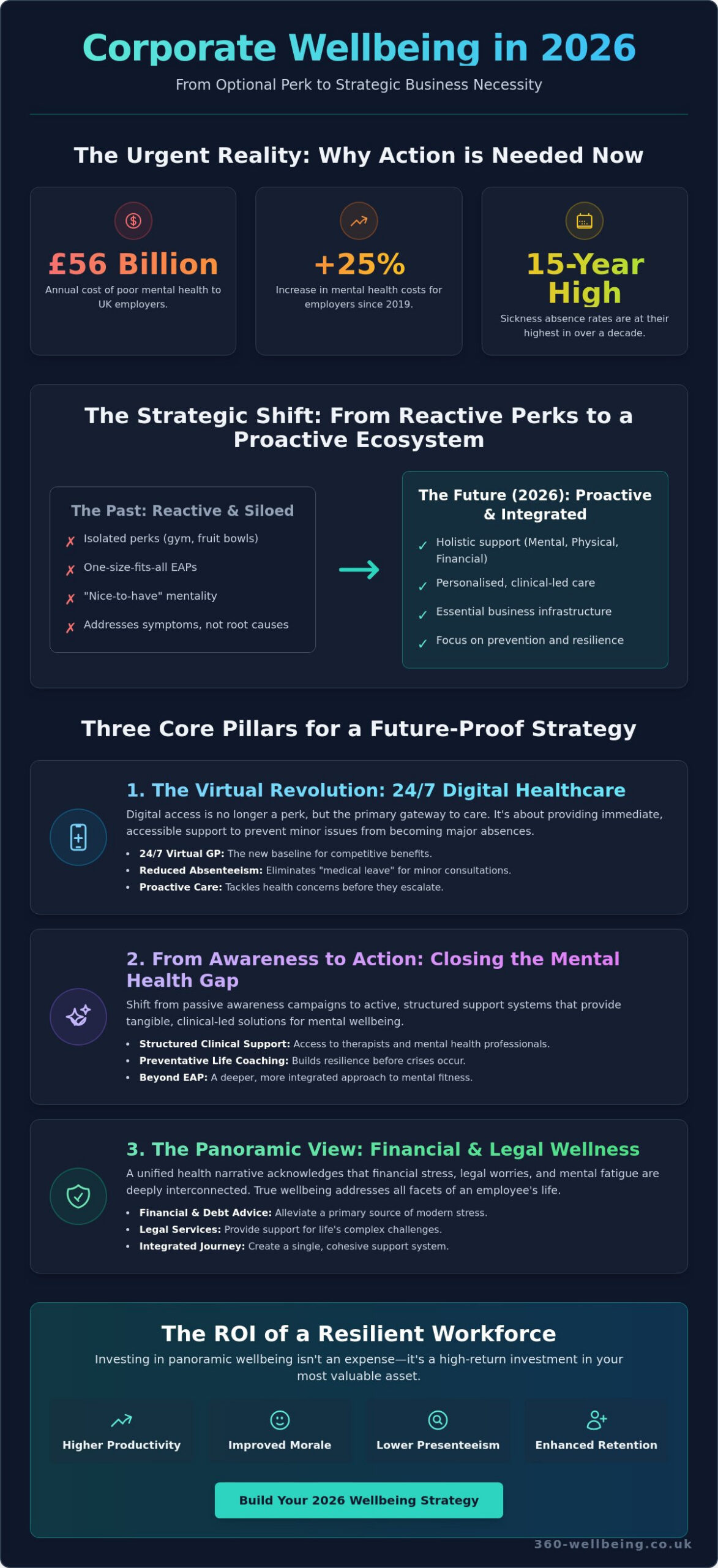
Did you know that poor mental health now costs UK employers an estimated £56 billion annually, marking a 25% increase since 2019? With sickness absence hitting a 15-year high, the pressure on your teams and your bottom line has never been more intense. Understanding the corporate wellbeing trends 2026 is no longer just about offering optional perks. It’s a strategic necessity in a “job hugging” economy where talent is staying put but often struggling to stay productive and healthy.
You’re likely seeing the direct impact of these figures through rising absenteeism and the visible strain on staff who can’t access timely care. This guide promises to help you move beyond reactive fixes to build a resilient, high-performing workforce through holistic, proactive support. We’ll provide a clear roadmap for your 2026 benefits planning, exploring how the integration of virtual healthcare, mental health strategies, and financial security can reduce turnover and foster a truly vibrant workplace culture.
Key Takeaways
- Learn why corporate wellbeing has evolved from a secondary perk into a strategic business anchor to support employees in a “job hugging” economy.
- Understand how to integrate 24/7 Virtual GP services and AI-driven tools while maintaining the essential human touch of clinical expertise.
- Discover how to transition from basic mental health awareness to structured clinical support and preventative life coaching.
- Explore how expanding your support to include financial advice and legal services reflects the most impactful corporate wellbeing trends 2026.
- Get a clear roadmap for auditing your current benefits and adopting scalable, per-employee models to ensure your strategy remains resilient and future-proof.
Beyond the Perk: Why Corporate Wellbeing is a Strategic Necessity in 2026
In 2026, the definition of corporate wellbeing has shifted from a collection of isolated perks to a deeply integrated holistic ecosystem. It’s no longer just about a bowl of fruit or a discounted gym membership. Instead, it’s about building a durable infrastructure that supports the physical, mental, and social health of every individual. This shift is a direct response to the “job hugging” phenomenon. Employees in 2026 are staying in their roles longer, prioritizing security and comprehensive benefits over the risks of a volatile job market. While this reduces recruitment costs, it also means your workforce is staying in place and potentially carrying long-term health burdens that require proactive management.
The UK is currently facing a significant long-term sickness crisis, with 2.8 million people economically inactive due to health conditions as of April 2026. This reality makes workplace wellness a foundational pillar of business continuity rather than a luxury. When staff stay but struggle, the hidden costs of presenteeism can quietly erode your margins. Understanding these corporate wellbeing trends 2026 helps leaders move from “nice-to-have” extras to essential business infrastructure that protects both the person and the profit.
The Economic Case for Wellness in 2026
The financial argument for proactive support is clearer than ever. Presenteeism, or working while unwell, often costs businesses more than actual absence because it leads to mistakes, low morale, and eventual burnout. In the 2026 market, where the cost of replacing a skilled employee remains high, retention through care is a significant competitive advantage. It’s much cheaper to provide mental health support or access to a virtual GP than it is to lose a seasoned team member. In 2026, the ROI of wellbeing is measured by the sustained vitality and collective resilience of a workforce that feels truly seen and supported.
The Panoramic Viewpoint: A Unified Health Narrative
At the heart of modern strategy is the panoramic viewpoint. This approach moves away from siloed benefits that address only one aspect of health in isolation. If you only offer an EAP but ignore financial stress, or provide a gym but no clinical mental health support, your strategy is incomplete. A unified health narrative recognizes that physical pain, financial worry, and mental fatigue are often interlinked. Holistic care is now a professional necessity and a basic human entitlement. By integrating services like physiotherapy, life coaching, and debt advice into one cohesive journey, you create a sense of safety and order that empowers your team to perform at their best.
The Virtual Revolution: Integrating AI and 24/7 Digital Healthcare
Digital health is no longer a futuristic concept. In 2026, it’s the primary gateway through which your employees access care. With the NHS facing sustained pressure and wait times often stretching into weeks, the demand for immediate medical advice has surged. As we examine the core corporate wellbeing trends 2026, 24/7 access to clinical expertise has moved from a premium add-on to the baseline expectation for any competitive benefits package. This shift isn’t just about convenience; it’s a direct response to the need for a more agile and responsive workforce.
According to the Workplace Wellbeing Initiative Trends for 2026, digital health integration is accelerating, yet the most successful models are those that maintain a balance between technology and human care. Providing a 24/7 Virtual GP allows your staff to address health concerns the moment they arise. This immediacy helps prevent minor ailments from escalating into long-term sickness, directly tackling the absenteeism crisis that currently costs UK businesses billions each year. It’s a proactive way to ensure your team stays healthy and focused without the stress of navigating complex appointment systems.
The Rise of the Virtual GP
A virtual GP serves as your staff’s first line of defence. In our hybrid working world, the ability to book a digital appointment during a lunch break or from home is invaluable. It eliminates the need for “medical leave” for simple consultations or repeat prescriptions, keeping productivity high. When employees know they can speak to a doctor at any time, it creates a sense of security that reduces the anxiety often associated with physical symptoms. This level of support is a practical way to show your team that their health is a professional necessity, not just an afterthought.
AI Therapy vs. Clinical Support
There’s a growing trend toward using AI-guided tools for mental health, such as chatbots or mood trackers. While these tools can offer immediate, low-level stress management, they shouldn’t replace professional Mental Health Support for complex needs. Some industry voices suggest that AI can replace human interaction, but we believe technology should facilitate care, not substitute for it. Clinical expertise and human empathy remain essential for addressing deep-seated psychological challenges. Finding the right balance between tech and touch is easier when you partner with a provider who offers integrated healthcare solutions tailored to your team’s specific requirements.
Ultimately, the goal of virtual healthcare is to remove barriers to wellness. By combining the speed of AI with the reliability of human clinicians, you provide a panoramic support system that is both modern and compassionate. This approach ensures that your workforce remains resilient, even as the healthcare environment continues to evolve.
From Awareness to Action: Closing the Mental Health Support Gap
For years, many UK workplaces relied on annual awareness days to address mental health. While these events started important conversations, they often lacked the clinical depth needed to support a workforce facing the complex pressures of 2026. One of the most significant corporate wellbeing trends 2026 is the transition from surface-level awareness to structured, rapid-response clinical action. It’s about ensuring that when an employee reaches out, the support they receive is immediate, professional, and evidence-based. We’re moving away from simply talking about the problem and toward providing the clinical infrastructure to solve it.
The current landscape is defined by two primary stressors: digital fatigue and economic anxiety. With 92% of UK employees reporting financial stress as of January 2026, the impact on mental clarity and workplace productivity is undeniable. A robust Employee Assistance Programme (EAP) is no longer a hidden benefit tucked away in a handbook. It must be a front-and-center resource that provides rapid access to professional Mental Health Support and crisis care. By closing the gap between identifying a struggle and providing a solution, you protect your team from the long-term effects of chronic stress and help them regain a sense of balance.
Preventative Care through Life Coaching
Life Coaching has emerged as a vital bridge between general wellness and clinical mental health support. While therapy addresses psychological distress, life coaching focuses on personal development and proactive stress management. It helps employees navigate life transitions, set boundaries, and build resilience before they reach a point of burnout. This preventative approach is a hallmark of modern corporate wellbeing trends 2026. By investing in a person’s growth and clarity today, you reduce the likelihood of them needing intensive clinical intervention tomorrow. It’s a partnership that values the individual’s future as much as their current output.
Managing Digital Burnout in 2026
The “always-on” culture of a hybrid workforce has led to a rise in digital burnout. Symptoms often include cognitive exhaustion, a lack of focus, and a sense of being perpetually overwhelmed by notifications. Forward-thinking employers are now implementing strategies that encourage true rest and recovery. This includes empowering mental health champions to lead by example in remote settings and setting clear expectations around “switching off.” Promoting a culture of disconnection isn’t just about policy; it’s a commitment to the long-term durability of your workforce. When employees have the space to fully recharge, they return with a renewed sense of vitality and purpose.
Financial and Legal Wellness: The New Frontiers of Employee Health
For too long, corporate health strategies focused almost exclusively on the physical. In 2026, we understand that a panoramic viewpoint of health must include a person’s financial and legal security. Financial stress is now recognized as a leading cause of physical illness, often manifesting as chronic fatigue, digestive issues, and sleep disturbances. With 92% of UK employees reporting financial stress as of January 2026, the impact on your business is significant. This stress leads to a £50 billion annual loss in productivity across the UK, making financial support an essential human entitlement at work rather than a luxury perk. It’s a core component of the corporate wellbeing trends 2026 that every forward-thinking employer must address.
Modern benefits have evolved to meet these needs directly. Providing immediate cost-of-living relief through a discount marketplace like 360 Rewards helps stretch household budgets further. This isn’t just about saving money; it’s about reducing the daily mental load your employees carry. When people feel financially secure and have access to legal support for life’s major changes, they bring a higher level of focus and engagement to their roles. Integrating these services into your strategy ensures your team feels supported in every aspect of their lives, fostering a culture of durability and trust.
Direct Financial Support and Debt Advice
Debt helplines and professional debt advice provide a vital safety net for staff. When an employee is struggling with mounting bills, their mental clarity and focus are the first things to suffer. By offering confidential Financial Support and Debt Advice, you help them find a structured path forward. This proactive intervention is directly linked to reduced stress-related absenteeism and higher overall morale. For more detailed strategies on this topic, you can refer to our comprehensive guide on financial support for UK employers.
Legal Peace of Mind: Wills and Support
Legal challenges, whether it’s a property dispute or planning for the future, can be incredibly draining. Complimentary Will Writing has become one of the most highly valued “life-stage” benefits in 2026. It provides a sense of order and security that many employees often put off due to cost or complexity. Comprehensive Legal Support differentiates your 2026 benefits package by addressing these often-overlooked sources of anxiety. It shows that you’re a partner looking out for their long-term interests, not just their immediate output.
Building a truly supportive environment means looking at the whole person. If you’re ready to enhance your team’s security, you can explore our financial and legal wellness solutions to see how they fit into your 2026 strategy.
Implementing a Panoramic Wellbeing Strategy for 2026 and Beyond
Building a health strategy that lasts requires more than just picking a few isolated services. It’s about creating a unified journey that supports your team at every stage of their professional and personal lives. In 2026, the most effective way to achieve this is through scalable, “per-employee” SaaS models. This shift allows businesses to move away from the administrative heavy lifting of traditional, rigid schemes and toward a more agile, digital-first approach. By adopting these corporate wellbeing trends 2026, you can ensure your support remains durable and responsive to the changing needs of your workforce.
Before onboarding a new platform, it’s essential to audit your current benefits against 2026 market expectations. Start by identifying where your current support might be siloed. Do you have mental health awareness but no rapid clinical action? Are you providing physical health perks but ignoring financial security? A truly panoramic strategy balances physical, mental, and social health into a single narrative. Measuring success in this new era relies on a combination of data-driven insights and consistent employee feedback loops. This methodical approach creates a sense of safety and order, allowing you to refine your strategy based on what your team actually needs to thrive.
Scaling Support for SMEs and Sole Traders
In 2026, expert care shouldn’t be reserved for large corporations with massive budgets. The modern wellbeing model is specifically designed to be affordable and accessible for smaller teams and sole traders. Rigid, clinic-based models often fail smaller businesses because they lack the flexibility needed for hybrid or remote setups. A single-platform approach reduces admin overhead and ensures that even the smallest teams can access 24/7 Virtual GPs and professional Mental Health Support. It’s about democratizing wellness and recognizing that every employee, regardless of company size, deserves comprehensive care.
The 360 Wellbeing Approach
At 360 Wellbeing, we act as an expert caregiver and a dedicated partner in your success. Our platform seamlessly integrates essential services like Physiotherapy, Life Coaching, and Legal Support into one manageable ecosystem. We avoid the cold, transactional nature of traditional services, opting instead for a persona that is modern, forward-thinking, and genuinely compassionate. This integration ensures that your employees don’t have to navigate a maze of different providers to find the help they need. If you’re ready to build a more resilient and engaged workforce, you can explore our wellbeing platform for your team to see how we can support your journey into 2026 and beyond.
Future-Proofing Your Workforce for 2026
The landscape of workplace health has fundamentally changed. We’ve moved from offering fragmented perks to building a panoramic ecosystem where physical, mental, and financial health are inextricably linked. By embracing corporate wellbeing trends 2026, you’re doing more than just reducing absenteeism; you’re creating a culture of durability and trust. Whether it’s shifting from simple awareness to clinical mental health support or integrating financial safety nets, your strategy now serves as the backbone of your business resilience.
It’s time to transform your benefits package into a strategic asset that truly cares for the whole person. Our platform provides 24/7 UK-registered Virtual GP access, comprehensive EAP and Mental Health therapy, and integrated financial and legal support tools to ensure no member of your team is left behind. You don’t have to navigate these complexities alone. We’re here as your partner to help you build a healthier, more engaged workforce for the years ahead.
Empower your team with our all-in-one wellbeing platform and start your journey toward a more vibrant workplace today.
Frequently Asked Questions
What are the top corporate wellbeing trends for 2026?
The leading corporate wellbeing trends 2026 focus on the transition from fragmented benefits to unified, panoramic ecosystems. This includes a shift toward preventative care through life coaching and the integration of financial and legal support as standard offerings. Businesses are moving away from reactive awareness days to provide structured, clinical action that supports the whole person’s health journey.
How does a Virtual GP benefit a UK business?
A Virtual GP provides your staff with immediate access to UK-registered doctors, which drastically reduces the time lost to medical appointments. By bypassing long wait times, employees can secure consultations, prescriptions, or referrals directly from their smartphone. This immediacy prevents minor health issues from escalating into long-term sickness, keeping your workforce active, focused, and supported.
Can small businesses afford comprehensive employee wellbeing platforms?
Comprehensive wellbeing platforms are now highly accessible for small businesses and sole traders through scalable, per-employee pricing models. You don’t need the massive budget of a global corporation to provide high-quality clinical care. These digital-first solutions remove the administrative burden of traditional schemes while offering the same level of professional expertise to smaller, agile teams.
What is the difference between an EAP and a total wellbeing platform?
An Employee Assistance Programme (EAP) is often a reactive service designed for crisis intervention, while a total wellbeing platform offers a panoramic range of proactive support. Integrating these services is a hallmark of corporate wellbeing trends 2026. A total platform provides physical care like physiotherapy alongside mental health tools and financial advice, focusing on maintaining vitality before issues require support.
How does financial stress impact workplace productivity in 2026?
Financial anxiety manifests as physical illness and cognitive distraction, which directly results in lost productivity and presenteeism. When employees are worried about debt or cost-of-living pressures, their cognitive focus shifts away from their professional duties. Providing confidential debt advice and financial support tools helps alleviate this mental burden, allowing your team to regain their focus and clarity.
What legal support should employers offer in 2026?
Employers should provide access to legal advice and complimentary will writing to reduce the significant anxiety associated with major life transitions. These services help employees navigate complex personal matters like property disputes or family planning without the stress of high legal fees. By providing these tools, you demonstrate a commitment to your employees’ long-term interests and provide essential security.
How do I measure the ROI of a corporate wellbeing strategy?
Measuring ROI involves tracking tangible data like sickness absence rates and staff turnover alongside employee engagement levels. This data-driven approach is essential for evaluating corporate wellbeing trends 2026 within your own organization. You can also monitor the usage rates of specific services, such as Virtual GP consultations. Combining this data with regular feedback loops helps you understand how your strategy improves collective resilience.
Is AI therapy a replacement for traditional employee counselling?
AI tools are excellent for facilitating low-level stress management, but they shouldn’t replace professional human counselling for complex mental health challenges. Technology works best when it removes barriers to care, such as providing 24/7 access to resources. However, human empathy and clinical oversight remain the gold standard for supporting employees through deep-seated psychological or emotional difficulties.