
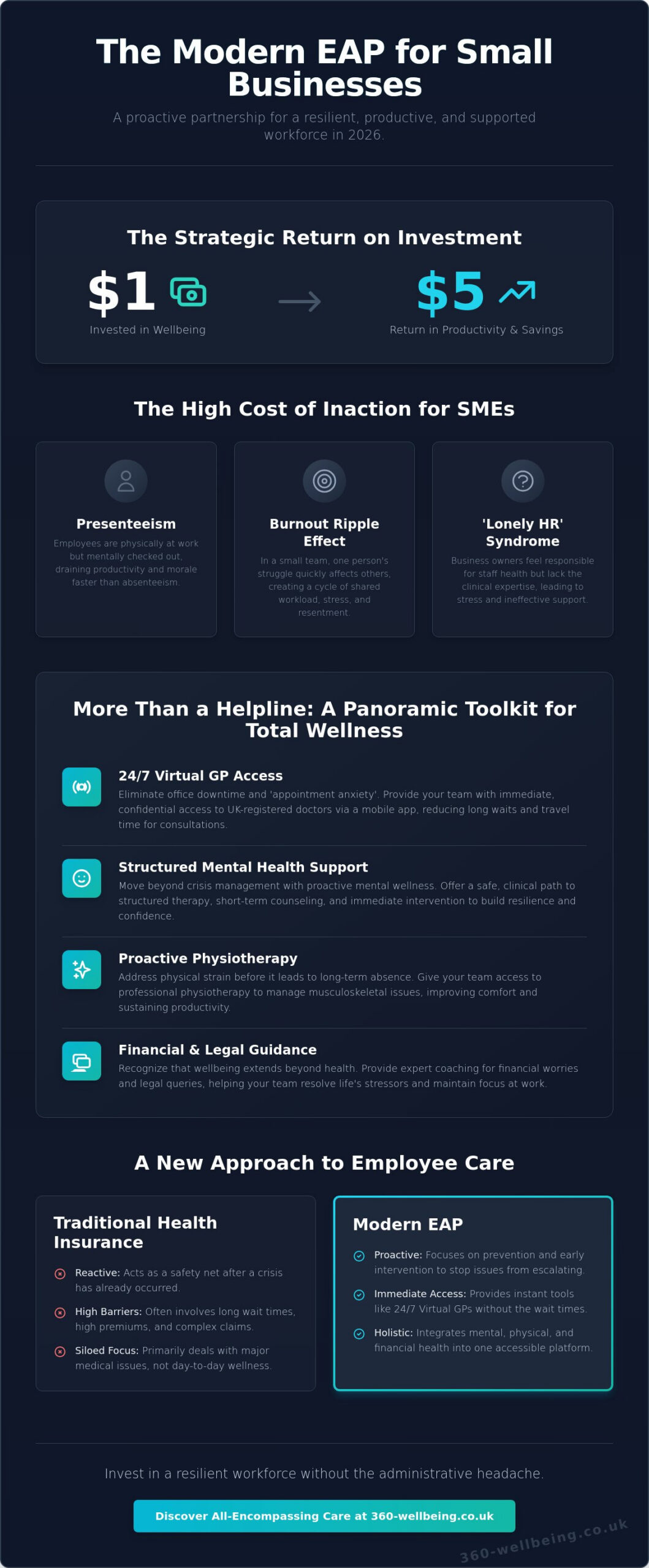
Did you know that for every $1 you invest in your team’s wellbeing, your business could see a return of up to $5 in reduced costs and improved output? In 2026, an employee assistance program for small business has moved far beyond a simple “break glass in case of emergency” service. It’s now a proactive partnership that helps you manage the rising costs of absenteeism while providing the expert care your staff deserves. You likely feel the weight of your team’s mental health on your shoulders, yet you shouldn’t have to be a clinical expert to be a great boss.
It’s exhausting to juggle multiple health platforms while worrying if your benefits package is actually competitive enough to keep your best people. We understand that you want a resilient workforce without the administrative headache of complex systems. This guide will show you how a modern, digital-first EAP can protect your business, boost retention, and provide holistic support your team will actually use. We’ll explore the latest trends in proactive care, from 24/7 Virtual GPs and mental health support to financial coaching and physiotherapy, giving you a clear roadmap to a healthier, more harmonious workplace.
Key Takeaways
- Discover how a modern employee assistance program for small business integrates mental, physical, and financial health to meet the evolving expectations of today’s workforce.
- Learn how 24/7 Virtual GP access and structured mental health support can reduce office downtime while providing your team with reliable, clinical expertise.
- Explore the strategic advantages of a holistic benefits package, including its power to boost long-term employee retention and engagement.
- Identify the essential criteria for choosing a wellbeing partner, from mobile app accessibility to the breadth of support services like financial advice and physiotherapy.
Why Employee Assistance Programs are Essential for Small Businesses in 2026
By 2026, the definition of a healthy workplace has fundamentally shifted. An Employee Assistance Program is no longer just a dusty brochure in a desk drawer; it’s a living, breathing support system designed for the unique pressures of small teams. We see wellbeing as a professional necessity and a human entitlement rather than a corporate luxury. For many leaders, an employee assistance program for small business serves as a bridge between high-level clinical expertise and the daily reality of managing a growing company.
Staff expectations have evolved. Your team members now look for panoramic support that recognizes them as whole people. They want to know that if they’re struggling with a financial worry, a legal query, or a mental health hurdle, their employer has already provided a path to resolution. Moving beyond a “checkbox exercise” means investing in a platform that offers foresight and durability. It’s about being a partner in your employees’ long-term success rather than just a source of a paycheck. When you provide tools like life coaching or legal support, you’re telling your team that their stability matters to you.
Small business owners often face “Lonely HR” syndrome. You feel a deep responsibility for your staff’s health but lack the specialized training to manage complex mental or physical health cases. An EAP acts as your external support team. It provides a structured, professional path forward, allowing you to remain a supportive employer without the stress of being an amateur counselor. This partnership creates a sense of safety and order that is essential for workplace harmony.
The Hidden Cost of Doing Nothing
Ignoring staff wellbeing carries a heavy price tag. Presenteeism, where employees are physically at work but mentally checked out, can drain your margins faster than total absenteeism. In a small team, the “ripple effect” is intense. When one person is unwell, their workload falls on others, leading to a cycle of burnout and resentment. A proactive EAP reduces long-term sickness rates by catching issues early through services like physiotherapy or mental health support, ensuring your team remains resilient and productive.
EAP vs. Traditional Health Insurance
While traditional health insurance often acts as a reactive safety net after a crisis occurs, an EAP focuses on proactive assistance. It’s often a more accessible entry point for SMEs because it provides immediate tools like 24/7 Virtual GP access and financial support without the wait times or high premiums associated with traditional medical cover. These two approaches can work together to provide panoramic health coverage, but for many small businesses, the EAP is the essential foundation that supports the team’s daily vitality and keeps the business moving forward.
Core Components of a Modern EAP: More Than Just a Helpline
A truly modern employee assistance program for small business acts as a panoramic toolkit for your team’s total wellness. It moves away from the outdated model of a simple phone number that nobody calls. Instead, it provides a unified narrative of care that blends physical, mental, and social health into a single, accessible platform. Modern programs offer confidential assessments, short-term counseling, referrals, and follow-up services that address the root causes of workplace stress before they escalate into long-term absence.
Mental health support is the heartbeat of this system. It provides a safe, clinical space for everything from immediate crisis intervention to structured therapy sessions. By offering professional guidance, you empower your staff to navigate life’s challenges with durability and confidence. This isn’t just about crisis management; it’s about proactive vitality and ensuring every team member feels genuinely looked after. It’s about balance.
Physical Health: The Virtual GP Advantage
Small teams often struggle when an employee needs to attend a mid-day medical appointment. A 24/7 Virtual GP changes that dynamic entirely. By offering a digital gateway to UK-registered doctors, you eliminate the need for employees to spend hours waiting in local surgeries or taking half-days for a ten-minute consultation. This reduces “appointment anxiety” and keeps your business moving. When you pair this with physiotherapy to manage physical limitations, you create a workplace that feels both scientifically grounded and deeply personal.
Financial and Legal Support
Life doesn’t stop at the office door. Stressors from home, like debt or legal disputes, inevitably impact productivity and focus. EAP providers reported a 40-60% increase in the use of financial counseling services between 2023 and 2025, highlighting how essential these tools have become. By providing financial support and debt advice, you help alleviate the heavy burden of cost-of-living pressures. Complimentary will writing and legal helplines further ensure that your team has the foresight and protection they need for their families’ futures.
Finally, adding 360 Rewards and life coaching helps transform your benefits package from a simple safety net into a desirable lifestyle perk. These rewards boost morale through everyday savings, while life coaching helps employees reach their personal and professional goals. You can explore how these individual elements fit together by viewing our comprehensive wellbeing services. Choosing an employee assistance program for small business that actually gets used requires this kind of all-encompassing, modern approach.
The Strategic ROI: How EAPs Protect Small Business Productivity
Investing in an employee assistance program for small business isn’t just a compassionate choice; it’s a strategic move to safeguard your bottom line. Small businesses often operate with lean teams where every individual’s contribution is vital. When a key player struggles, the impact is felt immediately across the entire organization. Leading industry research shows that employers save an estimated £3 to £5 for every £1 invested in an EAP through lower health costs and reduced claims. These savings aren’t just theoretical. They manifest as reduced disruption and a more durable workforce that can weather the pressures of a competitive market.
The psychological impact of feeling “looked after” cannot be overstated. When employees know they have access to 24/7 Virtual GPs or mental health support, their engagement with the company deepens. They aren’t just working for a paycheck; they’re working for an organization that values their human entitlement to health. This sense of partnership builds a resilient culture where staff are 2 to 10 times more likely to stay with the company if they engage with mental health platforms. Compare the modest monthly subscription of an EAP to the cost of replacing an employee, which typically ranges from 30% to 50% of their annual salary, and the financial logic becomes undeniable.
Small business owners in the UK often find themselves at a disadvantage when competing for talent against global firms with massive HR budgets. However, an employee assistance program for small business levels the playing field by providing high-quality, clinical-grade support that feels personal and accessible. Beyond the human benefit, the data-driven insights provided by anonymous reporting allow managers to spot team-wide issues, such as rising stress levels or physical strain, before they lead to a crisis. This foresight is essential for maintaining workplace harmony and long-term vitality.
Reducing Absenteeism and Presenteeism
Early intervention is the key to maintaining a steady rhythm in your business. By providing immediate access to physiotherapy or life coaching, you prevent minor physical strains or personal hurdles from escalating into long-term absences. Presenteeism, where staff show up but are unable to function at full capacity due to stress or illness, is often more expensive than absenteeism because it leads to errors and poor morale. By addressing stress and burnout proactively, an EAP can reduce absenteeism by up to 27%, effectively reclaiming lost hours for your business.
Strengthening Employer Brand
In the current talent war, small businesses must offer more than just a competitive salary. A robust benefits package that includes legal support and complimentary will writing serves as a powerful differentiator in your job descriptions. It demonstrates a commitment to total wellness that larger, more bureaucratic corporations often struggle to match. This supportive culture naturally reduces staff turnover in high-pressure environments, fostering long-term loyalty and a reputation as an employer of choice.
Choosing the Right Partner: A Checklist for SME Leaders
Selecting a partner for your employee assistance program for small business is a significant decision that impacts the long-term durability of your company. It’s a consultation between your vision for a healthy workplace and a provider’s ability to deliver clinical excellence with a human touch. You need to look beyond the surface level to ensure the support is truly all-encompassing and manageable for your specific needs. A partner should feel like a knowledgeable authority that remains approachable and deeply invested in your team’s success.
When reviewing potential providers, use this checklist to ensure they meet the modern standards of 2026:
- Breadth of Care: Does the provider offer more than just a helpline? Look for integrated services like physiotherapy, life coaching, and financial support to address every pillar of wellness.
- Clinical Integrity: Verify that all GPs are UK-registered and mental health therapists hold recognized professional accreditations.
- Financial Clarity: Small margins require transparent, per-employee pricing without hidden setup fees or tiered costs that penalize your growth.
- The Human Touch: Your provider should offer a warm, empathetic partnership rather than a cold, automated interface.
Engagement is Everything
A high-quality employee assistance program for small business is only effective if your team actually uses it. Stigma and lack of awareness often keep utilization rates low in traditional models, sometimes dipping below 5%. When evaluating partners, ask specifically about their onboarding tools and communication strategies. Do they provide a user-friendly mobile app for on-the-go support? For diverse or remote teams, 24/7 availability is a professional necessity that ensures help is available whenever it’s needed, regardless of the time or location.
Scalability and Flexibility
Your business isn’t static, and your benefits shouldn’t be either. Look for platforms that offer monthly per-employee subscriptions, allowing you to scale your support as your team size fluctuates. This flexibility ensures you aren’t paying for empty seats or struggling with rigid, long-term contracts. Seamless integration into your existing management workflows is essential to avoid adding to your administrative burden, creating a sense of safety and order for both you and your staff. You can see how these elements come together in a single, unified narrative by exploring our flexible EAP solutions for SMEs.
360 Wellbeing: Empowering Small Teams with All-Encompassing Care
At 360 Wellbeing, we believe that your business is more than just a company; it’s a community of individuals working toward a shared goal. Our employee assistance program for small business is designed to protect that community by providing a holistic solution that feels both scientifically grounded and deeply personal. We’ve moved away from the cold, clinical approach of traditional providers to offer a partnership that reflects the values of the SMEs we serve. By acting as an expert caregiver, we help you navigate the complexities of workplace health with foresight and compassion.
The 360 difference lies in our ability to integrate multiple pillars of health into a single, unified experience. We don’t just offer isolated services. We provide a seamless blend of 24/7 Virtual GP access, Mental Health Support, and Financial Support & Debt Advice. This completeness ensures that no matter what challenge your employee faces, there is a clear and structured path forward. It creates a sense of safety and order within your team, allowing everyone to focus on their best work while knowing their wellbeing is a professional necessity rather than a luxury.
Panoramic Care for Your Most Valuable Asset
Our platform brings “corporate-grade” benefits to sole traders and small teams who might have previously felt these tools were out of reach. With core pillars like 24/7 Virtual GP consultations and structured mental health therapy sessions, your staff receives the clinical expertise they need without unnecessary delays. We also include the 360 Rewards marketplace, which puts money back into your employees’ pockets through everyday savings. This combination of physical, mental, and social support ensures that your benefits package is both durable and highly valued by your workforce, regardless of your team’s size.
A Partnership Built on Trust
We’re committed to making complex health and wellbeing topics feel manageable for you and your staff. Our model avoids the confusing jargon often found in traditional medical services, opting instead for a transparent, simple support system. You won’t find complex insurance terminology or hidden exclusions here; just a steady, methodical approach to total wellness. If you’re ready to transform your workplace culture and build a more resilient team, we’re here to guide you through every step of the journey. We invite you to book a consultation with 360 Wellbeing today to see how our panoramic approach can support your business goals.
Building a Resilient Future for Your Team
Choosing to implement a modern employee assistance program for small business is a powerful step toward creating a culture where every individual can thrive. You’ve seen how shifting from a reactive safety net to a proactive wellbeing platform protects your margins and honors the human entitlement to health. By integrating clinical expertise with daily support, you empower your staff to navigate life’s complexities with durability and confidence. It’s about more than just business metrics; it’s about fostering workplace harmony and long-term vitality.
Our approach provides the foresight your business needs to stay competitive. With 24/7 access to UK-registered GPs and holistic support that includes financial and legal advice, we offer durable and customizable care for teams of all sizes. You don’t have to manage these complex health challenges alone. We’re ready to partner with you to make comprehensive wellness an accessible reality for your company. Discover the 360 Wellbeing EAP for Small Businesses and take the first step toward a healthier, more engaged workforce today. Your team’s success starts with their wellbeing, and we’re here to help you protect it.
Frequently Asked Questions
What is an Employee Assistance Program (EAP) for small business?
An EAP is a comprehensive support system designed to help staff manage personal and professional challenges that might impact their work or home life. It provides a digital-first gateway to services like mental health support, 24/7 Virtual GPs, and financial advice. Unlike traditional corporate benefits, these programs are tailored to the agility of smaller teams, ensuring every member has access to panoramic care that supports their total wellness.
How much does an EAP cost for a small company in the UK?
Pricing for these programs typically follows a subscription model based on the number of employees in your team. While costs vary across the industry depending on the breadth of services included, small businesses often find it to be a highly accessible entry point compared to other health benefits. You should check with individual providers for specific quotes that match your current headcount and required service levels.
Is an EAP tax-deductible for small businesses?
Yes, in many cases, an employee assistance program for small business is considered a deductible business expense in the UK. Because it’s designed to maintain the health and welfare of your workforce, it often qualifies for tax relief. Tax regulations can be complex, so it’s always best to consult with your accountant or a qualified tax professional to confirm how these benefits apply to your specific situation.
Will my employees actually use an EAP?
Usage depends heavily on how easy the platform is to access and how well you communicate its benefits. Modern programs that offer user-friendly mobile apps and 24/7 Virtual GP access tend to see much higher engagement than older, phone-only models. When you provide holistic tools like 360 Rewards and life coaching, the program becomes a part of their daily lifestyle rather than just a crisis resource.
What is the difference between an EAP and private medical insurance (PMI)?
The primary difference lies in the proactive nature of an EAP compared to the reactive focus of medical insurance. While insurance often covers major medical treatments or surgeries, an EAP provides immediate, daily support for mental health, physiotherapy, and financial stressors. It’s a more accessible way to handle the frequent, smaller health hurdles that can lead to workplace disruption if left unaddressed.
Can an EAP help with staff retention in a small business?
Providing a robust support system is a powerful way to build long-term loyalty and reduce staff turnover. Employees are more likely to stay with a company that views their wellbeing as a professional necessity rather than a luxury. By offering high-value perks like complimentary will writing and debt advice, you demonstrate a deep investment in their future, making your business a more attractive place to work.
How long does it take to set up an EAP for my team?
Setting up an employee assistance program for small business is usually a swift and methodical process that can often be completed within a few business days. Once you’ve chosen your required services, the onboarding phase involves registering your team and providing them with their login credentials. A professional partner will guide you through this transition, ensuring that your staff can start accessing support with minimal administrative delay.
Is employee usage of the EAP confidential from the employer?
Absolute confidentiality is a cornerstone of any professional wellbeing service to ensure a sense of safety for all users. You’ll receive high-level, anonymous data reports that help you identify team-wide trends, but you’ll never see details regarding which individual accessed specific services like mental health support or legal advice. This privacy is essential for maintaining trust and encouraging employees to seek help early.