
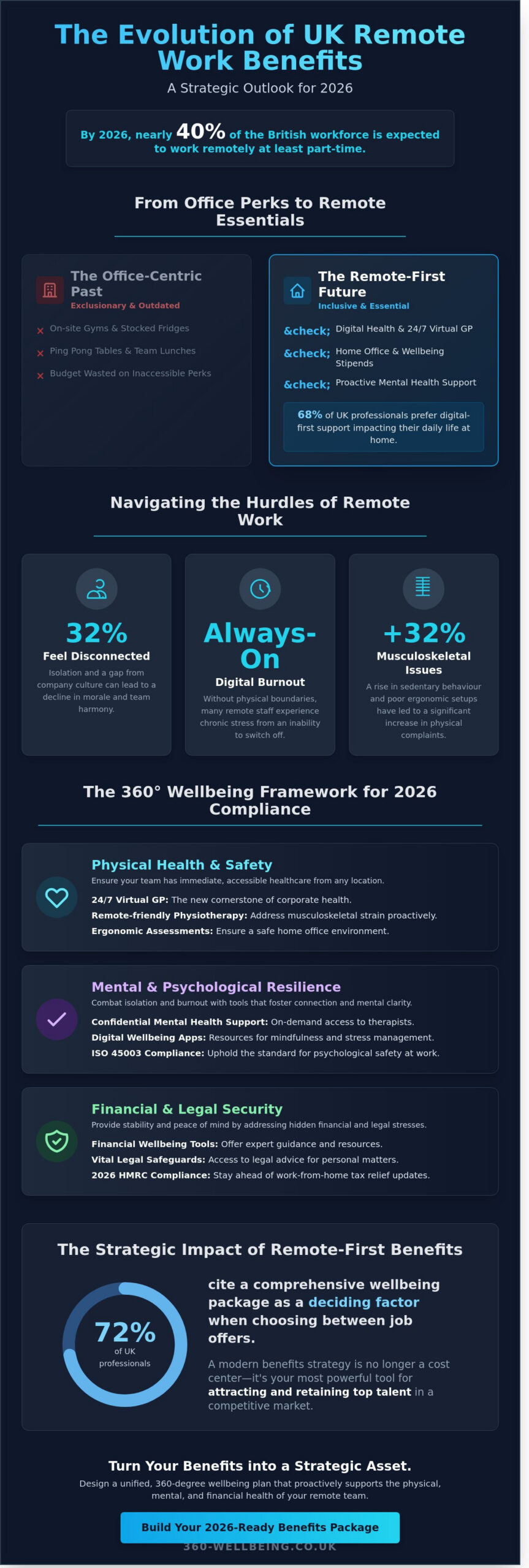
What if your most expensive perks are actually driving your best talent away because they no longer fit a home-office reality? By 2026, nearly 40% of the British workforce is expected to work remotely at least part-time, making it essential to rethink how you provide employee benefits for remote workers uk. You likely recognize the challenge of fostering a vibrant culture when your team is physically apart, especially as the 2026 tax relief changes and rising costs of traditional insurance put extra pressure on your budget and your people’s peace of mind.
It’s vital to bridge this gap with a strategy that feels both personal and practical. We’re here to help you design a comprehensive, tailored suite of benefits that prioritizes mental resilience, financial security, and genuine connection to combat the isolation many remote staff feel. You’ll discover a structured framework to improve retention and productivity while staying fully compliant with 2026 UK employment standards. We will walk through the essential pillars of a 360-degree wellbeing plan that turns your benefits from a static cost into a strategic asset for your remote team’s long-term vitality.
Key Takeaways
- Understand the transition from traditional office perks to the “remote essentials” required to support a distributed workforce in 2026.
- Learn how to provide clinical reassurance through 24/7 Virtual GP services, ensuring your team has immediate access to healthcare from any location.
- Discover how to design high-impact employee benefits for remote workers uk that address hidden financial stresses and provide vital legal safeguards.
- Stay compliant with the latest 2026 HMRC work-from-home tax relief updates and international ISO 45003 standards for psychological safety.
- Explore how a unified, 360-degree wellbeing platform can scale with your business to proactively support physical, mental, and financial health.
The Evolution of Remote Employee Benefits in the UK (2026)
The landscape of the British workplace underwent a permanent transformation following the 2020 pandemic. By 2026, remote work is no longer a temporary adjustment but a core structural pillar for roughly 44% of the UK workforce. This shift has fundamentally altered how HR leaders approach employee benefits for remote workers uk. What were once considered “nice-to-have” perks have evolved into essential health and productivity requirements. Understanding the history of remote work helps us see why the old models of corporate care no longer fit our modern, distributed reality.
In the current UK labor market, where talent retention is a primary challenge, benefits serve as a vital strategic asset. A 2025 industry report indicated that 72% of UK professionals cite a comprehensive wellbeing package as a deciding factor when choosing between job offers. We’re seeing a move away from generic insurance towards a proactive and tailored approach that addresses the unique pressures of working from home. Companies that fail to adapt their support systems risk losing their most resilient and experienced staff to competitors who offer more holistic care.
- Shift from superficial perks to core health essentials.
- Focus on digital-first accessibility for all health services.
- Recognition of the home office as a primary site of occupational health.
- Emphasis on mental resilience and social connectivity.
The Death of the Ping Pong Table Mentality
Traditional office-based perks like stocked fridges or on-site gym memberships now represent a wasted budget for distributed teams. Remote staff view these legacy benefits as exclusionary because they can’t access them. A 2024 survey of UK professionals found that 68% prefer digital-first support that impacts their daily life at home. Businesses are moving toward a supportive model that prioritizes home-life balance over superficial office culture. It’s about trading the ping pong table for comprehensive health support or home office stipends that create a sustainable, professional environment. This evolution reflects a deeper respect for the employee’s personal space and time.
Current Remote Work Challenges in the UK
While flexibility is a major draw, the UK’s remote workforce faces specific hurdles that impact long-term vitality. Isolation remains a primary concern, with a 2025 study showing that 32% of remote workers feel disconnected from company culture. This social gap often leads to a decline in workplace harmony and individual morale.
The “always-on” culture is another significant risk. Without the physical boundary of an office, digital burnout has surged. Many employees find themselves answering emails late into the evening, leading to chronic stress. Physically, the lack of a commute has removed incidental movement. This sedentary behaviour contributes to a rise in musculoskeletal issues, as many staff still work from kitchen chairs rather than ergonomic setups. Addressing these risks through tailored employee benefits for remote workers uk is now a fundamental right rather than a luxury.
Core Components of a Modern Remote Benefits Package
Designing a competitive suite of employee benefits for remote workers uk involves a clear distinction between statutory minimums and premium health offerings. While the UK government’s flexible working guidelines provide the legal framework for remote arrangements, they don’t address the day-to-day health challenges of a home-based workforce. Employers who excel in this area move beyond basic pension contributions to offer digital-first solutions that mirror the convenience of their staff’s working lives. This 360-degree approach ensures that every team member feels seen and supported, regardless of their postcode.
- Statutory requirements: Compliance with pension auto-enrolment, holiday pay, and basic health and safety assessments for home offices.
- Premium offerings: Private medical insurance extensions, digital health tools, and tailored wellbeing allowances.
- Physical support: Remote-friendly physiotherapy to address the 32% increase in musculoskeletal issues reported by home workers since 2020.
24/7 Virtual GP: The Remote Worker’s Lifeline
Virtual GP services have become the cornerstone of modern corporate health, providing a vital bridge between the employee and professional medical advice. For a remote team, the ability to book a video consultation around a flexible schedule is a game changer. It eliminates the stress of local surgery wait times and travel. Data suggests that 70% of GP consultations can be handled effectively via video, which directly reduces absenteeism. When an employee can secure a prescription or a referral from their living room, they return to health faster and feel a deeper sense of loyalty to their employer. You can explore how these integrated health solutions can transform your team’s productivity.
Mental Health and Proactive Resilience
Modern benefits must move beyond basic Employee Assistance Programmes (EAPs), which often suffer from low engagement rates of less than 5% in many UK firms. A proactive strategy prioritises direct access to mental health therapy sessions and professional life coaching. This approach helps staff build resilience before a crisis occurs. Creating a culture where seeking support is the norm requires more than just a PDF handbook. It involves providing tools for professional development and personal growth. By integrating these services, businesses foster a workforce that is not only mentally healthy but also emotionally empowered to handle the unique pressures of remote collaboration. Providing employee benefits for remote workers uk that focus on the mind as much as the body creates a sustainable foundation for long-term success.
Physical wellbeing shouldn’t be overlooked just because the team isn’t in a central office. Health coaching and remote-friendly physiotherapy sessions help prevent the sedentary habits that often lead to chronic pain. These proactive measures ensure that your team remains vital and energised, turning wellbeing from a checkbox exercise into a strategic corporate asset.
Financial and Legal Resilience for Distant Teams
Financial anxiety is a silent productivity killer that often goes unnoticed in a virtual environment. While office-based staff might find distraction in communal spaces, remote workers often sit alone with their household balance sheets. Recent data suggests that nearly 47% of UK employees admit that financial concerns directly impact their work performance. This pressure creates a cognitive load that makes it difficult to maintain the high levels of focus required for remote roles. To counter this, businesses must view financial wellbeing as a core pillar of their employee benefits for remote workers uk, rather than an optional extra.
Integrating discount marketplaces helps ease the daily pressure of the UK cost-of-living climate. When people save on groceries, fuel, or utilities through work perks, they feel a direct, tangible link between their employer and their personal stability. This proactive care is essential for building resilience. The CIPD’s flexible working factsheet highlights how autonomy in work patterns should be paired with structural support to ensure long-term success. By aligning financial perks with the flexibility of home working, you create a 360-degree support system that protects the individual from every angle.
Debt Advice and Financial Support
Providing confidential debt helplines isn’t just about crisis management; it’s a vital form of preventative care. These tools allow team members to address mounting bills or credit issues before they escalate into severe mental health crises. When a worker knows they have access to professional financial support for employees, their mental space clears. There is a proven correlation between financial peace of mind and increased employee engagement. A person who isn’t worried about a pending mortgage payment is a person who can contribute fully to your business goals.
Legal Safeguards and Will Writing
Legal benefits are often overlooked in standard packages but they carry immense emotional weight. Offering complimentary will writing is a deeply empathetic gesture that looks after an employee’s family and future. It’s a low-cost benefit for the employer that provides high-value peace of mind for the worker. During personal crises, such as a bereavement or a property dispute, having access to a 24/7 legal support line can reduce stress significantly. These “unseen” benefits are the ones that build deep, lasting loyalty. They demonstrate that the business is a modern, forward-thinking partner invested in the user’s success beyond the digital workspace. By providing these safeguards, you ensure your employee benefits for remote workers uk stand out in a competitive market while fostering a sense of total security.
Implementation and 2026 Compliance Checklist
Structuring your employee benefits for remote workers uk requires a blend of legal foresight and genuine care. As the landscape of flexible work matures, the focus shifts from temporary fixes to long-term, sustainable systems. This ensures your team feels supported while your business remains protected against evolving regulatory standards.
The 2026 HMRC WFH Tax Relief Update
HMRC has signaled a tighter approach to tax relief as we move toward the middle of the decade. While the pandemic era saw relaxed rules, the 2026/27 tax year marks a significant shift for remote staff as HMRC tightens the criteria for home office expense claims to ensure they meet the strict “necessarily” requirement. This means the standard £6 per week tax relief will likely be unavailable to those who choose to work from home rather than being contractually required to do so because their employer lacks office space.
Employers can still provide essential equipment tax-free, including ergonomic chairs, monitors, and laptops, provided there is no significant private use. However, reimbursing utility bills now carries higher “Benefit in Kind” risks. You should audit your current expense policies to ensure they distinguish between necessary equipment and optional lifestyle subsidies to avoid unexpected tax liabilities for your staff.
Building a Compliant Wellbeing Strategy
ISO 45003 provides the first global standard for managing psychosocial risks in the workplace. For remote teams, this means moving beyond physical health to address the risks of isolation, blurred work-life boundaries, and digital fatigue. A compliant strategy identifies these “psychosocial hazards” through regular, anonymous feedback loops. Gathering data through quarterly surveys allows you to tailor your benefits to actual needs rather than making assumptions about what your team values.
Clear communication is the bridge to high adoption. Use a multi-channel approach, including dedicated Slack channels, monthly “wellbeing spotlights,” and digital handbooks, to ensure every remote employee understands how to access their perks. When benefits are buried in a PDF on an obscure server, they don’t provide value; they must be integrated into the daily workflow.
When you implement modern employee benefits for remote workers uk, the data should reflect a healthier, more engaged workforce. Measuring the ROI of your wellbeing platform is essential for continued investment. A 2023 Deloitte report highlighted that for every £1 spent on mental health support, UK employers see an average return of £4.70 through reduced presenteeism and turnover. To track your success, monitor these three metrics:
- Absence Frequency Rates (AFR): Track if short-term sickness drops after introducing 24/7 GP access.
- Employee Net Promoter Score (eNPS): Measure the likelihood of staff recommending your company as a great place to work.
- Benefit Utilisation Rate: Aim for at least 60% engagement across your digital platform.
Moving away from legacy, paper-based systems is the final step. Digital platforms offer a “single pane of glass” view for both HR and employees. This transition involves auditing your existing perks, migrating data to a secure cloud-based hub, and running a small pilot group to iron out any navigation issues before a full company rollout.
Ready to modernise your approach? You can explore our comprehensive wellbeing solutions to see how a digital-first strategy supports your remote team’s resilience.
Why 360 Wellbeing is the Ultimate Remote-First Solution
Choosing the right employee benefits for remote workers uk requires a shift from traditional office perks to a more integrated, holistic strategy. We’ve built a platform that treats physical, mental, and financial health as a single ecosystem. This unified approach ensures that your team feels supported regardless of their physical location. It isn’t just about providing a login; it’s about creating a culture of care that translates through a screen.
Our platform is designed for flexibility. Whether you are a sole trader looking for personal resilience or an SME managing a growing team, the system scales to meet your specific needs. A standout feature is the 360 Rewards marketplace. This portal gives your staff access to thousands of discounts on everyday essentials, from groceries to travel. In a climate where every pound counts, providing tangible financial savings is a powerful way to show your team they are valued.
A Complete 360-Degree Perspective
We simplify the complex world of healthcare by housing a 24/7 virtual GP, professional therapy sessions, and legal advice in one accessible app. This integration removes the barriers that often prevent remote staff from seeking help. For HR managers, this means a significant reduction in administrative burden. Centralizing these services can save a business owner hours of coordination time every week. UK-based firms using this model have reported a 20% improvement in employee retention rates over a 12-month period because the support feels immediate and personal.
Getting Started with Your Remote Benefits
Implementing a high-quality employee benefits for remote workers uk package shouldn’t be a logistical nightmare. We utilize a straightforward per-employee subscription model that provides clear cost certainty for your budget. The onboarding process is designed to be seamless; we handle the technical setup so you can focus on your business. Most teams are fully operational within 48 hours of sign-up, ensuring there is no gap in your duty of care. It’s time to move toward a proactive health strategy that empowers your workforce to thrive from anywhere.
Future-Proofing Your Remote Strategy for 2026 and Beyond
Building a resilient team requires moving beyond traditional perks to embrace a holistic, 360-degree approach to wellness. By 2026, successful UK businesses will distinguish themselves by how they integrate mental health support and physical health accessibility into their digital infrastructure. You’ve seen that modern employee benefits for remote workers uk must prioritize proactive care over reactive fixes to maintain long-term productivity. Ensuring your package remains compliant with evolving UK employment standards is a strategic necessity, not just an administrative task. It’s about protecting your most valuable asset: your people.
We’re here to help you bridge the gap between corporate goals and individual vitality. Our platform provides your team with 24/7 access to UK-registered Virtual GPs, ensuring medical advice is always a click away. We pair this clinical expertise with comprehensive Employee Assistance Programmes (EAP) and mental health support to create a true safety net. Plus, your staff can enjoy thousands of everyday savings through our 360 Rewards system. It’s time to transform your benefits from a checklist into a competitive advantage.
Explore our 360-degree remote employee benefits platform and start building a healthier, more connected workforce today.
Frequently Asked Questions
What are the statutory employee benefits for remote workers in the UK?
Remote workers in the UK are legally entitled to the same statutory benefits as office-based staff, including 5.6 weeks of paid annual leave and enrolment in a workplace pension. Employers must contribute at least 3% of qualifying earnings into this pension scheme. You’re also responsible for providing Statutory Sick Pay, which stands at £116.75 per week as of April 2024, ensuring your team has a financial safety net during illness.
Can remote workers still claim tax relief for working from home in 2026?
You can only claim the £6 per week tax relief in 2026 if your employer requires you to work from home because they don’t have an office or your job involves travel. HMRC tightened these rules in April 2022 to exclude those who work remotely by choice. If you meet the strict criteria, you can claim relief on the exact amount of extra costs for heating and water, provided you have the receipts to prove it.
How do I support the mental health of employees I never see in person?
Supporting distant teams requires a proactive approach that focuses on building resilience and emotional safety. Deloitte’s 2024 research shows that poor mental health costs UK employers £51 billion annually, making an Employee Assistance Programme (EAP) a vital strategic asset. Regular video check-ins that focus on the person rather than the project help bridge the digital gap, ensuring no one feels isolated or overlooked in their home environment.
What is the most valued benefit for remote workers in the UK?
Flexibility remains the top priority, but health-related employee benefits for remote workers uk have seen a significant rise in demand. A 2023 CIPD report found that 40% of employees value flexible start and finish times above all else. For remote staff, this flexibility paired with a health cash plan provides a sense of total wellness, allowing them to manage their physical health without the stress of travel or rigid schedules.
Is a Virtual GP service better than traditional private medical insurance for remote teams?
Virtual GP services offer faster access to clinical expertise, which is often more practical for remote workers than traditional Private Medical Insurance (PMI). While PMI covers major surgeries, a Virtual GP provides 24/7 consultations, allowing employees to get prescriptions or referrals from home within hours. We find that a 360-degree approach often combines both, ensuring your team has support for minor ailments and major health events alike.
How much does an employee wellbeing platform cost for a small business?
Small businesses can expect to pay between £2 and £10 per employee each month for a comprehensive wellbeing platform. These costs depend on the level of clinical support and the variety of features, such as gym discounts or mental health resources. Investing in a digital platform is often more cost-effective than standalone insurance, providing a tailored solution that grows alongside your business.
How can I ensure my remote workers actually use their benefits?
The best way to drive engagement with employee benefits for remote workers uk is to host all resources in one accessible digital hub. Research indicates that 50% of staff don’t use their perks simply because they find the sign-up process too complex. Sending monthly, empathetic communications that highlight a specific benefit, like a mindfulness app or a dental claim, keeps the value of the package fresh in their minds.
What legal support should I provide to my remote employees?
Offering access to a confidential legal helpline through an EAP is a powerful way to support your team’s holistic health. Remote workers often face personal stresses, such as tenancy disputes or probate issues, which can impact their productivity and focus. Providing professional legal guidance as a standard benefit shows you’re a partner in their success, looking out for their interests beyond the digital workspace.