
Are you noticing a rise in staff absenteeism, or a subtle dip in team focus and productivity? When employees are constantly worried about rising living costs and personal debt, their stress doesn’t stay at home-it directly impacts their work, your team’s morale, and ultimately, your bottom line. As we look towards 2026, UK employers are realising that traditional salary increases are no longer enough to retain top talent. The solution lies in creating a genuinely supportive workplace culture, and a crucial pillar of this is providing proactive financial support.
This comprehensive guide provides a clear, actionable framework to do just that. We will move beyond the reactive and explore how to build a tailored financial wellbeing strategy that empowers your team, legally and effectively. You will discover how to reduce costly staff turnover, build profound mental health resilience, and foster a focused, engaged workforce that feels secure and truly valued for the long term.
Key Takeaways
- Discover why proactive employee financial health is now a critical component of modern workplace wellness and a key driver of productivity in the UK.
- Compare the ROI of a £1,000 pay rise against a comprehensive wellbeing package to make more tax-efficient and impactful investments in your team.
- Learn a clear, five-step process for implementing a tailored financial support strategy, starting with auditing your team’s specific pain points.
- Explore how integrating financial advice with mental health support and 24/7 Virtual GP access creates total employee resilience against stress.
What is Financial Support in the Modern Workplace?
In 2026, the definition of workplace support has expanded far beyond the monthly paycheck. True financial wellbeing is no longer a fringe benefit but a central pillar of a modern, resilient workforce. As the conversation around employee wellness evolves, we see a clear shift: after years of focusing on mental and physical health, financial health has rightfully emerged as the critical new frontier. This proactive approach recognises that an employee’s financial stability is intrinsically linked to their overall vitality and performance.
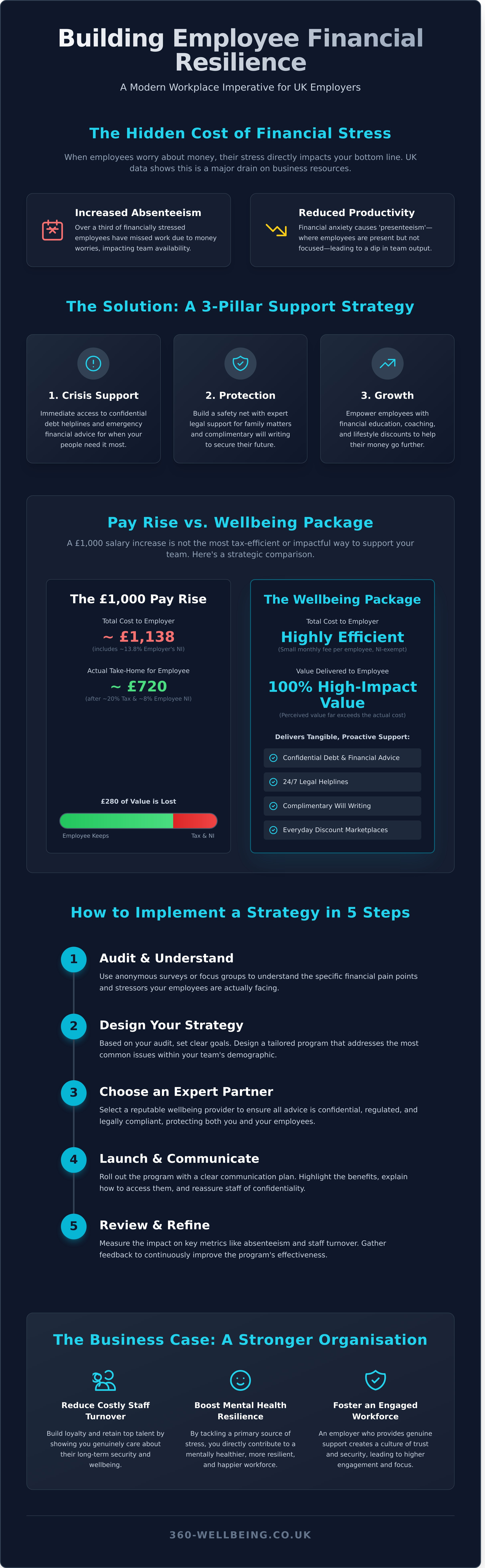
The connection between financial insecurity and workplace disruption is undeniable. Persistent money worries are a significant source of stress, directly contributing to poor mental health, reduced focus, and increased absenteeism. In fact, recent UK data reveals the scale of the issue: a 2023 PwC survey found that over a third of financially stressed employees have missed work due to their money worries, creating a tangible impact on team productivity and business continuity. Providing comprehensive financial support isn’t just compassionate; it’s a strategic imperative for a healthy organisation.
The Three Pillars of Financial Wellbeing
A truly holistic approach to employee financial health rests on three core pillars, designed to provide a complete circle of care for every stage of an employee’s journey:
- Crisis Support: Immediate, confidential access to debt helplines and emergency financial advice for when your people need it most.
- Protection: Building a safety net with services like expert legal support for family matters and complimentary will writing to secure their future.
- Growth: Empowering employees with practical financial education, coaching, and meaningful lifestyle discounts to help their money go further.
Why 2026 Requires a New Approach
The persistent legacy of the UK’s cost-of-living crisis has reshaped employee expectations. This environment demands a fundamental change in how employers provide care, moving away from reactive “perks” and toward proactive, integrated support systems. This represents a significant evolution in our understanding of what employee benefits are, shifting the focus from temporary morale boosts to tools that build genuine, long-term resilience. By investing in this deeper level of financial support, you not only protect your team’s wellbeing but also cultivate powerful employer branding built on trust, security, and authentic care.
Types of Financial Support Every UK Business Should Offer
Moving beyond the payslip, a truly comprehensive wellbeing strategy provides a proactive safety net for life’s financial challenges. Modern financial support is not about handouts; it’s about empowerment. It equips your team with the tools and expert guidance needed to build resilience, navigate uncertainty, and make their salary go further. The most effective programmes balance immediate, practical help with long-term planning security.
Forward-thinking UK businesses are embracing a holistic approach by offering a tailored mix of professional advice and tangible lifestyle benefits. This includes:
- Confidential Debt Advice: Access to impartial experts who can help with budgeting, debt management plans, and financial restructuring.
- 24/7 Legal Helplines: Immediate support for common issues like tenancy disputes, family law, or consumer rights.
- Complimentary Will Writing: A profoundly valuable benefit that provides peace of mind and ensures an employee’s family is protected.
- Discount Marketplaces: Platforms that give your team real-world savings on everyday essentials, from the weekly shop to utility bills.
The Role of Professional Debt and Legal Advice
Financial and legal troubles are deeply personal. By integrating confidential advice helplines into an Employee Assistance Programme (EAP), you remove the stigma of asking for help. Employees can seek support discreetly, without involving their line manager. This is crucial, as employers face significant legal complexities and risks when attempting to provide financial guidance directly. Offering access to regulated, impartial experts protects both the business and the employee, ensuring the advice given is both safe and effective. This approach aligns with the UK Government Guidance on Financial Wellbeing, which recognises the clear link between financial pressure and overall health.
Lifestyle Benefits: Stretching the Salary Further
In a tight economy, even small savings make a significant difference. A dedicated discount platform is a powerful tool for increasing your employees’ real-world purchasing power, helping to offset the rising cost of essentials. This form of financial support provides immediate, tangible value every single day. Beyond the practical savings, these schemes deliver a powerful psychological boost. They act as a consistent reminder that the company is invested in their wellbeing, fostering a culture of appreciation and reward. For a practical example of how this works, see how you can provide meaningful savings with a platform like 360 Rewards.
Financial Support vs. Salary Increases: A Strategic Comparison
While a competitive salary is fundamental, many organisations mistakenly believe that a simple pay rise is the most effective way to alleviate employee financial stress. In reality, a strategic investment in a comprehensive wellbeing package often delivers a far greater, more lasting return for both the business and its people. The immediate appeal of cash can mask deeper needs, whereas targeted support builds genuine long-term resilience.
Consider the real-world impact of a £1,000 investment:
- A £1,000 Pay Rise: After income tax and National Insurance contributions, an employee might only take home an extra £50-£60 per month. This amount is quickly absorbed into household bills, and its positive impact fades. For the employer, this also comes with the added cost of Employer’s NI contributions.
- A Wellbeing Package: The same investment can unlock access to services worth thousands. Benefits like financial advice, debt counselling, and legal support are often highly tax-efficient. This type of proactive financial support provides a tangible safety net that a small cash increase cannot replicate, making it a “stickier” benefit that significantly boosts retention.
The Hidden Costs of Financial Stress
Financial worries don’t stay at home. They manifest as “presenteeism”-where employees are physically at work but mentally distracted, costing UK businesses billions in lost productivity. This stress is a key driver of staff turnover, and with recruitment costs projected to rise steadily towards 2026, proactive intervention is a strategic imperative. Comprehensive support acts as a preventative mental health measure, directly addressing the root cause of anxiety before it escalates.
When to Choose Benefits Over Pay Rises
During times of budget constraint, a benefits package allows you to demonstrate profound value without permanently inflating salary costs. A modest pay rise is easily forgotten, but giving an employee access to legal protection that saves them thousands on conveyancing fees creates powerful, lasting loyalty. This approach moves beyond a transactional relationship to build a genuine culture of care, proving you are invested in their holistic wellbeing, not just their daily output.
How to Implement a Financial Support Strategy in 5 Steps
Implementing a successful financial wellbeing strategy is a proactive journey, not a one-off initiative. By taking a structured, empathetic approach, you can build a framework that not only supports your team through challenges but also empowers them to achieve long-term financial resilience. Here is a clear, five-step path to creating a programme that truly makes a difference.
- 1. Audit Your Workforce: Begin by listening. Use confidential surveys and focus groups to understand the primary financial pain points affecting your employees in the UK. Are they concerned about the rising cost of living, managing debt, or planning for retirement? This insight allows you to tailor your financial support to meet genuine needs.
- 2. Select a Comprehensive EAP: Partner with an Employee Assistance Programme (EAP) that offers more than just basic advice. Look for a provider with dedicated modules covering debt counselling, mortgage advice, and financial planning, all delivered by accredited UK professionals. A robust EAP is the cornerstone of effective support.
- 3. Communicate Clearly and Confidently: How you introduce the programme matters. Launch your initiative with positive, destigmatising language. Emphasise that using these services is a sign of strength and a proactive step towards greater wellbeing. Ensure all communications are clear, accessible, and highlight confidentiality.
- 4. Integrate with Your Mental Health Strategy: Financial health is mental health. Frame your new benefits within your wider wellbeing framework to show a holistic commitment to your staff. This interconnected approach reinforces the message that the business cares about the whole person, not just their performance at work.
- 5. Measure Engagement and Adjust: Your strategy should be dynamic. Regularly review anonymised engagement data and gather direct feedback from staff to understand what is most valuable. Be prepared to adapt your offerings to ensure they remain relevant and impactful over time.
Removing the Stigma Around Financial Help
Launching a programme with empathy is crucial. Frame it as a universal tool for building financial confidence, not just a crisis line. Guaranteeing 100% confidentiality, especially for sensitive services like debt management, is non-negotiable for building trust. Empower your existing Mental Health Champions to advocate for the financial support services, normalising conversations around money and encouraging early, proactive engagement.
Measuring the Success of Your Program
Success can be measured through both quantitative and qualitative data. Track key metrics like absenteeism rates before and after implementation; a reduction often signals a decrease in stress-related absence. Use anonymised usage data from your EAP provider to see which services are most in demand, helping you refine your strategy. Understanding these patterns is key to calculating ROI and addressing The True Cost of High Employee Absenteeism.
The 360 Wellbeing Approach: Total Financial & Health Resilience
True wellbeing is interconnected. Financial stress doesn’t exist in a vacuum; it directly impacts mental and physical health, just as health concerns can create significant financial strain. At 360 Wellbeing, we’ve moved beyond fragmented benefits to offer a truly integrated platform where expert financial guidance works in harmony with comprehensive health support, creating a powerful foundation for total employee resilience.
Our approach is proactive, not just reactive. Imagine an employee using our 24/7 Virtual GP service to quickly resolve a health issue, avoiding prolonged illness, lost income, and the stress that follows. This immediate medical access is a form of preventative financial support. We pair this with dedicated life coaching, which empowers your team members to set clear personal and financial goals, build confidence, and develop the coping strategies needed to navigate life’s challenges without derailing their future.
A Holistic Safety Net for Your Team
We provide a comprehensive safety net that protects your employees from multiple angles. This unified support system is designed for modern businesses, from our home in Oxford to clients all across the UK.
- Cornerstone Family Security: Our complimentary will writing service offers essential peace of mind, ensuring your employees can protect their families’ futures and secure their assets without the prohibitive cost.
- Mental & Financial Synergy: We recognise the profound link between debt and anxiety. Our platform provides access to both confidential mental health therapy and practical debt management advice, addressing the emotional and logistical sides of financial hardship simultaneously.
Getting Started with 360 Wellbeing
Implementing a world-class wellbeing programme shouldn’t be complicated or costly. We’ve designed our onboarding process to be seamless for any business size, from a sole trader to a large enterprise. With transparent pricing, you can embed this vital support into your business as a fixed, manageable monthly cost, making exceptional care an affordable reality.
Ready to see how a 360-degree view of wellbeing can transform your team’s resilience and productivity? Book a demo of our financial support tools and discover a better way to care for your people.
Your Next Step Towards Total Employee Wellbeing
As we’ve explored, building a robust support strategy in 2026 moves beyond simple salary increases. It’s about recognising that employee wellbeing is a 360-degree challenge where financial security is intrinsically linked to mental and physical health. By implementing a comprehensive financial support programme, UK employers can cultivate a culture of care that boosts loyalty, enhances productivity, and builds true organisational resilience.
If you are ready to put this proactive strategy into action, our platform provides the complete, tailored framework. We empower your team with practical tools and expert guidance, including 24/7 access to UK-registered GPs, complimentary Will Writing, and thousands of retail and lifestyle discounts. This is total wellbeing, unified and made simple.
Explore our Financial Support & Debt Advice tools and partner with us to build a healthier, more engaged, and thriving workforce. Investing in your people is the most powerful investment you can make in your company’s future.
Frequently Asked Questions About Financial & Legal Support
What is the most effective form of financial support for employees?
The most effective support is tailored and comprehensive, addressing the diverse needs of your workforce. While one employee may benefit from a salary advance scheme, another might need confidential debt counselling or mortgage advice. A holistic financial wellbeing platform that combines educational resources, digital tools for budgeting, and access to impartial financial advisers provides a flexible and impactful solution. This multi-faceted approach empowers employees to tackle their specific challenges, building long-term financial resilience and security.
Can an employer legally provide debt advice to staff?
In the UK, providing regulated financial advice, including specific debt advice, requires authorisation from the Financial Conduct Authority (FCA). To avoid legal risk, employers should not give this advice directly. Instead, the safest and most effective route is to partner with a professional service, such as an Employee Assistance Programme (EAP) or a specialist financial wellbeing provider. These partners offer confidential access to qualified, impartial advisers who can legally and expertly guide your staff.
How does an Employee Assistance Programme (EAP) help with financial stress?
An EAP provides a confidential and immediate lifeline for employees experiencing financial stress. It offers access to qualified counsellors who can help manage the anxiety and emotional toll of money worries. Beyond emotional support, many comprehensive EAPs also connect staff with debt management specialists and impartial financial experts. This dual approach addresses both the practical and psychological aspects of financial distress, providing a complete circle of care when it’s needed most.
Is financial support for employees taxable as a benefit in kind?
This depends on the type of support provided. Generally, offering financial advice or education is considered a trivial benefit by HMRC and is not taxable. However, if you provide a direct cash benefit, such as a loan with a preferential interest rate or a non-repayable grant, it is likely to be considered a taxable benefit in kind. We always recommend consulting with a tax professional to ensure your programme is structured in a compliant and tax-efficient way.
Why is will writing considered a workplace financial benefit?
Will writing is a proactive pillar of long-term financial wellbeing. Providing this service removes a significant cost barrier-often several hundred pounds-and encourages employees to undertake a crucial but often-delayed task. Having a valid will provides immense peace of mind, ensuring an employee’s assets are distributed according to their wishes. This reduces future stress for their families and is a clear demonstration of an employer’s commitment to their team’s complete, 360-degree security.
How much does it cost to implement a financial wellbeing platform?
The cost of a financial wellbeing platform can vary, but it’s often more accessible than employers assume. Typically, pricing is based on a per-employee, per-month model. For a small to medium-sized business, this can range from as little as £2 to £10 per employee each month. The final cost depends on the comprehensiveness of the platform, such as whether it includes access to one-on-one coaching with financial advisers or integrates with other wellbeing services.
What is the link between financial support and workplace productivity?
The link is direct and significant. Financial stress is a leading cause of distraction and absenteeism, with employees worrying about money while at work. This “presenteeism” impairs focus, decision-making, and overall performance. By providing proactive financial support, you alleviate this mental burden. A less-stressed, more financially secure employee is more engaged, focused, and motivated, which translates directly into improved productivity and a healthier, more positive workplace culture.
How can small businesses afford to offer financial support?
Offering meaningful financial support doesn’t have to be expensive. Small businesses can start with high-impact, low-cost initiatives like hosting financial literacy workshops or partnering with a local credit union. Many digital wellbeing platforms offer scalable pricing models designed for SMEs. Investing in these benefits often yields a strong return through improved employee retention and productivity, making it a strategic investment rather than just a cost.