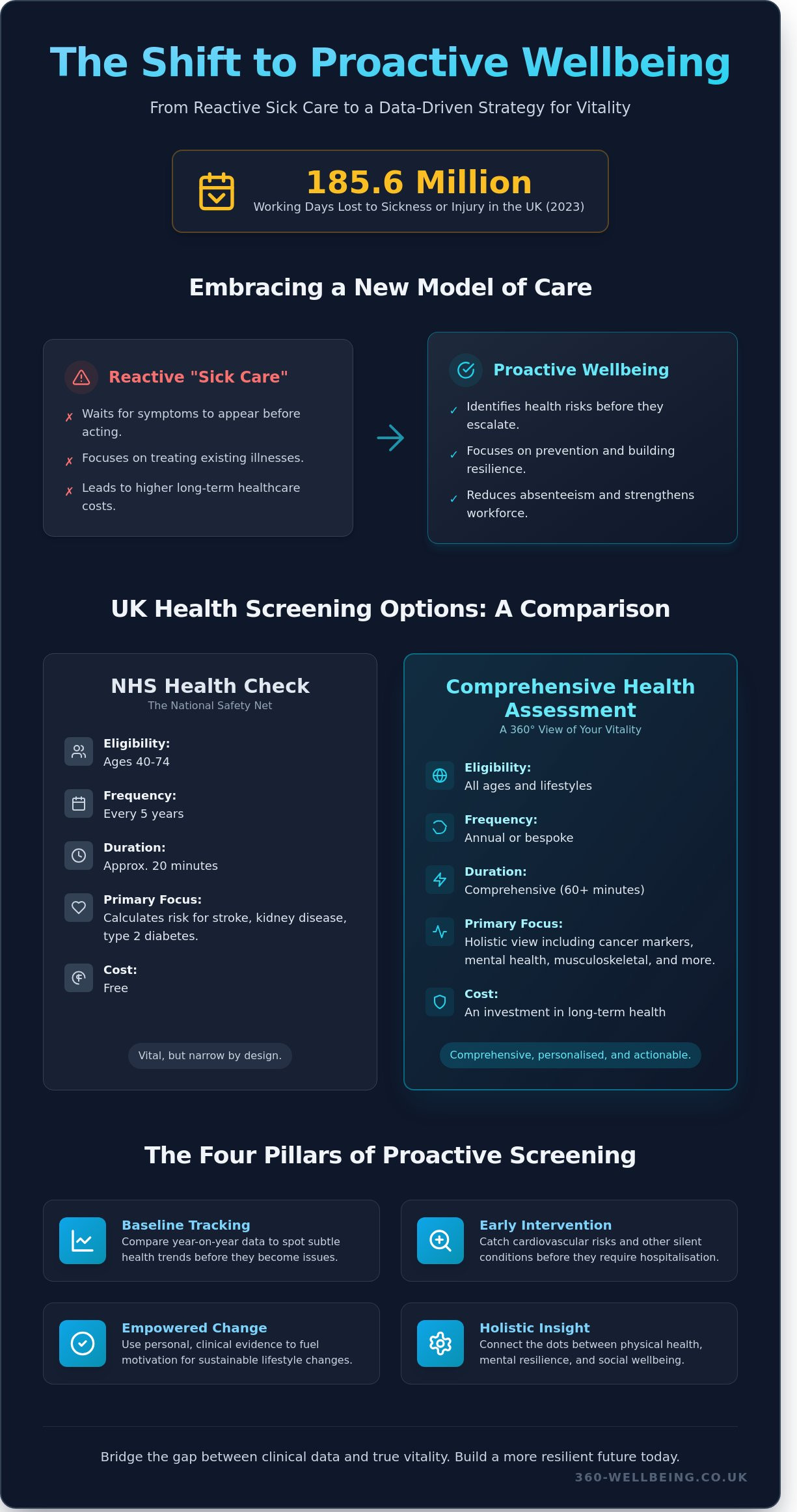
In 2023, the Office for National Statistics reported that 185.6 million working days were lost to sickness or injury in the UK, a figure that continues to challenge even the most robust businesses. You likely feel the weight of this trend through rising absenteeism and the growing realisation that reactive care isn’t enough to keep a team thriving. While standard NHS checks provide a vital safety net, they often lack the depth needed for a truly proactive wellbeing strategy. This is where modern health assessments step in, offering a comprehensive, 360-degree view of your physical and mental landscape before issues become crises.
We understand the frustration of receiving “one-off” test results that offer no clear follow-up or actionable advice. You deserve a partner who translates complex clinical data into a clear plan for vitality and workplace harmony. This guide explores how tailored evaluations can transform your approach to wellness, providing the specific insights needed to build a more resilient workforce and reduce long-term healthcare costs. We’ll break down the differences between various UK screening options and show you how to implement a data-driven wellbeing strategy that actually delivers results by 2026.
Key Takeaways
- Understand the vital shift from reactive ‘sick care’ to a proactive model that identifies health risks before they impact your long-term vitality.
- Learn the clinical differences between the standard NHS check and private health assessments to determine which level of depth is right for your age and lifestyle.
- Discover how UK employers can use anonymised data to transform wellbeing into a strategic asset that reduces absenteeism and strengthens workforce resilience.
- Identify how to select a health framework that balances comprehensive clinical testing with the digital accessibility needed for remote and hybrid teams.
- Explore how to bridge the gap between physical check-ups and total wellness by integrating 24/7 Virtual GP access and mental health support.
What are Health Assessments and Why are They Vital in 2026?
At its core, What is a health assessment? It’s a comprehensive evaluation involving clinical tests and lifestyle reviews designed to identify risks before they escalate into chronic conditions. By 2026, the UK’s healthcare model has fundamentally pivoted. We’ve moved away from a reactive “sick care” system that only intervenes when symptoms appear. Instead, we embrace a proactive preventative model. This shift is essential. The British Heart Foundation reported in 2024 that 7.6 million people are living with heart or circulatory disease. Health assessments provide the data needed to interrupt these trends before they become life-altering events.
These evaluations combine objective metrics like blood pressure, cholesterol, and glucose levels with Body Mass Index (BMI) and personalised lifestyle coaching. This combination allows for the early detection of type 2 diabetes and cardiovascular issues. These conditions often develop over years without obvious signs. By identifying elevated glucose or rising cholesterol early, we can implement tailored interventions. This isn’t just about avoiding illness; it’s about building long-term resilience and vitality through informed choices.
The Core Objectives of Modern Screening
The primary goal is establishing a health baseline. Without this starting point, it’s impossible to track how your body changes over time. Many life-threatening conditions are “silent” and don’t affect your daily energy levels until significant damage is done. For instance, high blood pressure affects roughly 15 million adults in the UK, but 5 million of those remain undiagnosed. Health assessments reveal these hidden markers. A 2025 study showed that individuals who receive personalised health data are 40% more likely to sustain positive lifestyle changes. We empower you with this information so you can take control of your future.
The 360-Degree Perspective on Vitality
Physical metrics only tell half the story. True vitality requires a broader view. At 360 Wellbeing, we integrate nutritional habits, sleep quality, and mental health markers into every review. This isn’t a luxury; it’s a strategic necessity for modern life. Statistics from 2024 indicated that poor sleep costs the UK economy £40 billion annually in lost productivity. By viewing health through a 360-degree lens, we treat wellness as a unified narrative. This ensures you aren’t just “not sick,” but truly thriving. Our approach views these assessments as the foundation of total wellness, bridging the gap between clinical data and human experience.
- Baseline Tracking: Compare year-on-year data to spot subtle trends.
- Early Intervention: Catch cardiovascular risks before they require hospitalisation.
- Empowered Change: Use clinical evidence to fuel personal motivation.
- Holistic Insight: Connect physical health with mental and social wellbeing.
We believe that health is a strategic asset and a fundamental right. By choosing a proactive path, you’re not just reacting to problems; you’re investing in a future of sustained energy and workplace harmony. Our process is designed to be calm, methodical, and deeply supportive, ensuring you feel like a partner in your own care journey.
Comparing NHS Health Checks vs. Private Health Assessments
The UK health landscape offers two distinct paths for preventative care. Understanding how they differ helps you choose the right level of support for your current life stage and lifestyle goals. While both systems aim to catch issues early, their scope, frequency, and depth vary significantly.
NHS Health Check: The Statutory Baseline
The NHS provides a vital service through the official NHS Health Check programme, which acts as a national safety net for cardiovascular health. If you’re aged between 40 and 74, you’re usually invited by your GP every five years for a 20 minute appointment. This session focuses on calculating your risk of stroke, kidney disease, and type 2 diabetes by measuring blood pressure, BMI, and cholesterol. It’s a fantastic free resource, but it’s narrow by design. It doesn’t typically screen for specific cancers, mental health resilience, or musculoskeletal issues. You can check your eligibility by contacting your local GP surgery or visiting a participating high street pharmacy to see if you’re on their register.
The Private Advantage: Depth and Speed
Private health assessments provide a more granular view of your vitality. While the NHS focuses on the most common cardiovascular risks, private options often include advanced diagnostics like resting ECGs, lung function tests, and comprehensive blood panels that look at over 50 different biomarkers. The most significant difference is the gift of time. Instead of a 10 or 20 minute slot, you’ll often spend 60 minutes with a clinician. This allows for a deeper conversation about your lifestyle, sleep quality, and any niggling concerns that don’t fit into a standard checkbox. These assessments often result in immediate digital reports and fast-tracked referrals to private physiotherapy or mental health support, ensuring you don’t spend weeks on a waiting list.
Bridging the Preventative Gap
A significant gap exists in public provision for the younger workforce. Since the statutory check starts at 40, a 28 year old employee struggling with burnout or early signs of a repetitive strain injury might fall through the cracks. Data from the Office for National Statistics shows that 2.8 million people were out of work due to long-term sickness in early 2024; many of these individuals are under the age of 40. Corporate-led health assessments bridge this void. They’re tailored to the modern workplace, focusing on areas the NHS cannot currently prioritise for everyone:
- Mental health resilience: Using validated tools to identify early signs of stress or anxiety before they lead to absence.
- Musculoskeletal focus: Postural assessments to prevent long-term damage from sedentary office work.
- Nutritional guidance: Personalised advice to sustain energy levels and cognitive function throughout the working day.
By offering these tools, businesses treat wellbeing as a strategic asset rather than a perk. If you’re looking to build a more resilient team, exploring tailored health solutions can provide the 360-degree perspective your staff deserve. This proactive approach ensures that every team member, regardless of age, feels seen and supported. It moves the conversation away from reactive sick leave toward a positive vision of long-term vitality and workplace harmony.
Why Corporate Health Assessments are a Strategic Asset for UK Employers
UK businesses lost an average of 7.8 days per employee to sickness in 2023, reaching the highest level recorded in over a decade. This trend isn’t just a human resources challenge; it’s a significant drain on corporate resources. By integrating health assessments into the workplace, employers shift from a reactive “sick-pay” model to a proactive culture of care. These digital screenings identify underlying risks like hypertension or early-stage cardiovascular issues before they escalate into long-term absences.
The real power of these tools lies in the data. When leadership teams review anonymised, aggregated results, they gain a clear picture of the specific pressures facing their staff. This evidence allows for the creation of a workplace wellbeing strategy that targets actual needs rather than relying on guesswork. Instead of generic perks, you’re providing the precise interventions your team requires to thrive.
Presenteeism is the silent productivity killer where staff are physically at their desks but mentally or physically unwell. It’s estimated to cost the UK economy up to £28 billion annually. Early intervention through regular checks catches the “walking wounded” early, offering support before burnout sets in. Looking toward 2026, 75% of the emerging workforce will view comprehensive health support as a non-negotiable standard. Offering these assessments makes your business a destination for top-tier talent who value their long-term vitality.
Calculating the ROI of Prevention
Investing in early detection is a sound financial safeguard. Identifying the early signs of chronic pain or stress-related fatigue can prevent a 12-week absence that would otherwise cost thousands in statutory sick pay and temporary cover. Deloitte’s 2024 analysis confirms that for every £1 spent on employee wellbeing, UK employers see an average return of £4.70 through increased productivity and reduced turnover. Proactive care is consistently cheaper than reactive insurance premiums. It builds a sense of loyalty that can reduce staff turnover by as much as 15%, as employees feel genuinely seen and supported by their employer.
- Reduced Sick Pay: Early intervention stops minor issues from becoming long-term claims.
- Enhanced Loyalty: Staff stay longer when they feel their health is a corporate priority.
- Better Engagement: Healthy employees are 20% more likely to be fully engaged with their tasks.
Supporting a Diverse Workforce
A modern office requires a nuanced approach to care. Tailored health assessments allow you to support different life stages with precision. This includes specific screenings for menopause support, which affects millions of UK workers, or targeted men’s health checks that focus on prostate and heart health. Providing this level of detail helps your organisation fulfil its duty of care under ISO 45003, the international standard for managing psychosocial risks at work.
We believe that physical and mental health are two sides of the same coin. By linking physical screening results directly to our Mental Health Support services, we provide a 360-degree view of employee wellness. This joined-up approach ensures that if a physical assessment flags high cortisol levels or sleep disruption, the employee is immediately guided toward the right emotional support. It’s about creating a safety net that’s as comprehensive as it is compassionate, ensuring every member of your team has a clear path to feeling their best.
How to Choose the Right Health Assessment Framework for Your Team
Selecting a health assessment framework isn’t a simple administrative task; it’s a strategic investment in your organisation’s resilience. To find the right fit, you must first analyse the unique profile of your workforce. A team of 100 employees where 65% are in sedentary, desk-based roles will face different risks, such as postural issues or metabolic slowdown, compared to a physically active field-based team. Tailoring your health assessments ensures the data you collect is relevant and actionable for your specific demographic.
Clinical depth should never be sacrificed for the sake of digital convenience. When choosing your provider, ensure the health assessments are overseen by UK-registered GPs and Physiologists. This ensures that every piece of advice follows NHS-aligned standards and provides the reassurance of professional expertise. A robust framework balances high-tech delivery with high-touch clinical care, ensuring no employee feels like just another data point in a spreadsheet. This combination of digital accessibility and medical authority is essential for remote or hybrid teams who may not have easy access to traditional onsite clinics.
A vital component of any framework is the “pathway to care.” Identifying a health risk is only half the battle; the true value lies in what happens next. If an assessment flags a concern, your provider should offer a seamless transition to professional support. This proactive approach prevents minor issues from escalating into long-term sickness absence, which currently costs UK businesses an average of £958 per employee every year according to recent industry data. You need a partner that doesn’t just hand over a report but guides the employee through the next steps of their recovery or lifestyle adjustment.
Key Features to Look For in a Provider
The most effective providers offer a joined-up ecosystem rather than isolated services. Look for a platform that includes direct integration with a Virtual GP. This allows employees to book a consultation the moment they receive their results, removing the stress of waiting weeks for a local appointment. Digital reports must be intuitive; they should use clear visuals and plain English to guide the user toward positive changes. Additionally, ensure the package includes ongoing support mechanisms such as physiotherapy or life coaching to address both physical and mental wellbeing holistically.
Avoiding the ‘One-Off’ Trap
Standalone health checks frequently fail because they offer a snapshot without a narrative. A 2022 workplace study indicated that health interventions without follow-up support saw a 40% drop in employee engagement within three months. To create lasting change, you need a framework that provides year-round access to health professionals. Communication is also essential; you should frame these assessments as a benefit for the individual’s vitality rather than a corporate monitoring tool. When employees understand that the data is confidential and designed to empower them, uptake typically increases by up to 50%.
Ready to build a healthier, more resilient workforce? Explore how our tailored health assessment frameworks can support your team today.
Beyond the Check-up: Integrating Data into a Total Wellbeing Strategy
A health assessment shouldn’t be a static document that gathers dust in a drawer or stays buried as an unread PDF in an inbox. It’s a living blueprint for a healthier life. We believe the true value of health assessments lies in what happens on day 31, day 180, and day 365. By integrating clinical data into a total wellbeing strategy, we move away from reactive “sick care” toward a model of genuine, proactive vitality. This approach ensures that data doesn’t just inform; it transforms.
When an assessment identifies a potential risk, such as elevated blood pressure or early signs of burnout, our system doesn’t just provide a warning. It provides a solution. Results can immediately trigger a 24/7 Virtual GP consultation. This “Doctor at Hand” service ensures that clinical expertise is available whenever the employee feels ready to talk. It removes the friction of waiting weeks for a local appointment, which is a significant barrier for the 6.3 million people currently on NHS waiting lists. Early intervention prevents minor issues from escalating into chronic conditions.
We also recognise that physical symptoms often have roots in mental or social challenges. High stress might be linked to financial pressures or legal worries that keep an employee awake at night. Our platform bridges these gaps by creating a seamless “Cycle of Care”. This means:
- Connecting physical health findings directly to immediate mental health therapy or life coaching sessions.
- Utilising 360 Rewards to incentivise healthy lifestyle changes, such as hitting daily step counts or completing nutrition modules.
- Providing a support system that lasts 365 days a year, ensuring the momentum from the initial assessment isn’t lost.
By rewarding positive choices, we turn health management into an engaging, daily habit rather than a yearly chore. It’s about building long-term resilience through consistent, small actions that are backed by clinical data.
The 360 Wellbeing Ecosystem
Our platform functions as a central hub where diagnosis meets daily habit change. It’s not enough to know there’s a problem; employees need the tools to fix it. We provide 24/7 access to medical professionals who can discuss assessment findings in detail. Beyond clinical needs, we integrate financial and legal support. Since 2023, data shows that 1 in 4 UK workers cite money worries as a primary cause of poor mental health. By addressing these external stressors, we protect the employee’s physical resilience and overall workplace harmony.
Next Steps for UK Businesses
The transition from basic, siloed benefits to a comprehensive health platform is a strategic investment in your workforce. Research from 2024 indicates that UK companies with integrated wellbeing programmes see a 25% reduction in long-term sickness absence. It’s time to move beyond the annual check-up and embrace a strategy that supports your team every single day. You can request a demo to see how our 360-degree care model supports your staff through every challenge, from physical recovery to mental fortitude.
Discover how 360 Wellbeing can transform your team’s health today.
Building a Resilient Workforce for 2026 and Beyond
The transition toward proactive health strategies is no longer optional for UK businesses. By 2026, health assessments will serve as the foundation for high-performing teams, moving away from reactive sick pay towards a culture of sustained vitality. Data from the UK small business sector shows that the 5.5 million SMEs across the country now prioritise holistic care to combat rising absenteeism and stress. You’ve seen how integrating clinical insights with mental and financial support creates a 360-degree safety net for your staff.
At 360 Wellbeing, we specialise in supporting UK SMEs and sole traders with a compassionate, expert-led approach. Our members benefit from 24/7 access to UK-registered GPs and a support system that addresses physical, mental, and financial wellbeing in one unified platform. It’s about more than just a check-up; it’s about providing your team with the tools they need to stay healthy and focused every day.
Book a consultation to discuss your team’s health assessment needs and take the first step toward a more harmonious workplace. We’re here to help you navigate these complex health decisions with clarity and care.
Frequently Asked Questions
Are health assessments worth it for small businesses with limited budgets?
Yes, proactive health assessments are a strategic investment for small businesses because they help reduce the £927 average annual cost of employee absence reported by the CIPD in 2023. By identifying risks early, you prevent long-term sickness that disrupts small teams. Digital-first options starting from approximately £30 per employee make these tools accessible without requiring a massive corporate budget. It’s a way to build resilience and show your team they’re valued.
What is the difference between a health check and a medical examination?
A health check focuses on preventative screening and lifestyle markers, whereas a medical examination is typically a diagnostic response to specific symptoms or an existing condition. Your assessment provides a 360-degree view of your current vitality to catch issues before they become clinical problems. Think of it as a proactive MOT for your body rather than a reactive repair job. This distinction ensures you’re managing your wellness before you actually feel unwell.
How often should an employee have a professional health assessment?
Employees should ideally undertake a professional health assessment every 12 months to track changes and maintain a consistent record of their wellbeing. This annual frequency allows for the detection of subtle shifts in markers like blood pressure or cholesterol that might occur over a calendar year. Regular monitoring creates a reliable data set for your health journey. It ensures that any lifestyle adjustments you’ve made are actually delivering the results you want.
Can health assessment results be shared with the employer?
No, individual results are strictly confidential and cannot be shared with your employer without your explicit, written consent under the Data Protection Act 2018. Employers only receive anonymised, aggregated reports if the group size is large enough to protect individual identities. This ensures your personal medical data remains private while the company gains insights into general workforce trends. You can feel safe knowing your personal information is handled with clinical integrity.
How long does a typical private health assessment take to complete?
A digital assessment usually takes between 15 and 20 minutes to complete from your own device. If you’re attending a comprehensive in-person clinic, the appointment typically lasts between 30 and 90 minutes depending on the depth of the tests involved. We’ve designed these sessions to be thorough yet respectful of your busy schedule. You get a clear roadmap for your health without spending an entire day in a waiting room.
What happens if a health assessment identifies a serious medical issue?
If an assessment identifies a high-risk marker or a serious issue, you’ll receive immediate guidance and a recommendation to contact your GP or a specialist. We provide a clear summary of the findings that you can take directly to your doctor to speed up the diagnostic process. Our role is to act as an early warning system. We ensure you have the support and information needed to take the next steps with confidence.
Is mental health screening included in a standard health assessment?
Yes, our comprehensive health assessments include mental health screening because emotional resilience is just as vital as physical fitness. With 1 in 4 people in the UK experiencing a mental health problem each year according to Mind’s 2024 data, we believe a holistic approach is essential. We look at stress levels, sleep quality, and mood alongside physical metrics. This creates a complete picture of your total wellness rather than just measuring heart rate.
Do I need to fast before attending my health assessment appointment?
You’ll typically need to fast for 8 to 12 hours if your assessment includes specific blood tests for glucose or cholesterol levels. We’ll provide you with clear instructions at least 48 hours before your appointment so you know exactly how to prepare. If you’re only doing a digital assessment or non-invasive screening, fasting usually isn’t necessary. We make sure the process is straightforward so you can get accurate results with minimal fuss.