
What if the most significant threat to your business isn’t a competitor’s higher salary offer, but the quiet weight of your team’s unaddressed personal lives? In the UK’s current economic climate, it’s easy to assume that pay is the only thing keeping your staff at their desks. You’re likely feeling the pressure of rising overheads while trying to maintain morale during a period of 3.2% annual inflation. However, the hidden drivers of employee attrition in small business often lie in the gaps where traditional benefits fail to reach, from health anxieties to the “life admin” that keeps employees awake at night.
We understand the frustration of losing institutional knowledge just as your business begins to scale, especially when you feel you can’t compete with corporate-sized budgets. This guide promises to help you look past the obvious and uncover the invisible factors causing staff turnover in SMEs. By the end of this article, you’ll have a clear, proactive retention strategy that goes far beyond the monthly paycheque.
We’ll explore how to identify these silent stressors and implement a 360-degree support system that fosters deep loyalty and long-term resilience within your team.
Key Takeaways
- Understand why competitive salaries aren’t enough by uncovering the hidden drivers of employee attrition in small business that silently erode team stability.
- Gain insights into bridging the “Wellbeing Gap” to help your team manage health anxieties and long wait times before they lead to permanent departures.
- Learn to identify the invisible burdens of financial and legal stress that stifle productivity and how to provide the resources needed to restore focus.
- Move past the “SME Hero Trap” by implementing a management style that prioritizes psychological safety and empowers your staff to grow.
- Discover how a proactive, 360-degree support strategy can replace expensive, fragmented benefits with a single, comprehensive wellness solution.
Beyond the Paycheque: Identifying Hidden Drivers of Employee Attrition in Small Business
In 2026, small business owners in the UK are finding that the traditional levers of retention, like annual pay rises, aren’t working as they once did. While Employee turnover is often viewed through the lens of career progression or better salary offers, the hidden drivers of employee attrition in small business are frequently more personal and less visible. Attrition in this context is the gradual erosion of your workforce; it’s not just a single resignation, but a symptom of a culture where employees feel their holistic needs are being overlooked.
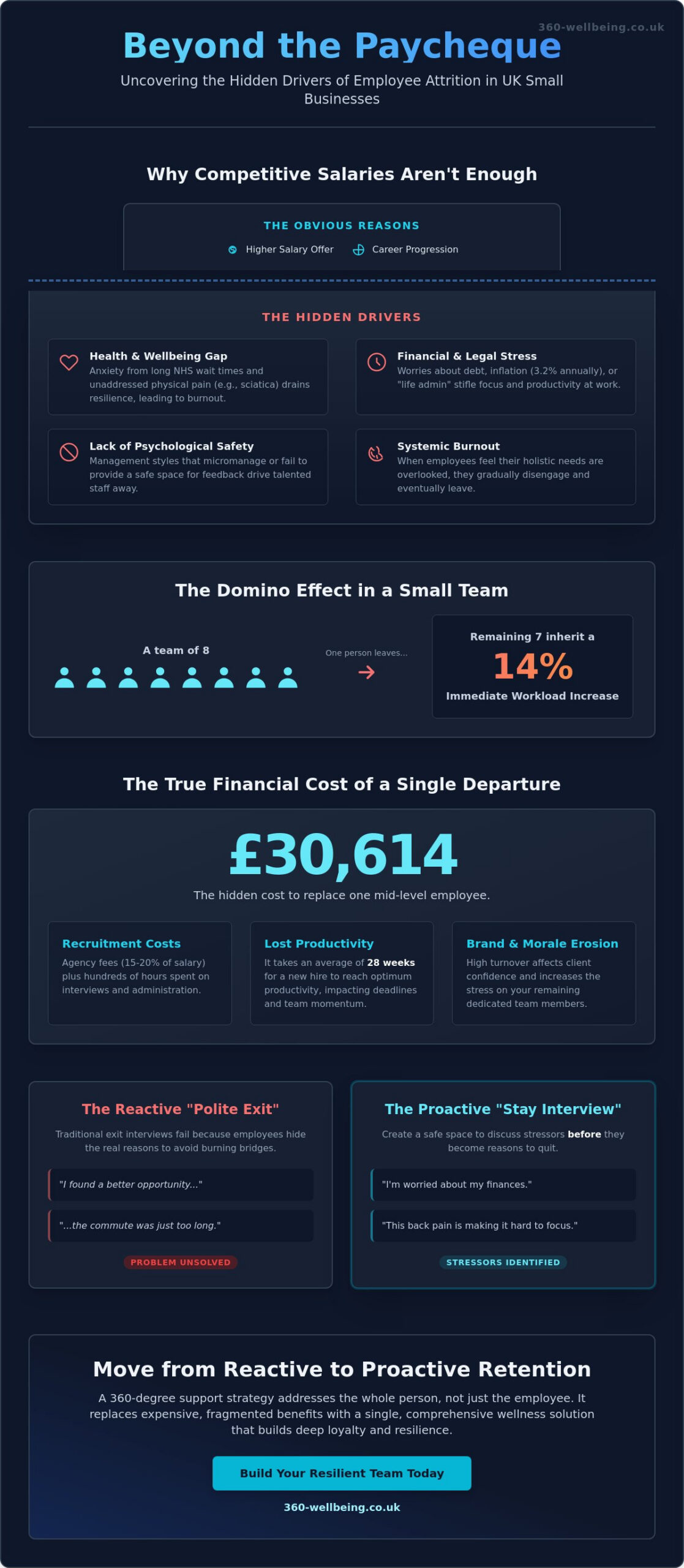
Hidden drivers are more dangerous than obvious ones because they’re silent. A salary dispute is a conversation you can have, but burnout, health anxiety, or financial stress often simmer beneath the surface until a resignation letter appears. In a small team, the ripple effect of a single exit is profound. When one person leaves a team of eight, the remaining seven immediately inherit a 14% increase in workload. This sudden pressure can trigger a domino effect, where the “hidden” stress of the first departure becomes the “obvious” reason for the next. Using holistic wellbeing as a retention anchor allows you to support the person, not just the employee, creating a bond that salary alone can’t replicate.
The True Cost of Staff Turnover for SMEs
The financial impact of losing a team member goes far beyond recruitment fees. For an SME, the drain on resources includes:
- Recruitment and Onboarding: Agency fees typically range from 15% to 20% of the starting salary, alongside the time spent by senior staff interviewing candidates.
- Lost Productivity: It takes time for a new hire to understand your unique processes and client nuances.
- Brand Erosion: Constant turnover can make long-term clients feel uneasy, as they lose the personal connections they’ve built with your staff.
The hidden cost of a single mid-level departure in the UK is approximately £30,614 when you factor in the 28 weeks it takes for a new hire to reach optimum productivity.
Why Traditional Exit Interviews Fail to Find the Truth
Most employees practice the “polite exit.” They cite a “better opportunity” or “shorter commute” because they don’t want to burn bridges by mentioning a micromanaging founder or the fact that their mental health has suffered due to a lack of support. They hide their real reasons for leaving because, by the time they’ve resigned, they no longer believe the business can or will change. To uncover the hidden drivers of employee attrition in small business, you must move toward “stay interviews.” These are proactive, compassionate consultations held while the employee is still committed, allowing you to identify stressors like debt worries or physical ailments before they become reasons to quit. Creating a safe, non-judgmental space for these conversations shows that you’re an expert caregiver for your team’s careers and their lives.
The Wellbeing Gap: How Unaddressed Health Needs Fuel SME Staff Turnover
In May 2026, the strain on public health services continues to be a significant, if silent, business risk for SMEs across the UK. When an employee is struggling with a health concern, the anxiety of waiting weeks for a primary care appointment doesn’t stay at home; it follows them to their desk. This “health anxiety” is one of the most potent hidden drivers of employee attrition in small business. If your staff feel they have to choose between their health and their job because they can’t access timely medical advice, they’ll eventually choose their health by walking away.
Physical health issues, such as sciatica or repetitive strain, often act as the first domino in a chain reaction leading to resignation. Chronic pain is exhausting. It drains mental resilience and makes even simple tasks feel insurmountable. By the time an employee reaches their breaking point, they might cite “burnout” as their reason for leaving, but the root cause was an unaddressed physical ailment. To effectively Combat the Costs of Employee Attrition, small businesses must treat proactive health support as a strategic necessity rather than a luxury.
Virtual GPs: The 24/7 Retention Tool You Didn’t Know You Needed
Immediate access to a UK-registered doctor is a powerful way to reassure your team that their health is a priority. For working parents or those with caring responsibilities, the ability to book a 24/7 Virtual GP appointment removes the stress of trying to secure a 8:00 AM slot at a local surgery. These consultations prevent minor symptoms from escalating into major absences, keeping your team healthy and focused. In the current climate, providing a direct line to medical expertise is no longer just a benefit; it’s a fundamental pillar of a loyal workplace culture.
Mental Health and the ‘Burnout Threshold’ in Small Teams
In high-pressure small teams, the “burnout threshold” is often lower because there are fewer people to share the load. We must also recognize that life stages, such as the menopause, significantly impact retention. With approximately 13 million people in the UK currently navigating the menopause, the lack of tailored support can lead to talented individuals feeling they can no longer perform their roles. Providing professional mental health support and life coaching can bridge this gap. These services offer a safe space for employees to build resilience, preventing the “quiet quitting” that often precedes a permanent departure. When you invest in their mental clarity, you’re investing in the long-term stability of your business.
Invisible Burdens: Financial Stress and Legal Anxiety as Attrition Drivers
The hidden drivers of employee attrition in small business often extend far beyond the office walls, reaching into the kitchen table discussions about rising energy bills and complex legal paperwork. In 2026, even with an annual inflation rate of 3.2%, many UK workers feel that their purchasing power is under constant siege. This financial pressure creates a heavy cognitive load that follows employees to work, manifesting as “presenteeism.” When a staff member is physically present but mentally calculating how to manage a debt repayment or a tenancy dispute, their productivity and loyalty begin to erode. They aren’t just looking for a new job; they’re looking for an escape from the stress that their current situation doesn’t seem to address.
Legal anxiety is another silent thief of employee retention. Issues like divorce, probate, or disputes with landlords are not just personal matters; they are significant productivity killers. If an employee spends their lunch break on hold with a solicitor or feels overwhelmed by legal jargon, their connection to their work weakens. By acknowledging these “outside-of-work” burdens, a small business can transform from a mere employer into a vital support system. Understanding the hidden costs of employee attrition helps leaders see that supporting a staff member through a personal crisis is far more cost-effective than the £30,000 price tag of replacing them.
The Link Between Financial Wellness and Workplace Resilience
While a pay rise is always welcome, it isn’t a permanent cure for financial anxiety. In a high-inflation environment, the relief of a raise can be swallowed by rising costs within months. True resilience comes from empowerment and education. Providing access to professional debt helplines and expert financial advice allows employees to regain control over their lives. For a deeper look at how to implement these systems, see our guide on Financial Support for Employees: A Comprehensive Guide for UK Employers in 2026. When you help an employee resolve a debt issue, you’ve earned a level of loyalty that a standard bonus cannot buy.
Life Admin Support: Wills, Legal Advice, and Peace of Mind
Small businesses often overlook “life admin” as a retention tool, yet benefits like complimentary will writing are surprisingly impactful. A will is a fundamental document that many people put off due to cost or complexity; providing this service shows a deep, compassionate interest in an employee’s family legacy. Similarly, a legal support helpline acts as a pressure valve, allowing staff to get quick, professional answers to civil legal questions without taking time off work. Peace of mind is the ultimate retention anchor; an employee who feels their life is in order is an employee who can focus on your business goals with a clear mind and a loyal heart.
Culture Over Compensation: Why Small Business Management Styles Drive People Away
While external factors like health access and financial stress are critical, the most pervasive hidden drivers of employee attrition in small business often stem from the internal culture. Gallup’s 2026 data reveals that global employee engagement has fallen to 21%, one of the lowest points in a decade. In a small team, this disengagement is amplified. Many SME founders fall into the “Hero Trap,” where their intense passion for the business translates into micromanagement. When a leader feels they must oversee every detail, they unintentionally stifle their team’s growth and autonomy. This lack of trust is a primary reason why 56% of employees are currently “job hugging,” staying for security while actively looking for an exit.
In a small workplace, there is nowhere to hide. This visibility can be a double-edged sword. Without a foundation of psychological safety, employees feel that every mistake will be scrutinized by the entire firm. This pressure, combined with an “always-on” expectation where work-life boundaries are blurred, makes staff feel that loyalty is a one-way street. They give their time and energy, but receive only a paycheck and more work in return. To break this cycle, management must shift from a mindset of oversight to one of holistic support.
Recognition and Appreciation in the Absence of Big Bonuses
Recognition doesn’t always require a massive bonus pool. In fact, consistent, meaningful appreciation often carries more weight in a small team environment. By offering 360 Rewards, you can celebrate small wins in real-time, creating a positive feedback loop that salary alone cannot match. Similarly, providing access to Life Coaching shows your team that you value their long-term personal trajectory. It transforms the workplace from a site of labor into a space for genuine personal development, which is a powerful anchor for retention.
Flexibility as a Competitive Advantage Against Corporates
Small businesses have a unique advantage: agility. You can out-manoeuvre corporate giants by offering truly personalised flexibility that addresses the specific needs of your staff. You don’t need a ten-person HR department to be proactive about wellbeing. An Employee Assistance Programme (EAP) acts as a vital bridge, providing your team with expert support for mental health or workplace stress that a busy founder might not have the time to provide personally. This comprehensive approach ensures that your management style is defined by compassion and resilience, making your business a place where people want to stay and grow.
Reversing the Trend: Implementing a Proactive Employee Support Strategy
Turning the tide on the hidden drivers of employee attrition in small business requires a shift from reactive problem-solving to a unified, 360-degree strategy. By integrating physical, mental, and financial health into one cohesive narrative, you create a safety net that catches employees before they reach a breaking point. Many SMEs struggle with fragmented benefits that are expensive to maintain and difficult for staff to navigate. A single, comprehensive platform replaces this clutter, providing your team with a clear and accessible path to the support they need. This isn’t just a compassionate choice; it’s a strategic asset. When you address health and personal stressors proactively, you reduce absenteeism and foster a culture of deep engagement that keeps your best people from looking elsewhere.
The financial logic for this approach is clear. As we established earlier, the cost of replacing a mid-level staff member in 2026 exceeds £30,000. Investing in a tailored wellbeing solution is a cost-effective way to protect your bottom line. 360 Wellbeing serves as a modern partner for UK SMEs, offering the clinical expertise and human touch needed to scale your business without losing the institutional knowledge held by your long-term team. We move away from the cold, transactional nature of traditional insurance, opting instead for a proactive vision of workplace harmony and vitality.
Step-by-Step: Launching a Wellbeing Strategy in 30 Days
You don’t need months of planning to start protecting your workforce. Follow this structured path to implement a more resilient culture:
- Audit Your Recent Turnover: Review the last 12 months of exits. Look past the “polite” reasons given in exit interviews to find the real patterns of burnout or stress.
- Onboard a Comprehensive Platform: Partner with 360 Wellbeing to provide instant access to Virtual GPs, mental health support, and financial advice.
- Communicate with Clarity: Introduce these benefits to your team as a fundamental right. Building immediate trust requires showing your staff that you’re invested in their long-term success.
Measuring Success: Beyond the Attrition Rate
Success in retention isn’t just about a lower turnover percentage; it’s about the quality of the workplace environment. You can track the impact of your strategy by monitoring platform engagement and conducting regular sentiment checks. When employees utilize the 24/7 Virtual GP or seek debt advice through your provided services, they’re resolving stressors that would otherwise lead to disengagement. Over time, this proactive care strengthens your employer brand, making recruitment easier and less frequent. It’s time to build a team that isn’t just “job hugging” for security, but staying because they feel genuinely valued and supported. Book a demo of the 360 Wellbeing platform today to see how we can help you secure your business’s future.
Securing Your Team’s Success Beyond 2026
Retaining your best people in 2026 requires looking past the monthly payroll. We’ve explored how health anxieties, legal burdens, and financial stress act as the primary hidden drivers of employee attrition in small business. When you provide a safety net that addresses these personal challenges, you don’t just lower recruitment costs; you build a culture of genuine loyalty. Small businesses have the unique agility to out-perform corporate giants by treating every employee as a whole person, ensuring their physical, mental, and social health are prioritized.
You have the power to turn turnover into transformation. By implementing a strategy that includes 24/7 UK-registered Virtual GP access and holistic support tailored specifically for SME budgets, you create a workplace where staff feel seen and protected. It’s time to move toward a proactive vision of workplace harmony that safeguards your most valuable asset. Protect your team and reduce attrition with 360 Wellbeing today. Your journey toward a more resilient, engaged, and loyal workforce starts with a single, compassionate step.
Frequently Asked Questions
What are the most common hidden drivers of employee attrition in small businesses?
The most common hidden drivers of employee attrition in small business include unaddressed health anxiety, financial instability, and a lack of psychological safety within the team. While salary is often the reason cited in formal exit papers, many employees actually quit because they feel overwhelmed by “life admin” and cumulative personal stressors. Providing a comprehensive support system that addresses these invisible burdens helps you resolve issues before they lead to a resignation letter.
How much does employee turnover actually cost an SME in the UK?
Employee turnover costs a UK SME approximately £30,614 per mid-level departure when you account for recruitment fees and the 28 weeks it takes for a new hire to reach full productivity. These costs stem from agency fees, which typically range from 15% to 20% of the starting salary, and the significant time senior staff spend on interviewing and training. This financial drain makes proactive retention a critical strategic priority for any small business owner in 2026.
Can a virtual GP service really help with staff retention?
Providing a virtual GP service is a highly effective retention tool because it removes the stress of navigating long public health wait times. For the 45.9% of the workforce employed by small businesses, 24/7 access to a doctor means they don’t have to sacrifice their workday for a medical appointment. This support is particularly valued by parents and carers, who often feel forced to choose between their family’s health and their professional duties.
How do I know if my employees are suffering from burnout before they quit?
You can identify burnout by looking for signs of “presenteeism,” where an employee is physically at their desk but mentally disengaged. Watch for sudden changes in communication patterns, increased irritability, or a drop in work quality from previously high performers. Since Gallup reports that global engagement is currently just 21%, proactive “stay interviews” are essential for uncovering these feelings before an employee decide to move on to a competitor.
Is it possible to reduce attrition without offering a massive salary increase?
You can significantly reduce attrition by focusing on holistic support rather than just salary. Since only 1 in 4 employees feels genuinely appreciated at work, small gestures like providing life coaching or complimentary will writing can build deep loyalty. These benefits address the “whole person,” showing your team that you value their life outside of work. This level of care is often more persuasive than a standard pay rise in a high-inflation environment.
What is an Employee Assistance Programme (EAP) and do small businesses need one?
An Employee Assistance Programme (EAP) is a confidential service that provides employees with professional support for mental, financial, or legal issues. Small businesses need an EAP because they often lack the internal HR resources to handle complex personal crises. It acts as a vital safety net, ensuring your staff can access expert intervention for stress or debt without feeling they have to disclose sensitive personal details to their manager or founder.
What role does financial stress play in employee turnover?
Financial stress is a major driver of turnover because it erodes an employee’s ability to focus and stay resilient. With 2026 inflation at 3.2%, many workers are struggling with debt and rising costs, leading to a heavy cognitive load that follows them to work. By offering debt advice and financial support, you help remove the “invisible burden” that often leads to burnout. Employees who feel financially secure are more likely to remain loyal to their employer.
How can I support employees going through major life changes like menopause or divorce?
Support employees through life changes by providing access to specialized resources like legal support and life coaching. For the 13 million UK workers navigating menopause, tailored health advice can be the difference between staying in a role or leaving. Similarly, legal helplines for divorce or probate help manage the “life admin” that otherwise consumes an employee’s time and mental energy, allowing them to remain focused and supported at work.