
What if a formal complaint wasn’t a sign of a failing culture, but a vital opportunity to protect your most valuable asset before a small spark becomes a courtroom fire? You’re likely feeling the weight of recent legal shifts, such as the Employment Rights Act 2025, and the mounting stress of keeping your team productive while managing individual friction. It’s natural to worry about the 25% compensation uplift for failing to follow the Acas Code or the new six month tribunal time limit arriving in October 2026. Understanding how to handle employee grievances is no longer just about ticking boxes; it’s about building a durable environment where every voice feels heard and supported.
In this guide, we’ll show you how to master the legal requirements of the Acas Code while protecting your team’s mental health and long term workplace harmony. We will explore a methodical path through the latest 2026 regulations, from Fair Work Agency oversight to proactive wellbeing strategies. You’ll gain the foresight needed to reach a compliant resolution that minimizes disruption and, where possible, restores the vital partnership between you and your employee.
Key Takeaways
- Understand the legal significance of the Acas Code of Practice and how it provides a foundational roadmap for maintaining UK compliance.
- Learn a structured, step-by-step framework for how to handle employee grievances that prioritizes impartiality and procedural fairness from the moment a concern is raised.
- Discover how to conduct objective investigations and interview witnesses while safeguarding sensitive data and GDPR requirements.
- Identify strategies to protect team wellbeing during high-stress disputes, including the proactive use of an Employee Assistance Programme (EAP).
- See how integrating holistic resources like 24/7 Virtual GP access and legal support can address the external stressors that often fuel workplace conflict.
The Foundations of Handling Employee Grievances in the UK
At its core, a workplace grievance is a formal concern, problem, or complaint that an employee raises with their employer. It might involve anything from specific working conditions and safety concerns to complex interpersonal conflicts or allegations of unfair treatment. Grievance procedures provide the necessary structure to address these issues fairly, ensuring that emotions don’t cloud the path to a resolution. Understanding how to handle employee grievances requires a balance of legal precision and human empathy; it’s about seeing the person behind the paperwork while staying firmly within the lines of UK employment law.
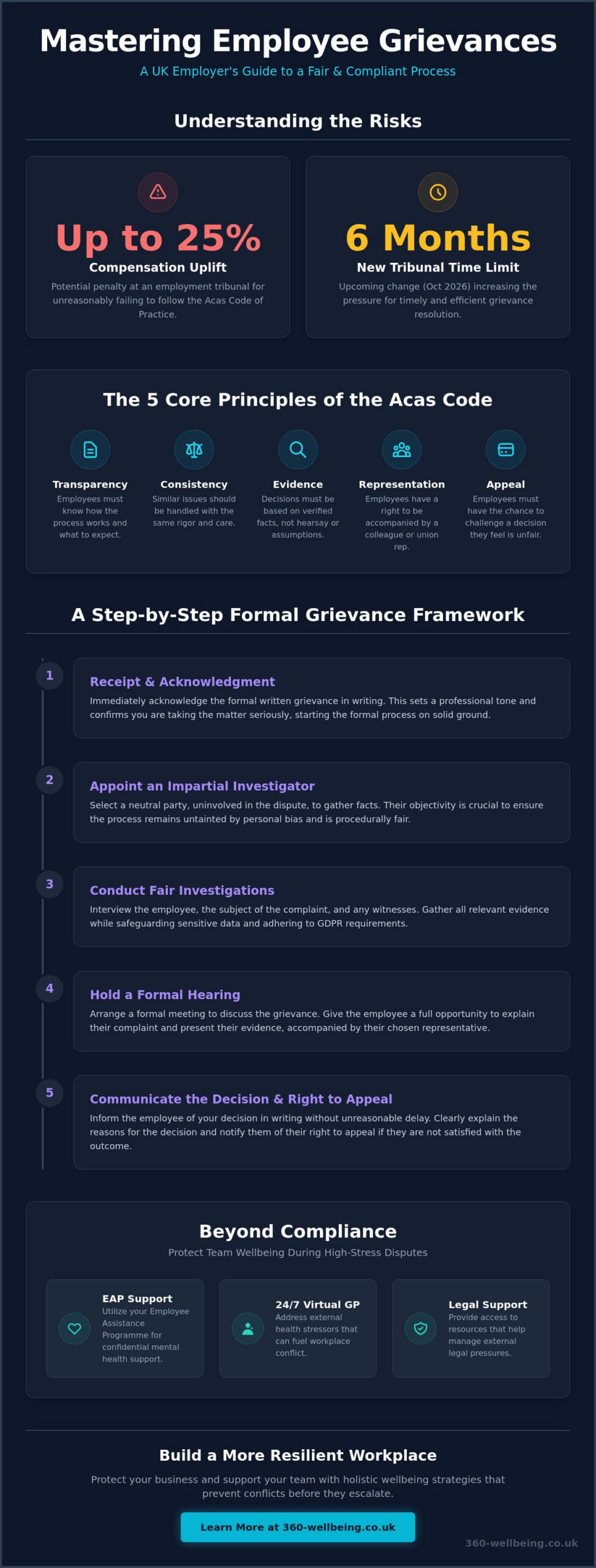
The stakes for getting this right are high. The Acas Code of Practice on Disciplinary and Grievance Procedures serves as the minimum standard for fairness in the UK. While it isn’t a law itself, its influence is profound. If a dispute reaches an employment tribunal and you’re found to have unreasonably failed to follow the Code, the tribunal can increase any compensation awarded to the employee by up to 25%. This financial risk, combined with the potential for long term reputational damage, makes a compliant approach a professional necessity rather than a luxury.
Informal vs. Formal: When to Escalate
Most workplace friction can and should be resolved through a “quiet chat” or an open door policy. These early interventions allow for foresight and agility, often mending relationships before they’ve had a chance to fracture. However, you must recognize the trigger points for escalation. If an employee provides a written statement of their complaint or if the issue involves serious allegations like harassment, the statutory formal process must begin. Mediation often acts as a vital bridge here; it’s a confidential way to de-escalate conflicts through a neutral third party, helping both sides find a durable middle ground without the rigidity of a formal hearing.
Understanding the Acas Code of Practice
The Acas Code is widely regarded as the gold standard for maintaining workplace harmony and legal safety. It ensures that every step of the process is grounded in equity and transparency. When you are learning how to handle employee grievances, you should always return to the five core principles of the Code:
- Transparency: Employees must know how the process works and what to expect next.
- Consistency: Similar issues should be handled with the same level of care and procedural rigor across the entire organization.
- Evidence: Decisions must be based on verified facts rather than hearsay or assumptions.
- Representation: Employees have a statutory right to be accompanied by a colleague or trade union representative.
- Appeal: Every employee must have the opportunity to challenge a decision they feel is unfair.
The Acas Code of Practice is the statutory framework that employment tribunals use to judge the fairness and reasonableness of an employer’s conduct during a dispute. By following this roadmap, you protect the business from litigation while demonstrating a genuine commitment to your team’s wellbeing and right to a fair hearing.
A Step-by-Step Framework for a Formal Grievance Procedure
Once a grievance moves from an informal conversation to a formal written notice, your approach must shift toward a structured, statutory sequence. Learning how to handle employee grievances effectively means following a sequence that ensures every party feels respected and every fact is verified. This process isn’t just about legal safety; it’s a methodical way to restore order and clarity to a fractured working relationship. By adhering to the UK government grievance procedure, you provide a clear roadmap for resolution that protects both the individual and the organization.
- Step 1: Receipt and Acknowledgment. As soon as the formal grievance arrives, acknowledge it in writing. This sets a professional tone and confirms that you’re taking the matter seriously.
- Step 2: Appointing an Impartial Investigator. Choose someone who isn’t involved in the dispute. This person’s role is to gather facts objectively, ensuring the process remains untainted by personal bias.
- Step 3: The Formal Hearing. This is the employee’s opportunity to explain their concerns in full. It’s a space for listening, not for immediate judgment or defense.
- Step 4: The Decision. After considering all evidence, you must deliver a reasoned written outcome. This should explain the findings and any actions you intend to take.
- Step 5: The Appeal. If the employee is unhappy with the outcome, they must have the chance to appeal. This ensures a “second look” at the case, often by a more senior manager.
Preparing for the Grievance Hearing
Preparation is the key to a calm and productive meeting. Choose a neutral, private location where you won’t be interrupted. You must remind the employee of their statutory right to be accompanied by a colleague or a trade union representative. Before the meeting starts, prepare a “bundle” of all relevant documents, such as emails, policies, or witness statements. This keeps the discussion focused on evidence rather than emotion. If you’re feeling overwhelmed by the legal complexities, our legal support services can provide the guidance you need to proceed with confidence.
Communicating the Decision and the Right to Appeal
Once the hearing concludes, take the time to deliberate carefully. You should aim to provide a written decision within five working days, though complex cases might take longer. Your response should be clear, addressing each point of the grievance individually. Always include details on how to appeal. To maintain impartiality, the appeal should be handled by a manager more senior than the original decision-maker who hasn’t been involved in the case yet. This creates a durable sense of fairness and transparency throughout the entire journey.
Conducting Fair Investigations and Gathering Evidence
When you’re learning how to handle employee grievances, the investigation phase is the most critical bridge between a complaint and a resolution. The investigator isn’t a judge. Their primary responsibility is to act as a neutral fact-finder, meticulously gathering information to build a clear, panoramic view of the events in question. This role requires a balance of clinical detachment and human empathy; you must remain objective while recognizing that the process is deeply personal for everyone involved. By focusing on the facts, you create a sense of safety and order that is essential for a fair outcome.
Gathering evidence involves more than just listening to stories. You should collect a range of physical and digital data to support the investigation, such as emails, CCTV footage, access logs, and contemporaneous meeting notes. Throughout this process, maintaining confidentiality and GDPR compliance is a professional necessity. When dealing with sensitive grievances, like allegations of bullying or sexual harassment, the approach must be even more specialized. It’s vital to remember that as of April 2026, workers who disclose information about sexual harassment are protected under whistleblowing legislation, making a thorough, compliant investigation more important than ever.
Best Practices for Witness Interviews
Interviewing witnesses requires a methodical and supportive touch. Use open, non-leading questions like “Can you describe what happened?” rather than “Did you see X do Y?” This allows the witness to provide their own account without external influence. Always take detailed notes during the meeting and ask the witness to sign their statement to confirm its accuracy. Many witnesses fear repercussions for speaking up, so it’s helpful to remind them of the confidential nature of the process. If a witness is visibly distressed, offering support through an Employee Assistance Programme (EAP) can help manage their mental wellbeing during the dispute.
Analysing Evidence Without Bias
Mastering the art of how to handle employee grievances requires you to look beyond the surface of a complaint. In many cases, you’ll encounter “he-said, she-said” scenarios where accounts conflict. In these moments, you must seek corroborating data that tips the balance of probability. Your final investigation report should be a steady, calm document that clearly explains how you reached your conclusions. This documentation is your primary defense if the case ever reaches an employment tribunal. A “reasonable investigation” is the benchmark for legal safety, not absolute certainty. By demonstrating that you’ve acted fairly and explored all logical leads, you protect the durability of your organization’s reputation and your team’s trust.
Beyond Compliance: Managing the Impact on Workplace Wellbeing
Grievances are inherently high-stress events that ripple far beyond the formal hearing room. They don’t just exist on paper; they manifest as lost sleep, reduced focus, and a significant strain on mental health for everyone involved. Understanding how to handle employee grievances requires a deep appreciation for human vulnerability. When a dispute is handled purely as a legal exercise, you risk the very real possibility of burnout or long term mental health leave. By viewing the process through a lens of care, you can transform a conflict into a moment of restorative growth.
An Employee Assistance Programme (EAP) acts as a vital safety net during these times, providing a confidential space for employees to process their emotions away from the workplace. Managing the fallout within the wider team is equally essential. Disputes can create a “ripple effect” of gossip or divided loyalties that poison productivity. Maintaining a calm, professional atmosphere and offering reassurance to observers helps contain the disruption. Once a resolution is reached, the focus must shift to reintegration. Supporting an employee’s return to their normal duties with empathy ensures the resolution is durable rather than just a temporary pause in hostilities.
The Manager’s Wellbeing: Handling the Stress of Conflict
Managers often find themselves in a lonely position during a grievance process. It’s common to feel personally attacked or isolated, especially if you’re the subject of the complaint or the one tasked with delivering difficult news. To maintain professional objectivity, you must prioritize your own mental health. Utilizing resources like life coaching or mental health support can provide the clarity needed to keep a panoramic viewpoint on the situation. This broader perspective prevents personal bias from creeping in and helps you remain the steady, methodical leader your team needs during a crisis.
Proactive Prevention Through Wellbeing Platforms
A proactive approach is always more durable than a reactive one. Regular check-ins and anonymous wellbeing surveys can help you spot the early warning signs of discontent before they escalate into a formal statutory process. Often, workplace tension is exacerbated by external pressures that managers might not see. For example, providing financial support and debt advice can significantly lower the overall stress levels of your workforce, reducing the likelihood of friction. Building a culture where employees feel safe raising concerns informally is a professional necessity. It fosters a sense of completeness and balance, ensuring that every voice is heard long before a grievance form is ever filled out. To ensure your leadership team has the tools to manage these sensitive situations, consider our comprehensive mental health support for businesses.
How 360 Wellbeing Supports Employers Through the Grievance Process
Resolving workplace friction requires more than just a firm grasp of policy; it demands a unified approach that integrates physical, mental, and social health into a single narrative of care. At 360 Wellbeing, we understand that learning how to handle employee grievances is a significant weight for any leader to carry. We provide the clinical expertise and warm, human support necessary to navigate these challenges with foresight and durability. By offering resources like 24/7 Virtual GP access, we ensure that employees experiencing the physical manifestations of stress, such as chronic headaches or insomnia, receive immediate medical reassurance before their health impacts their ability to engage with a resolution.
Often, the root causes of workplace tension are found in external pressures that bleed into the professional environment. Our platform provides specialized legal and financial helplines that empower staff to resolve debt or personal legal issues before they manifest as workplace conflict. When a formal grievance is already in motion, our mental health support and therapy sessions offer a vital space for individuals to process their emotions. This holistic focus doesn’t just settle a single dispute; it builds a culture of completeness and balance that significantly reduces absenteeism and improves long term employee retention.
Immediate Support Tools for Your Team
Our Employee Assistance Programme (EAP) serves as a critical “escape valve” for the intense pressure that builds during a formal dispute. When an employee feels overwhelmed, having 24/7 access to professional advice provides a sense of safety and order that prevents situations from spiraling. Utilizing these tools allows you to demonstrate a proactive duty of care, showing your team that their wellbeing is a professional necessity rather than a luxury. This immediate partnership between the provider and the user ensures that support is always available at the point of need, rather than weeks too late.
Empowering Managers with Professional Resources
Managers are the architects of workplace harmony, but they need the right materials to build a resilient culture. Our legal support services allow you to clarify complex employment law obligations in real time, ensuring your process remains beyond reproach. To help you manage the emotional weight of these procedures, our life coaching services focus on developing the resilience and empathy needed for difficult conversations. This support helps you maintain a panoramic viewpoint, ensuring you can lead your team back to a state of vitality and productivity. Discover how 360 Wellbeing can transform your workplace culture and support your team today.
Cultivating a Resilient and Harmonious Workplace
Mastering the complexities of how to handle employee grievances is a journey that balances statutory rigor with genuine compassion. You’ve seen how following the Acas Code protects your organization from legal risk while a structured investigation ensures fairness for everyone. By looking beyond simple compliance and prioritizing the mental health of your entire team, you transform a potentially disruptive dispute into a catalyst for cultural growth and durability.
Providing a safety net of professional support is a professional necessity. With our award winning holistic wellbeing platform, you can offer your staff UK registered GPs available 24/7 alongside comprehensive EAP and Mental Health support. These tools don’t just resolve conflicts; they build a foundation of trust and vitality that lasts. Protect your team and your business with 360 Wellbeing and move toward a future where workplace harmony is the standard. You have the foresight and the resources to lead your team through any challenge with confidence.
Frequently Asked Questions
What is a formal employee grievance?
A formal grievance is a written complaint raised by an employee regarding their work, working conditions, or relationships with colleagues. It triggers a statutory process designed to address concerns fairly and transparently. While informal chats are often the best first step for minor issues, a formal grievance requires a structured, documented response. This ensures legal compliance while protecting the employee’s fundamental right to a fair and impartial hearing.
Do I have to follow the Acas Code for every grievance?
Yes, you should follow the Acas Code of Practice for every formal grievance to ensure procedural fairness. While the Code itself isn’t law, employment tribunals use it as the benchmark for reasonable conduct. Failing to adhere to these standards when learning how to handle employee grievances can lead to a 25% uplift in compensation awards if a claim is successful. Consistency in your approach helps maintain long term workplace harmony.
Can an employee bring a lawyer to a grievance hearing?
Employees do not have a statutory right to be accompanied by a lawyer at a grievance hearing. Under UK law, the right to accompaniment is limited to a work colleague or a trade union representative. While you can choose to allow a lawyer in exceptional circumstances, it isn’t a legal requirement. Maintaining this boundary helps keep the focus on internal resolution and support rather than adversarial legal posturing.
How long do I have to respond to a formal grievance letter?
You should acknowledge a formal grievance letter immediately and aim to hold a hearing without unreasonable delay. While there is no fixed statutory deadline, the Acas Code suggests acting promptly to prevent issues from festering. Most organizations aim to hold the initial meeting within five working days. Providing a clear, steady timeline helps manage expectations and demonstrates your commitment to a proactive and supportive resolution process for your team.
What happens if an employee is off sick during a grievance process?
If an employee is off sick, you must handle the situation with empathy and clinical expertise. You should assess whether they are fit to attend a meeting, perhaps by seeking medical advice through a 24/7 Virtual GP or occupational health. You might need to postpone the hearing or allow them to submit written evidence instead. Forcing a meeting during illness can lead to claims of unfairness or unnecessary workplace stress.
Can an employee raise a grievance after they have left the company?
Yes, a former employee can raise a grievance after their employment has ended. While you aren’t legally required to follow the full Acas process for ex-employees, it’s often best practice to investigate their claims thoroughly. This is particularly important for spotting systemic issues or preparing for potential tribunal claims. Addressing these concerns properly shows foresight and a commitment to maintaining a durable, professional reputation even after a person has moved on.
What is the difference between a grievance and a disciplinary procedure?
A grievance is a complaint raised by an employee about their employer or colleagues, while a disciplinary procedure involves action taken by the employer regarding an employee’s conduct. Essentially, a grievance is an employee’s concern, and a disciplinary is a management concern. Understanding how to handle employee grievances alongside disciplinary matters is vital for maintaining a balanced, respectful, and legally compliant workplace culture that treats every individual with appropriate care.
Should I use mediation to resolve a workplace grievance?
Mediation is a highly effective tool for resolving workplace grievances before they escalate into adversarial disputes. It involves a neutral third party helping both sides reach a voluntary, confidential agreement. This approach prioritizes relationship repair and emotional wellbeing over rigid procedural outcomes. By using mediation, you demonstrate a modern, compassionate leadership style that values workplace harmony as a professional necessity and an essential entitlement for every member of your team.