
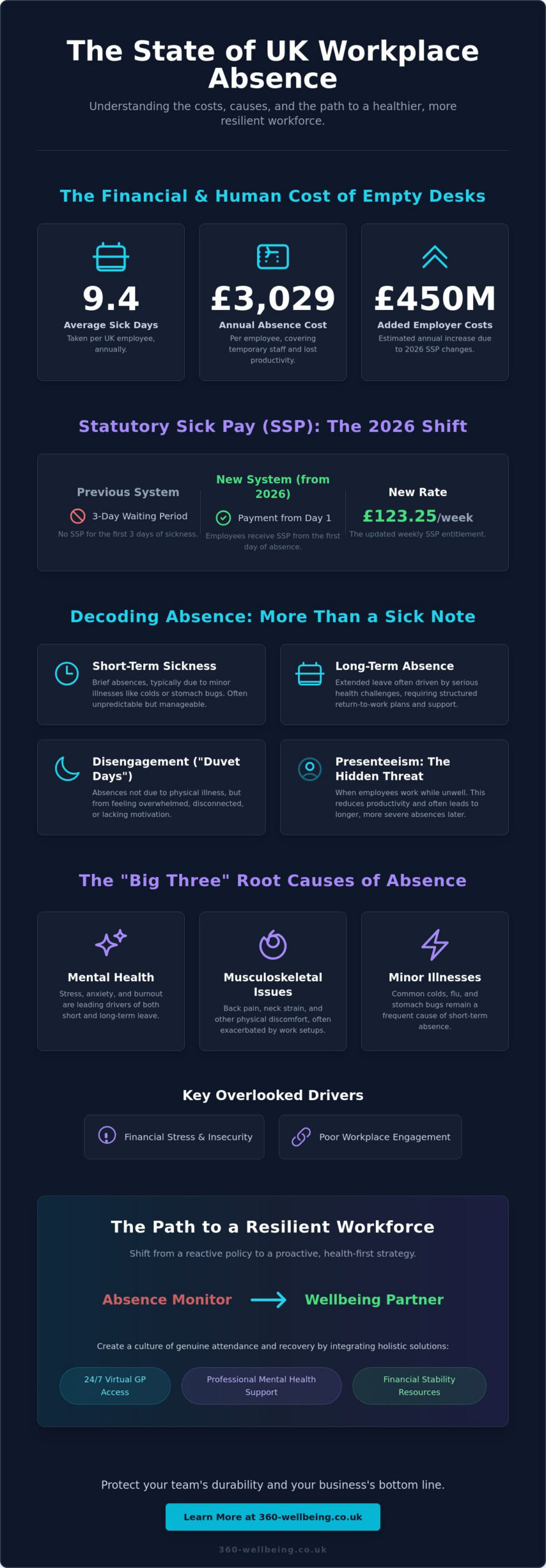
With the average UK employee now taking 9.4 sick days a year, the annual cost of absence has reached a staggering £3,029 per person. You’re likely feeling the ripple effects of these empty desks, from the high price of temporary cover to the dip in morale as your remaining team shoulders the extra weight. Learning how to manage absenteeism in the workplace has become more than an HR task; it’s a vital part of protecting your team’s durability and your business’s bottom line. It’s a delicate balance to strike, especially with the 2026 removal of SSP waiting days and the launch of the Fair Work Agency adding new layers of responsibility.
We believe that staff wellbeing is a professional necessity and a human entitlement, not a luxury. This guide will help you move from a culture of rigid policing to a proactive, health-first strategy that boosts both retention and productivity. You’ll gain a clear, legal, and supportive framework for handling sick leave by taking a panoramic view of your team’s physical and mental health. We’ll explore how providing modern resources like mental health support and 24/7 virtual GP access can create a more resilient workforce while significantly lowering your absenteeism rates.
Key Takeaways
- Learn why shifting your leadership style from an “absence monitor” to a “wellbeing partner” is the most effective way to foster a culture of genuine attendance and recovery.
- Discover how to manage absenteeism in the workplace by implementing a methodical, five-step framework that prioritises early intervention and empathetic communication.
- Identify the “Big Three” drivers of staff absence-including mental health and musculoskeletal issues-and learn how to address these root causes before they lead to long-term leave.
- Understand how integrating holistic solutions like 24/7 Virtual GP access and professional mental health support can reduce the pressure on your team and prevent minor issues from escalating.
- Explore the critical link between financial stability and workplace attendance, ensuring your team feels secure enough to focus on their professional contributions.
Understanding Absenteeism in the 2026 UK Workplace
To build a resilient team, we must first look clearly at the data. What is absenteeism? In a professional context, it isn’t just a one-off bout of flu or a family emergency. It’s a pattern of unscheduled absences that suggests a deeper disruption in an employee’s wellbeing or engagement. By 2024, the UK saw sick days climb to 9.4 days per employee. This isn’t just a statistic; it’s a signal that our traditional methods of support need a modern, more compassionate upgrade. Understanding how to manage absenteeism in the workplace starts with recognizing that absence is often the final symptom of a much longer journey through stress or physical discomfort.
We generally categorize these absences into three areas. Short-term sickness often involves minor illnesses like colds or stomach bugs. Long-term absence, frequently driven by mental health challenges or musculoskeletal issues, requires a more structured return-to-work plan. Then there are “duvet days” or disengagement, where staff stay away not because of physical ailment, but because they feel overwhelmed or disconnected. There’s also the hidden challenge of presenteeism. This happens when staff show up while unwell, often leading to longer, more severe periods of absence later. It’s a cycle that drains vitality from your organization.
The Financial and Human Cost of Absence
The impact of absence is felt far beyond the HR dashboard. With the estimated cost of absence sitting at £3,029 per employee per year, the financial burden on UK businesses is significant. Recent 2026 updates to Statutory Sick Pay (SSP) mean that the three-day waiting period is gone. Employees now receive £123.25 per week from day one. While this provides essential security for workers, it also increases the direct costs for employers by an estimated £450 million annually across the country.
The human cost is equally pressing. When a team member is away, the remaining staff often face increased workloads and heightened stress, which can lead to a domino effect of burnout. Ultimately, absenteeism is a diagnostic signal of workplace vitality that requires a panoramic viewpoint to understand the physical, mental, and social factors at play. Addressing this requires more than just a policy; it requires a commitment to financial support for employees and holistic health care.
Absence in the Era of Hybrid Work
Hybrid and remote working have changed the landscape of how to manage absenteeism in the workplace. The lines between “ill” and “well enough to log on” are now incredibly blurry. Many employees feel a quiet pressure to work through migraines or high stress because they don’t have to commute, leading to “invisible burnout.” Traditional tracking methods often miss these nuances. You might see a full digital “green light” on your team chat, but that doesn’t always mean your team is thriving. Modern management requires looking past the screen to ensure staff feel empowered to take the genuine recovery time they need to maintain long-term durability.
Identifying the Root Causes: Why Your Team is Staying Away
To effectively address staff absence, we must look beyond the surface level of a sick note. Most absences in the UK fall into what we call the “Big Three”: mental health challenges, musculoskeletal issues, and minor illnesses. However, these categories often overlap and influence one another. A minor illness might be the final tipping point for someone already struggling with chronic back pain or a stressful home life. Understanding these underlying drivers is the first step in learning how to manage absenteeism in the workplace with a truly supportive and clinical hand.
One often overlooked factor is the heavy weight of external pressures. There’s a profound link between financial support for employees and their ability to show up fully. When staff are burdened by debt or rising living costs, the resulting stress often manifests as physical illness or severe anxiety. Similarly, a workplace culture that lacks engagement can lead to “avoidance-based” absence. If an employee doesn’t feel valued or supported, they’re far more likely to stay away when they feel slightly under the weather. We see this as a signal that the professional harmony of the team needs attention.
The Mental Health Crisis and Workplace Attendance
Mental ill-health is now the leading cause of long-term absence, cited by 41% of UK employers. It’s rarely just “in the mind”; anxiety and depression often present as physical exhaustion, headaches, or digestive issues. A major driver of the 148.8 million working days lost in 2025 is the difficulty in accessing quick care. When an employee is stuck on a waiting list for months, a manageable issue can spiral into a long-term crisis. Providing immediate Mental Health Support can be the difference between a few days of recovery and a multi-month absence.
Physical Barriers: Musculoskeletal and Chronic Health
Our bodies weren’t designed for sedentary desk work or repetitive manual tasks. Poor ergonomics often lead to back pain and repetitive strain, which remain primary drivers of physical absence. We need to focus on “durability”, which is the ability of our workforce to remain healthy and resilient over time. Preventative care is essential here. By catching a minor niggle early through professional Physiotherapy, you can stop a small physical barrier from becoming a permanent obstacle to attendance. This proactive approach ensures that your team feels cared for before a problem becomes debilitating.
Moving Beyond Policies: Creating a Culture of Attendance
Traditional absence policies often feel like a set of hurdles for employees to jump over. To truly transform your results, you must shift your perspective. A rigid approach often breeds fear, leading staff to hide symptoms until they reach a breaking point. When you consider how to manage absenteeism in the workplace effectively, the answer lies in shifting the manager’s role from a clinical “absence monitor” to a compassionate “wellbeing partner.” This transition creates an environment where staff feel safe to admit they’re struggling before a crisis occurs.
Psychological safety is the bedrock of this culture. If an employee feels that admitting to a mental health struggle or a chronic flare-up will lead to disciplinary action, they’ll likely “power through” until they can no longer function. This presenteeism is a precursor to long-term absence. By promoting a work-life balance that encourages genuine recovery, you protect the long-term durability of your team. Tools like flexible working are essential here. They allow staff to manage family commitments or health appointments without the stress of a full day’s absence, keeping them engaged and productive.
Training Managers for Empathetic Intervention
Managers are your first line of defense. They need the skills to spot early warning signs, such as subtle changes in work quality or a sudden withdrawal from team socialising. A direct and personal check-in can often prevent a minor stressor from escalating into a week of sick leave. We encourage managers to handle sensitive medical information with clinical precision and human warmth. It’s about asking “How can we support you?” rather than “When will you be back?” This shift in language signals that the employee’s health is a professional necessity, not just a line item on a spreadsheet.
The Role of Return-to-Work Consultations
The return-to-work interview shouldn’t feel like a cross-examination. Instead, reframe it as a supportive consultation focused on adjustments. This is your opportunity to identify if the workplace itself, perhaps through excessive workload or lack of support, is a contributing factor to the illness. By drafting a methodical path forward with agreed-upon adjustments, you ensure the employee feels valued and understood. This partnership approach doesn’t just reduce the risk of a relapse; it builds a deeper sense of loyalty and engagement that serves your business long after the employee has returned to their desk.
A 5-Step Framework for Managing Absence with Empathy
To move from theory to action, you need a structured path that balances clinical precision with human sensitivity. Understanding how to manage absenteeism in the workplace effectively requires a methodical approach that views every absence as a signal rather than a problem. This five-step framework ensures you remain a partner in your employee’s health journey, protecting the durability of your team while maintaining operational steady rhythm.
- Data-Driven Insight: Use tracking systems not to police, but to identify patterns. Look for frequency and timing to understand if an employee is struggling with a recurring issue or burnout.
- Early Intervention: Reach out as soon as a pattern emerges. A supportive “check-in” conversation can often prevent a short-term struggle from escalating into a long-term absence.
- Holistic Assessment: Take a panoramic viewpoint. Determine if the barrier to attendance is physical, mental, or an external pressure like financial stress.
- Collaborative Adjustments: Work with the employee to find solutions. This might include phased returns, amended duties, or temporary remote working to ease the transition back.
- Clinical Support: Provide immediate access to professional care. Bypassing traditional wait times ensures that your staff get the help they need when they need it most.
By following these steps, you create a sense of safety and order. It’s about moving away from fear-based management toward a proactive vision of workplace harmony. If you’re ready to provide your team with the tools they need to thrive, you can explore our comprehensive wellbeing solutions designed for the modern UK employer.
Identifying Patterns with the Bradford Factor
The Bradford Factor is a widely used formula that highlights frequent, short-term absences. While some organisations use it as a punitive tool, we believe it’s most effective as a “wellbeing trigger.” A high score shouldn’t lead to an immediate warning; it should lead to a supportive consultation. Using this data gives you the foresight to spot potential burnout before it becomes debilitating. It allows you to offer customization in support, ensuring that those who are frequently absent for minor reasons receive the specific care or adjustments they need to stay engaged.
Practical Adjustments for a Phased Return
When an employee returns after a long-term illness, a steady and methodical transition is essential. Under UK law, employers must consider “reasonable adjustments” to support staff with disabilities or long-term health conditions. A phased return is a classic example, where an employee might work shorter hours or fewer days, gradually building back to their full contract over several weeks. This isn’t just about compliance; it’s about making the employee feel valued and supported. It removes the “all or nothing” pressure that often leads to relapses, ensuring that their return to the team is both successful and sustainable.
Strategic Solutions: Reducing Absence through Holistic Support
While many managers rely on tracking software to highlight where a problem exists, real change happens when you provide the clinical solutions that address the root cause. Learning how to manage absenteeism in the workplace effectively means moving from a reactive stance to a proactive partnership with your employees. By integrating holistic support systems, you remove the obstacles that keep your team away from their best work. This isn’t about monitoring a problem; it’s about providing the foresight and resources to prevent it.
Your strategy should aim for a panoramic viewpoint that covers every aspect of an employee’s life. When you offer 24/7 Virtual GP access, you’re giving your staff a professional lifeline that works around their schedule. Similarly, providing Mental Health Support and life coaching addresses the emotional roots of absenteeism, such as anxiety or burnout, before they manifest as long-term leave. For physical durability, immediate access to Physiotherapy can stop a minor musculoskeletal niggle from becoming a debilitating back injury. By also offering Legal Support and Financial Support & Debt Advice, you help remove the external stressors that often distract staff and lead to disengagement.
The Virtual GP as a Performance Tool
Traditional healthcare often requires employees to take half-days or full days off just to sit in a waiting room. Integrating a 24/7 Virtual GP service transforms this experience. It allows staff to speak with a doctor within minutes, often from the comfort of their own home. This “Doctor at Hand” approach ensures that minor symptoms are treated early, leading to faster recovery times and a swifter return to work. We believe that quick access to medical advice is more than a perk; it’s an essential human entitlement in a modern, healthy workplace. When staff can secure prescriptions and referrals without the stress of a three-week wait, their health and their productivity both see a significant boost.
How 360 Wellbeing Facilitates Total Workplace Wellness
Our philosophy is rooted in the belief that an employee is a whole person, not just a resource. A fragmented approach to health often misses the underlying factors that drive absence. By using an all-encompassing platform, you treat physical, mental, and social health as a single, unified narrative. This holistic care ensures that every team member receives the customization they need to stay resilient and engaged.
There is a clear ROI in this approach. The “cost of doing nothing” is far higher than the investment in a proactive wellbeing strategy. When you reduce the frequency and duration of absences, you protect your bottom line and foster a culture of vitality. See how 360 Wellbeing can help you manage and reduce absenteeism by creating a workplace where every individual has the support they need to thrive. It’s time to move beyond tracking the days lost and start investing in the health that keeps your team present and productive.
Building a Future of Workplace Vitality
Managing absence isn’t about enforcing rigid rules; it’s about nurturing the long-term health and durability of your team. You’ve seen how shifting your role from a clinical monitor to a wellbeing partner can transform your workplace culture. By addressing the true root causes of absence, from mental health challenges to musculoskeletal issues, you move toward a proactive strategy that protects both your people and your bottom line. Implementing a methodical, empathetic framework ensures that every employee feels valued during their recovery and supported during their return.
Mastering how to manage absenteeism in the workplace requires the right tools to bridge the gap between policy and genuine care. Our award-winning holistic wellbeing platform provides the clinical expertise your team deserves to thrive. With 24/7 access to UK-registered Virtual GPs and comprehensive Mental Health support through our EAP, you can bypass traditional wait times and offer immediate, professional care.
Discover how our platform reduces absenteeism through 24/7 health support and start building a more resilient organization today. You’re not just managing staff; you’re investing in the human heart of your business, ensuring a harmonious and productive future for everyone.
Frequently Asked Questions
What is considered a high absenteeism rate in the UK?
An absenteeism rate is generally considered high if it significantly exceeds the national average, which reached 9.4 days per employee in 2024. However, “high” is often relative to your specific industry. For example, public sector absence rates were 2.9% in 2025, while the private sector saw a lower rate of 1.7%. Benchmarking your team against these sector-specific figures helps you identify when a pattern requires a more proactive intervention.
Can I dismiss an employee for frequent short-term absences?
You can dismiss an employee for frequent absences, but you must follow a fair and transparent capability or disciplinary procedure. It’s essential to show that you’ve investigated the underlying causes and offered reasonable support or adjustments. With the Fair Work Agency now enforcing employment rights as of April 2026, businesses must be particularly methodical in their approach. Dismissal should always be a last resort after all supportive avenues have been exhausted.
How does a Virtual GP help reduce workplace absenteeism?
A Virtual GP reduces absence by giving employees immediate access to medical advice, often within minutes. This prevents the need for staff to take half-days or full days off to wait for traditional NHS appointments. Quick access to prescriptions and referrals means that minor illnesses are treated before they become severe. It’s a practical way to show how to manage absenteeism in the workplace by prioritizing early clinical intervention and employee convenience.
What are reasonable adjustments for mental health absence?
Reasonable adjustments for mental health often include flexible start times, phased return-to-work plans, or temporary changes to specific job responsibilities. You might also provide direct access to Mental Health Support or an Employee Assistance Programme (EAP). These adjustments create a sense of safety and order, allowing the employee to manage their wellbeing while staying connected to their role. It’s about building a path back to productivity that feels both manageable and supportive.
How do I conduct a supportive return-to-work meeting?
A supportive meeting should focus on the employee’s health and readiness to return rather than just the logistics of their absence. Start by asking how they’re feeling and if there are any workplace factors contributing to their illness. This is a vital part of how to manage absenteeism in the workplace with empathy. Agree on a clear, methodical plan for their first few weeks back, ensuring they feel valued and not pressured to “power through” symptoms.
Is the Bradford Factor still a relevant tool in 2026?
The Bradford Factor remains a useful tool in 2026 for identifying disruptive patterns of frequent, short-term absence. However, its application has shifted from a punitive “stick” to a “wellbeing trigger.” Instead of using a high score to issue an automatic warning, modern managers use it as a signal to start a supportive conversation. It gives you the foresight to spot potential burnout or chronic health issues early, allowing for a more customized approach to staff care.
How can financial stress lead to physical sickness and absence?
Financial stress often manifests as physical symptoms like chronic tension, insomnia, or high blood pressure, all of which drive up absence rates. When employees are distracted by debt or rising costs, their mental resilience drops, making them more susceptible to illness. Providing Financial Support & Debt Advice as part of your wellbeing strategy helps address these external pressures. This panoramic approach ensures that your team isn’t just physically present, but mentally engaged and focused.
What legal rights do UK employees have regarding sick leave?
As of April 2026, UK employees have the right to receive Statutory Sick Pay (SSP) from their first qualifying day of illness. The three-day waiting period has been abolished, and the Lower Earnings Limit was removed to make SSP more inclusive. Employees are entitled to £123.25 per week, or 80% of their average earnings if that’s lower. They also have the right to a fair process and “reasonable adjustments” if their illness qualifies as a disability under the Equality Act.