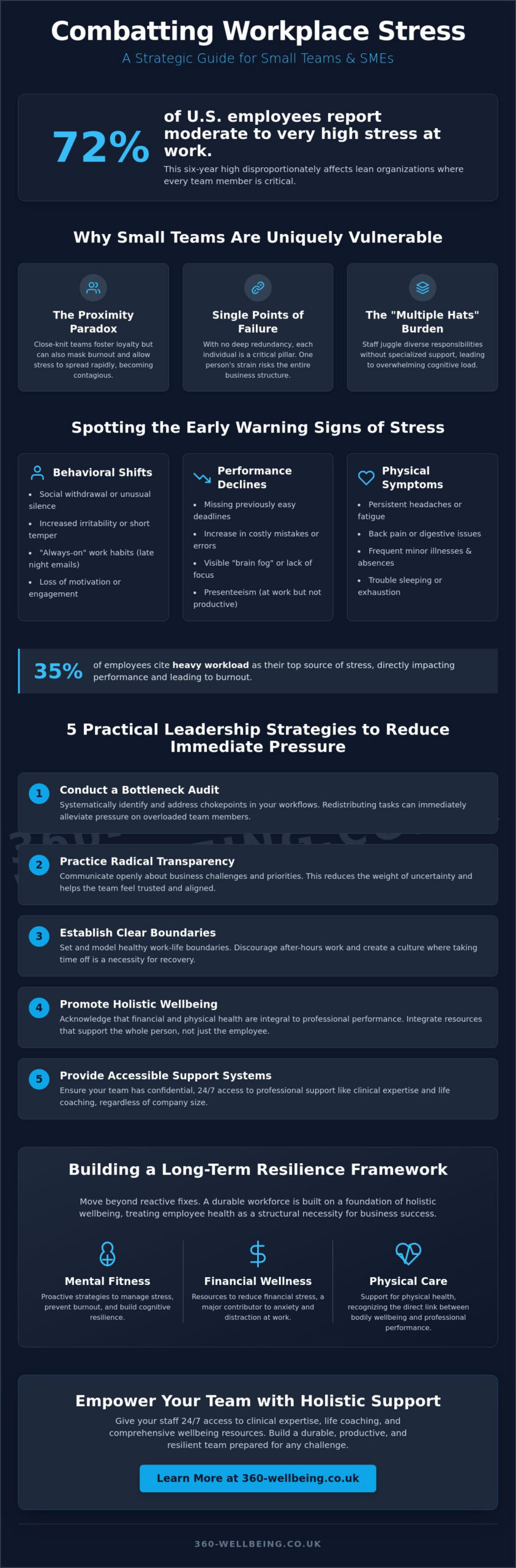
72% of U.S. employees report moderate to very high stress at work, a six-year high that hits lean organizations especially hard. In a smaller setting, you don’t have the luxury of deep redundancy, and every individual often acts as a single point of failure. Learning how to reduce stress in a small team is no longer just a leadership perk; it’s a structural necessity for the health of your business. You likely feel the weight of keeping the wheels turning while personal pressures bleed into the office, often without the cushion of a traditional corporate HR budget.
We understand that your team’s vitality is your greatest asset. This guide offers a panoramic view of workplace wellbeing, providing practical, SME-focused strategies to identify, manage, and prevent burnout through proactive leadership. You’ll discover how to create a more resilient and productive environment using tools that prioritize both mental and financial fitness. We’ll walk through a structured path to lower absenteeism and foster a culture of durability, ensuring your team feels supported and empowered to succeed throughout 2026.
Key Takeaways
- Recognize the subtle behavioral shifts and performance indicators that often mask the unique “proximity paradox” found in close-knit, lean environments.
- Master immediate leadership tactics, like bottleneck auditing and radical transparency, to redistribute workloads and remove the weight of uncertainty.
- Learn how to reduce stress in a small team by moving beyond reactive fixes toward a panoramic resilience framework that treats wellbeing as a professional necessity.
- Understand why integrating financial wellness and physical care is essential for building a durable workforce that’s protected against the domino effect of burnout.
- Discover how affordable, all-encompassing support systems give your staff 24/7 access to clinical expertise and life coaching, regardless of your company’s size.
Understanding the Small Team Stress Dynamic: Why SMEs are Different
Small teams operate much like a single nervous system. When one part experiences tension, the entire organism feels the vibration. Unlike large corporations with deep layers of redundancy, small and medium-sized enterprises (SMEs) face a unique set of pressures that make learning how to reduce stress in a small team a matter of survival rather than just a cultural goal. In a team of five or ten, there’s no “Department B” to absorb the overflow when things get difficult. Every individual often acts as a critical pillar, and when one pillar begins to buckle, the structural integrity of the whole business is at risk.
This dynamic creates what we call the “Proximity Paradox.” The close-knit nature of a small team is often its greatest strength, fostering loyalty and fast communication. However, these tight bonds can also mask the early signs of Occupational burnout. Employees often feel a personal obligation to their colleagues, leading them to hide their struggles to avoid “letting the team down.” Conversely, because of this closeness, one person’s high stress levels can quickly become contagious, rippling through a small office or group chat in minutes. When you add the “multiple hats” burden, where staff juggle diverse responsibilities without specialized support, the cognitive load can become overwhelming.
The Impact of Chronic Stress on SME Productivity
In a lean operation, the margin for error is razor-thin. Stress-induced brain fog isn’t just a personal hurdle; it’s a liability that leads to costly mistakes, from missed project deadlines to errors in financial reporting. We often see the hidden cost of presenteeism in small teams, where employees show up physically but lack the mental clarity to perform. Chronic stress in an SME is the persistent erosion of mental and physical resources that occurs when professional demands consistently outpace the team’s collective capacity for recovery. When no one feels they can take a day off without the work stalling, the team’s durability begins to fade.
Proximity vs. Professionalism: Navigating Small Team Boundaries
Maintaining a healthy culture requires a delicate balance between being an empathetic partner and a professional leader. You’ve likely noticed when a team member’s personal stress starts bleeding into their professional performance, perhaps through unusual silence or a sudden drop in engagement. Identifying these shifts early allows for a proactive rather than reactive response. By setting a tone that views wellbeing as a professional necessity, you create a safe environment where boundaries are respected. This clarity helps prevent the “always-on” culture that frequently leads to exhaustion in small, ambitious teams.
Identifying Early Warning Signs of Stress in Your Team
Recognizing when pressure has tipped into something harmful requires more than just looking at a spreadsheet. In a small team, the signs are often behavioral before they are financial. You might notice a team member who was once the first to chime in during a brainstorm suddenly becoming withdrawn or unusually silent in group chats. This irritability or social retreat is a common byproduct of a heavy workload, which 35% of employees cited as their top stressor in March 2026. When you understand these subtle shifts, you’re better equipped in your journey of learning how to reduce stress in a small team.
Performance indicators follow closely behind these behavioral changes. If a reliable colleague begins missing deadlines that were previously easy to hit, it isn’t usually a lack of skill. It is often a sign that their cognitive capacity is stretched to its limit. To understand the broader context of these shifts, the NIOSH guide to preventing job stress provides a helpful framework for how organizational changes manifest as individual strain. Another major red flag is the “always-on” worker. If you see emails landing in your inbox at 11 PM or during scheduled holidays, your team member is likely struggling to disconnect, a habit that leads directly to burnout.
Physical Signs of Stress to Watch For
The body often speaks when the mind cannot. Chronic stress frequently presents as physical ailments, such as persistent headaches, fatigue, or even back pain and digestive issues. In a lean team, frequent short-term absences for minor illnesses are often a cry for help rather than a string of bad luck. Encouraging your staff to seek professional medical advice early is a vital part of maintaining team durability. Providing access to a holistic support system ensures they have the clinical guidance needed to address these physical symptoms before they escalate into long-term absenteeism.
Psychological and Emotional Red Flags
Watch for social anxiety during presentations or a noticeable drop in confidence. There is a fine line between “healthy pressure” that drives growth and the destructive stress that paralyzes it. Regular, empathetic check-ins are your best tool for uncovering these hidden emotional burdens. These shouldn’t be formal performance reviews but rather steady, calm consultations that allow team members to voice concerns about their mental fitness without fear of judgment. This proactive approach helps maintain the durability of your workforce through the challenges of 2026.
5 Practical Leadership Strategies to Reduce Immediate Pressure
Once you’ve identified the red flags of burnout, the next step is implementing structural changes that provide immediate relief. Learning how to reduce stress in a small team requires a shift from reactive management to proactive design. Start with a “bottleneck audit.” In lean teams, work often piles up behind one person who holds specialized knowledge or access. Redistributing these tasks doesn’t just relieve that individual; it also builds redundancy, protecting your business from the risks of single points of failure. It’s about ensuring the workload is balanced across the team’s collective capacity.
Radical transparency is another vital tool for the modern manager. When employees understand the “why” behind company goals and challenges, it reduces the “uncertainty stress” that often plagues smaller, more volatile organizations. Couple this with enforced boundaries. If your team knows that “no-contact” holidays are a mandatory policy rather than a suggestion, they can truly disconnect and recharge their mental fitness. This creates a sense of safety, knowing they aren’t expected to be “always-on” even during their personal time.
Don’t underestimate the power of micro-recognition. Celebrating small, daily wins builds dopamine and strengthens team cohesion, which is essential when the pressure is high. Finally, empower autonomy. Giving staff control over their own schedules and how they approach their tasks allows them to manage their unique work-life balance needs. This trust-based approach is a significant driver of long-term durability and professional satisfaction.
Streamlining Communication for Mental Clarity
Notification fatigue is a modern epidemic that fragments focus and heightens anxiety. To combat this, choose specific tools for specific tasks to reduce the constant ping of interruptions. A 15-minute daily “stand-up” keeps everyone aligned without the exhaustion of long, unnecessary meetings. Most importantly, create a safe space where staff feel comfortable saying, “I am at capacity.” This honesty allows you to intervene before a workload becomes a crisis.
Fostering a Culture of Growth and Ownership
Empowerment goes beyond delegating tasks; it involves supporting the person behind the role. Providing access to Life Coaching can help employees develop the tools to manage their own professional stress and personal growth. Encourage them to propose their own solutions to workload bottlenecks. When staff have clear, achievable milestones, they avoid the feeling of “running in place” and instead feel a sense of collective progress and ownership over their success.
Building a Long-Term Resilience Framework for SMEs
To build a truly durable team, we must look beyond the office walls. A panoramic approach to wellbeing recognizes that your employees are whole people whose personal anxieties don’t vanish the moment they log on. When considering how to reduce stress in a small team, it’s vital to pair mental health support with physical care and life security. For a small business, this resilience framework acts as a safety net that catches issues before they turn into crises. It moves the conversation from reactive fixes to a proactive vision of workplace harmony.
Integrating Financial and Legal Peace of Mind
Money stress is a quiet productivity killer. There’s a direct, undeniable link between personal financial strain and workplace performance. Data from early 2026 indicates that financially stressed employees are twice as likely to be looking for a new job, often because the distraction of debt makes their current role feel unmanageable. By offering resources like Financial Support & Debt Advice, you demonstrate a caregiver leadership style that acknowledges the weight of modern living costs. Providing legal helplines and services like Complimentary Will Writing further alleviates the background noise of life admin that often leads to burnout. For a deeper look at this, see our guide on Financial Support for Employees: A Comprehensive Guide for UK Employers in 2026.
The Clinical Safety Net: Virtual GP and Therapy
A single illness can stall a lean team. Providing 24/7 access to a UK-registered Virtual GP reduces absenteeism by allowing staff to address health concerns quickly without waiting weeks for a traditional appointment. Similarly, normalizing mental health therapy sessions as a standard benefit removes the stigma of seeking help. Early clinical intervention prevents temporary stress from hardening into long-term, debilitating burnout. This support system ensures that professional necessity is balanced with essential human entitlements. It’s about providing foresight and durability for every individual.
Implementing an Employee Assistance Programme (EAP) specifically designed for the agility of an SME ensures your team has professional support at their fingertips. This isn’t about complex corporate schemes that sit unused in a handbook. Instead, it’s about providing a unified narrative of care that covers mental, physical, and social health. By integrating these services, you create a culture of durability where every team member feels scientifically supported and personally valued. To see how these services can protect your team’s vitality, explore our SME-focused wellbeing solutions today.
Holistic Wellbeing: The 360 Wellbeing Solution for Small Teams
While leadership tactics and cultural shifts are essential, the practical reality of learning how to reduce stress in a small team often comes down to accessible resources. Most SMEs don’t have the budget for sprawling corporate wellness schemes, yet they face the highest risks from employee burnout due to their lean structures. This is why we’ve developed an affordable, per-employee SaaS model specifically for UK small businesses. It’s a solution that treats wellbeing as a professional necessity rather than a luxury, ensuring that even the smallest teams have access to elite-level care.
Our all-encompassing platform provides a clinical safety net that protects your team’s vitality from every angle. From 24/7 Virtual GP access and Mental Health Support to Life Coaching and Physiotherapy, your employees receive the support they need when they need it. By centralizing these services, we significantly reduce the administrative burden on managers. You no longer need to act as a pseudo-HR department or a medical coordinator; you simply provide the gateway to professional care. This allows you to focus on your core business while we look after the durability of your workforce.
Why a Unified Platform Works for SMEs
Managing multiple benefit providers creates a layer of friction that time-poor managers simply can’t afford. A unified platform removes this complexity, offering a single point of access for everything from Financial Support & Debt Advice to Legal Support. This “expert caregiver” advantage means you have professional support standing behind you, even without a dedicated HR team. Additionally, our 360 Rewards program helps employees save money on daily expenses, which directly works to alleviate the financial stress that often bleeds into professional performance. It is a complete ecosystem designed for the modern SME.
Next Steps: Securing Your Team’s Future
The transition from reactive stress management to a proactive wellbeing strategy is the most significant step you can take for your team’s long-term success. In the fast-paced environment of 2026, waiting for a crisis to occur is no longer a viable management style. Onboarding your team into our ecosystem takes only minutes and causes minimal disruption to your daily operations. It’s an investment in human entitlement and professional durability that pays dividends in loyalty and productivity. Book a consultation to see how our platform can support your team and help you foster a culture of total wellness today.
Empowering Your Team for a Sustainable Future
Building a resilient team is an ongoing commitment to foresight and empathy. You’ve explored how identifying early warning signs and implementing structural changes like bottleneck audits can transform your daily operations. By embracing a panoramic approach that integrates mental health support with clinical care and financial wellness, you move beyond temporary fixes toward a vision of long-term workplace harmony. Understanding how to reduce stress in a small team is the first step in ensuring your business remains durable through the challenges of 2026.
You don’t have to navigate this journey alone. We provide the expert guidance and clinical safety net your team deserves, including 24/7 access to UK-registered GPs and comprehensive mental health and life coaching. Our platform is already used by thousands of UK small businesses to foster vitality and reduce the administrative burden on leadership. Protect your team with our all-in-one wellbeing platform and invest in the essential human entitlement of total health. Your team’s success is built on their wellbeing, and we’re here to help you secure it.
Frequently Asked Questions
How can I tell if my team is stressed or just busy?
Stress is characterized by a persistent decline in work quality and a negative shift in personality, whereas being busy is usually a temporary state of high focus. Busy teams often feel a sense of accomplishment, but stressed teams show signs of withdrawal, irritability, or increased errors. If you notice a consistent drop in engagement or team members acting out of character, it is likely a sign of chronic strain rather than a simple workload spike.
Can a small business really afford an Employee Assistance Programme (EAP)?
Yes, modern EAP solutions are designed specifically for the budget constraints of UK SMEs using a scalable, per-employee subscription model. These programs offer an affordable way to provide 24/7 professional support without the need for a large internal HR department. Investing in an EAP acts as a preventative measure, potentially saving your business from the significant costs associated with long-term absenteeism and staff turnover in a lean environment.
What is the most effective way to reduce stress in a 5-person team?
The most effective strategy is to address single points of failure by redistributing tasks and building redundancy across the group. In such a small setting, the pressure on one individual can quickly destabilize everyone else. Clear communication about capacity and the implementation of structured “no-contact” periods allows everyone to recharge properly, which is a core strategy for how to reduce stress in a small team effectively.
How do I talk to an employee who seems burnt out without overstepping?
Approach the conversation with empathy and curiosity rather than focusing on performance metrics or using clinical labels. Start by mentioning a specific observation, such as a change in their usual communication style, and ask how you can support them. This positions you as a partner in their wellbeing. It is about opening a safe space for them to speak without fear of professional repercussions or judgment from leadership.
Does offering a Virtual GP service actually help reduce workplace stress?
Offering a Virtual GP service directly reduces stress by removing the anxiety and time constraints of accessing traditional healthcare. Employees can speak to a UK-registered doctor 24/7, meaning they don’t have to worry about missing work or waiting weeks for an appointment. This immediate access provides peace of mind, allowing them to address physical health concerns before they escalate into mental strain or prolonged illness that affects the whole team.
What are the legal requirements for UK employers regarding workplace stress?
UK employers have a legal duty of care under the Health and Safety at Work etc. Act 1974 to ensure the health and welfare of their staff. This includes conducting risk assessments for work-related stress and taking steps to mitigate those risks. While the law doesn’t mandate specific benefits, providing resources like an EAP or legal support helplines helps you meet your obligations and protect your team’s long-term durability.
How does financial advice help with team performance?
Financial advice reduces the mental load of personal debt and budgeting, which are significant sources of workplace distraction. When employees have access to professional debt advice, they spend less time worrying about their bills and more time focusing on their professional roles. This proactive support demonstrates that you value them as whole people, fostering a culture of loyalty and improving overall productivity across your small operation.
What are some low-cost ways to improve team morale in 2026?
Improving morale doesn’t always require a massive budget; it often starts with micro-recognition and clear boundaries. Celebrating small wins daily builds team cohesion and provides a dopamine boost that counters stress. Additionally, enforcing strict “switch-off” times and providing access to a rewards platform that helps with daily living costs are effective, low-cost methods. These actions show your team that their mental fitness is a professional necessity rather than a luxury.