
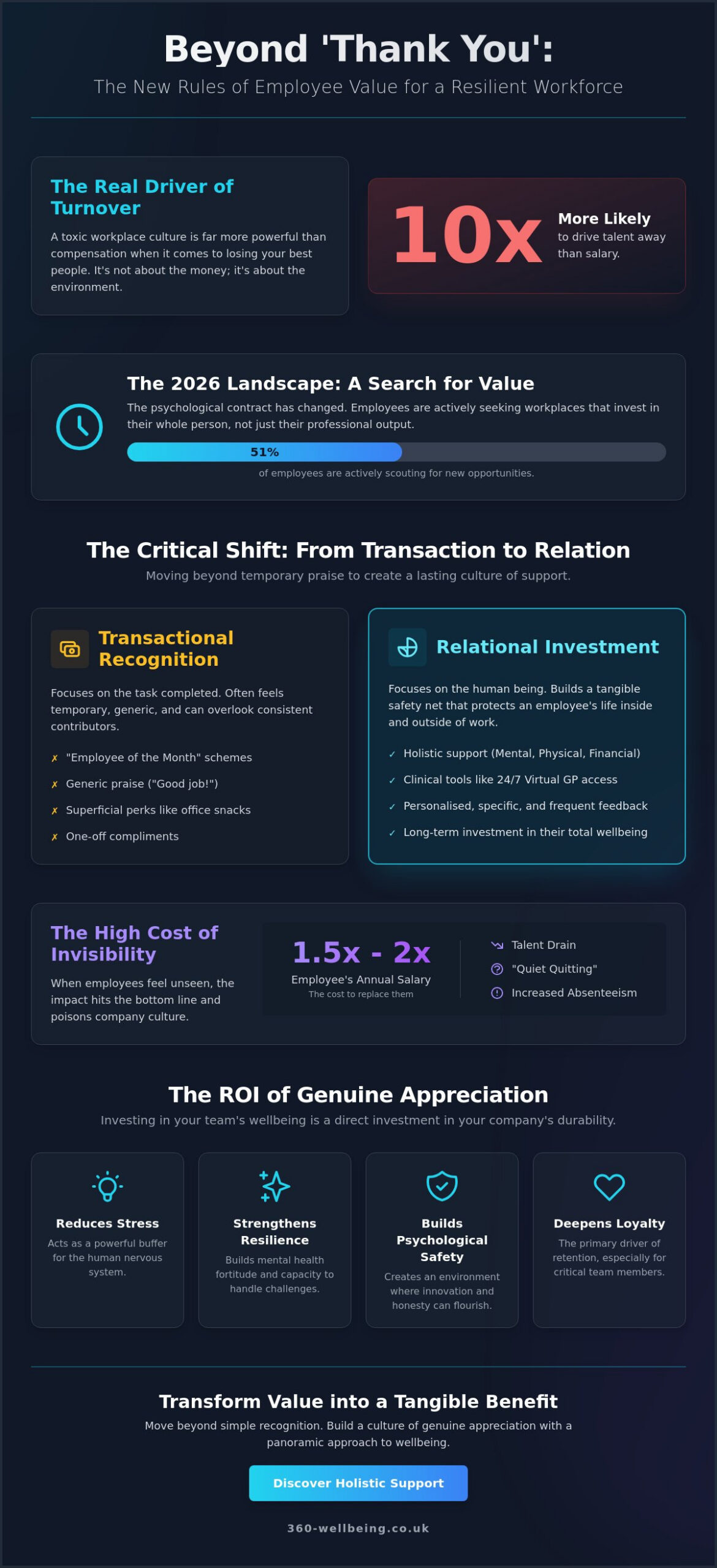
Did you know that a toxic workplace culture is ten times more likely to drive your best talent away than their salary? Even in 2026, with 51% of employees actively scouting for new opportunities, many organizations still struggle with the fundamental question of how to show employees you value them in a way that actually lasts. It’s exhausting for managers to feel disconnected from their hybrid teams, especially when traditional rewards fail to move the needle on morale or retention.
We understand that you want to do more than just fill roles; you want to nurture a resilient community where every individual feels a sense of belonging and vitality. This guide will help you move beyond simple recognition to build a culture of genuine appreciation through holistic support and clinical expertise. We’ll explore a panoramic approach to wellbeing that integrates mental health, financial stability, and physical recovery. You’ll discover a clear, structured path to transforming your workplace into a sanctuary of professional growth and personal harmony.
Key Takeaways
- Learn how to show employees you value them by shifting from transactional praise to deep relational investment that supports the whole person.
- Discover how providing clinical tools like a 24/7 Virtual GP and mental health support transforms abstract appreciation into a tangible safety net for your team.
- Understand the psychological contract of 2026 and why protecting an employee’s life outside of work is the most effective way to drive performance inside it.
- Master the manager’s checklist for active listening and personalised recognition to bridge the emotional gap between leadership and hybrid teams.
Why Demonstrating Value is the Foundation of Workplace Vitality
In the evolving landscape of 2026, the bond between an employer and their team has shifted from a simple transaction to a complex psychological contract. It’s no longer enough to offer a competitive salary and hope for the best. True workplace vitality begins when we understand that demonstrating value is a clinical necessity, not a luxury. When you explore how to show employees you value them, you’re essentially building a protective barrier against burnout and disengagement. This proactive health strategy ensures that your staff aren’t just surviving the work week but are actually thriving within it.
This psychological contract is built on the expectation that an individual’s contribution is met with a holistic perception of being seen, heard, and supported. When this balance fails, the cost of “invisibility” becomes staggeringly high. Statistics from early 2026 show that replacing an employee costs between 1.5 to 2 times their annual salary. Beyond the balance sheet, the talent drain and “quiet quitting” that follow a lack of appreciation can poison a company’s culture for years. Understanding how to show employees you value them is therefore a fundamental pillar of long-term business durability.
The ROI of a Valued Workforce
Feeling valued acts as a powerful buffer for the human nervous system. It directly reduces stress levels and strengthens mental health resilience by providing a sense of psychological safety. Within the framework of Employee recognition, the impact on retention is undeniable. For UK SMEs, where every team member’s role is critical, perceived value is the primary driver of loyalty. Employee value is the intersection of professional respect and personal care. When workers feel their health and happiness are a priority, their commitment to the organization’s success naturally deepens.
The “Invisible Employee” Syndrome
Undervalued staff often suffer from “Invisible Employee” syndrome, a state where they feel their presence makes little difference to the company’s trajectory. You can recognize the signs through subtle withdrawal, a sudden lack of innovation, or increased absenteeism. Many leaders try to fix this with generic perks like office snacks or “fun” Fridays, but these often fail because they don’t provide genuine appreciation. Instead, we must adopt a panoramic viewpoint of employee wellbeing. This means looking at the whole person and providing support that addresses their physical, mental, and social health as a single, unified narrative of care.
Moving Beyond ‘Thank You’: The Difference Between Recognition and Investment
A simple “thank you” is a gracious starting point, but it shouldn’t be the finish line. When you’re exploring how to show employees you value them, it’s vital to distinguish between a one-off compliment and a long-term investment in their life. Transactional recognition focuses on the task completed; relational investment focuses on the human being who completed it. This shift in perspective is what transforms a standard workplace into a community of mutual respect and durability.
Many business owners feel pressured by the belief that they don’t have the budget for massive, inflation-busting pay rises every quarter. While fair compensation is a non-negotiable foundation, providing high-quality wellbeing support is often a more sustainable and deeply felt form of corporate appreciation. By offering tools that protect an employee’s health and stability, you’re providing a benefit that carries weight long after a bonus has been spent. It’s about being an expert caregiver who looks out for their team’s long-term interests rather than just their immediate output.
The Limits of Transactional Praise
Traditional “Employee of the Month” schemes often feel exclusionary or hollow because they reward a single individual while potentially overlooking the steady contributions of the wider team. To create a structured culture of gratitude, your feedback must be specific. Instead of generic praise, highlight exactly how a person’s unique skills made a difference. Leaders who seek out practical ways to recognize employees often find that moving toward personalized, frequent feedback bridges the emotional gap that hybrid work can create. It’s these small, consistent acknowledgments that make staff feel truly seen.
Investment as the Ultimate Value Statement
True investment means providing solutions for real-world problems that keep your staff awake at night. When an employer provides 24/7 access to a UK-registered GP, they aren’t just offering a “perk”; they’re giving back the gift of time and removing the stress of waiting for medical care. This level of support shows you value an employee’s health as much as their performance. Integrating a comprehensive wellness strategy into your business model signals that you’re a partner in their success. Whether it’s through Mental Health Support or Financial Advice, these tools serve as a tangible safety net that reinforces their sense of belonging and vitality every single day.
5 Strategic Ways to Show Employees You Value Them in 2026
While verbal praise is a gracious starting point, true loyalty is built through tangible provision. In 2026, the most effective strategies for how to show employees you value them move beyond the office walls and into the fabric of their daily lives. By addressing the specific stressors that impact their vitality, you demonstrate a level of care that a simple “well done” can’t match. This proactive stance transforms the workplace from a site of labor into a community of mutual support.
- Prioritise Physical Health: Provide 24/7 Virtual GP services to remove the anxiety of appointment waiting times and ensure clinical advice is always accessible.
- Support Mental Resilience: Normalise mental health therapy and life coaching as standard benefits, shifting the narrative from crisis management to proactive emotional health.
- Financial Safeguarding: Offer practical debt advice and complimentary will writing to help staff protect their families’ futures and manage economic pressures.
- Career Empowerment: Move beyond traditional training by offering holistic life coaching and mentorship that aligns personal growth with professional milestones.
- Lifestyle Rewards: Use a 360 Rewards marketplace to help salaries go further on daily essentials, providing a constant reminder of the company’s appreciation.
When organizations prioritize these panoramic viewpoints of care, they master how to show employees you value them through consistent action. This approach acknowledges that an individual’s success is inseparable from their overall wellbeing. By integrating these services, you’re not just providing a job; you’re offering a durable partnership that respects the whole person.
Protecting Their Most Valuable Asset: Health
Health is a professional necessity and an essential human entitlement. Providing immediate access to clinical care sends a powerful message of foresight and reliability. A 24/7 Virtual GP service gives your team peace of mind, knowing they can speak to a doctor at any hour without the stress of traditional waiting lists. This commitment to their durability is essential for maintaining a positive workplace culture. Rapid access to Physiotherapy also ensures that minor physical aches don’t become chronic limitations, showing you’re a dedicated partner in their physical health.
Financial and Legal Peace of Mind
External stressors often weigh more heavily on productivity than workplace tasks. Providing robust financial support is one of the clearest signals of value in a high-inflation economy. It reduces the cognitive load that financial worry creates, allowing staff to focus with clarity. Beyond salary, offering practical ways to recognize employees through legal helplines and complimentary will writing addresses sensitive life stages with genuine compassion. These services provide the safety and order essential for workplace harmony.
The Manager’s Checklist: Small Gestures with Big Impact
Managers are the heartbeat of workplace culture. They’re the ones who translate abstract company policies into a daily lived reality for their teams. If you’re wondering how to show employees you value them on a practical level, the answer often lies in the quality of your attention. Research from Gallup suggests that managers account for 70% of the variance in team engagement. This means your individual leadership style is the most significant factor in whether an employee feels like a vital contributor or just another number on a spreadsheet.
To move beyond generic praise, follow this structured approach to demonstrating genuine appreciation:
- Step 1: Practice Active Listening. Dedicate time in 1-to-1s to focus entirely on the person, not just their current KPIs or project deadlines.
- Step 2: Personalise Recognition. Understand that some people thrive on public praise, while others find it overwhelming and prefer a quiet, private word of thanks.
- Step 3: Empower Autonomy. Show you trust your staff by offering flexible “wellbeing hours” that they can use for exercise, clinical appointments, or rest.
- Step 4: Facilitate Social Connection. Create opportunities for organic interaction that don’t feel like the forced fun of traditional corporate team building events.
- Step 5: Review Your Benefits. Regularly check that your support package, including Mental Health Support and Financial Advice, aligns with the actual needs of your workforce.
Mastering the 1-to-1 Consultation
A 1-to-1 should feel like a professional consultation rather than a performance interrogation. Move beyond the standard “How is the project going?” and ask questions that invite honest reflection. You might ask, “What has been the most draining part of your month?” or “Is there a specific area where you feel you need more support?” This creates a safe harbour for communication. By observing changes in tone or energy, you can identify early signs of burnout. Since 76% of employees report that workplace stress negatively impacts their productivity, these empathetic check-ins are a business necessity.
Autonomy as an Expression of Trust
Micromanagement is one of the fastest ways to erode an employee’s sense of value. When you grant autonomy, you’re signaling that you trust their professional judgment and respect their time. Providing a platform like 360 Rewards is a perfect example of this trust in action. It gives employees the power to choose the perks and discounts that actually matter to their unique lifestyle. Similarly, encouraging the use of Mental Health Support before a crisis occurs shows that you’re looking out for their long-term durability. This proactive approach ensures your team feels supported as whole human beings, not just as workers.
If you’re ready to build a more resilient and appreciated workforce, explore our full range of employee support services to see how we can partner with your business.
How 360 Wellbeing Transforms Value into a Tangible Benefit
Throughout this guide, we’ve explored the psychological and cultural shifts required to master how to show employees you value them. However, even the most compassionate strategy requires a reliable vehicle for implementation. The 360 Wellbeing platform serves as a turnkey solution, allowing businesses to move from abstract intentions to concrete provision. It’s designed to bridge the gap between leadership’s desire to care and the employee’s need for accessible, professional support. By centralising clinical expertise and everyday rewards, you create a unified narrative of total wellness that feels both scientifically grounded and deeply personal.
For many SMEs, the challenge has historically been making “big company” benefits accessible for smaller teams. We’ve solved this by offering a safety net that includes a 24/7 Virtual GP and a robust Employee Assistance Programme (EAP) through a simple per-employee monthly fee. This model ensures that even the most modest organisations can provide their staff with the same level of protection and foresight as global corporations. It’s about democratising health and ensuring that every worker, regardless of company size, has access to the support they deserve as a basic human entitlement.
A Single Platform for Total Wellness
Integrating physical, mental, and financial health into one platform ensures that support is never fragmented. Whether an employee requires Physiotherapy for a physical limitation or Financial Support & Debt Advice for external stressors, the path forward remains clear and methodical. The 360 Rewards marketplace acts as a daily touchpoint, helping staff save on essentials and serving as a consistent reminder of their employer’s investment in their lifestyle. We’ve made onboarding straightforward and stress-free, providing dedicated account management to ensure your wellness strategy is durable and effective from day one.
The Future of Valuing Your Team
The next frontier of corporate culture is proactive vitality. It’s a shift away from reactive crisis management toward a future where health is protected as a professional necessity. By choosing a partner who is deeply invested in your team’s success, you move beyond the coldness of traditional insurance models. Taking the first step involves a professional consultation to identify the unique needs of your workforce. This ensures your approach to how to show employees you value them is customised, manageable, and genuinely compassionate.
Ready to transform your workplace culture? Explore how 360 Wellbeing can help you show your employees they are truly valued.
Empowering Your Team for the Future
Creating a workplace where people feel truly seen requires a shift from occasional praise to a consistent, panoramic approach to care. As we’ve explored, the most effective strategy for how to show employees you value them involves protecting their health and stability as much as their professional output. By integrating clinical expertise with daily support, you move beyond the limits of traditional perks and build a foundation of genuine loyalty and vitality.
Through the 360 Wellbeing platform, you can provide your team with essential tools like 24/7 UK-registered GP access and comprehensive Mental Health Support. Combined with thousands of lifestyle discounts via 360 Rewards, these benefits offer a tangible safety net that respects the whole person. This proactive investment ensures that your workforce remains resilient, engaged, and supported through every challenge the modern landscape presents.
Take the first step toward a more harmonious and productive workplace today. Book a demo of the 360 Wellbeing platform to see how we can help you safeguard your team’s future. We’re here to partner with you in building a culture where everyone can thrive.
Frequently Asked Questions
How do you show an employee they are valued without a pay rise?
You can demonstrate genuine care by investing in an employee’s quality of life through comprehensive wellbeing support. While salary is a foundation, providing clinical services like a 24/7 Virtual GP or Physiotherapy addresses their daily stressors directly. These benefits show you value their health as a human entitlement. This approach creates a more durable bond than a one-off bonus might achieve by supporting their long-term vitality.
What are the most effective ways to recognise remote employees?
Recognition for remote staff thrives on intentional visibility and specific, personalised feedback. Since you lack casual office interactions, you must create digital spaces for appreciation. Using a platform like 360 Rewards allows remote teams to access the same lifestyle discounts and support services as office-based staff. This ensures nobody feels like an “invisible employee” regardless of their physical location or time zone.
How often should a manager show appreciation to their staff?
Appreciation should be a steady, methodical rhythm rather than a rare event. Aim for small, specific acknowledgments weekly to reinforce positive behaviours and maintain morale. This prevents recognition from feeling like a transactional chore. Regular 1-to-1 consultations provide the perfect safe harbour for these conversations. They allow you to focus on the person’s growth and wellbeing rather than just their current KPIs.
Can an Employee Assistance Programme (EAP) help staff feel more valued?
An Employee Assistance Programme is a powerful signal that you care about your team’s life outside of work. By offering confidential access to Mental Health Support and Financial Advice, you’re providing a tangible safety net for their personal challenges. This demonstrates that you view their wellbeing as a professional necessity. It’s a core part of how to show employees you value them in a modern workplace.
What is the difference between employee recognition and employee appreciation?
Recognition is typically transactional and focuses on rewarding specific achievements or high-performance tasks. Appreciation is much broader and involves valuing the individual for who they are as a person. While you might recognise a successful project completion, you appreciate the unique skills and perspective that employee brings to your community every day. Both are essential for long-term workplace harmony and resilience.
Is it better to give public or private recognition?
The most effective choice depends entirely on the individual’s personality and preferences. Some staff feel empowered by public praise in team meetings, while others find it uncomfortable and prefer a private, heartfelt note. Expert caregivers take the time to learn these preferences during 1-to-1s. This ensures that the recognition feels like a genuine gift that respects their boundaries rather than a source of social anxiety.
How do health benefits like a Virtual GP impact employee morale?
Health benefits like a 24/7 Virtual GP significantly boost morale by removing the stress of traditional medical waiting lists. When employees know they can access clinical advice at any hour, they feel a deep sense of reassurance and reliability from their employer. This type of provision transforms abstract value into a tangible benefit. It shows that you’re looking out for their long-term health and durability.
What are some low-cost ways to show staff you care about their wellbeing?
Showing you care doesn’t always require a massive budget; it often starts with trust and active listening. Granting autonomy through flexible “wellbeing hours” or providing a safe space for honest communication costs nothing but yields high returns in morale. Understanding how to show employees you value them often comes down to these small, human gestures that acknowledge their needs and boundaries as individuals.