
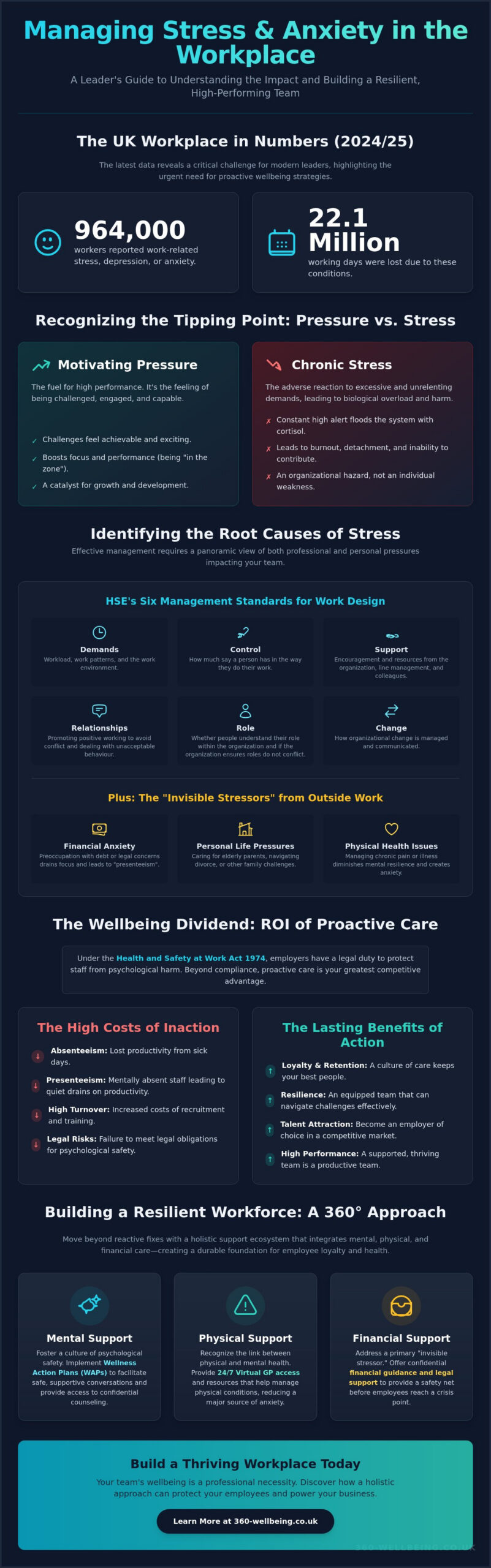
Did you know that 964,000 workers in the UK reported work-related stress, depression, or anxiety in the 2024/25 period alone? It’s a staggering figure that translates to 22.1 million working days lost, making the task of managing stress and anxiety in the workplace a critical priority for every modern leader. You likely see the impact through rising absenteeism or the quiet drain of presenteeism, and it’s natural to feel ill-equipped when navigating these sensitive conversations. We believe your team’s wellbeing is a fundamental right and a professional necessity, and we’re here to help you protect it with confidence.
This guide provides a clear, compassionate roadmap to help you identify early warning signs and meet your legal obligations under the Health and Safety at Work Act. You’ll learn how to move beyond reactive fixes and build a proactive strategy that fosters a loyal, resilient, and high-performing culture. We’ll explore a 360-degree approach to wellness that integrates mental health support with physical and financial care, ensuring your employees feel supported in every aspect of their lives so your business can truly thrive.
Key Takeaways
- Learn to distinguish between motivating pressure and chronic stress while identifying the “invisible stressors” like financial worries that impact your team’s daily focus.
- Discover how to apply the HSE’s six management standards to create a structured, reliable framework for managing stress and anxiety in the workplace.
- Explore how to implement Wellness Action Plans (WAPs) to facilitate safe, supportive conversations and foster a culture of psychological safety.
- Understand the “Wellbeing Dividend” and how proactive care serves as a professional necessity to reduce the high costs of absenteeism and burnout.
- Find out how a holistic support ecosystem, including 24/7 Virtual GP access and financial guidance, creates a durable foundation for employee loyalty and health.
Understanding Workplace Stress and Anxiety in 2026
The Health and Safety Executive (HSE) defines stress as the “adverse reaction people have to excessive pressures or other types of demand placed on them.” This definition is vital because it moves the focus away from individual weakness and onto the relationship between the worker and their environment. In 2026, the landscape has changed. Hybrid working models and rapid technological shifts have introduced new stressors, from digital exhaustion to the “always-on” culture. While pressure can be a catalyst for growth, chronic stress is an organizational hazard that requires a panoramic approach to resolve. For a comprehensive overview of occupational stress, one must look at how physical, mental, and social factors intertwine.
Anxiety often travels alongside stress but has its own distinct rhythm. It manifests as a persistent sense of unease or dread that doesn’t always have a clear, immediate cause. When managing stress and anxiety in the workplace, it’s vital to recognize that these aren’t just personal issues. They are responses to the environment we create as employers. By understanding these definitions, you can begin to build a strategy that protects your team’s vitality and ensures long-term durability.
The Difference Between Pressure and Stress
Pressure is often the fuel for high performance. It’s that sense of being in the zone where challenges feel achievable and exciting. However, every individual has a tipping point. When pressure becomes constant and unrelenting, the body remains in a state of high alert, flooding the system with cortisol. This biological overload eventually leads to burnout, turning a once-productive team member into someone who feels drained, detached, and unable to contribute. Recognizing this tipping point is the first step toward proactive care.
Why Mental Health is Now a Business Priority
Supporting your team isn’t just a kind gesture; it’s a professional necessity and a legal requirement. Under the Health and Safety at Work Act 1974, and with the heightened enforcement seen in 2026, employers have a clear duty to protect staff from psychological harm. Beyond compliance, a focus on “Total Wellness” is your greatest competitive advantage. In a market where talent is mobile, a culture that treats wellbeing as an entitlement rather than a luxury will always attract and keep the best people. Effective strategies for managing stress and anxiety in the workplace ensure your brand remains a place where people don’t just work, but truly thrive.
Identifying the Root Causes: From Workload to Personal Pressures
While many leaders focus solely on high workloads, the reality of managing stress and anxiety in the workplace is far more complex. It’s rarely just about the size of a “to-do” list. According to the HSE guidance on managing workplace stress, there are six core areas of work design that can cause harm if not managed well: demands, control, support, relationships, role, and change. These standards are essential, but they are only the starting point for an employer who wants to build a truly resilient culture.
To support a team effectively, we must look at the “invisible stressors” that employees carry with them every day. Life doesn’t happen in a vacuum. A person might be struggling with the weight of caring for an elderly parent, navigating a difficult divorce, or managing chronic physical pain. These factors don’t stay at home; they bleed into the working day, often manifesting as a lack of focus or sudden irritability. When physical health suffers, mental resilience often follows, creating a cycle of anxiety that can feel impossible to break without professional intervention. By taking a panoramic view of an employee’s life, you can identify these pressures before they lead to burnout.
The Interplay of Personal and Professional Stress
Financial anxiety is one of the most significant yet overlooked drivers of workplace stress. When a team member is preoccupied with debt or legal concerns, they might be physically present but mentally absent. This “presenteeism” is a silent drain on productivity and morale. By framing financial wellness as a pillar of your mental health strategy, you provide a safety net that catches people before they reach a crisis point. Offering resources like financial support for employees helps remove the stigma and provides practical paths forward. If you’re looking for ways to strengthen this support, exploring an Employee Assistance Programme can offer your staff the expert legal and debt advice they need to regain their focus.
Spotting the Signs in Your Team
Early intervention is the key to long-term durability. You don’t need to be a clinician to notice when something is wrong, but you do need to be observant and approachable. Look for these subtle shifts in your team’s daily rhythm:
- Emotions: Watch for uncharacteristic irritability, heightened sensitivity to feedback, or a sudden, noticeable loss of confidence in their own abilities.
- Behaviours: Notice if they’re working much longer hours than usual, withdrawing from team social interactions, or making uncharacteristic mistakes on routine tasks.
- Physical: Listen for mentions of frequent headaches, constant fatigue, or recurring minor illnesses that suggest their immune system is under strain.
Identifying these root causes allows you to move from being a manager who simply assigns tasks to a leader who nurtures a healthy, high-performing environment. When you address the whole person, you create a foundation for managing stress and anxiety in the workplace that is both sustainable and deeply compassionate.
The Business Case: ROI of Proactive Stress Management
Investing in your team’s mental health is often framed as a moral choice, but it’s equally a vital financial one. Poor mental health costs UK employers an estimated £51 billion each year according to data published by Planned Future in March 2026. This financial drain isn’t just about people being away from their desks. It includes the hidden costs of presenteeism, where staff are physically present but unable to function at their best. By proactively managing stress and anxiety in the workplace, you aren’t just ticking a compliance box; you’re protecting your bottom line. Adhering to the HSE guidance on managing work-related stress serves as a foundation for this protection, helping you avoid the 22.1 million working days lost annually to these conditions.
The “Wellbeing Dividend” is the tangible return you see when your workforce feels secure and supported. Happy, healthy employees are naturally more creative and resilient in the face of change. They’re also far less likely to seek roles elsewhere. When you reduce staff turnover, you save thousands in recruitment and training costs. This creates a cycle of stability that allows your business to focus on growth rather than constant damage control. Proactive support also significantly reduces the likelihood of long-term disability claims, ensuring your most experienced team members stay in the business for longer.
Calculating the Cost of Inaction
The numbers behind mental health investment are compelling. Research from the 2024 Deloitte Mental Health Report suggests that every £1 spent on workplace mental health interventions yields an average return of £5. If you ignore these needs, the costs quickly escalate beyond lost productivity. You face the very real risk of legal grievances and expensive employment tribunals under the Health and Safety at Work Act 1974. Beyond the courtroom, unmanaged stress creates a toxic atmosphere that erodes team-wide productivity, making it harder for even your strongest performers to succeed.
Building Durability into Your Business Model
A robust benefits package does more than just provide support; it creates a “loyalty loop” that binds your team to your vision. When employees see that you’ve invested in their health through tools like an Employee Assistance Programme (EAP) or digital health platforms, they feel valued as human beings. For SMEs, these digital solutions offer a scalable way to provide panoramic care without the need for massive internal departments. Positioning wellbeing as an investment in your people ensures your business model is built on a foundation of durability and mutual respect. This approach transforms managing stress and anxiety in the workplace from an administrative burden into a powerful driver of organisational success.
Practical Strategies for Managers to Reduce Workplace Anxiety
Managers often feel a heavy burden of responsibility when it comes to the mental wellbeing of their teams. You don’t need to be a clinical psychologist to make a profound difference. Effective leadership in 2026 is about providing the right environment and tools so that employees can manage their own health with your support. One of the most effective ways of managing stress and anxiety in the workplace is the implementation of Wellness Action Plans (WAPs). These are collaborative, living documents that allow an employee to outline what they need to stay well and how you can support them during difficult periods. They move the conversation away from “what is wrong” toward “what helps you thrive.”
Fostering a culture of psychological safety is equally vital. This means creating a space where team members feel safe to speak up about their struggles without fear of judgment or career repercussions. When people know they won’t be penalised for being human, they’re more likely to seek help early, preventing a minor issue from becoming a long-term absence. This panoramic viewpoint ensures that your team feels valued as individuals, not just as units of productivity.
Leading with Empathy and Professionalism
Starting a sensitive conversation can feel daunting. The key is to lead with empathy rather than focusing immediately on performance metrics. Instead of asking why a deadline was missed, try asking, “I’ve noticed you haven’t seemed yourself lately; is there anything I can do to support you?” This approach validates their experience and opens a door for active listening. During these periods, you should set realistic workload expectations. Temporarily adjusting a task list isn’t a sign of weakness; it’s a strategic move to ensure the long-term durability of your talent.
Structural Changes to the Working Environment
Sometimes, the root cause of anxiety is the structure of the work itself. Reviewing job descriptions to ensure role clarity can remove the stress of ambiguity. You should also encourage “Social Health” by facilitating peer support and team-building activities that aren’t just about the work. Flexible working patterns are no longer a luxury but a professional necessity for many, helping staff balance personal commitments like caring responsibilities. By addressing these structural elements, you create a more sustainable environment for managing stress and anxiety in the workplace.
Promoting healthy boundaries is another critical step. Encourage a “right to disconnect” where emails aren’t expected to be answered outside of core hours. If you want to empower your leadership team with the right tools, our Mental Health Support and training resources can help them spot early warning signs with confidence. By taking these practical steps, you move toward a proactive and positive vision of workplace harmony.
Building a Resilient Workforce with 360 Wellbeing
Managing stress and anxiety in the workplace requires more than just good intentions; it demands a comprehensive support ecosystem that employees can trust. We’ve designed the 360 Wellbeing platform to be that foundation for your business. It’s a modern, integrated digital space where your team can access the care they need exactly when they need it. By providing a panoramic view of health, we help you move away from reactive fixes toward a proactive culture of durability and vitality. This isn’t just about providing a service; it’s about establishing a partnership that values your team’s health as a professional necessity.
One of the most critical gaps in traditional support is immediate access to professional care. Our 24/7 Virtual GP service ensures that your employees never have to wait days for a consultation, providing peace of mind for both physical and mental health concerns. This instant connection to UK-registered clinicians is a vital tool for 2026, where speed and reliability are essential. Alongside medical care, we offer dedicated Mental Health Support and Life Coaching sessions. These resources empower your staff to navigate life’s transitions with confidence, ensuring they have the mental resilience to perform at their best.
We also recognise that wellbeing is deeply tied to financial security. The 360 Rewards marketplace is built to ease the burden of daily living costs, offering a practical way to reduce the financial stress that often fuels workplace anxiety. This holistic approach ensures that every aspect of an employee’s life is supported, creating a more engaged and loyal workforce. When you address the whole person, you build a business that is truly resilient.
Immediate Professional Support When It Matters
Our Employee Assistance Programme (EAP) serves as a confidential safety net, available at any hour of the day or night. It’s often the first port of call for those struggling with the “invisible” stressors of legal or financial worries. By offering expert Legal Support and Financial Support & Debt Advice, you provide your team with the resources to solve problems before they escalate into a crisis. Virtual GP services also play a vital role in lowering absenteeism rates, as employees can manage their health concerns without the need for lengthy time off for travel and waiting rooms.
A Holistic Partnership for Your Business
Whether you’re an SME or a larger organisation, our onboarding process is designed to be steady, calm, and methodical. We don’t just provide a one-off service; we act as a knowledgeable authority that remains approachable and deeply invested in your success. Every interaction is guided by the expertise of UK-registered clinicians who balance clinical precision with a warm, human touch. This ensures your staff receive care that is both scientifically grounded and deeply personal. It’s time to transform your corporate strategy into a vision of total wellness. You can protect your team’s wellbeing with 360 Wellbeing today.
Cultivating a Culture of Lasting Vitality
Building a resilient workforce is a journey that requires foresight, empathy, and a commitment to the whole person. We’ve explored how identifying invisible stressors and implementing structured support like Wellness Action Plans can transform your organisational health. By treating wellbeing as a professional necessity rather than a luxury, you secure the long-term durability of your most valuable asset. Mastering the art of managing stress and anxiety in the workplace isn’t just about compliance; it’s about creating a space where every individual feels empowered to thrive.
You don’t have to navigate this path alone. Our platform provides the comprehensive tools you need to support your staff through every challenge. With 24/7 access to UK-registered GPs, professional mental health therapy, and life coaching, your team receives the expert care they deserve. We also provide essential financial and legal support to tackle the pressures of daily life. Empower your team with a 360-degree wellbeing platform and start building a more engaged, loyal, and healthy workforce today. Your partnership with us ensures a brighter, more balanced future for everyone in your care.
Frequently Asked Questions
What is the most common cause of stress in the workplace?
Workload and a lack of control over how tasks are performed are the most cited causes of stress according to the HSE management standards. It is often the combination of high demands and insufficient support that leads to chronic stress. By addressing these factors, you can build a more durable environment that prevents burnout before it starts.
How can I tell if an employee is suffering from anxiety or just a busy period?
The key difference lies in the duration and nature of the symptoms. A busy period usually has a clear end date and employees remain engaged; however, anxiety often persists even when the workload decreases. Look for uncharacteristic irritability, social withdrawal, or a sudden loss of confidence that doesn’t resolve once a project is completed.
Are UK employers legally required to provide mental health support?
Yes, under the Health and Safety at Work Act 1974, you have a legal duty to protect your staff from psychological harm. This includes managing stress and anxiety in the workplace through regular risk assessments. Failing to address these risks can result in enforcement action from the Health and Safety Executive.
What is the difference between an EAP and private medical insurance?
An Employee Assistance Programme (EAP) provides immediate, confidential support for a wide range of life issues, including legal and financial worries. Private medical insurance typically focuses on clinical treatment for specific physical illnesses. We don’t sell medical insurance; instead, we provide a holistic EAP that offers a confidential safety net for your team’s mental and social health.
How can I help an employee who is stressed about financial issues?
You can provide practical resources such as Financial Support & Debt Advice to help them regain a sense of control. Our 360 Rewards marketplace also helps ease the burden of daily living costs by stretching the household budget. Addressing these “invisible” stressors is a professional necessity for maintaining a focused and productive workforce.
Can a Virtual GP help with workplace mental health issues?
Yes, a 24/7 Virtual GP provides a professional medical perspective and can refer employees to specialist Mental Health Support when needed. This rapid access to a UK-registered clinician offers immediate reassurance and helps in managing stress and anxiety in the workplace by resolving health concerns before they escalate. It’s a scalable solution that fits into any modern corporate strategy.
What are the first steps a manager should take when a team member reports stress?
You should listen without judgment and validate their experience immediately to foster psychological safety. The next step is to collaborate on a Wellness Action Plan (WAP) that identifies specific triggers and necessary adjustments. This methodical approach creates a sense of order and shows the employee that you are a partner in their recovery.
How does a wellbeing platform improve staff retention?
A comprehensive platform improves retention by creating a “loyalty loop” where staff feel valued as human beings rather than just units of productivity. When employees have access to Life Coaching and mental health resources, they feel a deeper connection to the organisation. This sense of being supported through life’s challenges leads to a more resilient and committed workforce.