
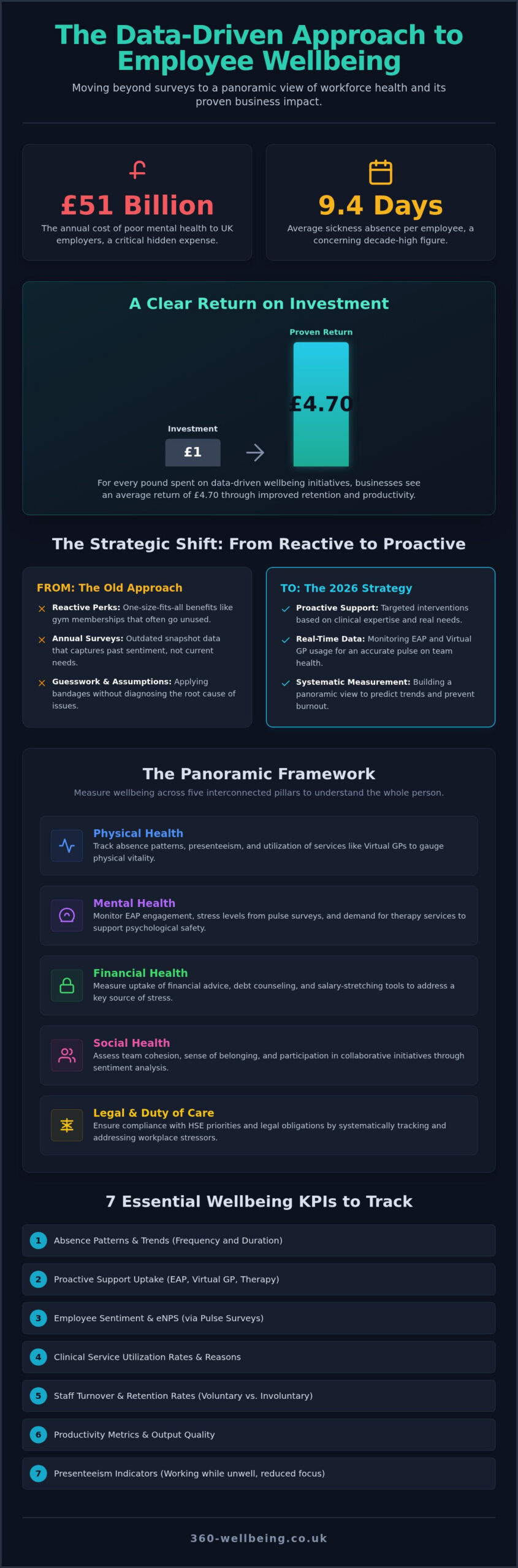
What if the most expensive line item on your balance sheet isn’t your office lease or your tech stack, but the hidden £51 billion annual cost of poor employee mental health? With UK sickness absence recently hitting a decade high of 9.4 days per employee, many leaders are realizing that traditional ‘tick-box’ surveys simply aren’t enough. You likely feel the pressure to support your team, yet you’re struggling with how to measure employee wellbeing in a way that provides clear, actionable data rather than just “soft” sentiment. It’s difficult to justify a budget when you can’t see the direct link between a wellness initiative and your bottom line.
We understand that behind every absenteeism statistic is a human being who deserves support, and we’re here to help you bridge that gap. This 2026 guide offers a comprehensive, data-driven framework to accurately assess and improve your workforce’s physical, mental, and financial health. You’ll discover how to move beyond surface-level metrics toward a panoramic view of organizational vitality. We will preview the essential KPIs you need to boost staff retention and explain how to align your strategy with the latest HSE enforcement priorities, ensuring your wellbeing spend delivers a proven return of £4.70 for every pound invested.
Key Takeaways
- Understand the shift from reactive perks to a systematic approach that tracks physical, mental, and social health indicators for a more durable workforce.
- Learn how to measure employee wellbeing using a panoramic framework that balances employee sentiment with hard data from clinical service utilization.
- Discover why monitoring EAP and Virtual GP engagement provides a more accurate reflection of organizational health than annual surveys alone.
- Identify seven essential KPIs, including absence patterns and proactive support uptake, to prove the ROI of your wellbeing initiatives.
- Master the transition from data collection to active management by using insights to tailor personalized support for your team’s unique requirements.
What is Employee Wellbeing Measurement and Why Does it Matter?
Employee wellbeing measurement is the systematic tracking of physical, mental, and social health indicators within your workforce. It represents a shift away from the guesswork of the past; it’s a move toward a panoramic understanding of your team’s vitality. Understanding how to measure employee wellbeing effectively is no longer just an HR exercise; it’s a strategic imperative. In 2026, the UK workforce landscape has changed. We’ve moved beyond reactive “wellness” perks like discounted gym memberships. Instead, we focus on proactive “wellbeing” that prioritizes clinical expertise, mental health therapy, and financial support.
This shift matters because measurement provides the foundation for a durable workplace. Without data, you’re essentially applying a bandage to a wound you haven’t seen. By quantifying health, you can identify rising absenteeism trends before they become a crisis. This foresight allows you to transform your organization from a place of high-pressure stress into a supportive environment where people can truly thrive.
The Business Case for Quantifying Health
Data-driven insights allow you to move away from “one-size-fits-all” perks that often go unused. Instead, you can implement targeted interventions that address the specific needs of your team. This approach is essential for fulfilling your legal duty of care under the Health and Safety at Work etc. Act 1974. It also aligns with the evolving standards of the Quality of Working Life (QWL), which emphasizes that a healthy workforce is a productive one. With poor mental health costing UK employers £51 billion annually, the financial argument is clear. When you use data to address the root causes of turnover, such as burnout or financial stress, you significantly improve staff retention and see an average return of £4.70 for every pound spent.
Moving Beyond the Annual Staff Survey
Many businesses still rely on the annual staff survey. While well-intentioned, these snapshot data points are often outdated by the time the analysis reaches your desk. They capture how people felt months ago, not how they’re coping today. Real-time service utilization data, such as how often your team accesses a 24/7 Virtual GP or uses the Employee Assistance Programme (EAP), provides a much more accurate pulse of your organization’s health. Pulse checks and clinical usage stats offer the foresight needed to intervene before burnout takes hold.
Learning how to measure employee wellbeing through these active service metrics allows for a balance between employee anonymity and actionable insights. You don’t need to know who is stressed; you just need to know that stress levels are rising so you can offer the right support early. This methodical approach creates a sense of safety and order, ensuring your team feels cared for while your business remains resilient and forward-thinking.
The Panoramic Framework: 5 Pillars of Wellbeing Measurement
Instead of looking through a keyhole at your team’s health, we advocate for a panoramic viewpoint that considers the whole person. True insight comes from understanding that an individual’s vitality isn’t just about the absence of illness. When considering how to measure employee wellbeing, you must examine five distinct but connected pillars: physical, mental, financial, social, and legal health. These categories don’t exist in silos. They’re deeply interdependent, and a tremor in one often causes a crack in another. For example, an employee facing significant debt often experiences a subsequent decline in mental health, which eventually manifests as physical fatigue or a lack of focus at work.
A comprehensive study on Employee Well-being and Firm Performance by Harvard Business School highlights that these interconnected factors directly influence firm-level productivity and long-term profitability. By using a unified platform to gather data across all five pillars, you remove the administrative friction of managing multiple systems. This centralized approach allows you to see the “big picture” of your organizational health in real-time, providing the durability your business needs to thrive in 2026.
Physical and Mental Health Indicators
Measuring physical health in a modern workplace doesn’t involve tracking steps or calories. Instead, look at the usage rates of your 24/7 Virtual GP services. High uptake is often a sign of a proactive culture where employees feel empowered to address minor health concerns before they escalate. Similarly, tracking engagement with mental health therapy and life coaching provides a clear indicator of your team’s psychological resilience. If you notice a spike in stress-related consultations, it gives you the foresight to adjust workloads or offer additional support before it leads to long-term sick leave. This clinical data is far more reliable than the subjective answers found in traditional surveys.
Financial and Social Wellbeing Metrics
Financial stability is a cornerstone of workplace harmony and individual peace of mind. You can assess the “financial health” of your workforce by looking at the anonymized uptake of financial advice and debt support helplines. On the social side, “Community Wellbeing” is reflected in how your team interacts with 360 Rewards and peer-to-peer recognition tools. Even legal support, such as complimentary will writing, plays a vital role. It reduces the “cognitive load” on your staff, allowing them to bring their best selves to work. If you’re ready to see the full picture of your team’s health, you can explore our holistic wellbeing platform to start gathering actionable data today.
Learning how to measure employee wellbeing through these five pillars ensures that your strategy is grounded in reality. It moves the conversation from vague “wellness” concepts to a structured framework of professional necessity and human entitlement. When you measure what matters, you can manage what counts.
Qualitative vs Quantitative: Balancing Sentiment with Hard Data
When you explore how to measure employee wellbeing, it’s easy to get lost in spreadsheets. Quantitative data provides the “what” of your organizational health. It offers hard, undeniable numbers that help you track trends over time. However, numbers alone can be cold. If you rely solely on output metrics, you risk falling into “productivity paranoia,” where leaders worry about performance while missing the human struggle behind the screen. To gain a panoramic view, you must balance these hard metrics with qualitative “soft” data that captures how your people actually feel.
This balance is what transforms a simple report into a proactive strategy. By combining the two, you create a feedback loop where sentiment data informs your future benefit investments. If your quantitative data shows a spike in Virtual GP usage, your qualitative feedback can explain whether this is due to a seasonal flu or a deeper issue with workplace stress. This methodical approach ensures your interventions are both scientifically grounded and deeply personal.
Quantitative Methods: The “What”
The foundation of your measurement strategy should include robust HR metrics that track tangible outcomes. These figures provide the durability your board needs to see the value of your wellbeing spend. Key quantitative areas to monitor include:
- Absenteeism and Presenteeism: Track the 9.4 days per employee average sickness rate to see how your firm compares. Look for patterns in short-term versus long-term leave.
- Staff Turnover Rates: High turnover often signals a breakdown in social or mental wellbeing that requires immediate attention.
- Platform Utilization: Monitor how often your team engages with 360 Wellbeing features. High uptake in Mental Health Support or Physiotherapy indicates a culture of proactive care and trust.
- Healthcare Trends: Keep an eye on anonymized insurance claim trends to identify recurring physical health issues within specific departments.
Qualitative Methods: The “How”
Qualitative data provides the context that numbers lack. It’s the “Expert Caregiver” side of your strategy, allowing you to hear the voices behind the data points. This sentiment analysis helps you understand the “why” behind your turnover or absence rates. Effective methods include:
Pulse surveys with open-ended questions allow for real-time sentiment analysis, helping you gauge morale more frequently than an annual survey ever could. Focus groups and anonymous suggestion boxes provide a safe space for employees to voice concerns about workload or culture without fear of judgment. We also recommend “stay interviews.” Unlike exit interviews, these conversations help you understand why your best people choose to remain, allowing you to double down on the factors that drive retention and vitality.
By mastering how to measure employee wellbeing through this dual lens, you ensure that your strategy is both clinical and compassionate. You aren’t just managing a workforce; you’re supporting a community of individuals, creating a workplace harmony that benefits everyone.
7 Essential Wellbeing Metrics Every UK HR Manager Should Track
Moving from the theory of how to measure employee wellbeing to practical application requires a focused set of KPIs. In the current UK climate, where NHS waiting times often delay primary care, your role as an employer has shifted. You aren’t just a manager; you’re a facilitator of health. To manage this responsibility effectively, you need a clear dashboard of metrics that tell the story of your team’s vitality. These seven metrics provide the panoramic view necessary for a durable workforce strategy.
- 1. Absence Frequency and Duration: Distinguish between short-term “duvet days” and long-term illness. Frequent short absences often signal burnout or low engagement, while duration helps you track the impact of chronic health issues.
- 2. Service Utilization (EAP & Virtual GP): Contrary to what some believe, high uptake is a positive sign. It indicates that your team trusts the support provided and is taking proactive steps to manage their health before a crisis hits.
- 3. Employee Net Promoter Score (eNPS): This simple metric asks how likely employees are to recommend your workplace. It’s a punchy indicator of overall satisfaction and cultural harmony.
- 4. Presenteeism Rates: This is the hidden cost of people working while unwell. It’s often driven by a fear of falling behind or a lack of access to quick medical advice.
- 5. Retention and Turnover: Correlate your turnover data with the timelines of your wellbeing interventions. If retention improves after launching mental health support, you have a powerful proof point.
- 6. Physiotherapy Engagement: For many UK workers, musculoskeletal issues are a primary cause of absence. Tracking physiotherapy usage helps you identify physical health trends early.
- 7. Financial and Legal Support Uptake: Measuring how often staff access debt advice or will-writing services reveals the “unseen” stressors that impact focus and productivity.
Leading vs. Lagging Indicators
It’s vital to understand the difference between looking at the past and predicting the future. Staff turnover is a lagging indicator; by the time someone leaves, it’s too late to intervene. Conversely, tracking usage of a 24/7 Virtual GP is a leading indicator. If you see a rise in GP consultations for stress-related symptoms, you have the foresight to act before that stress turns into a resignation. In 2026, the ability to bypass traditional primary care delays is a significant competitive advantage for UK SMEs. You can explore our 360 Wellbeing platform to see how real-time data can transform your approach.
Measuring the ROI of Wellbeing Platforms
Presenting a case to the board requires a balance of clinical empathy and financial logic. Start by calculating the direct cost savings from reduced absenteeism. When employees have immediate access to medical and mental health professionals, they return to health faster. Beyond the hard numbers, consider the “Value on Investment” (VOI). This includes improved brand reputation and easier recruitment. A company that demonstrates a genuine commitment to its team’s total wellness is far more attractive to top talent. By using these metrics, you turn wellbeing from a vague concept into a professional necessity with a clear financial return.
From Measurement to Management: Implementing a Proactive Strategy
Measurement is only the beginning of the journey. The true value of your data lies in how you use it to foster a culture of vitality and workplace harmony. Once you’ve mastered how to measure employee wellbeing, the next step is translating those figures into a living, breathing strategy. Communicating your findings to the workforce requires a delicate balance; you want to show that you’re listening without causing unnecessary alarm. Focus on the positive steps you’re taking based on their feedback, framing the data as a tool for collective growth and individual empowerment.
One of the most effective ways to act on your insights is through the appointment of Mental Health Champions. These individuals serve as a vital link between your data and your people. They help interpret anonymized sentiment and provide a friendly, approachable face for your wellbeing initiatives. By having champions on the ground, you ensure that your strategy remains deeply personal and that the support you offer is always accessible to those who need it most. We recommend reviewing your measurement framework every six months to ensure it stays aligned with your team’s evolving needs and the changing professional landscape.
Creating an Actionable Wellbeing Roadmap
A successful strategy requires a clear path forward. Start by setting SMART goals based on your baseline metrics. If your initial assessment reveals that financial concerns are a primary stressor, you can integrate tailored financial support and legal advice into your quarterly wellness calendar. This methodical approach ensures your interventions are timely and relevant. It’s also essential to ensure that your managers are trained to handle the specific issues identified by the data. When a manager understands how to measure employee wellbeing and recognize early warning signs, they can intervene with empathy and clinical foresight before a minor issue becomes a crisis. This upskilling transforms managers into the first line of support, creating a more durable and compassionate organization.
How 360 Wellbeing Simplifies the Process
Managing multiple health streams can be overwhelming for any HR team. An all-in-one platform simplifies this by centralizing your data, providing a single panoramic viewpoint of your organization’s health. With integrated features like a 24/7 Virtual GP and comprehensive EAP services, you provide continuous, measurable support that your team can access whenever they need it. This durability is what makes a business truly resilient in the face of modern workplace pressures.
Data should empower your leadership, not burden it. By using a unified platform, you can spend less time on administration and more time on meaningful support. Explore how 360 Wellbeing can help you measure and improve your team’s health.
Empowering Your Workforce with Data-Driven Vitality
Building a resilient organization starts with a shift from guesswork to clarity. By embracing the panoramic framework of the five pillars, you’ve learned that total wellness isn’t just about physical health; it’s the seamless integration of mental, financial, and social stability. You now have the tools to balance hard quantitative metrics with the human sentiment found in qualitative feedback. Mastering how to measure employee wellbeing ensures that your strategy is no longer a reactive “tick-box” exercise, but a professional necessity that protects your most valuable asset: your people.
At 360 Wellbeing, we specialize in providing the clinical expertise and proactive support that UK SMEs and sole traders need to thrive. Our platform offers 24/7 access to UK-registered GPs, alongside comprehensive EAP and mental health support, ensuring your team has the durability to face any challenge. We’re here to act as your partner in this journey, turning complex health data into a clear path forward for your business. Book a demo of the 360 Wellbeing platform today and take the first step toward a more harmonious, productive workplace. Your team’s vitality is within reach, and we’re ready to help you nurture it.
Frequently Asked Questions
How often should we measure employee wellbeing?
Monthly pulse checks combined with a deeper six-month review offer the best balance for most UK employers. This cadence allows you to spot seasonal trends, such as winter burnout or summer engagement peaks, without causing survey fatigue. By maintaining a steady rhythm, you demonstrate a consistent, methodical commitment to your team’s health rather than just a one-off interest.
What are the most important wellbeing KPIs for small businesses?
Small businesses should prioritize absence frequency, eNPS, and the utilization rates of services like Mental Health Support. These metrics are manageable and provide immediate insight into organizational harmony. Focus on actionable data that helps you understand how to measure employee wellbeing without needing a dedicated data science team or complex software.
How can we ensure employee surveys remain anonymous and trusted?
Trust is built through transparency and the use of third-party platforms that aggregate responses into group data. Always communicate exactly how the information will be used and ensure that individual responses are never visible to management. This creates a sense of safety and order, encouraging the honest feedback essential for an accurate measurement of your workplace culture.
What is the difference between measuring engagement and measuring wellbeing?
Engagement measures an employee’s commitment to their role and company goals, whereas wellbeing tracks their holistic physical, mental, and financial health. While they’re linked, an engaged employee can still be suffering from hidden burnout. Measuring wellbeing ensures the human foundation of your business remains durable and supported, rather than just focusing on productivity output.
Can we measure the ROI of a Virtual GP service?
Yes, you can measure ROI by tracking the reduction in sickness absence days after implementing 24/7 Virtual GP access. When employees get medical advice within minutes rather than waiting days for a local appointment, they return to health and work much faster. This direct impact on absenteeism provides a clear financial justification for your wellbeing budget spend.
How do we measure wellbeing for remote or hybrid teams?
For remote teams, digital engagement metrics and sentiment analysis in pulse surveys are your primary tools. Since you can’t see physical signs of stress in a kitchen-office, you must rely on usage stats from your EAP or Physiotherapy services. These digital indicators help you identify isolation or burnout in a distributed workforce before it leads to resignation.
What should we do if our wellbeing metrics show a decline?
A decline in metrics is an opportunity for a professional consultation with your workforce. Use focus groups or Mental Health Champions to understand the underlying factors, such as increased workload or external financial pressures. Adjust your roadmap to provide targeted support, like debt advice or life coaching, to address the specific challenges identified in your data.
Is it legal to track employee health data in the UK?
It is legal to track health data under UK GDPR and the Data Protection Act 2018, provided you have a clear legal basis and handle it as special category data. You must ensure the data is anonymized and used specifically to improve workplace health and safety. Understanding these legal boundaries is a key part of how to measure employee wellbeing responsibly and ethically.