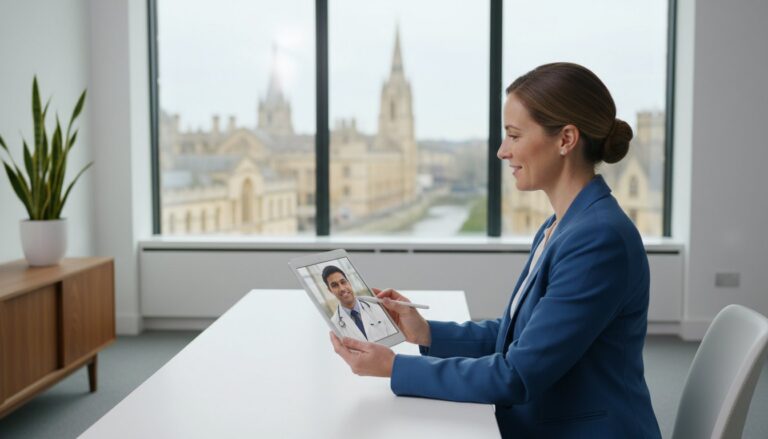
In 2023, 18.4% of individuals aged 16 and older in the UK self-reported a long-term musculoskeletal (MSK) condition, a figure that continues to climb as kitchen tables replace ergonomic offices. You’ve likely noticed the quiet rise in physical discomfort and the resulting dip in productivity as your team adapts to these less-than-ideal home setups. It’s frustrating when you want to provide uniform support to a distributed workforce but feel limited by traditional, clinic-based options. This is where online physiotherapy for remote workers transforms from a digital alternative into a strategic necessity for 2026.
Online care isn’t a diluted version of traditional treatment. It’s a precise, diagnostic tool that meets your team exactly where they are. In this guide, you’ll discover how virtual sessions effectively treat common remote-work injuries and how to integrate these services into a modern employee benefits strategy. We’ll explore the latest 2026 Remote Therapeutic Monitoring (RTM) updates and provide a clear path toward reduced staff turnover and lower MSK injury rates. By the end, you’ll have a streamlined, digital-first approach to wellness that prioritizes both professional vitality and human care.
Key Takeaways
- Understand the mechanics of “Kitchen Table Syndrome” and how to protect your team from the rising productivity costs of remote-work musculoskeletal injuries.
- Discover how online physiotherapy for remote workers provides immediate clinical expertise through digital triage and secure video sessions, ensuring care is accessible regardless of location.
- Compare virtual and in-person care to see why digital-first models often result in higher adherence rates and more consistent recovery outcomes for busy staff.
- Learn how to calculate the long-term value of early intervention, moving away from reactive care toward a proactive strategy that prevents chronic conditions.
- Explore the benefits of a panoramic wellness strategy that unites physical therapy with mental health support and 24/7 Virtual GP access for a truly holistic approach.
The Rising MSK Crisis in the Remote Workforce
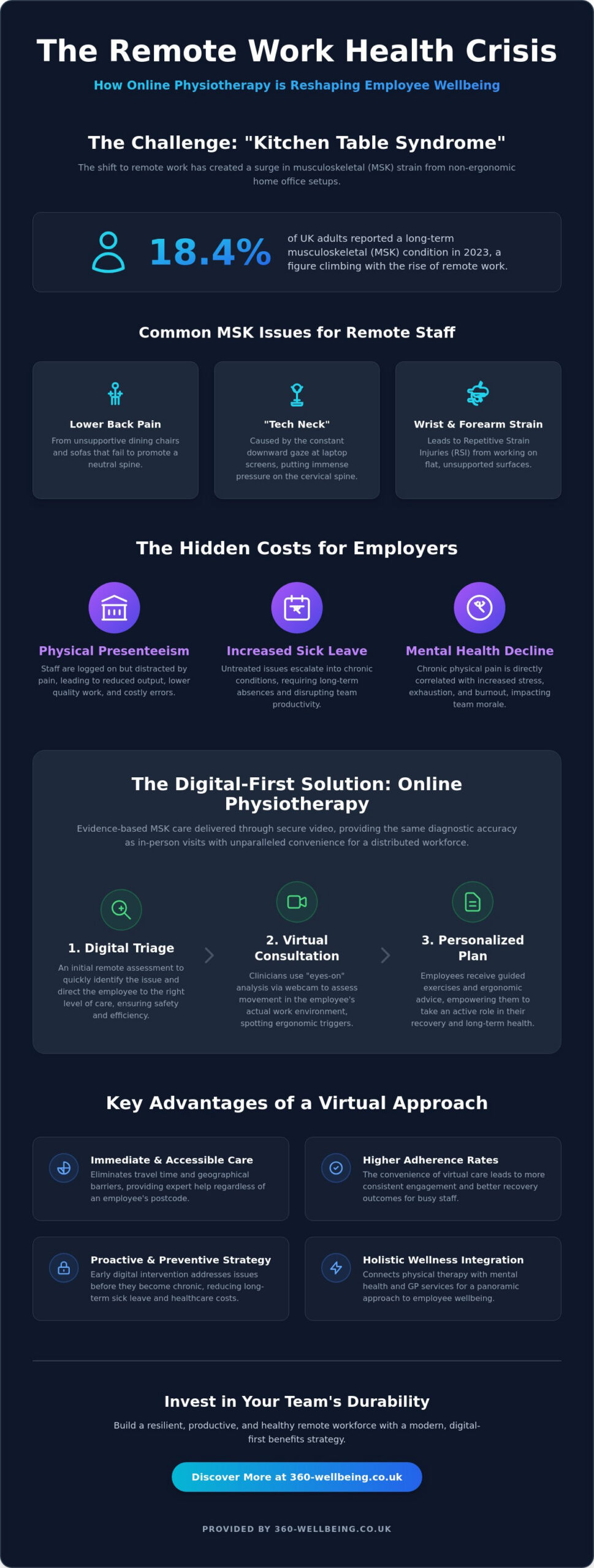
The shift to flexible working changed the professional landscape forever. For many UK employees, the daily commute moved from the train station to the kitchen table. While this offers autonomy, it has created a surge in “Kitchen Table Syndrome.” This term describes the unique musculoskeletal strain caused by working in environments never designed for eight-hour shifts. Traditional MSK strategies often fail because they rely on the employee being physically present in an office. When your team is distributed across the country, an on-site clinic is no longer a benefit they can access. It’s a relic of a different era.
Implementing online physiotherapy for remote workers bridges this gap. It provides clinical support that travels with the employee, ensuring care is consistent regardless of their postcode. There’s also a hidden cost to consider: physical presenteeism. Remote staff often suffer in silence, logging on while distracted by a nagging ache in their neck or a sharp pain in their wrist. This leads to errors and reduced output long before they eventually reach a breaking point and require long-term sick leave. As the delivery of healthcare evolves through Telerehabilitation, we’re learning that proactive, digital-first care is the most effective way to protect a modern workforce.
Common MSK Issues for Remote Staff
Without the ergonomic standards of a managed office, physical health can quickly deteriorate. Lower back pain is the most frequent complaint, usually stemming from unsupportive dining chairs or sofas that don’t promote a neutral spine. We also see a rise in “tech neck,” caused by the constant downward gaze at laptop screens. This puts immense pressure on the cervical spine. Finally, wrist and forearm strains are common when employees work on flat surfaces without proper arm support, leading to repetitive strain injuries that can become chronic if ignored.
Why Employers Can No Longer Ignore Home Setups
Supporting your team’s physical health isn’t just a kindness; it’s a professional necessity. Employers have clear legal obligations to conduct DSE assessments for remote workers to ensure their safety. Beyond compliance, the financial impact is undeniable. With 18.4% of people in the UK reporting long-term MSK conditions in 2023, the cost of sick leave is a significant burden on productivity. We must also recognize that physical pain doesn’t exist in a vacuum. Chronic discomfort directly correlates with a decline in mental health, creating a cycle of stress and exhaustion that impacts the entire organization’s harmony. Taking a panoramic view of employee health means addressing these physical foundations today to ensure durability for the future.
How Online Physiotherapy for Remote Workers Works
Modern clinical care has evolved beyond the four walls of a traditional clinic. At its core, online physiotherapy for remote workers is evidence-based musculoskeletal (MSK) care delivered through secure, high-definition video consultations. It isn’t just a casual video call; it’s a structured clinical interaction designed to provide the same level of diagnostic accuracy as an in-person visit. The process begins with digital triage, a vital step that quickly identifies whether an employee’s condition is manageable through remote exercises or if it requires urgent medical escalation. This foresight ensures that every team member receives the right level of care at the right time.
The transition from “hands-on” to “eyes-on” assessment is a cornerstone of digital health. Instead of physical palpation, clinicians use sophisticated real-time movement analysis via webcam to observe how an employee moves in their natural environment. This shift is supported by growing research into the prevalence of musculoskeletal disorders in remote workers, which highlights the need for interventions that address the root causes of pain where they occur. By watching a staff member sit, reach, or stand at their actual workstation, a physiotherapist can spot ergonomic triggers that would be invisible in a clinical setting. It’s a partnership that empowers the individual to take an active role in their own recovery and long-term durability.
The Virtual Consultation Process
Every journey begins with a deep dive into the individual’s clinical history. Your employees will participate in functional movement tests, such as guided stretches or balance exercises, while the therapist monitors their form. A unique advantage of this model is the environmental review. The clinician can assess the height of a kitchen chair or the placement of a laptop in real-time, offering immediate adjustments. Following the session, employees receive personalized recovery plans through mobile apps, featuring clear video demonstrations to ensure every movement is performed safely and effectively.
Key Components of a Digital Physio Platform
A reliable platform must be built on a foundation of security and accessibility. To provide true peace of mind for both employers and staff, these systems utilize GDPR-compliant video calling features that protect sensitive health data. Beyond the live sessions, a high-quality platform offers an on-demand library of exercise videos, allowing users to practice their routines whenever it fits their schedule. Continuous support is maintained through secure messaging and progress tracking, ensuring that no one feels isolated in their recovery journey. Integrating these tools into a comprehensive health and wellbeing strategy creates a supportive ecosystem where physical health is treated as a professional priority.
Virtual vs. In-Person Physiotherapy: A Comparison
Choosing between digital and physical care is no longer about settling for a secondary option. While traditional clinics offer hands-on manipulation, online physiotherapy for remote workers provides a unique advantage: significantly better adherence. When an appointment requires a forty-minute drive and a search for parking, busy staff members often cancel or delay their care. Virtual sessions remove these barriers entirely. By fitting into a lunch break or a gap between meetings, digital care ensures employees stick to their recovery plans. There is strong evidence supporting remote physiotherapy as a highly effective alternative that often results in faster recovery times because the patient remains consistent with their exercises in their actual home environment.
For small and medium enterprises (SMEs), this model is particularly cost-effective. Unlike complex private medical insurance (PMI) schemes that can be prohibitively expensive or laden with exclusions, digital-first physiotherapy offers a direct, streamlined path to support. It’s about providing foresight and durability for your team without the administrative weight of traditional insurance. However, clinical safety remains the priority. Expert caregivers are trained to identify “red flags,” such as severe neurological symptoms or complex post-surgical needs, that require an immediate referral for in-person intervention. This ensures that online physiotherapy for remote workers remains a safe, reliable cornerstone of your health strategy.
Efficacy and Evidence
The Chartered Society of Physiotherapy (CSP) has highlighted how remote triage and assessment can be just as accurate as face-to-face consultations for many musculoskeletal conditions. The real power of this approach lies in self-management. Instead of relying on a therapist to “fix” them with manual therapy once a week, employees learn how to manage their symptoms daily. This creates a lasting behavioral change. Owning one’s recovery builds confidence and resilience, turning a period of injury into a lesson in long-term physical health and workplace harmony.
Accessibility and Inclusivity
Digital care is a great equalizer for a distributed workforce. It eliminates the “healthcare postcode lottery,” ensuring a staff member in a rural village receives the same high-standard care as someone in a major city. This is essential for maintaining a unified company culture where every employee feels equally valued. For staff with existing disabilities or those whose injuries make traveling painful, virtual access isn’t just a convenience. It’s a fundamental entitlement to care. By removing the physical hurdles to health, you create a more inclusive workplace where everyone has the tools they need to thrive.
Implementing Online Physio as an Employee Benefit
Integrating online physiotherapy for remote workers into your existing health strategy turns a standalone tool into a powerful engine for retention. It’s not just about fixing a sore back; it’s about showing your team that their vitality is a professional necessity and an essential human entitlement. When you offer early intervention through virtual care, you create a safety net that catches minor issues before they escalate into chronic conditions. This proactive approach significantly improves the return on investment by reducing the likelihood of expensive surgeries or long-term disability claims that disrupt business continuity.
Success depends on how you communicate this benefit. Clear, compassionate messaging helps staff understand that seeking help isn’t a sign of weakness but an act of proactive self-care. HR departments can track the impact by monitoring MSK-related absenteeism data over time. This provides a clear, data-driven picture of how digital health interventions improve the bottom line while fostering a more resilient and appreciative workforce. It’s about moving away from reactive “sick care” toward a positive vision of workplace harmony.
Step-by-Step Implementation for HR
Choosing the right digital health partner is the first step toward long-term durability. Look for a provider that offers a seamless user experience and integrates with other essential services. During onboarding, set clear expectations about how virtual consultations work to build trust and reassurance. It’s also highly effective to link physical therapy with other pillars of wellness, such as mental health support or financial support. This holistic view ensures that if an employee’s physical pain is being exacerbated by stress or external pressures, they have a unified, structured path to recovery.
Creating a Culture of Physical Wellness
A digital-first environment shouldn’t mean a sedentary one. Encourage your team to take regular “movement breaks” and normalize the use of health apps during the working day. You can also utilize 24/7 Virtual GP services as a primary point of contact for initial MSK concerns. These GPs can provide rapid triage and referrals to physiotherapy, ensuring that care begins immediately rather than weeks later. By making these tools a standard part of the workday, you empower your staff to maintain their own physical health with confidence. To start building a more resilient workforce today, explore our integrated employee wellbeing solutions.
Holistic Support: The 360 Wellbeing Approach
True health is never found in isolation. A panoramic approach to wellness recognizes that a person’s physical durability is inseparable from their mental resilience. When an employee struggles with persistent discomfort, it doesn’t just affect their posture; it clouds their focus and drains their emotional energy. By 2026, the most successful organizations will be those that move away from fragmented, reactive care toward a unified narrative of total wellness. Implementing online physiotherapy for remote workers is a vital part of this shift, but its impact is amplified when it’s integrated into a broader ecosystem of support.
For small UK businesses, managing multiple health vendors is often an administrative burden that leads to gaps in care. A unified platform simplifies this journey by bringing together a Virtual GP, Mental Health Support, and Physiotherapy under one digital roof. This synergy ensures that if an employee’s physical pain is being driven by stress, or if their injury requires a medical prescription, the path to resolution is clear and immediate. It’s about providing a sense of safety and order in an increasingly complex professional world, ensuring that wellbeing is treated as a fundamental entitlement rather than a luxury.
Beyond the Exercises: Total Care
Effective recovery involves more than just a list of stretches. Our Virtual GP service works in tandem with physical therapy to provide a complete clinical overview, offering rapid triage and medical advice when needed. This helps break the stress-pain cycle, where physical tension and mental anxiety feed into one another. To address the root causes of workplace strain, Life Coaching can help staff implement sustainable lifestyle changes and ergonomic habits that stick. This multi-layered support ensures that your team isn’t just recovering from an injury but is building the foundations for long-term vitality and workplace harmony.
Getting Started with 360 Wellbeing
Protecting your team shouldn’t be a complex or prohibitive process. We’ve designed our platform to be accessible for businesses of all sizes, utilizing simple per-employee pricing models that allow for predictable and transparent budgeting. Onboarding is quick and methodical, ensuring your distributed workforce can access professional care almost immediately. By choosing a partner invested in your team’s long-term success, you’re not just buying a service; you’re establishing a partnership that looks out for your employees’ best interests. Now is the time to transition toward a proactive, digital-first health strategy. Explore our Online Physiotherapy and Wellbeing Platform to see how we can help your remote team thrive.
Building a Resilient Future for Your Distributed Team
The landscape of work has changed, and our approach to employee health must evolve alongside it. We’ve explored how “Kitchen Table Syndrome” impacts productivity and why traditional, office-based health benefits no longer meet the needs of a distributed workforce. By choosing online physiotherapy for remote workers, you’re providing a flexible, evidence-based solution that prioritizes long-term physical durability over short-term fixes. It’s a commitment to the health and happiness of the individuals who drive your business forward every day.
Our platform is specifically designed to support SMEs and sole traders by offering a panoramic view of wellness. This isn’t just about physical therapy; it’s a unified ecosystem featuring 24/7 UK-registered Virtual GP access and integrated mental health support. This holistic approach ensures that every member of your team feels valued and supported in every aspect of their lives. Taking this step today creates a foundation for a more harmonious and productive tomorrow. Protect your remote team with 360 Wellbeing today and discover the difference that compassionate, expert care can make for your organization’s future.
Frequently Asked Questions
How can a physiotherapist diagnose me through a screen?
Clinical diagnosis is achieved through a combination of detailed symptom history and functional movement tests observed via high-definition video. By watching how you bend, reach, or sit at your workstation, a therapist can identify specific patterns of musculoskeletal strain. This “eyes-on” approach is highly effective for identifying triggers in your actual home environment, allowing for precise adjustments to your daily habits that a clinic-based therapist might miss.
Do remote workers need a GP referral for online physiotherapy?
Most modern employee benefit platforms allow direct access to online physiotherapy for remote workers without requiring a GP referral. This streamlined path ensures that your team can begin their recovery journey as soon as they feel discomfort, preventing minor aches from becoming chronic issues. However, if you choose to consult a Virtual GP first, they can provide a rapid clinical triage and refer you directly into the physiotherapy stream for integrated care.
Is online physiotherapy as effective as traditional manual therapy?
Research indicates that virtual physiotherapy is often as effective as manual therapy because it prioritizes self-management and behavioral change. While manual therapy provides temporary relief, virtual sessions empower employees to master their own recovery through guided exercises and ergonomic education. This leads to higher adherence rates, as staff can perform their routines in their natural workspace. This ensures the benefits of treatment are durable and sustainable for the long term.
What equipment does an employee need for a virtual physio session?
Employees only need a laptop, tablet, or smartphone with a working camera and a stable internet connection for their sessions. It’s helpful to have a small, quiet space where they can move freely and be seen by the camera during functional tests. Most exercise plans are designed to be performed using common household items or bodyweight, so there’s no requirement for expensive gym equipment or specialized medical tools to achieve positive results.
How does virtual physiotherapy help with DSE compliance?
Virtual physiotherapy supports Display Screen Equipment (DSE) compliance by allowing a clinician to review an employee’s actual workstation in real-time. Unlike a generic checklist, a therapist can see how a person’s posture interacts with their specific home setup. This personalized assessment helps employers meet their legal obligations to protect remote staff. It provides tailored advice that reduces the physical risks associated with long-term computer use, ensuring a safer work environment.
Can online physio help with chronic conditions like sciatica or arthritis?
Online physiotherapy is highly effective for managing chronic conditions like sciatica or arthritis by focusing on pain education and mobility strategies. Therapists provide customized movement plans that help desensitize the nervous system and strengthen supporting muscles. This proactive management reduces the frequency of painful flare-ups. It helps employees maintain their professional vitality despite long-term health challenges, fostering a sense of balance and harmony within their daily working lives.
What happens if the virtual physio decides I need in-person treatment?
If a therapist identifies “red flags” or determines that a condition requires physical manipulation, they’ll recommend an in-person consultation immediately. Clinical safety is the foundation of our approach. In these cases, the virtual session serves as an essential triage step. This ensures the employee is directed to the most appropriate local specialist or diagnostic service without unnecessary delay. We ensure every individual receives the right level of care for their specific clinical needs.