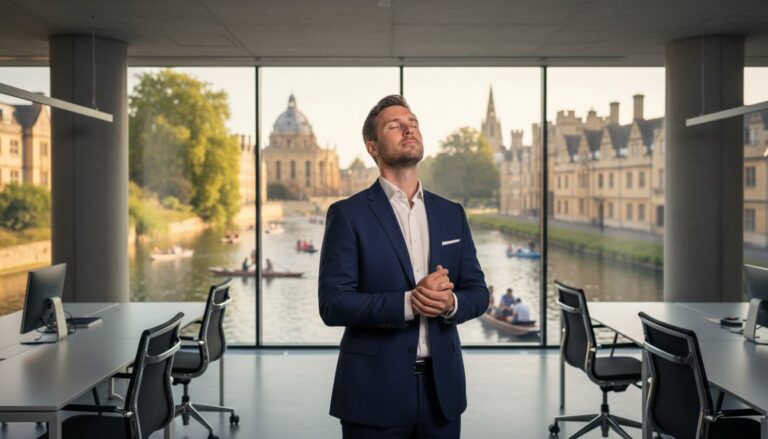
Imagine sitting in a boardroom in Oxford, feeling your heart hammer against your ribs as your turn to speak approaches. For the 12% of UK adults who will experience a social anxiety disorder at some point, these social anxiety symptoms aren’t just “pre-meeting nerves”; they’re a significant barrier to the career progression you deserve. You likely recognise the frustration of having brilliant ideas but feeling physically unable to voice them because of an intense fear of colleague scrutiny. It’s a lonely experience that can make even the most talented professional feel like an outsider in their own team.
We believe that identifying these triggers is the first step toward building a more resilient, balanced professional life. This article provides a comprehensive 360-degree perspective on how anxiety affects your performance and your mental wellbeing. You’ll discover how to distinguish between temporary shyness and clinical symptoms, alongside practical, tailored tools to manage a “blank mind” during presentations. We’re here to help you move from a state of quiet avoidance to one of proactive, lasting confidence.
Key Takeaways
- Understand the crucial distinction between everyday shyness and clinical social anxiety to gain clarity on your unique mental health needs within the workplace.
- Identify the specific physical, mental, and behavioural social anxiety symptoms that often manifest during high-pressure professional scenarios and networking events.
- Explore how the UK’s professional ‘coffee culture’ can impact your stress levels and discover tailored ways to navigate these social expectations with confidence.
- Acquire practical grounding techniques and long-term CBT strategies designed to help you manage panic spikes and build lasting workplace resilience.
- Learn how accessing proactive support, such as 24/7 Virtual GP services, provides a private and supportive path toward a more balanced professional life.
What is Social Anxiety? Understanding the ‘More Than Shyness’ Threshold
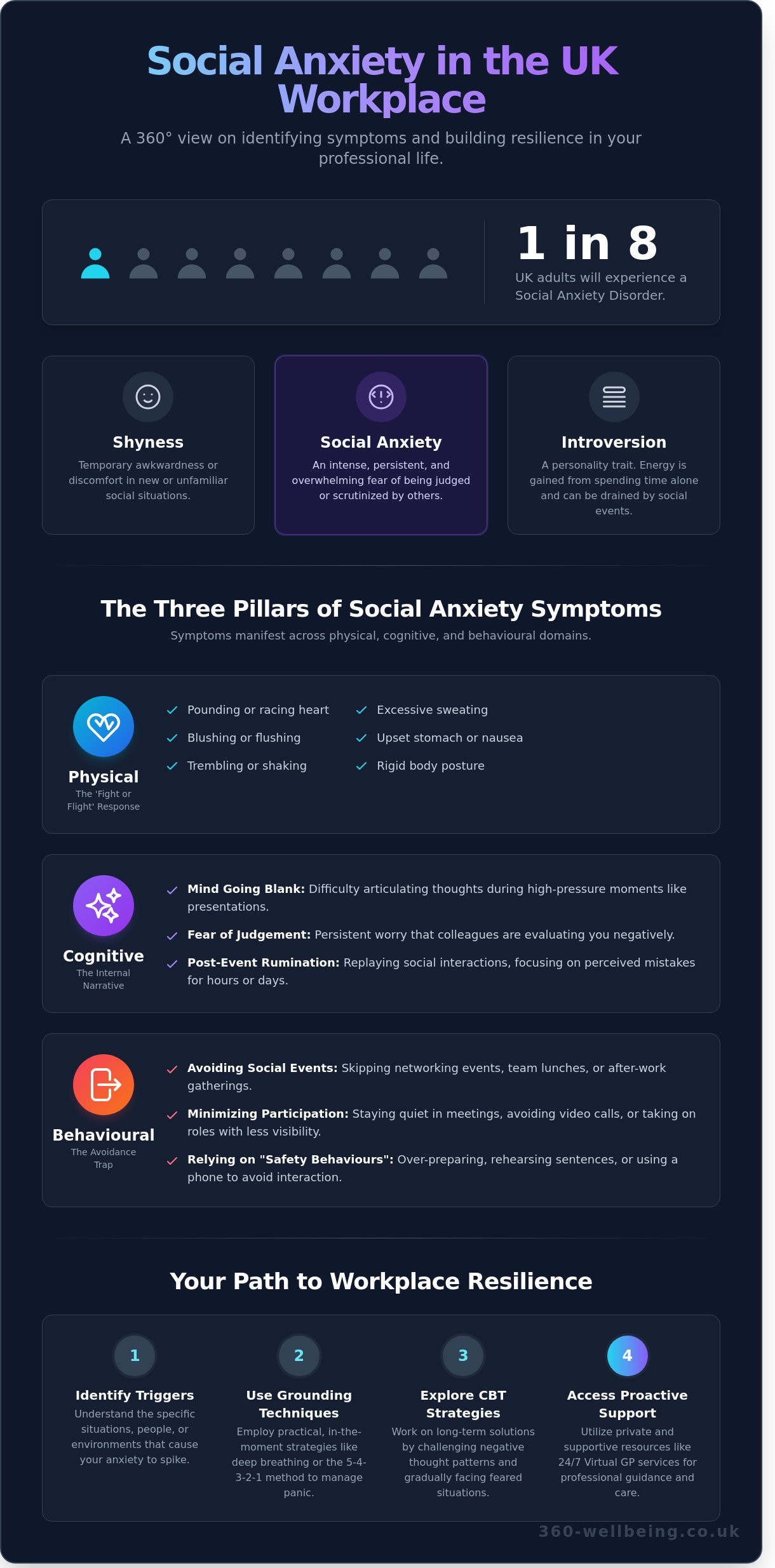
Social anxiety is often dismissed as simple shyness, but for 1 in 8 adults in the UK, it’s a debilitating condition that disrupts daily life. Formally known as Social Anxiety Disorder, it involves an intense, persistent fear of being watched or judged by others. While shyness might make someone feel slightly awkward in a meeting, social anxiety creates an overwhelming sense of dread that can start days before an event. This condition affects the workforce deeply, often leading to missed opportunities and reduced productivity when left unsupported.
We view this through a 360-degree lens because the impact isn’t just mental. It’s a holistic challenge that affects physical health, emotional stability, and professional growth. Common social anxiety symptoms include a racing heart, sweating, and a complete “freeze” response during interactions. When these reactions become a chronic barrier to a person’s wellbeing, it’s no longer a personality trait; it’s a health priority that requires a proactive, compassionate response from employers.
The difference between introversion and social anxiety
Introversion is about how you recharge. An introvert might prefer a quiet office because they find large groups draining. Social anxiety is fundamentally different; it’s rooted in fear. You’ll find that even the most outgoing extroverts can experience severe social anxiety symptoms. They may crave social connection but feel trapped by a terrifying internal monologue that predicts failure or humiliation. Recognising this distinction is vital for managers. You aren’t trying to change someone’s personality. You’re helping them manage a condition so they can thrive.
Why social anxiety often peaks in the workplace
The modern office is a high-stakes environment built on constant evaluation. From annual performance reviews to casual conversations in the breakroom, employees feel they’re always being appraised by peers and leaders. This evaluative pressure triggers the body’s fight-or-flight response, making the boardroom feel as dangerous as a physical threat. A 2023 report by the CIPD found that workplace culture plays a massive role in this. A culture that prizes “loud” leadership or high-pressure “on the spot” questioning can inadvertently isolate talented individuals who are struggling with their mental health.
The Three Pillars of Social Anxiety Symptoms
Social anxiety isn’t a single, static feeling of shyness. It’s a complex interplay between the mind and body that can fluctuate significantly depending on the environment. For one person, a small team catch-up is manageable, while for another, an unexpected video call triggers an immediate physiological response. According to the NHS, symptoms of social anxiety manifest through a combination of physical, cognitive, and behavioural changes. Understanding these patterns is the first step toward building resilience and finding the right support.
Physical symptoms: What your body tells you
The body’s “fight or flight” system often activates in social situations that don’t actually pose a physical threat. You might notice visible signs such as blushing, trembling, or excessive sweating. Internally, your heart rate often climbs, leading to a pounding sensation in the chest. The gut is also highly sensitive to these shifts. Anxiety triggers a rush of cortisol that frequently causes a “sick to the stomach” feeling or digestive upset. In the workplace, this often results in a rigid body posture or a physical struggle to maintain natural eye contact during conversations.
Emotional and cognitive symptoms: The internal narrative
The mental side of social anxiety symptoms often involves the “mind going blank” phenomenon. During high-stakes meetings, the brain’s processing power feels as though it’s been hijacked, making it difficult to recall simple facts or articulate thoughts. This is usually driven by a persistent fear that colleagues are judging you as incompetent or noticing your visible distress. Once a meeting ends, the “autopsy” begins. This involves hours of post-event rumination, where you over-analyse every word spoken and fixate on perceived social blunders that others likely didn’t even notice.
Behavioural symptoms: The avoidance trap
Avoidance is a common but costly coping strategy. It might look like skipping the communal kitchen to avoid small talk or declining invitations to office lunches. While staying in the background feels safer in the moment, it reinforces the underlying fear. Research from 2023 suggests that persistent avoidance can increase the intensity of social fears by up to 40% over time, as the brain never gets the chance to learn that these situations are safe.
If these patterns feel familiar, it’s helpful to keep a “trigger diary” for two weeks. Documenting the specific times you feel anxious and the physical sensations that follow provides a clear map of your experience. This diary is a practical tool to share with a Virtual GP, allowing them to offer a more tailored and proactive approach to your wellbeing.
How Social Anxiety Manifests in the Modern UK Workplace
Social anxiety isn’t just a personal hurdle; it’s a professional reality that shapes how talent interacts with your business. In the UK, where “coffee culture” and informal networking are often essential for career growth, those experiencing social anxiety symptoms can feel excluded from the natural flow of the office. These symptoms often surface during high-stakes moments, yet they also hide in plain sight during routine tasks. We see this through “safety behaviours,” which are proactive tactics employees use to feel secure. This might include over-rehearsing a simple greeting for several hours or staying glued to a laptop in the breakroom to avoid the pressure of small talk. According to the 2023 Deloitte Mental Health Report, poor mental health costs UK employers £56 billion annually, often because these subtle manifestations of anxiety go unsupported.
Anxiety in meetings and presentations
The “waiting-in-line” effect is a frequent trigger in British boardrooms. This occurs when an employee sits through a round-the-table introduction, feeling their heart rate climb as their turn approaches. The dread of being asked an unexpected question can be equally stifling. Physical social anxiety symptoms, such as trembling or a shaky voice, often make tasks like holding a laser pointer or reading from notes feel daunting. This isn’t a lack of competence; it’s a physiological response to a perceived social threat that requires a tailored, empathetic response from leadership.
Digital and phone-based anxiety
Hybrid working has introduced fresh triggers that are often overlooked. While remote work provides a physical barrier, it creates new pressures. Many employees struggle with “camera on” expectations, feeling a constant sense of being watched and judged by their peers. This frequently leads to phone call avoidance, where a staff member might choose a convoluted email thread over a quick two-minute call. On platforms like Microsoft Teams or Slack, the pressure to provide an immediate, “perfect” response can leave employees feeling drained before their actual work begins. A 2022 survey by the charity Mind indicated that 1 in 6 workers experience mental health problems like anxiety, highlighting the need for a comprehensive approach to digital communication.
- Safety Behaviours: Avoiding eye contact, over-preparing for casual chats, or arriving exactly on time to avoid “mingling” periods.
- Physical Triggers: Blushing, sweating, or visible shaking when put on the spot during a briefing.
- Digital Withdrawal: Consistent preference for text-based communication and reluctance to lead video calls.
How to Manage Social Anxiety Symptoms: A Step-by-Step Guide
Managing social anxiety symptoms requires a proactive, 360-degree approach that addresses both the physical response and the underlying thought patterns. When a panic spike occurs during a 9:00 AM briefing or a client lunch, the body’s ‘fight or flight’ system takes over. You can interrupt this cycle by using structured grounding techniques that anchor your focus in the physical environment rather than your internal fears.
In-the-moment grounding techniques
The 5-4-3-2-1 technique is a highly effective tool for pulling your mind out of a spiral. Identify five things you can see, four you can touch, three you can hear, two you can smell, and one you can taste. This shift in focus forces the brain to process external sensory data, which naturally dampens the intensity of social anxiety symptoms. Box breathing also provides immediate physiological relief; inhale for four seconds, hold for four, exhale for four, and hold for four. This rhythm signals to your nervous system that you’re safe, lowering your heart rate within sixty seconds. If you feel your mind going blank, look for specific details in the room, such as the grain of the wooden table or the font on a poster. This external focus prevents the ‘internalised monitoring’ that fuels social dread.
Gradual exposure and goal setting
Long-term resilience is built through a ‘fear ladder’ approach, a core principle of Cognitive Behavioural Therapy (CBT). Instead of avoiding social triggers, you rank them from least to most intimidating. You might start with a small goal, such as saying ‘good morning’ to two colleagues, before moving up to asking a single question in a low-stakes meeting. Challenging the narrative is vital here. Instead of assuming ‘they think I’m a fool,’ reframe the thought to ‘I am a professional contributor who is feeling nervous, which is a normal human response.’ Celebrating these small wins is essential for rewiring your brain’s response to workplace interactions. According to a 2023 mental health report, 73% of UK adults who utilised structured self-help and exposure techniques reported a measurable increase in workplace confidence within six months.
When to seek professional clinical support
Self-help is a powerful foundation, but it isn’t always enough to manage the complexities of a demanding career. If you find yourself consistently avoiding essential tasks or if your wellbeing is declining, it’s time to consult a professional. A GP can provide a formal diagnosis and rule out other underlying conditions, ensuring you receive the right support. Clinical trials show that CBT has a 50% to 70% success rate in significantly reducing social anxiety symptoms. Professional therapy offers a tailored toolkit to handle your specific triggers, from public speaking to one-to-one appraisals. Communicating these needs to HR doesn’t have to feel stigmatised; framing it as a proactive step toward maintaining your professional performance shows strength and self-awareness. To explore how we can support your team’s mental health, view our comprehensive workplace wellbeing solutions.
How 360 Wellbeing Supports Your Mental Health Journey
Supporting a team member through the complexities of social anxiety requires more than a standard HR policy. It needs a proactive partnership that bridges the gap between identifying a struggle and finding a sustainable solution. 360 Wellbeing acts as this dedicated partner, offering a comprehensive suite of tools designed to manage social anxiety symptoms before they escalate into long-term absence.
Our 24/7 Virtual GP service provides a vital first step for many. Employees can speak with a GMC-registered doctor via video or phone at any time, day or night. This private space is crucial for those who find the prospect of a busy NHS waiting room or a face-to-face consultation overwhelming. It ensures that medical advice is accessible within minutes, not weeks. This speed is essential given that 1 in 4 people in the UK experience a mental health problem each year, yet many wait months for initial support.
Private and accessible therapy sessions
We connect your team directly with qualified therapists who specialise in workplace stress and anxiety disorders. These remote sessions allow employees to manage their mental health around their existing work schedule, removing the logistical stress of commuting to appointments. By integrating a robust Employee Assistance Programme (EAP), you provide a safety net that protects both the individual and the business. Statistics from the EAPA UK show that for every £1 spent on an EAP, UK employers see an average return of £10.85 through increased productivity and reduced presenteeism.
The 360-degree approach to resilience
Physical health and mental wellbeing are inextricably linked. A person struggling with social anxiety symptoms often experiences physical manifestations like heart palpitations, digestive issues, or chronic sleep disruption. Our 360-degree approach addresses this by combining medical support with life coaching and legal or financial advice to reduce the external pressures that fuel anxiety. You can also learn more about our Mental Health Support services to see how we tailor care to individual needs.
We also believe in positive reinforcement through 360 Rewards. This platform encourages socialising on an employee’s own terms. By offering discounts on cinema tickets, dining, and gym memberships, we help staff engage with the world at a pace that feels safe for them. This holistic strategy builds genuine resilience, turning workplace wellbeing from a checkbox exercise into a strategic asset for your company.
Transforming Your Workplace Wellbeing Journey
Navigating the complexities of the modern office doesn’t have to feel like an uphill struggle. By identifying the physical, cognitive, and behavioural social anxiety symptoms that impact daily performance, you’ve already taken the most important step toward positive change. Research from the Mental Health Foundation suggests that around 1 in 10 adults in the UK live with social anxiety; you’re certainly not alone in this experience. Whether you’re implementing small changes to your routine or seeking structured professional support, proactive care is a strategic asset for your long-term vitality.
At 360 Wellbeing, we provide the tools needed to foster a culture of resilience and harmony. Our members benefit from 24/7 access to UK-registered GPs and tailored mental health therapy sessions designed for individual needs. Through our comprehensive Employee Assistance Programme (EAP), we ensure every member of your team has a clear, structured path forward. We believe that total wellness is a fundamental right, not a luxury, and we’re committed to your success.
Empower your team with 360-degree mental health support
You deserve to feel confident and supported every time you step into work. We’re ready to partner with you to make that a reality.
Frequently Asked Questions
Is social anxiety the same as being shy?
No, social anxiety is a clinical condition rather than a personality trait like shyness. While 40% of adults in the UK identify as shy, social anxiety disorder involves an intense, persistent fear of judgement that disrupts daily life. It often requires professional support to navigate, whereas shyness doesn’t typically prevent someone from fulfilling their professional duties or attending essential social gatherings.
Can social anxiety affect my physical health at work?
Yes, social anxiety triggers the body’s stress response, leading to tangible physical issues. You might experience a rapid heartbeat, excessive sweating, or nausea during presentations or team lunches. Common social anxiety symptoms also include muscle tension and fatigue, which can lead to an 11% increase in physical health-related absences if left unmanaged over a 12-month period.
What should I do if I have a panic attack in a meeting?
Excuse yourself quietly from the room to find a private space where you can focus on your breathing. Use the 5-4-3-2-1 grounding technique to reconnect with your surroundings and lower your heart rate. If you’re comfortable, you can inform a trusted colleague beforehand so they can cover your absence for the 10 to 15 minutes it typically takes for a panic attack to subside.
How do I tell my boss I have social anxiety?
Schedule a private 1-to-1 meeting to discuss your needs and focus on how specific adjustments will help you thrive. You don’t need to share every detail, but explaining that certain environments trigger social anxiety symptoms allows your manager to offer proactive support. Under the Equality Act 2010, employers have a legal duty to consider reasonable adjustments that help you perform your role effectively.
Can social anxiety be cured, or just managed?
Social anxiety is highly treatable, and many people see a 50% to 70% improvement in symptoms through Cognitive Behavioural Therapy. While some might consider it cured when they no longer meet the diagnostic criteria, others focus on long-term management strategies. Building psychological resilience through tailored support ensures you can navigate workplace challenges with confidence and maintain a healthy 360-degree perspective on your wellbeing.
Does 360 Wellbeing offer therapy for social anxiety?
Yes, 360 Wellbeing provides access to accredited therapists who specialise in social anxiety and workplace mental health. Our comprehensive packages offer employees up to 6 or 12 sessions of structured support, focusing on practical tools for resilience. We believe mental health is a fundamental right, so we’ve designed our services to be accessible, ensuring every team member has a clear path toward vitality.
What are the first signs of social anxiety in a colleague?
The first signs often include a consistent avoidance of team meetings, cameras being turned off during video calls, or visible distress during group interactions. You might notice a colleague becoming unusually quiet or appearing physically tense when asked to speak. Research from 2023 suggests that early intervention can reduce the long-term impact on productivity, so spotting these patterns early is a vital part of a proactive culture.
Is social anxiety considered a disability in the UK?
Social anxiety is classified as a disability under the Equality Act 2010 if it has a substantial and long-term negative effect on your ability to do normal daily activities. This means the condition must have lasted, or be expected to last, for at least 12 months. Recognising this status ensures you’re protected from discrimination and entitled to reasonable adjustments, such as flexible working hours or a fixed desk in a quieter area.