
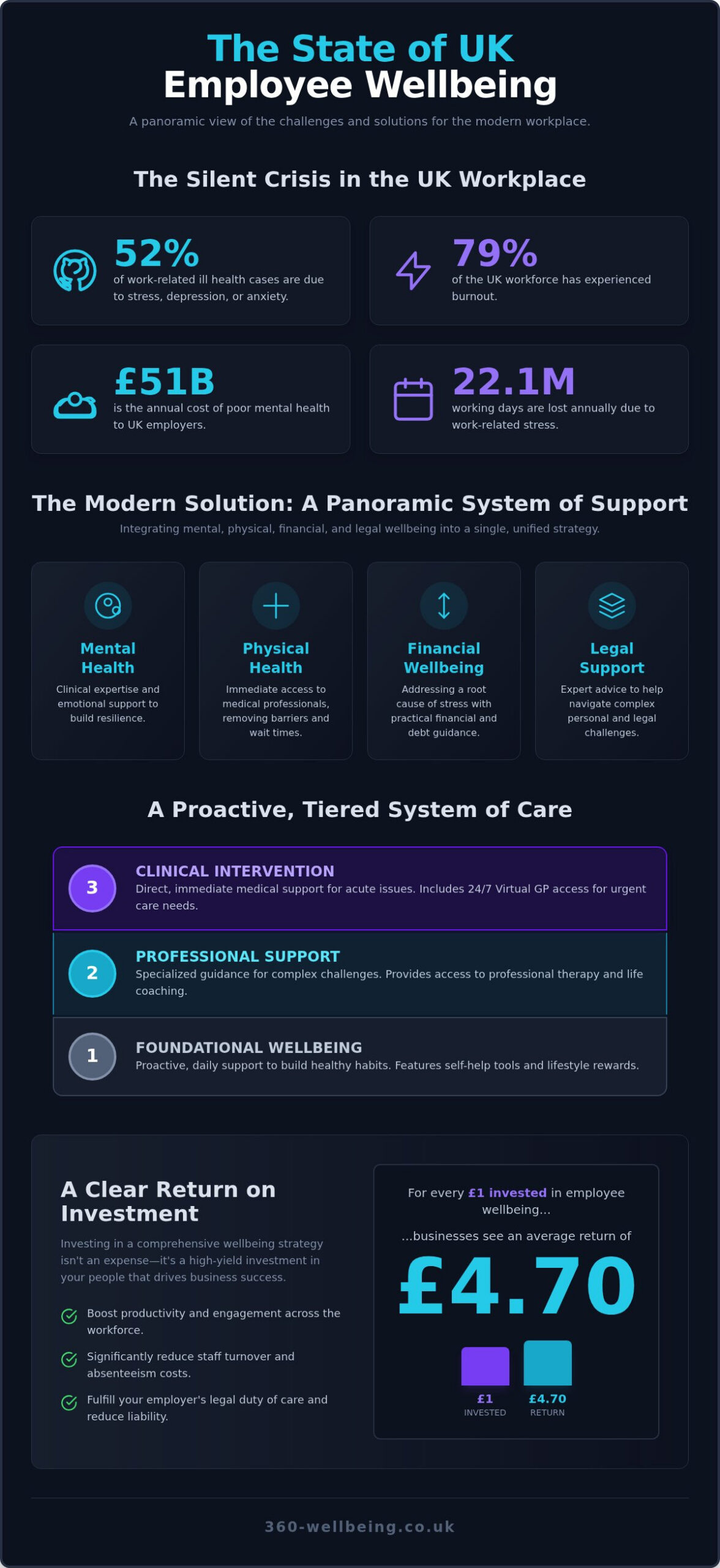
Did you know that work-related stress, depression, or anxiety now accounts for 52% of all work-related ill health cases in Great Britain? It is a sobering reality for any business leader to realize that 79% of their workforce has experienced burnout, especially when the cost of poor mental health to UK employers has reached £51 billion annually. You likely feel the weight of responsibility for your team’s wellbeing, yet navigating the complexity of financial stress and overstretched public health services can feel like an impossible task. We understand that you want to be a source of stability for your people during these uncertain times.
This guide will show you how to implement a panoramic system of mental health support for employees uk that protects your team without straining your budget. We’ll explore a proactive approach that integrates clinical expertise, financial guidance, and lifestyle support into a single, unified strategy. You’ll discover how to meet your legal duty of care seamlessly while fostering a healthier, more engaged workforce that drives your business forward. Let’s look at how a small, methodical shift in your wellbeing strategy can deliver an average return of £4.70 for every pound invested in your most valuable asset.
Key Takeaways
- Adopt a panoramic approach to wellbeing that integrates mental, physical, and financial health to address the specific challenges of the 2026 workplace.
- Discover how to implement a tiered system of mental health support for employees uk, providing everything from life coaching to professional therapy.
- Address the root causes of workplace stress by incorporating financial guidance and legal support into your core mental health strategy.
- Clarify your legal obligations under the Equality Act 2010 and learn how a proactive strategy reduces staff turnover while boosting productivity.
- Simplify your administrative overhead by using a cost-effective, SaaS-based platform designed specifically for the needs of UK SMEs and sole traders.
The Current Landscape of Mental Health Support for Employees in the UK
As we move through 2026, the way we work has fundamentally shifted, yet many corporate wellbeing strategies remain anchored in the past. The rise of hybrid working and the persistent pressure of cost-of-living increases have created a complex environment where employee needs are more diverse than ever. The Health and Safety Executive reported in late 2025 that nearly one million workers in Great Britain are suffering from work-related stress, depression, or anxiety. This isn’t just a clinical issue; it’s a structural one that requires a modern, integrated response.
To provide effective mental health support for employees uk, businesses are now adopting a panoramic viewpoint. We’ve learned that a person’s emotional state can’t be isolated from their physical health or their bank balance. Understanding What is Mental Health in a professional context requires us to look at the whole person. When an employee is struggling with debt or chronic physical pain, their mental resilience naturally declines. Proactive UK businesses are moving away from reactive, “break-glass-in-case-of-emergency” Employee Assistance Programmes (EAPs) toward unified platforms that offer 24/7 support across all these pillars.
The Silent Impact of Absenteeism and Presenteeism
The true cost of mental ill health is often hidden beneath the surface of daily operations. While absenteeism is easy to track through the 22.1 million working days lost annually due to stress, presenteeism is far more insidious. This occurs when staff members show up for work but are unable to function effectively because they are mentally or physically unwell. Deloitte’s 2024 analysis suggests that poor mental health costs UK employers approximately £51 billion per year, with a significant portion of that total attributed to reduced productivity while on the clock. Presenteeism is the hidden productivity killer of the 2020s. By the time an employee takes a formal sick day, they’ve often spent weeks struggling in silence, which is why early intervention is so vital for maintaining workplace harmony.
Why Traditional Support Models Often Fall Short
Many organisations still rely on office-based mental health first aiders, but this model often fails in a world where half the team might be working from home on any given day. Furthermore, traditional occupational health referrals can involve long waiting lists, leaving employees in a state of limbo while their condition worsens. We’ve seen that wait times for community-based services can be prohibitive, making 24/7 digital access to GPs and therapists a necessity rather than a luxury. Modern mental health support for employees uk must be accessible at the point of need, whether that’s a Tuesday morning in the office or a Sunday night at home. Transitioning to a model of total wellness ensures that support is always within reach, providing the durability and foresight needed to protect your team for the long term.
What is Mental Health Support for Employees? Core Components
Effective mental health support for employees uk is far more than a simple phone line or a collection of PDF guides. It is a structured ecosystem of clinical, emotional, and practical resources that an employer provides to ensure their team can thrive. Think of it as a hierarchy of care. At the foundation, you have self-help tools and lifestyle rewards that encourage daily wellbeing. As needs become more complex, the system scales to include life coaching, professional therapy, and eventually, direct medical intervention through a GP.
A modern support system must be built on the principles of foresight and durability. This means providing resources that address issues before they escalate into long-term sickness. Central to this is the concept of a “front door” to care, usually in the form of a 24/7 Virtual GP. By giving staff immediate access to medical professionals, you fulfill your Employer Duty of Care while removing the barriers of travel and long waiting lists. For this system to work, confidentiality is paramount. Employees need to know that their health journey is entirely anonymous, which builds the trust required for them to engage with the support offered.
The Role of 24/7 Virtual GPs in Mental Health
When an employee is struggling, the ability to speak with a UK-registered GP within minutes can significantly reduce anxiety. Virtual consultations are particularly beneficial for remote or flexible workers who may find it difficult to visit a physical surgery during standard business hours. This digital-first approach doesn’t just support the individual; it protects the business by reducing the time staff need to take off for medical appointments. It’s a methodical way to ensure that health concerns are addressed promptly, preventing a minor stressor from becoming a major crisis.
Therapy and Life Coaching: Proactive vs. Reactive Care
It’s vital to distinguish between clinical therapy and life coaching. Clinical therapy is a reactive necessity for those managing diagnosed conditions like depression or anxiety. Life coaching, however, is a proactive tool focused on personal growth, resilience, and managing work-life balance. By offering both, you provide a panoramic support system that caters to everyone, from the high-performer looking to sharpen their focus to the individual needing deep emotional support. Providing a set number of structured therapy sessions as a standard benefit ensures that professional help is a right, not a luxury. If you’re ready to build a more resilient team, you can explore how an integrated wellbeing platform brings these essential services together in one place.
The Crucial Link Between Financial Stress and Mental Health
Financial anxiety is currently the leading cause of workplace stress across the country. It’s impossible to separate a person’s emotional resilience from their financial security. When we consider the most effective mental health support for employees uk, we must look beyond traditional therapy to address the root causes of distress. A panoramic approach treats debt advice and legal support as essential mental health interventions. These services resolve the external pressures that often lead to internal crises, offering a sense of stability that clinical support alone cannot provide.
Integrating Debt Advice and Financial Helplines
Recent data suggests that 58% of UK employees feel their mental health is suffering due to money worries. This financial load creates a significant drain on concentration and overall workplace performance. It’s a quiet crisis that costs businesses billions every year. By providing anonymous, professional financial guidance, you give your team a safe space to tackle these issues without fear of judgment. It’s about offering a lifeline that helps them regain control of their situation. You can find more detail on how to structure these benefits effectively in our Financial Support for Employees Guide.
Legal Support as a Wellbeing Pillar
Legal complications are another major source of hidden stress. Whether it’s a property dispute, a consumer issue, or a family matter, the complexity of the legal system can feel overwhelming. Access to 24/7 legal helplines offers immediate clarity and reassurance, which is vital for maintaining employee mental health. Practical benefits such as complimentary will writing also demonstrate a high level of foresight and care from the employer. It reduces the long-term mental load by ensuring that personal affairs are in order. This allows staff to feel more secure in their future and more valued in their present role.
Daily financial relief is just as important as long-term planning. Marketplace discounts, such as those found in 360 Rewards, help alleviate the pressure of rising costs on everyday essentials. This integrated approach ensures that support isn’t just a one-off service but a durable part of the employee’s daily life. It creates a sense of completeness in your wellbeing strategy, moving from reactive help to a proactive vision of workplace harmony.
Employer Duty of Care and the ROI of Mental Health Support
Providing mental health support for employees uk is not just a compassionate choice; it’s a fundamental legal requirement. The Health and Safety at Work Act mandates that employers protect the welfare of their team, which extends directly to psychological health. Under the Equality Act 2010, a mental health condition can be classified as a disability if it has a long-term, substantial effect on an individual’s ability to carry out daily activities. This means you have a legal obligation to make reasonable adjustments for those in need, ensuring they aren’t disadvantaged by their condition. Meeting these obligations shouldn’t be seen as a burden but as a way to build a more durable and loyal workforce.
The financial case for proactive care is equally compelling. Research from Deloitte in 2024 shows that for every £1 spent on supporting mental health, employers receive an average return on investment of £4.70. This return comes from reduced absenteeism, higher levels of engagement, and a significant drop in staff turnover. In a competitive recruitment market, a robust wellbeing strategy acts as a powerful differentiator. It signals to potential talent that your business prioritises human vitality over mere output, which is essential for attracting the next generation of leaders. If you’re looking to protect your business and your people, you can explore how our integrated wellbeing platform simplifies compliance.
Meeting Your Legal Obligations
A clear, written mental health policy is the cornerstone of a safe workplace. It provides a methodical framework for support, ensuring that every team member knows where to turn when they feel overwhelmed. Digital platforms enhance this by providing a secure audit trail of the support offered to staff, which is invaluable for demonstrating compliance during internal reviews. Duty of care is the legal and moral obligation of an employer to ensure the psychological safety and wellbeing of their staff as part of a healthy work environment. By formalising these processes, you move away from reactive fixes toward a culture of foresight and stability.
Measuring Success and Employee Engagement
You can’t manage what you don’t measure. Modern wellbeing platforms provide anonymised analytics that help you understand usage trends without compromising individual privacy. This data allows you to see which services, such as debt advice or virtual GP access, are most valued by your team. Using these insights, you can refine your strategy to better meet the evolving needs of your workforce. This transparent, feedback-driven approach builds a culture of trust and vitality. When employees see that their wellbeing is treated as a professional necessity rather than a luxury, they are more likely to remain engaged and committed to the long-term success of the organisation.
Implementing a Seamless Wellbeing Platform with 360 Wellbeing
Bringing a comprehensive system of mental health support for employees uk into your business shouldn’t be a source of administrative stress. We’ve designed 360 Wellbeing to act as an extension of your team, providing the clinical expertise and logistical support that small and medium-sized businesses often lack. By moving to a SaaS-based model with a fixed per-employee monthly fee, you can offer world-class benefits without the unpredictable costs or complex contracts often associated with traditional medical services. It’s a methodical way to ensure your team is protected while keeping your overheads predictable.
Our platform removes the burden of managing multiple providers. Instead of juggling separate contacts for a virtual GP, a therapist, and a debt counsellor, your team accesses everything through a single, intuitive interface. This panoramic approach ensures that every aspect of an individual’s health, mental, physical, and financial, is supported under one roof. It creates a sense of completeness that is often missing from fragmented support models. You’re not just providing a service; you’re building a durable culture of care that feels both personal and professionally managed.
Tailored Solutions for SMEs and Sole Traders
You don’t need a 500-person HR department to provide exceptional care. 360 Wellbeing is uniquely positioned for UK SMEs and sole traders, offering a scalable solution that grows alongside your business. We act as an expert caregiver for your organisation, allowing you to focus on growth while we ensure your people remain resilient and healthy. This level of foresight is no longer a luxury; it’s a professional necessity for any modern employer looking to protect their team’s long-term interests. Whether you have one employee or one hundred, the quality of care remains consistently high and deeply personal.
Next Steps: Launching Your Wellbeing Strategy
Introducing the platform to your staff is the final step in creating a proactive wellbeing culture. We’ve streamlined the digital onboarding process to be as simple as possible, ensuring high engagement from day one. When employees see that mental health support for employees uk is available 24/7, they feel empowered to take charge of their own health journey. This visible commitment to their wellbeing builds immediate trust and fosters workplace harmony. If you’re ready to transform your workplace into a hub of vitality, you can Book a demo of the 360 Wellbeing platform today.
Securing Long-Term Vitality for Your Workforce
We’ve explored how a panoramic approach to wellbeing transforms a business from reactive to proactive. By integrating 24/7 UK-registered Virtual GP access with essential financial and legal support, you address the root causes of workplace stress before they escalate into long-term absence. This strategy isn’t just about meeting legal obligations; it’s about fostering a culture where every individual feels seen, valued, and empowered to do their best work. It’s a shift that moves wellbeing from a luxury perk to a core pillar of your business durability.
Implementing comprehensive mental health support for employees uk ensures your team has the tools to navigate the pressures of the 2026 workplace. Our platform is designed specifically for UK SMEs and sole traders, removing the administrative weight while providing integrated mental health and financial resources that protect your most valuable asset. It’s a methodical path to building a resilient business that thrives on human harmony and shared success. Taking these steps today secures a healthier, more engaged future for everyone in your organisation.
Empower your team with 360 Wellbeing support
You have the power to create a workplace where health is a professional necessity and an essential human entitlement. We’re here to help you turn that vision into a reality.
Frequently Asked Questions
What is the best mental health support for employees in the UK?
The best support is a panoramic, integrated system that addresses mental, physical, and financial health simultaneously. A proactive model that includes 24/7 access to clinical experts, such as virtual GPs and therapists, ensures that help is available at the point of need. This all-encompassing approach prevents minor stressors from escalating into long-term crises, providing a durable safety net for the entire workforce while supporting overall business productivity.
Do small businesses have a legal duty to provide mental health support?
Yes, all UK employers have a legal duty of care under the Health and Safety at Work Act to protect the welfare of their employees, which includes their mental health. Additionally, the Equality Act 2010 requires businesses to make reasonable adjustments for staff with mental health conditions that qualify as disabilities. Failing to provide adequate support can lead to legal risks and increased costs associated with staff absenteeism and high turnover.
How much does an employee assistance programme (EAP) cost per employee?
The cost of an EAP varies depending on the level of service and the size of the organisation, but many providers offer fixed per-employee monthly fees to keep costs predictable. For small businesses and sole traders, these models are often more affordable than traditional private medical insurance. It’s best to look for a provider that offers a transparent fee structure that includes comprehensive clinical and financial support without hidden extras or administrative burdens.
Can mental health support improve employee retention?
Investing in mental health support for employees uk is one of the most effective ways to improve retention and reduce staff turnover. When employees feel that their wellbeing is a professional necessity rather than a luxury, they develop a deeper sense of loyalty to their employer. Research indicates that a supportive environment reduces burnout and presenteeism, leading to a more stable, engaged, and productive workforce that is less likely to leave.
What is included in a 360 Wellbeing mental health package?
A 360 Wellbeing package provides a unified narrative of total wellness by integrating several core pillars of health. This includes 24/7 access to UK-registered virtual GPs, structured mental health therapy, and life coaching for personal growth. To address the root causes of stress, the package also features financial support, debt advice, and legal helplines, alongside marketplace rewards to help manage the daily cost of living for your team.
Is employee mental health support tax-deductible for UK businesses?
In many cases, the cost of providing welfare-related benefits like mental health support is a tax-deductible business expense in the UK. Many organisations find that these services are not considered a benefit-in-kind for employees, provided they meet specific HMRC criteria for welfare and counselling services. You should always consult with a qualified tax professional or accountant to understand how these deductions apply to your specific business structure and chosen wellbeing platform.
How quickly can an employee see a therapist through a virtual platform?
Virtual platforms are designed to bypass the long waiting lists often associated with traditional occupational health or community-based referrals. Many digital services allow employees to book initial consultations within days rather than months, ensuring they receive support at the earliest possible stage. This speed of intervention is critical for preventing conditions from worsening and helping individuals maintain their vitality and workplace harmony during challenging times when they need it most.
What is the difference between an EAP and a wellbeing platform?
A traditional EAP is often a reactive service that focuses primarily on crisis counselling. In contrast, a modern wellbeing platform offers a more panoramic viewpoint, integrating proactive tools like life coaching, 24/7 virtual GPs, and financial guidance into a single ecosystem. While an EAP might only be used during a crisis, a wellbeing platform encourages daily engagement through lifestyle rewards and preventative care, building long-term resilience and stability across the entire organisation.