
What if the most effective way to protect your business’s future isn’t by trimming benefits, but by reimagining health as a fundamental employee entitlement? With UK employees now absent for an average of 9.4 days per year, it’s clear that traditional reactive models are struggling to keep pace. You’ve likely felt the strain of rising NHS wait times and the difficulty of providing consistent support to a hybrid workforce. This is why 88% of UK organizations now lean on virtual care services for employers to provide a more durable and accessible safety net.
We understand that managing workplace wellbeing can feel like a complex puzzle of budget constraints and shifting tax regulations. This guide will show you how modern virtual care ecosystems integrate medical, mental, and financial support to build a more resilient and productive UK workforce. We’ll walk through the transition to digital-first care, explain how unified platforms help reduce recruitment and retention costs, and provide a clear, structured path toward a healthier and more engaged team.
Key Takeaways
- Discover the shift from reactive “sick care” to a proactive, digital-first health ecosystem that treats wellbeing as an essential human entitlement.
- Explore how virtual care services for employers integrate 24/7 GP access with mental health support and physiotherapy to provide a more durable safety net.
- Understand why a unified digital platform offers a more accessible and cost-effective alternative to traditional Private Medical Insurance (PMI).
- Gain a practical 5-step implementation roadmap designed to help UK businesses of all sizes launch a successful and simplified wellbeing strategy.
- Learn how a panoramic approach to care balances professional medical expertise with a warm, human touch to foster long-term workplace harmony.
What are Virtual Care Services for Employers?
At its core, virtual care services for employers represent a shift away from the fragmented “sick care” models of the past toward a unified, digital-first health ecosystem. This approach integrates clinical expertise with everyday accessibility, ensuring that support isn’t just a reactive measure but a proactive foundation for workplace harmony. The broader field of Telehealth has evolved rapidly; it’s no longer just about video consultations but about creating a durable safety net that moves with your staff, whether they’re in the office or working from home.
In 2026, UK businesses are facing a unique set of challenges. Stricter NHS rules implemented in April now require clinical assessments for every appointment request, which has significantly increased the demand for private alternatives. Forward-thinking organisations are prioritising digital access to bypass these traditional delays. They recognise that a standalone health app isn’t enough. Instead, they’re opting for integrated platforms that offer a panoramic viewpoint of an employee’s wellbeing, treating health as a professional necessity rather than a luxury.
The Evolution of the Virtual GP
The modern virtual GP is far more than a simple video call. It’s a 24/7 gateway to UK-registered clinical support that provides instant peace of mind. By incorporating prescription management and clear referral pathways within a single digital framework, these services ensure that medical concerns are addressed before they escalate. This level of foresight is essential for reducing absenteeism. When an employee can consult a doctor at a time that suits them, they avoid the stress of waiting weeks for a local appointment, allowing them to remain focused and productive.
Beyond the Clinic: Holistic Digital Support
True vitality requires a sense of completeness that extends beyond medical check-ups. Virtual care services for employers are now designed to support the whole person by integrating Mental Health Support, Physiotherapy, and Life Coaching into a single journey. This holistic narrative is vital because physical limitations often stem from mental stress or even financial worries. Including Financial Support and Debt Advice alongside clinical care helps address the root causes of poor wellbeing. Given that poor mental health costs UK employers an estimated £56 billion annually, according to Deloitte, providing this level of all-encompassing care is both a compassionate choice and a sound corporate strategy.
The Core Pillars of a Modern Virtual Care Ecosystem
A truly effective virtual care ecosystem is built on the belief that health is multi-dimensional. It’s no longer enough to offer a reactive service that only triggers when an employee feels unwell. Instead, a panoramic approach to wellness addresses the physical, mental, and social factors that influence a person’s ability to thrive. By integrating these diverse elements into a single platform, virtual care services for employers provide a durable safety net that supports the whole individual. This shift toward remote, high-quality care mirrors broader national trends, such as the NHS virtual ward programme, which demonstrates the clinical validity and efficiency of digital-first health delivery.
To build a resilient workforce, your strategy should rest on four essential pillars:
- The Medical Pillar: Rapid clinical intervention through 24/7 GP access.
- The Mental Pillar: Proactive stress management and professional therapy.
- The Physical Pillar: Digital physiotherapy and preventative health coaching to maintain vitality.
- The Lifestyle Pillar: Practical rewards and financial guidance that support daily life.
24/7 UK-Registered Virtual GP Services
Clinical quality is the foundation of trust in any health service. By ensuring that employees speak with UK-based, GMC-registered doctors, you provide a level of reassurance that matches traditional primary care. The 24/7 availability is particularly vital for multi-shift workforces or those with irregular hours, as it removes the barrier of restrictive clinic opening times. In 2026, the clinical standard for virtual GP services is defined by immediate, board-certified intervention that mirrors the precision and safety of in-person primary care. This instant access helps resolve health concerns early, preventing minor issues from becoming long-term absences.
Mental Health & Life Coaching
Mental wellbeing requires a balance of crisis intervention and long-term personal growth. While therapy and counselling provide a safe, confidential space for those facing immediate challenges, Life Coaching offers a proactive path for employees to develop resilience. Empowering your team to manage stress before it leads to burnout is a professional necessity. This supportive framework ensures that every staff member has the tools to navigate both workplace pressures and personal transitions with confidence.
Financial & Legal Wellbeing
Financial insecurity is often cited as the leading cause of employee stress, yet it’s frequently overlooked in traditional health packages. Providing comprehensive financial support and debt advice helps prevent the distractions that arise from money worries. When paired with legal helplines and complimentary will writing, these services transform a health app into an essential life tool. This all-encompassing care acknowledges that a person’s financial health is inseparable from their mental and physical vitality. If you’re ready to see how these pillars can strengthen your team, you can explore our integrated wellbeing solutions to find the right fit for your organisation.
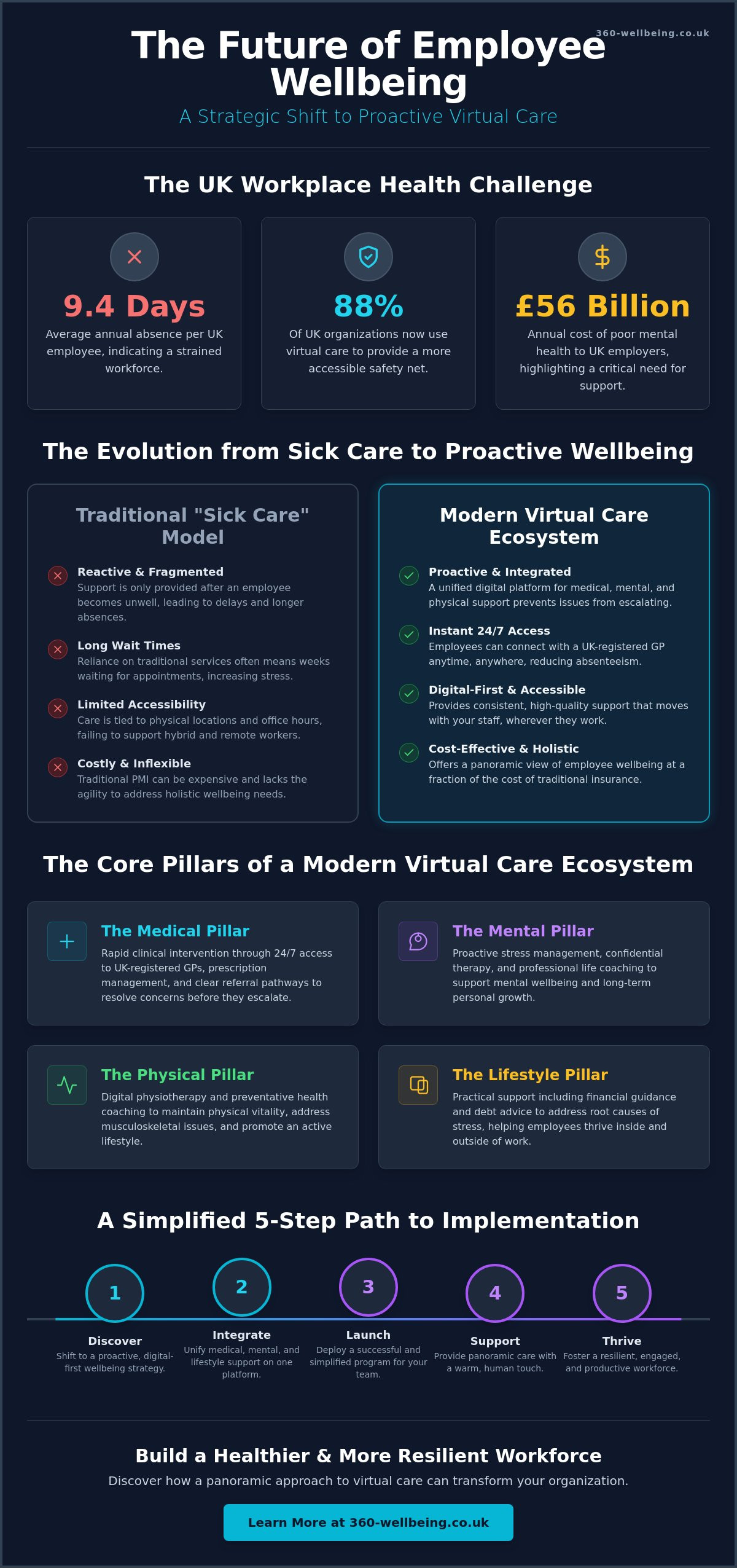
Comparing Virtual Care vs. Traditional Employee Benefits
For decades, the standard approach to corporate health relied on two pillars: Private Medical Insurance (PMI) for the few and an Employee Assistance Programme (EAP) for the many. However, the rising cost of insurance premiums and the reactive nature of traditional EAPs have left many UK businesses looking for a more inclusive alternative. Virtual care services for employers bridge this gap by offering a subscription-based model that treats health as a universal entitlement rather than a tiered luxury. This approach ensures that your youngest apprentice receives the same level of care as your managing director, fostering a sense of equity and workplace harmony.
Traditional PMI often feels out of reach for SMEs due to its high premiums and the complexities of tax reporting. From April 2026, the mandatory payrolling of benefits-in-kind means that employers must handle the tax for PMI in real-time, adding another layer of administrative work. Digital-first platforms simplify this by providing a straightforward service that doesn’t require the same level of complex claims management or underwriting, making it a more durable choice for growing teams.
Virtual Care vs. Private Medical Insurance (PMI)
Speed of access is the defining factor when comparing these models. While PMI is invaluable for major surgeries or chronic conditions, it isn’t always designed for the immediate, daily medical needs that drive the majority of workplace absenteeism. Virtual care acts as the “front door” to the healthcare system, providing consultations with UK-registered GPs within minutes. Because it focuses on rapid intervention and early prevention, it serves as a more agile solution for a multi-shift or remote workforce that cannot afford to wait weeks for a local appointment.
Standard EAPs often suffer from low engagement because they’re seen as a reactive “crisis line” for when things have already gone wrong. Modern virtual care ecosystems flip this narrative by offering active, daily support through rewards and life coaching. This keeps wellbeing at the forefront of the employee experience, rather than something only accessed during a period of intense stress.
Measuring the ROI of Virtual Health
Tracking the success of your wellbeing strategy is essential for long-term sustainability. By monitoring engagement rates and the utilization of services like Physiotherapy or Mental Health Support, you can see exactly how your team is benefiting from the platform. The hidden costs of “waiting for an appointment” are significant; every hour an employee spends trying to secure a GP slot is an hour of lost productivity and increased anxiety. Virtual care pays for itself by significantly reducing recruitment and retention costs through a more loyal and resilient workforce.
How to Implement Virtual Care in Your Organisation
Introducing virtual care services for employers into your business shouldn’t be a daunting administrative hurdle. Instead, it’s a structured path toward a more resilient and supportive workplace culture. Launching a digital health ecosystem requires more than just a software rollout; it’s about communicating a new standard of care that treats employee wellbeing as a professional necessity. By following a methodical roadmap, you can ensure that the transition is smooth for both your HR team and your staff.
To launch successfully, follow these five essential steps:
- Assess Workforce Needs: Identify where healthcare delays or mental health strain are currently impacting your team’s productivity.
- Select a Unified Partner: Choose a provider that integrates medical, mental, and lifestyle support into one manageable platform.
- Strategic Communication: Frame the service as an essential human entitlement and explain how it simplifies their daily life.
- Cultural Integration: Embed the platform into your standard onboarding process so new hires feel supported from day one.
- Monitor Engagement: Use anonymised data to understand which services are most valued and refine your strategy accordingly.
Choosing the Right Platform for Your Size
The needs of a sole trader or a small business differ significantly from those of a large enterprise. For SMEs, the priority is often reducing the administrative burden and finding a cost-effective alternative to high-premium insurance. Scalability is the key for larger organisations. You need a partner capable of managing onboarding for hundreds of staff while providing dedicated support. Regardless of your size, a user-friendly app is non-negotiable. If the interface is intuitive, engagement will naturally follow, ensuring your investment delivers a durable return through a healthier workforce.
Promoting Engagement and Utilisation
High adoption rates depend on two factors: value and trust. Employees are more likely to use the service if they see immediate benefits in their daily lives. By utilising reward marketplaces and discounts, you can drive daily app usage even when staff don’t have a specific medical concern. This keeps the platform “top of mind” for when they eventually need clinical support. Privacy is equally vital. You must clearly communicate that all consultations are confidential and that health data is protected by UK GDPR. When staff feel safe and rewarded, they’ll embrace virtual care as a cornerstone of their professional life. If you’re ready to transform your workplace health strategy, you can start your virtual care journey here.
The 360 Wellbeing Approach: Panoramic Care for Every Employee
The 360 Wellbeing philosophy is rooted in a panoramic viewpoint of health, where every individual is seen as a whole person rather than a collection of symptoms. We believe that true vitality isn’t achieved through isolated interventions but through a seamless integration of physical, mental, and social support. Our platform balances rigorous clinical expertise with a warm, human touch, ensuring that every interaction feels personal and empowering. By choosing 360 Wellbeing, you aren’t just buying a service; you’re gaining a strategic partner dedicated to the long-term durability of your workforce. Our virtual care services for employers are designed to be a professional necessity, treating health as an essential human entitlement that should be accessible to everyone, from the warehouse floor to the boardroom.
Predictability is essential for any business strategy. This is why we utilise a fixed, per-employee subscription model that provides total budget transparency. Unlike traditional insurance products where premiums can fluctuate based on claims or age, our model ensures that your costs remain stable while your staff receives comprehensive care. This approach simplifies the financial planning process for UK businesses, allowing you to focus on growth while we look after the health of your team. It’s a modern, forward-thinking way to manage corporate wellness without the hidden complexities of traditional private medical insurance.
The 360 Rewards Marketplace
Social health is a vital component of the 360 Wellbeing narrative. Our 360 Rewards marketplace adds tangible value to an employee’s daily life by providing thousands of discounts on everything from the weekly shop to gym memberships and travel. These lifestyle perks do more than just save money; they complement medical care by fostering a positive workplace culture and encouraging proactive engagement with the platform. There’s a direct link between financial savings and reduced employee anxiety. By helping your team’s wages go further, you’re addressing one of the root causes of stress, creating a sense of completeness and balance that supports their overall mental vitality.
Dedicated Support & Expert Caregiving
Our commitment to excellence is reflected in the quality of our people. We provide access to UK-registered professionals across all pillars of care, including 24/7 Virtual GPs, mental health counsellors, and physiotherapists. This ensures that every clinical assessment is scientifically grounded and safe. For HR managers and business owners, our platform simplifies administration by bringing EAP services, Life Coaching, and Financial Support into a single, unified dashboard. It removes the coldness often associated with medical services, replacing it with the persona of an expert caregiver who is deeply invested in your success. Take the next step toward a healthier, more resilient workforce by making 360 Wellbeing the foundation of your corporate strategy.
Building a Resilient Future for Your Team
The shift toward a unified, digital-first health ecosystem is no longer just a trend; it’s a professional necessity for any UK business looking to thrive in 2026. We’ve explored how moving beyond reactive “sick care” to a proactive, panoramic model helps reduce absenteeism and supports every staff member equally. By integrating clinical medical intervention with long-term mental health and financial support, you’re providing a durable safety net that empowers your team to stay healthy and engaged.
Selecting the right virtual care services for employers allows you to bypass traditional healthcare delays while maintaining budget predictability. Our platform offers 24/7 access to UK-registered GPs and comprehensive Mental Health and Life Coaching support, all delivered through an affordable per-employee subscription model. It’s about creating a workplace where wellbeing is an essential human entitlement rather than a luxury.
Discover our holistic virtual care platform for your team and start building a more harmonious, productive environment today. We’re here to help you navigate this journey with confidence and care.
Frequently Asked Questions
What are virtual care services for employers in the UK?
Virtual care services for employers are digital-first health platforms that provide staff with immediate access to clinical and wellbeing support. These ecosystems typically include 24/7 Virtual GP consultations, mental health therapy, and lifestyle rewards. By integrating these tools into a single app, UK businesses can offer a durable safety net that bypasses traditional healthcare delays and supports employees wherever they work.
How much do virtual care services cost per employee?
Most providers utilise a per-employee, per-month subscription model to ensure budget predictability for the business. While specific costs depend on the size of your organisation and the level of support required, this approach is generally designed to be a more affordable alternative to traditional medical insurance. It allows business owners to provide comprehensive care for their entire team without the high premiums or complex underwriting associated with older healthcare models.
Can virtual GPs provide prescriptions and referrals to UK employees?
Yes, UK-registered GPs within a virtual care platform can issue private prescriptions and clinical referrals during a consultation. When an employee has a video or phone appointment, the doctor can send a prescription directly to a local pharmacy or arrange for home delivery. If further specialist care is needed, the GP provides a formal referral letter that the employee can use to access private treatment or share with their NHS provider.
Is virtual care a replacement for Private Medical Insurance (PMI)?
Virtual care serves as a perfect “front door” to healthcare, though it functions differently than traditional Private Medical Insurance. While PMI is designed for major surgeries and chronic hospital care, virtual care focuses on rapid intervention for everyday health concerns like minor illnesses, mental health, and physiotherapy. For many SMEs, it acts as a more inclusive and cost-effective alternative that ensures every staff member is covered for their daily wellbeing needs.
How do virtual care services improve employee retention?
These services improve retention by demonstrating a genuine commitment to an employee’s long-term health and vitality. When staff feel that their wellbeing is treated as a professional necessity rather than a luxury, their loyalty to the organisation grows. Providing instant access to 24/7 Virtual GPs and mental health support reduces the stress of balancing work with health concerns, making your business a more supportive and attractive place to stay.
Are virtual care services suitable for small businesses and sole traders?
Virtual care services for employers are highly scalable and specifically designed to meet the needs of small businesses and sole traders. These organisations often lack the budget for traditional private medical schemes but still require a way to support their team’s health. Digital platforms provide a simplified, all-in-one solution that’s easy to manage; this ensures that even the smallest teams can access the same high-quality clinical support as large corporations.
How do employees access virtual care services?
Employees typically access these services through a secure, user-friendly mobile app or web portal provided by the employer. This allows them to book GP appointments, access mental health therapy, or browse lifestyle rewards at any time of day or night. The 24/7 nature of the platform is essential for modern workforces. It gives staff the flexibility to manage their health around their professional and personal commitments without needing to take time off for a local appointment.
Is employee data confidential in a virtual care platform?
Absolute confidentiality is a cornerstone of any professional virtual care service. All clinical consultations and personal health data are protected by UK GDPR and strict medical privacy standards. Employers receive only anonymised, high-level engagement data to help them understand the health of their organisation. This ensures that staff feel safe and empowered to discuss sensitive topics like mental health or financial stress without any fear of workplace repercussions.