
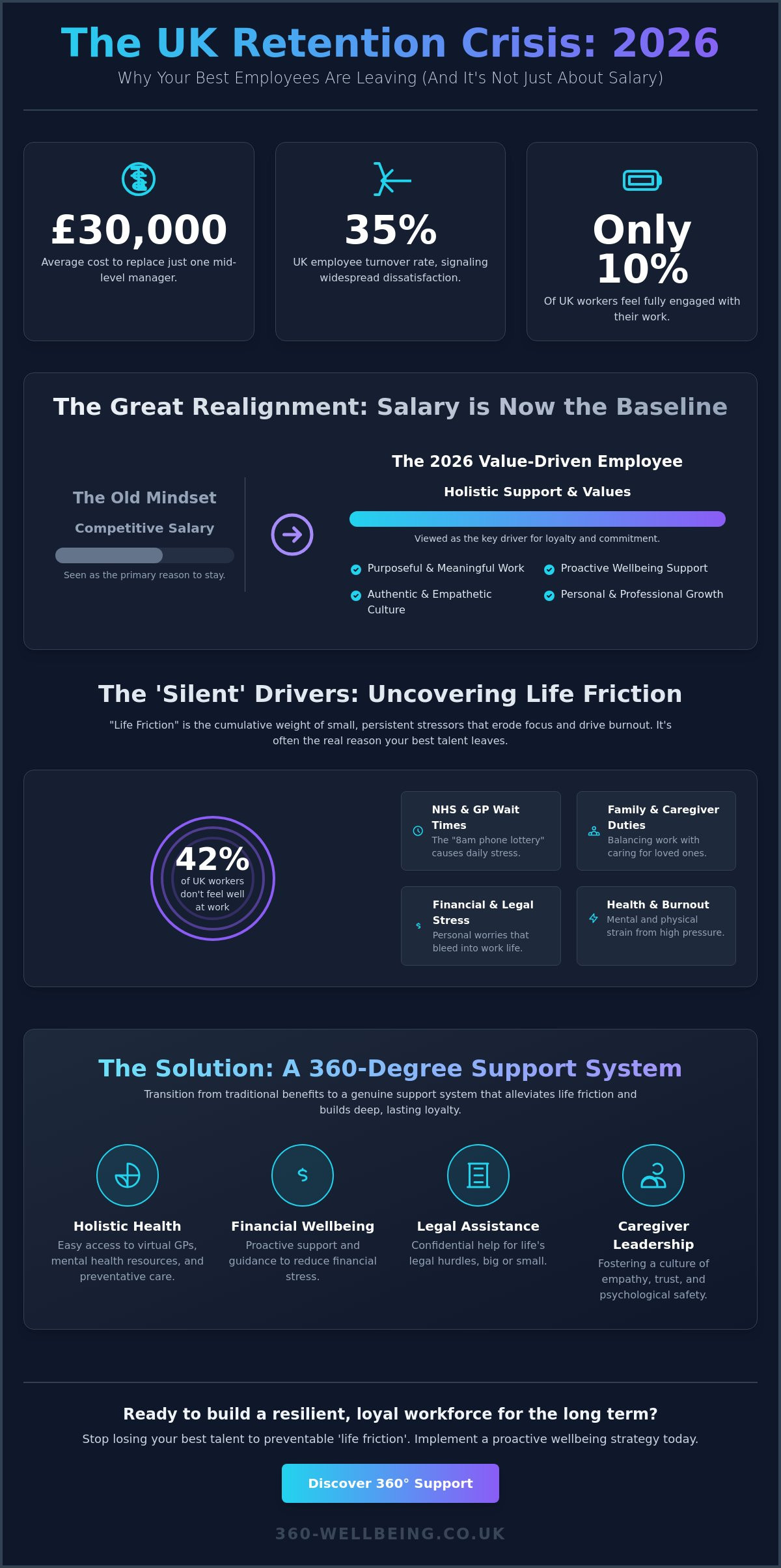
Did you know that replacing just one mid-level manager in 2026 costs your business an average of £30,000? With UK employee turnover rates hitting 35% and only 10% of workers feeling fully engaged, the financial and emotional drain on your organization is likely reaching a breaking point. You’ve probably looked at your competitive salaries and the 4.1% increase in the National Living Wage to £12.71 and wondered, “why are my best employees leaving uk?” It’s deeply frustrating to feel like you’re doing everything right while your top talent walks out the door for reasons that aren’t immediately clear.
We understand that your people are your most valuable asset. Seeing them leave affects more than just your bottom line; it impacts the very heart of your workplace harmony. This article will help you look beyond the paycheck to discover the hidden drivers behind these resignations. You’ll learn how to build a 360-degree support system that addresses the life friction pushing your stars away. We’ll explore the impact of the Employment Rights Act 2025 and show you how to implement a proactive wellbeing strategy that creates a resilient, loyal workforce for the long term.
Key Takeaways
- Move beyond salary by understanding why top performers now view competitive pay as a baseline rather than a primary reason to stay.
- Uncover the hidden impact of “life friction” and NHS delays on your team’s focus, revealing the real reasons why are my best employees leaving uk in 2026.
- Learn how proactive financial and legal support can stop talented staff from jumping ship for small, short-term pay rises.
- Transition your leadership style from traditional management to a caregiver approach that fosters deep loyalty and workplace harmony.
- Audit your current benefits package to ensure it provides a genuine 360-degree support system that your people actually value and use.
The 2026 UK Retention Landscape: Why Salary is No Longer Enough
The UK labor market in 2026 has moved past the frantic quitting of previous years into a phase we call the “Great Realignment.” While the National Living Wage rose to £12.71 in April 2026, simply meeting financial obligations isn’t enough to secure loyalty. You might find yourself asking, “why are my best employees leaving uk when I’ve increased their pay?” The reality is that salary has become a “hygiene factor.” It’s the baseline expectation that prevents dissatisfaction but doesn’t actually drive long-term commitment. High-performing individuals now look for a psychological contract that prioritizes their holistic health and personal values over a slightly higher figure on a payslip. This shift means that even well-paid staff will depart if they feel their work lacks purpose or if the environment doesn’t support their overall vitality.
Effective Employee retention in this climate requires understanding that your best people are often the most mobile. They have the skills that are in high demand across the UK’s persistent skills shortages. When the economic environment feels uncertain, these workers don’t just want a job; they want a partnership that offers stability, empathy, and a proactive approach to their wellbeing. Understanding why are my best employees leaving uk involves recognizing that loyalty is now earned through support systems that alleviate life’s daily pressures rather than just annual bonuses.
The Rise of the ‘Value-Driven’ Employee
In 2026, your team members are weighing their career progression against their mental and physical vitality. Recent data shows that 42% of UK workers don’t feel well at work, leading many to seek employers who offer more than just a desk and a salary. They’re looking for an authentic culture where corporate social responsibility isn’t just a marketing slogan but a lived reality. If a star player feels their personal growth is stagnating or their health is being sacrificed for “productivity,” they’ll be the first to explore new opportunities. They want to know their employer cares about them as a whole person, not just as a resource to be managed.
The True Cost of Employee Turnover in the UK
Losing a key team member creates a vacuum that extends far beyond an empty chair. You have to account for the high cost of recruitment, the months of training required for a new hire to reach full efficiency, and the inevitable dip in team morale. This “ripple effect” can be devastating, as the remaining staff often feel the strain of an increased workload, which can trigger further resignations. Replacing a mid-level professional in the UK in 2026 is estimated to cost your business approximately £30,000 when considering both direct expenses and lost productivity. Beyond the finances, the loss of institutional knowledge and established client relationships can take years to recover, making retention a strategic necessity rather than an HR checkbox.
The ‘Silent’ Drivers: Health, Burnout, and Life Friction
“Life friction” isn’t a single catastrophic event. It’s the cumulative weight of small, persistent stressors like managing a chronic health condition, caring for family, or dealing with administrative hurdles that erode a person’s ability to focus. In 2026, a major contributor to this friction is the ongoing struggle with NHS GP wait times. When a team member spends their morning in an “8 am phone lottery” just to get an appointment, their work day starts with high cortisol levels. If they feel they must sacrifice their physical health to meet a looming deadline, they’ll eventually seek an employer who removes that friction. This is often the fundamental answer to the question, “why are my best employees leaving uk?” It isn’t always about the work itself; it’s about the effort required to stay healthy while doing it.
Official work-related stress statistics confirm that mental health and physical strain remain the leading causes of long-term absence and attrition. Burnout often starts silently, manifesting as uncharacteristic irritability or a dip in the quality of work from previously flawless performers. By the time a resignation letter reaches your desk, the employee has usually been struggling in isolation for months. Proactive intervention is the only way to catch these signs early and preserve your institutional knowledge. Providing a comprehensive support system that addresses these silent drivers is no longer a luxury; it’s a retention necessity.
The Virtual GP Advantage
In 2026, peace of mind is a top-tier retention tool. Giving your staff 24/7 access to a UK-registered Virtual GP removes the anxiety of waiting weeks for a consultation. It allows employees to manage their health around their schedule, significantly reducing absenteeism and the “presenteeism” that occurs when people work while unwell. When healthcare is accessible and immediate, your team feels valued and protected, which builds a deep sense of loyalty that salary alone cannot buy.
Mental Health as a Strategic Asset
Modern UK workplaces must move beyond basic “Mental Health First Aid” toward continuous, professional support. This means providing direct access to therapy through an Employee Assistance Programme (EAP) and offering life coaching to help staff manage mid-career transitions or personal challenges. Normalising these conversations within your culture transforms mental health from a “problem to be solved” into a strategic asset. When your best people know they have a safety net, they develop the resilience needed to stay with your company for the long haul.
Beyond the Paycheque: Financial and Legal Stress in the UK
Financial anxiety doesn’t disappear just because an employee earns a professional salary. The “Cost of Living” hangover from previous years continues to linger in 2026, creating a layer of background noise that distracts even your most dedicated staff. Many business owners are baffled when a star performer resigns for a rival offering a mere £2,000 more per year. In many cases, that individual isn’t chasing a “better” job; they’re chasing a quick fix for a short-term financial hurdle. This is a common reason why are my best employees leaving uk. They’re looking for immediate relief from the pressure of rising household costs or unexpected bills that their current salary doesn’t quite cover.
Beyond just money, legal complications often weigh heavily on your team. Whether it’s a property dispute, a complex probate issue, or family law matters, these situations consume significant mental energy and time. Providing robust financial support and legal guidance creates a sense of “sticky” loyalty. When an employer helps resolve a personal crisis, the relationship shifts from transactional to transformative. Insights from the UK Commission for Employment and Skills survey suggest that businesses adopting these comprehensive standards see a marked improvement in how staff perceive their workplace environment. Understanding the financial pressures your team faces is the first step in solving the mystery of why are my best employees leaving uk.
Financial Wellness: Debt Advice and Will Writing
Debt isn’t always a result of poor management; it’s often a side effect of life’s unpredictability. Offering a confidential debt helpline allows employees to regain control without the stigma of discussing it with a manager. Similarly, providing complimentary will writing is a deeply appreciated benefit that offers long-term security for their families. These services reduce the constant pressure for salary hikes by addressing the root causes of financial fear. When people feel secure, their productivity and focus return to their work naturally.
Rewards and Recognition in a High-Inflation Economy
In a high-inflation economy, traditional “Employee of the Month” plaques feel hollow. Your team needs tangible ways to make their money go further. Discount marketplaces and 360 Rewards provide immediate, everyday savings on groceries, fuel, and essentials. This effectively increases their “real-world” disposable income without requiring a massive increase in your payroll. By normalising appreciation through practical savings, you show that you understand the daily realities of life in the UK today. It’s about moving from symbolic gestures to support that actually matters at the checkout.
The Managerial Gap: Why Culture Trumps Perks
While a comprehensive benefits package provides the foundation for retention, the daily interactions between a team and their leader determine the long-term loyalty of your staff. The age-old adage that people don’t leave companies, they leave managers, remains a stark reality in 2026. If you’re still asking “why are my best employees leaving uk”, the answer often lies in the gap between corporate policy and managerial practice. A manager who lacks empathy or the tools to support their staff can inadvertently dismantle even the most generous benefits package. Today, the role has shifted from a traditional “Boss” who monitors output to a “Caregiver” who monitors wellbeing as a prerequisite for performance.
Many leaders raise a valid concern: they simply don’t have the time to manage every personal problem that enters the office. This is where a structured wellbeing platform becomes a manager’s greatest ally. Instead of trying to provide debt advice or mental health counselling themselves, an empowered leader uses these tools to delegate support to qualified professionals. It removes the burden of expertise from the manager while ensuring the employee receives the high-quality care they need. This proactive approach transforms the manager from a bottleneck into a facilitator of health and resilience. You can equip your leadership team with these essential tools to bridge the managerial gap and foster a culture of genuine care.
Empathetic Leadership in the Modern UK Office
In 2026, empathetic leadership is a measurable skill rather than a soft trait. It involves training your managers to spot the “quiet” signs of disengagement, such as a star player who suddenly stops contributing in meetings or a consistent performer who begins taking frequent, short-term absences. One-to-one meetings must evolve. They shouldn’t just be a checklist of KPIs; they should be a safe space to discuss the person behind the professional. When a manager asks, “How are you, really?” and has the resources to help if the answer is “not great,” they build a foundation of trust that is incredibly difficult for competitors to break. This transparency is the first step in understanding “why are my best employees leaving uk” and taking active steps to prevent it.
Creating a 360-Degree Culture
A 360-degree culture integrates physical, mental, and social wellbeing into every level of the business. It recognizes that an employee’s life outside the office directly impacts their performance within it. By utilizing an Employee Assistance Programme (EAP), managers can confidently support their team’s diverse needs without becoming overwhelmed. The ROI of this healthy, supported culture is significant. Data from 2025 indicated that companies with high engagement scores saw a 21% increase in profitability. When your culture prioritizes the human element, your best people don’t just stay; they thrive, creating a resilient workforce that can navigate any economic challenge.
Implementing a 360-Degree Retention Strategy
Solving the puzzle of why are my best employees leaving uk requires moving beyond guesswork and into structured action. You’ve seen how health, financial stress, and managerial culture play vital roles in keeping your team together. Now, it’s time to audit your current provision. Many UK businesses find that their benefits are “shelfware”, perks that exist in an employee handbook but are rarely used because they’re too difficult to access. If your team doesn’t know how to reach a GP at 3 am or where to find debt advice, those benefits aren’t working for you or them. Consolidating these fragmented services into a single, unified platform is the most effective way to ensure your support is proactive rather than reactive.
Start by surveying your top talent to identify their specific “life friction” points. Are they struggling with the 8 am NHS phone lottery? Is the cost of the weekly shop causing anxiety? When you understand these pressures, you can move from offering generic perks to providing a strategic asset that protects your people. Clear communication is the final piece of the strategy. Regularly reminding your staff that they have 24/7 access to a Virtual GP or a confidential EAP ensures that when a crisis hits, they look to your support system first, rather than looking for a new job. This shift in approach is how you finally answer the question of why are my best employees leaving uk and start building a more resilient workforce.
Step-by-Step: From Resignation to Retention
- Identify friction points: Use anonymous surveys to pinpoint the high-risk stressors in your current staff experience, focusing on health and finance.
- Implement a unified platform: Deploy a comprehensive wellbeing system that covers health, finance, and legal support in one accessible place.
- Train your leadership: Ensure managers know how to lead with empathy and, crucially, how to refer staff to professional support through your platform.
- Measure and adjust: Track engagement levels and use real-time feedback to refine your support as the needs of your workforce evolve throughout 2026.
Why 360 Wellbeing is the Logical Conclusion
At 360 Wellbeing, we specialise in removing the daily stressors that drain your team’s energy and focus. Our 24/7 Virtual GP and professional mental health therapy sessions provide immediate relief from health-related anxiety, keeping your people present and productive. We also understand the economic landscape, which is why our 360 Rewards programme is designed to support the household budget through tangible everyday savings. By integrating physical, mental, and social health into a single narrative, we help you create a workplace where your best talent feels truly seen and supported. Discover how 360 Wellbeing can help you retain your best talent and secure the future of your organisation.
Securing Your Team’s Future in a Changing UK Landscape
Retaining your top talent in 2026 requires a shift from transactional perks to a culture of genuine, 360-degree support. We’ve explored how competitive pay is now a baseline expectation rather than a primary driver of loyalty, especially when “life friction” like NHS delays and financial anxiety begins to weigh on your staff. By removing these daily stressors, you create an environment where your best people can truly focus on their roles. Addressing the core question of why are my best employees leaving uk involves recognizing that your team members are looking for an employer who acts as a partner in their total wellness.
Our platform is designed specifically for UK SMEs and sole traders who want to provide a safety net that actually works. We offer your team 24/7 access to UK-registered GPs, professional mental health therapy, and practical financial advice, all within a single, unified system. This proactive approach doesn’t just lower turnover; it builds a more engaged and resilient workforce ready to face any challenge. You don’t have to navigate these complexities alone. Protect your top talent with the 360 Wellbeing platform and start building a workplace where everyone has the opportunity to thrive.
Frequently Asked Questions
Is it always about money when an employee leaves?
No, salary is rarely the sole driver for a resignation in 2026. While the National Living Wage increase to £12.71 provides a baseline, 24% of UK workers cite a lack of recognition as their primary reason for moving on. Top performers often leave because they feel undervalued or because the “life friction” of their daily routine has become unmanageable. They’re looking for a partnership that supports their total wellbeing, not just a monthly bank transfer.
What are the early warning signs that a top employee is unhappy?
Watch for uncharacteristic “quiet disengagement” in your previously high-performing staff. This often manifests as a sudden drop in meeting participation, a dip in work quality, or an increase in frequent, short-term absences. If a star player who was once highly collaborative begins to isolate themselves, it’s a clear signal of burnout. Catching these signs early allows you to offer proactive support before they decide to start looking for a new role elsewhere.
How can a Virtual GP service help with employee retention?
A Virtual GP service removes the significant stress of the “8 am phone lottery” for NHS appointments. By providing your team with 24/7 access to UK-registered doctors, you’re giving them back their time and peace of mind. This level of care is a powerful answer to the question, why are my best employees leaving uk for competitors? It shows you value their physical health as much as their output, fostering a deep sense of loyalty and security.
What is the most effective employee benefit for small UK businesses in 2026?
The most effective benefit is a consolidated wellbeing platform that addresses health, finance, and mental resilience. For UK SMEs, an Employee Assistance Programme (EAP) combined with a rewards scheme provides the highest return on investment. These tools offer tangible support for the household budget and immediate access to therapy. It’s a comprehensive approach that makes your business stand out as an employer of choice without the complexity of traditional medical insurance.
How do I conduct a ‘stay interview’ without making things awkward?
Frame the conversation as a proactive career check-in rather than a formal review. Focus on the person by asking what they enjoy most about their role and what “life friction” points make their day difficult. This transparency builds trust and helps you understand why are my best employees leaving uk markets in your specific sector. By listening to their needs before they reach a breaking point, you can adjust their support and secure their long-term commitment.
Can an EAP really prevent my best staff from resigning?
Yes, because an EAP acts as a vital safety net that catches employees before they fall into a crisis. By offering confidential mental health support and legal advice, you’re helping them resolve personal issues that would otherwise lead to burnout or resignation. When an employee knows they can access professional help for a family dispute or a mental health struggle through their workplace, they feel a level of support that money simply can’t buy.
What should I do if my best employee has already handed in their notice?
Start by having an open, empathetic conversation to understand the real “push” factors behind their decision. While counter-offers are common, they’re often a short-term fix if the underlying culture or health issues aren’t addressed. Even if you can’t persuade them to stay, use the exit interview to gather honest data. This insight is essential for refining your retention strategy and ensuring your remaining top talent feels supported enough to stay for the long haul.
How does financial stress impact workplace productivity?
Financial anxiety is a major drain on mental bandwidth, leading to decreased focus and a higher rate of errors. In 2026, many UK professionals are still dealing with a “cost of living” hangover that makes them susceptible to distraction. Providing debt advice and financial support restores their ability to focus on their work. When you alleviate their external pressures, you’ll see a natural return to the high productivity levels you expect from your best people.