Your greatest asset isn’t your business plan or your Q4 projections; it’s your own resilience. It’s the foundation upon which everything you build rests, and as a solopreneur, that foundation carries the entire weight of the enterprise.
We understand the paradox you live every day. You’re chasing a vision of ultimate freedom, yet you’re often isolated, carrying 100% of the risk with none of the corporate safety nets. The fear of a sudden illness wiping out your income, or a simple legal misstep costing thousands of pounds, is a constant, quiet hum beneath the surface of your ambition. This guide is your proactive plan to silence that noise. It provides a clear, structured path to fortifying your one-person business with the comprehensive health, financial, and mental wellbeing support systems you deserve.
We’ll walk through creating a scalable business model that doesn’t require hiring, establishing your professional safety net, and building the mental fortitude needed to not just survive, but truly thrive for years to come.
Key Takeaways
- Shift your mindset from trading time for money to building scalable systems that support your ideal lifestyle.
- Discover how to create a ‘corporate-style’ safety net with comprehensive health, mental wellbeing, and legal protections tailored for the UK market.
- Learn proactive strategies to maintain your psychological resilience and avoid burnout when you are your own team.
- Understand how to leverage AI and automation to build a sustainable and successful solopreneur business from the ground up.
What is a Solopreneur? Defining the One-Person Business in 2026
The image of a business owner has changed. Forget the bustling offices and sprawling teams of the 20th century. By 2026, a new model has firmly taken root, one built on agility, technology, and profound independence. The solopreneur isn’t simply a freelancer or a small business owner waiting to grow; they are the architect of a highly intentional, one-person enterprise. They function as the sole employee, strategically designing a business that is portable, scalable, and deeply aligned with their personal expertise and lifestyle goals.
This evolution, building on the 4.2 million self-employed individuals recorded in the UK in late 2023, is powered by a new toolkit. The widespread accessibility of AI-driven marketing platforms, sophisticated automation software, and no-code development tools has made the ‘one-person unicorn’ a tangible reality. A single individual can now manage client relations, financial forecasting, and global marketing with an efficiency that once required a full department. The focus is no longer on expanding headcount but on expanding impact through intelligent systems. This professional is defined by a distinct set of characteristics:
- Radical Autonomy: They possess complete control over their projects, schedule, and strategic direction, creating a work life of their own design.
- Lean Operations: By leveraging technology like automated invoicing via Xero or AI-powered content creation, overheads are kept minimal, maximising profit margins.
- Niche Expertise: Success hinges on deep, specialised knowledge in a high-value area, such as a sustainability consultant for UK-based fashion startups or a cybersecurity expert for small financial firms.
The Rise of the ‘Company of One’
The journey from a corporate role to a solo operation is now a proactive and strategic choice for thousands. It’s a deliberate pivot towards a more sustainable and fulfilling professional life. Digital leverage is the engine of this movement; a graphic designer in Bristol can serve clients in Tokyo, and a business coach in London can build a global community through a subscription platform. In this model, choosing to ‘stay small’ isn’t a sign of failure. It’s a calculated decision to build a resilient, profitable, and manageable business without the complexities of payroll and people management.
Solopreneurship vs. Traditional Entrepreneurship
A critical distinction separates these two paths. The traditional entrepreneur’s primary goal is to build a system and delegate tasks to a growing team. In contrast, the solopreneur’s goal is to automate processes, creating a robust system that they alone can operate efficiently. This model is a modern evolution of the classic definition of What is Self-Employment, but it introduces a unique risk profile. With all expertise and operational capacity resting on one person, the business faces a significant ‘single point of failure’ risk. This makes a proactive, 360-degree view of business health-encompassing personal wellbeing, financial resilience, and operational safeguards-not just an advantage, but a necessity for long-term success.
Solopreneur vs. Freelancer vs. Entrepreneur: A Comparison
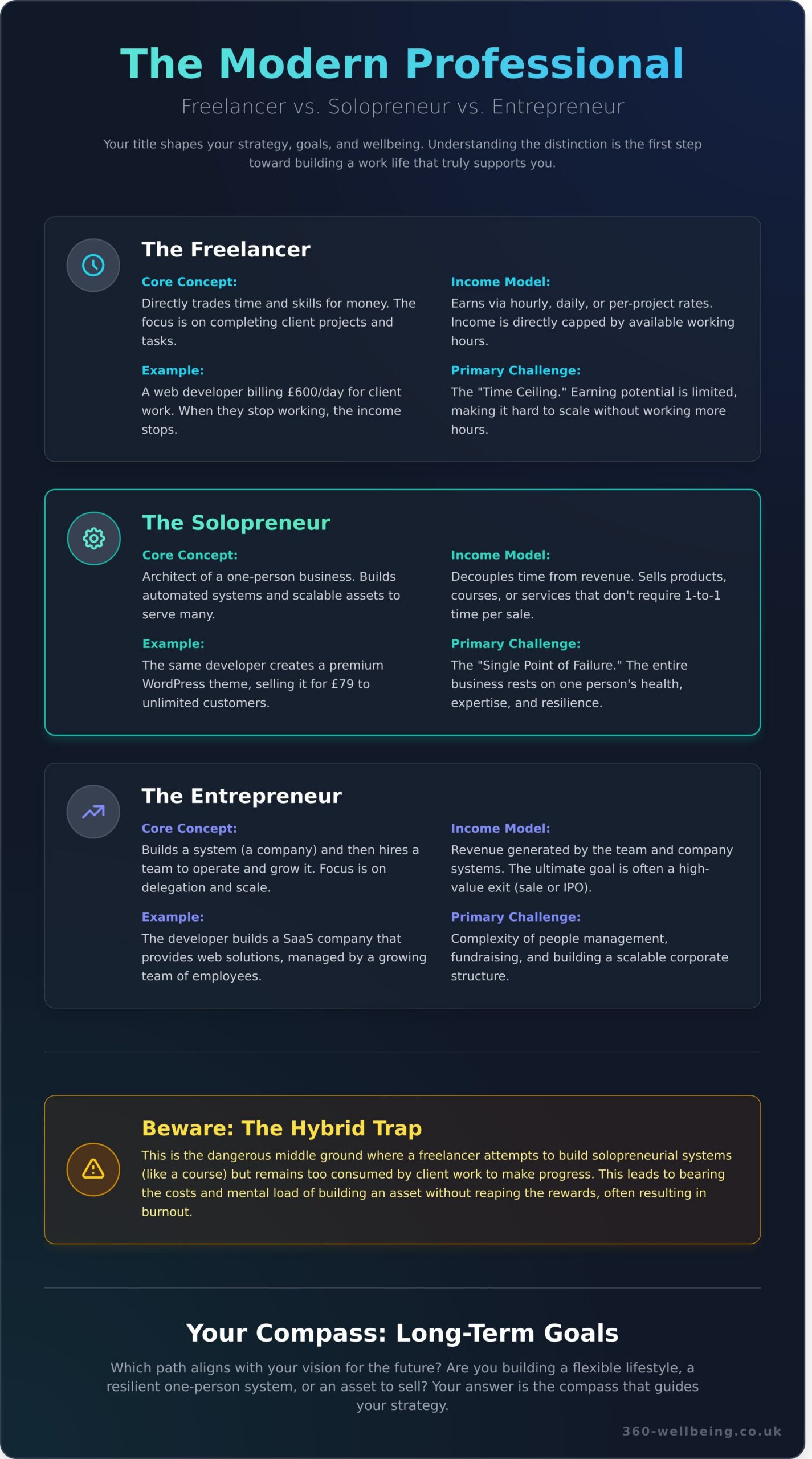
In the evolving world of work, the titles we use matter. They shape our strategy, our goals, and ultimately, our wellbeing. While often used interchangeably, the paths of the freelancer, solopreneur, and entrepreneur are profoundly different, each with a unique set of challenges and rewards. Understanding these distinctions is the first step toward building a working life that truly supports you.
At its core, the difference lies in the relationship between your time and your income. A freelancer directly trades hours for money; a web developer billing £600 a day has their earning potential capped by the 24 hours available. In contrast, a solopreneur works to build systems and assets that decouple their time from revenue. That same developer might create a premium WordPress theme, selling it for £79 to an unlimited number of customers. The entrepreneur takes this a step further, building a team and a scalable company, with the ultimate aim of an exit, such as a sale or public offering. The goals are fundamentally different; as a detailed Solopreneur vs. Entrepreneur analysis highlights, one is building a sustainable lifestyle, while the other is building an asset to sell.
Many individuals find themselves caught in the ‘Hybrid Trap’. This is the challenging middle ground where a freelancer attempts to build solopreneurial systems, like an online course, but remains too consumed by client work to make meaningful progress. They bear the costs and mental load of building an asset without reaping the financial rewards, leading to burnout.
Which Path Are You On?
Your long-term goals are your compass. Are you seeking the freedom of a lifestyle-centric business (solopreneur), the potential for significant wealth creation (entrepreneur), or the direct control of earning from your skills (freelancer)? Many freelancers hit the ‘Freelancer Ceiling’, a point where they can no longer increase their income without sacrificing their health. The most effective way to break through is productization: turning your service into a repeatable, sellable product. It’s a move that many entrepreneurs, bogged down by payroll and investor relations, often envy for its lean efficiency and high profit margins.
Structural Risks and Rewards
The greatest structural risk for the solopreneur is being a ‘Single Point of Failure’. If you fall ill or need to take unexpected time off, business operations can grind to a halt, and income may drop to zero. The reward, however, is absolute autonomy. You retain 100% equity and have complete control over your brand’s voice and direction. Building a resilient business starts with building your own personal resilience. Protecting yourself against this risk is a core component of sustainable self-employment. For a deeper look at the protections available, explore our guide on the essential Benefits for Sole Traders & The Self-Employed.
The Psychology of the Solo Success: Mindset and Resilience
Embarking on a solo business journey requires more than just a brilliant idea and a solid business plan; it demands a unique psychological fortitude. The autonomy that defines the solopreneur experience is both its greatest asset and its most profound challenge. Your passion becomes the engine, but you are also the sole engineer responsible for maintenance. This environment creates a specific set of pressures, from managing the intensity of your own drive to navigating the silence where a team’s chatter would normally be. True success is built on what we call solopreneurial resilience: the ability to maintain cognitive health under high-stakes autonomy.
The internal drive that fuels a one-person enterprise is often an obsession, a deep-seated passion for the work. This is a powerful motivator, but it can also blur the lines between work and life, making it difficult to switch off. Compounding this is the isolation factor. A 2022 report by Leapers revealed that 58% of self-employed individuals in the UK often feel lonely, missing the casual ‘water cooler’ moments that provide validation and perspective. Finally, you face decision fatigue. Making every choice, from a £10,000 strategic investment to the hex code for a button, depletes your cognitive resources, making it harder to focus on what truly matters.
Avoiding the Burnout Trap
Proactively managing your wellbeing is non-negotiable. It begins with recognising the early physical signs of chronic stress, such as persistent headaches, digestive distress, or disrupted sleep patterns, before they escalate. The ’24/7 hustle’ culture is an outdated and unsustainable model. The 2026 economy will reward not just output, but sustainable, healthy productivity. For a deeper look into identifying and managing these pressures, our guide to understanding workplace stress offers comprehensive strategies.
Building a Virtual Support Network
You may work alone, but you don’t have to be alone. A robust support system is a strategic asset. Digital communities and mastermind groups provide the peer feedback and camaraderie that a traditional office environment offers. We strongly advise every solopreneur to assemble a ‘Virtual Board of Directors’ comprised of trusted advisors:
- A Mentor: For strategic guidance and industry insight.
- A Coach: To challenge you and drive performance.
- A Therapist or Counsellor: For confidential, professional mental health support.
Maintaining a professional consultation rhythm with these individuals, scheduled as rigorously as client meetings, creates the structure and accountability needed to thrive.
The Solopreneur Safety Net: Essential Health and Legal Safeguards
The freedom of being a solopreneur is unparalleled. You are the visionary, the creator, and the driving force behind your success. But you are also the entire infrastructure. This unique position means your personal wellbeing isn’t just a lifestyle choice; it’s a direct measure of your business’s resilience. Without the built-in support systems of a large corporation, you must proactively build your own safety net. It’s about securing big-company advantages on a small-business budget, protecting your health, and safeguarding your future.
Your most critical asset isn’t your laptop or your client list; it’s your cognitive function. Proactive self-care, particularly mental health support, acts as a form of professional indemnity for your brain. It safeguards your ability to think clearly, solve complex problems, and maintain the creative energy that fuels your enterprise. For a business of one, burnout isn’t a personal problem that requires a holiday. It’s a critical, business-ending event.
Health as Business Continuity
Your physical and mental health are the bedrock of your productivity. According to NHS England data from March 2024, over 4.7 million GP appointments involved a wait of more than two weeks. That delay is a significant operational risk when you are the entire workforce. A comprehensive wellbeing plan provides immediate access to critical services:
- 24/7 Virtual GP Access: Get a diagnosis and prescription within hours, not weeks. This ensures a minor health issue doesn’t spiral into a major business disruption, keeping you active and productive.
- Mental Health Therapy: A 2022 study by IPSE found that 58% of self-employed professionals felt their work negatively impacted their mental health. Confidential therapy provides a strategic space to build resilience and navigate the intense pressures of the market alone.
- On-Demand Physiotherapy: Prevent and treat the ‘desk-bound’ injuries common among digital professionals. Protect your physical capacity to work effectively and pain-free for the long term.
Legal and Financial Security
Running a business involves navigating a complex web of financial and legal responsibilities without the backup of an in-house team. This is your outsourced C-suite, providing essential protection for you and your legacy:
- Complimentary Will Writing: A professionally drafted will can cost upwards of £200 with a solicitor. This service protects your personal and business assets, providing profound peace of mind for you and your family.
- Financial Support & Debt Advice: The ‘feast or famine’ cash flow cycle is a common challenge. Confidential financial guidance helps you manage lean periods, plan for tax, and build a stable financial foundation.
- Expert Legal Support: From contract reviews to client disputes, legal issues can be crippling. On-demand legal support acts as the HR and legal department you thought you couldn’t afford, empowering you to operate with confidence.
The most common objection we hear is about cost: “I can’t afford these benefits as a sole trader.” We invite you to reframe that thinking. This isn’t an expense; it’s a non-negotiable operational investment. Consider the alternative: the cost of one lost week of work due to stress or illness could easily exceed £1,000. A single hour with a solicitor can cost over £250. A comprehensive wellbeing package provides this entire safety net for a small, predictable monthly fee. It’s the most strategic investment a solopreneur can make in their long-term success. Explore our tailored plans and see how affordable it is to protect your business’s most vital asset: you.
How to Launch and Scale Your One-Person Business
Embracing the path of a solo professional is more than a career choice; it’s a commitment to building a business where you are the most critical asset. Protecting that asset isn’t a luxury, it’s the foundation of your success. This five-step framework provides a structured, proactive approach to launching and scaling your venture with resilience and foresight.
- Step 1: Audit Your Unique Skills. Before writing a business plan, map your expertise to a specific market problem. A 2023 analysis by the UK’s Federation of Small Businesses found that businesses with a clear niche service reported up to 15% higher profit margins. What unique value can you offer that solves a persistent pain point for a defined audience? Your answer is the bedrock of your business.
- Step 2: Build Your Essential Tech Stack. Efficiency is your competitive advantage. A modern tech stack doesn’t need to cost a fortune. Leverage AI tools like ChatGPT-4 for drafting communications, use a free CRM like HubSpot to manage your client pipeline, and integrate a comprehensive wellbeing platform. Automating routine tasks can reclaim over 8 hours per week, time you can reinvest in high-value work.
- Step 3: Establish a ‘Total Wellness’ Routine. The risk of burnout is real. A 2022 survey of UK freelancers by IPSE revealed that 62% reported feeling stressed or anxious due to their work. A proactive ‘Total Wellness’ routine that integrates physical activity, mental health check-ins, and dedicated time for social connection is non-negotiable. Think of it as preventative maintenance for your business’s engine: you.
- Step 4: Package Your Expertise. Move beyond trading hours for pounds. Develop recurring revenue streams that provide predictable income. This could be a monthly consulting retainer, a subscription-based newsletter, or a scalable digital course. This strategy transforms your expertise from a service into a tangible, scalable asset.
- Step 5: Partner with 360 Wellbeing. You don’t have a corporate HR department, so you must build your own support system. This final step secures your professional future by putting a comprehensive safety net in place, ensuring you can perform at your peak, day after day.
Leveraging the 360 Wellbeing Platform
Our platform is designed specifically for the modern professional who values both autonomy and security. With a monthly subscription model starting from just £25, it fits a solopreneur‘s budget without demanding a large upfront investment. We provide a complete 360-degree perspective on your health, seamlessly integrating on-demand physical care, confidential mental health support, and resources to nurture your professional resilience. This isn’t just a benefit; it’s a strategic tool for sustainable performance.
Case Study Highlight: Anna, a freelance graphic designer in Bristol, woke up with a debilitating back spasm two days before a critical project deadline. Instead of facing a long wait for an NHS appointment, she used our virtual GP service. Within 45 minutes, she had a video consultation, received a diagnosis, and was prescribed medication and recovery exercises. She met her deadline, securing a £3,000 follow-on contract that would have otherwise been lost.
Your Next Steps for 2026
The future of work is being written by independent experts like you. To seize this opportunity, create a 90-day execution plan today. Break down your biggest goal into small, weekly actions. This transforms ambition into a clear, manageable process. Wearing the ‘solopreneur’ title is a badge of honour in an economy that increasingly rewards agility and deep expertise. You are the CEO, the creative director, and the visionary. It’s time to give yourself the support you deserve.
Join 360 Wellbeing today to build your solo safety net.
Step Confidently into Your Solopreneur Future
The path to 2026 is clear. Building a thriving one-person business isn’t just about mastering your craft; it’s about cultivating a resilient mindset and proactively constructing a robust personal safety net. Your long-term sustainability depends on the strength of the foundation you lay today, one that prioritises your health just as much as your business strategy.
As a modern solopreneur, your wellbeing is your most critical asset. That’s why a comprehensive support system is non-negotiable. With 360 Wellbeing, you get empathetic, expert care designed for the unique challenges you face. This includes 24/7 access to UK-registered Virtual GPs and confidential legal and financial helplines, ensuring you have holistic support whenever you need it. Don’t build your dream on a precarious foundation. Secure your one-person business with 360 Wellbeing.
Your ambition is powerful. Give it the protection it deserves.
Frequently Asked Questions About Solopreneur Wellbeing
Is a solopreneur the same as a freelancer?
No, a solopreneur is not the same as a freelancer, though the terms are often used interchangeably. A freelancer sells their time and skills for specific projects, often working for multiple clients. A solopreneur, however, is building a business single-handedly. They are focused on creating scalable systems, developing products, and growing a brand with a long-term vision, even if they are the only person involved in the day-to-day operations.
Can a solopreneur have employees or contractors?
A solopreneur, by definition, runs their business entirely alone and does not have employees. This is the core distinction of the model. However, it’s very common for them to engage external contractors or freelancers for specific, project-based tasks like graphic design, accounting, or web development. This allows them to scale their capabilities without taking on the legal and financial responsibilities of being an employer, maintaining their solo operational status.
What are the biggest risks of being a solopreneur in 2026?
The biggest risks for solopreneurs heading into 2026 are financial instability and burnout. Economic volatility, with the Bank of England forecasting inflation to remain above its 2% target through 2025, directly impacts client spending and project security. A 2024 IPSE report found that 58% of freelancers are concerned about the rising cost of living affecting their business. This financial pressure, combined with the lack of a traditional support system, elevates the risk of burnout without a proactive wellbeing strategy.
Do solopreneurs qualify for small business employee benefits?
Solopreneurs operating as sole traders don’t qualify for traditional employee benefits because they aren’t employees. However, if you structure your business as a limited company, you can become an employee of your own company. This structure legally allows you to access benefits like a workplace pension and certain tax-efficient insurance policies. For all solopreneurs, creating a personal benefits package through private insurance and pensions is a vital step toward building resilience and long-term security.
How much does it cost to set up a ‘safety net’ as a sole trader?
The cost of a foundational safety net in the UK can be surprisingly accessible. A comprehensive income protection policy, which replaces your income if you’re unable to work, typically starts from £25-£45 per month for a healthy 35-year-old. Basic private medical insurance can be secured from around £40 per month. Therefore, a robust financial and health safety net can be established for approximately £65 to £85 per month, a proactive investment in your business’s continuity.
Can I access a Virtual GP if I am self-employed in the UK?
Yes, you can absolutely access a Virtual GP as a self-employed professional in the UK. Many modern private health insurance plans now include 24/7 virtual GP access as a standard feature, offering incredible convenience. Alternatively, you can subscribe to a standalone service. Companies like Vitality and Livi offer plans starting from as little as £15 per month, providing a direct, fast, and flexible way to manage your health around your demanding work schedule.
What happens to my business if I get sick as a solopreneur?
If you get sick as a solopreneur, your business operations and income generation will likely stop completely. Since you are the sole driver of the business, there is no one else to manage clients, complete work, or send invoices. This is why income protection insurance is so critical. It provides a monthly tax-free income to cover your personal and business expenses during your recovery, ensuring a temporary health issue doesn’t become a permanent financial crisis for your business.
Is solopreneurship sustainable for the long term?
Yes, solopreneurship is highly sustainable for the long term with strategic planning. Sustainability isn’t about working harder; it’s about working smarter and protecting your most valuable asset: you. This involves creating a comprehensive safety net with income protection, private health cover, and a SIPP pension. Data from IPSE in 2023 showed that over 60% of UK freelancers have been self-employed for more than six years, proving that a solo career path can offer lasting success and fulfilment.