
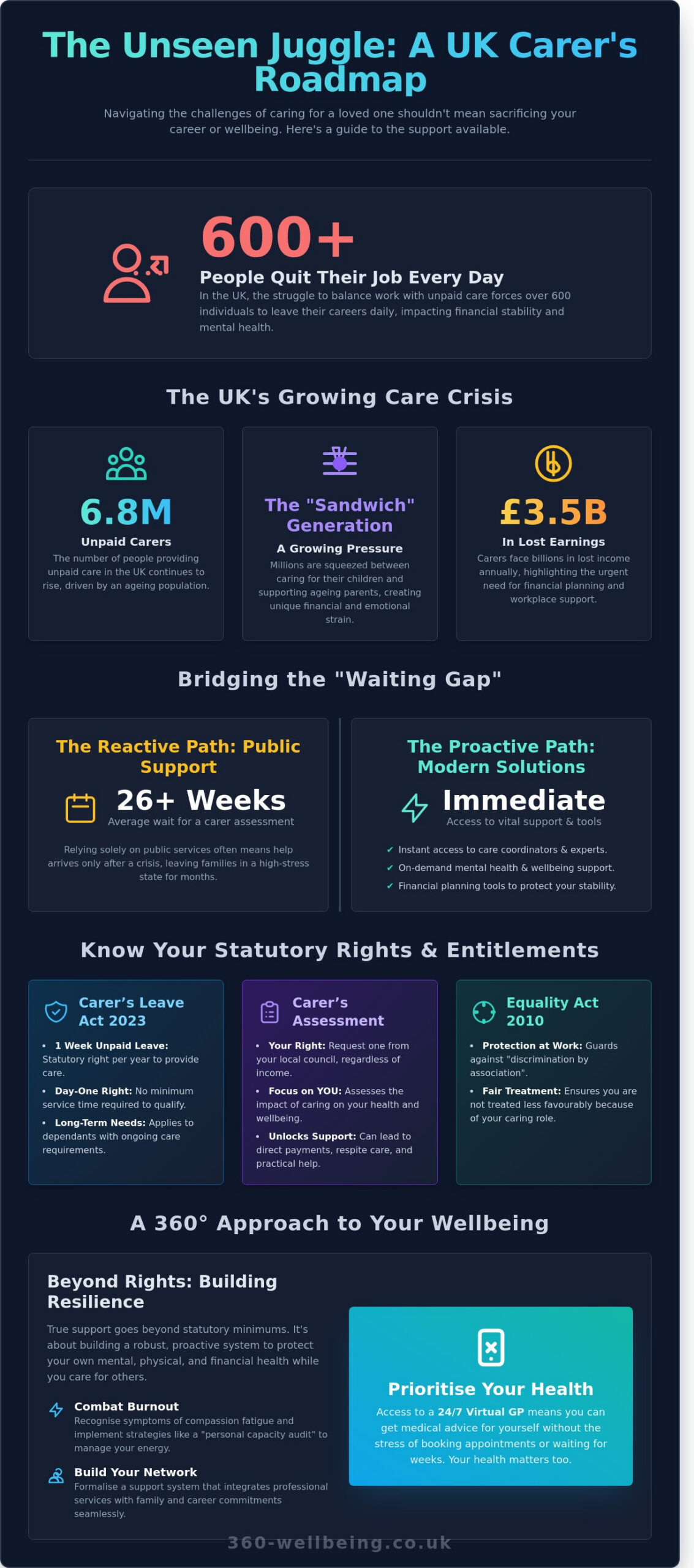
In the UK, over 600 people are forced to quit their jobs every single day because they can’t balance their professional lives with looking after a loved one. If you’re currently providing unpaid carer support, you’ve likely felt the heavy toll this role takes on your financial stability and your mental health. You’re probably exhausted from the constant juggle, often finding it nearly impossible to book a GP appointment for your own needs while managing someone else’s complex care schedule.
We believe that caring for another person shouldn’t mean sacrificing your own vitality or career. You deserve to feel supported too. This guide will show you exactly how to access current UK support options, from understanding your statutory rights at work to accessing immediate medical advice through modern private health solutions. We’ll explore a proactive approach that combines financial aid with practical tools to build your personal resilience. We’ll provide a clear, methodical roadmap to help you protect your wellbeing while continuing to provide high-quality care for those who matter most.
Key Takeaways
- Understand your statutory rights under the Carer’s Leave Act and the essential steps to secure financial aid through a local council assessment.
- Recognise the physical and emotional symptoms of compassion fatigue to proactively protect your health from the long-term “Carer’s Penalty.”
- Discover how to implement tailored carer support strategies, including a personal capacity audit to identify and manage your daily “red zones.”
- Learn to build a robust, formalised support network that seamlessly integrates professional services with your existing family and career commitments.
- Explore the benefits of a 360-degree wellbeing perspective, featuring 24/7 Virtual GP access to ensure your health remains a priority without the wait.
What is Carer Support and Why is it Essential in 2026?
Carer support isn’t just a line item in a benefits package; it’s a comprehensive lifeline for the modern workforce. We define this support as a blend of financial guidance, practical resources, and emotional assistance tailored for those who look after others. In 2026, the traditional boundaries of care have blurred. It’s no longer just about parents or professional nurses. Understanding What is a Carer helps us see that millions of employees now occupy this role, often without formal recognition. They’re the “Sandwich Generation,” a group of workers squeezed between the needs of their growing children and their ageing parents. This dual responsibility creates a unique pressure that requires more than just a sympathetic ear from an employer.
We must distinguish between different care roles to provide effective assistance. Unpaid carers are family members or friends who provide help without a salary, while professional carers are trained individuals paid for their services. Working carers are the bridge between these worlds. They’re professionals who maintain a career while managing significant care duties at home. Without proactive carer support, these individuals face a high risk of burnout. When we intervene early with practical tools, we move away from crisis management and toward a sustainable, resilient lifestyle. It’s about providing a 360-degree perspective on health that acknowledges the social and emotional weight of caregiving.
The Current Landscape of Care in the UK
The scale of caregiving in Britain has reached a tipping point. By 2026, data from Carers UK indicates that the number of unpaid carers has risen to approximately 6.8 million. This surge is driven by an ageing population, with the number of people aged over 85 expected to double within the next two decades. Recent legislative changes, such as the Carer’s Leave Act, have expanded the definition of a carer, granting employees the right to take unpaid leave for caring responsibilities from day one of their employment. However, statutory rights are only the baseline. With 600 people quitting their jobs every day in the UK to focus on care, businesses must offer more than the legal minimum to retain their best talent.
The “Waiting Gap” in Public Support
The state of public social care creates a significant “waiting gap” that impacts the workplace. In 2026, the average wait time for a local authority carer assessment has stretched to over 26 weeks in many regions. This delay means that families are often left in a state of high stress for half a year before receiving any official guidance. Relying solely on the NHS or local councils often leads to reactive care, where help only arrives once a situation has reached a breaking point. This is where private wellbeing platforms become vital. They provide immediate relief through:
- Instant access to care coordinators and legal experts.
- Financial planning tools to manage the £3.5 billion in lost earnings carers face annually.
- Mental health support that’s available at the point of need, not after a six-month wait.
By filling this gap, carer support becomes a strategic asset for the company. It ensures that employees don’t have to choose between their career and their family’s wellbeing, creating a culture of loyalty and long-term stability.
Navigating Your Statutory Rights and Financial Support
Understanding your legal standing transforms a stressful situation into a manageable one. The Carer’s Leave Act 2023, which became law on 6 April 2024, represents a significant shift in UK employment rights. It grants you the statutory right to one week of unpaid leave each year to provide or arrange care for a dependant with a long-term care need. This is a day-one right, meaning you don’t need a minimum length of service to qualify. Beyond this, the Equality Act 2010 protects you from “discrimination by association,” ensuring you aren’t treated less favourably because of your caring role.
Your first proactive step should be requesting a Carer’s Assessment from your local council. Under the Care Act 2014, you’re entitled to this regardless of your income or the level of carer support you currently provide. The assessment focuses on your health, feelings, and ability to balance work with caring. It can unlock direct payments, respite care, or practical help like household gadgets that ease your daily load. It’s a vital tool for ensuring your own health doesn’t suffer while you look after someone else.
Financial Aid and Benefits for Carers
Financial stability is a cornerstone of resilience. The most common benefit is Carer’s Allowance, currently paid at £81.90 per week for the 2024/25 tax year. To qualify, you must care for someone for at least 35 hours a week and earn £151 or less weekly after tax and National Insurance. If you receive Universal Credit, you may be eligible for the “carer element,” which adds £198.66 to your monthly payment as of April 2024.
- Council Tax: You might qualify for a 25% discount if you live with the person you care for, or a full exemption if they have a severe mental impairment.
- Pension Credits: Claiming certain benefits protects your State Pension by providing National Insurance credits.
- Complimentary Will Writing: Protecting your family’s future is essential. Many comprehensive carer support packages now include professional will writing to ensure long-term peace of mind and clarity for your dependants.
Workplace Rights and Flexible Working
The landscape of workplace flexibility changed on 6 April 2024. You now have a legal right to request flexible working from your first day of employment. This allows you to ask for staggered hours, remote working, or job sharing to fit your responsibilities. Employers must deal with requests in a “reasonable manner” and provide a decision within two months. If an emergency arises, Section 57A of the Employment Rights Act 1996 gives you the right to take a “reasonable” amount of unpaid time off to deal with unforeseen circumstances involving a dependant.
Opening a dialogue with your HR department is often the key to unlocking internal benefits. Many modern organisations offer tiered support that goes beyond statutory requirements, including paid “carer days” or access to private counselling. Being transparent about your situation allows your employer to act as a partner in your wellbeing. If you’re looking to build a more supportive environment, exploring tailored corporate wellness strategies can provide the framework your team needs to thrive together. This proactive approach ensures you’re not just surviving your caring role, but maintaining your own health and career trajectory.
The Invisible Strain: Protecting Your Mental and Physical Health
Caring for a loved one often leads to the “Carer’s Penalty,” a term describing the gradual, long-term decline in a caregiver’s health outcomes. According to data from Carers UK in 2023, 60% of unpaid carers report that their physical health has worsened as a direct result of their responsibilities. It isn’t just about feeling tired. Chronic stress triggers a sustained release of cortisol, which can lead to hypertension, heart disease, and a weakened immune system. Many people don’t recognise the physical symptoms of compassion fatigue, such as persistent tension headaches or digestive issues, until they reach a point of total exhaustion. Because the needs of the person being cared for are usually urgent, 40% of carers frequently cancel their own medical appointments or ignore preventative screenings. Shifting from reactive crisis management to proactive health care is essential. Effective carer support must bridge the gap between daily duties and long-term vitality.
Mental Health and Emotional Resilience
Carers often face a slow slide into social anxiety and depression. The isolation of the role means 1 in 4 carers feel they cannot talk to friends or family about the weight of their struggles. Accessing professional wellbeing support for carers through the NHS or private therapy provides a safe space to process these complex emotions. Mental health therapy and life coaching aren’t luxuries; they’re clinical necessities that help prevent total burnout. Building a resilience toolkit is a practical way to manage high-stress days. This might include:
- Micro-boundary setting: Carving out 15 minutes of non-negotiable personal time.
- Cognitive reframing: Working with a coach to shift from guilt-based thinking to self-compassion.
- Peer support: Connecting with others in similar situations to reduce the sense of isolation.
Physical Wellbeing and Clinical Access
Finding time for a traditional GP appointment is nearly impossible when you provide 24/7 care. This is where modern carer support benefits become transformative. Virtual GP services allow individuals to consult a qualified doctor via a smartphone in under 20 minutes, removing the need for travel or finding cover for their loved one. Beyond clinical advice, physical health requires structural support. Carers often suffer from musculoskeletal injuries due to repetitive lifting or poor posture. Access to physiotherapy and tailored nutrition plans ensures the body remains strong enough to meet daily demands. Maintaining your own health isn’t a selfish act; it’s a vital part of being an effective carer. When you prioritise your own medical needs, you’re better equipped to provide the high level of care your loved one requires without sacrificing your own future wellbeing.
Practical Strategies for Balancing Work and Caring
Finding equilibrium between professional duties and personal responsibilities is a common challenge for the five million people in the UK currently balancing work and care. To move from reactive survival to a proactive rhythm, you need a clear operational plan. Start by conducting a personal capacity audit to identify your “red zones.” These are the specific times, such as the 8:00 am medication window or the Sunday evening planning hour, where your stress levels peak. Once you’ve mapped these high-pressure points, you can deploy targeted carer support to mitigate the impact on your productivity.
Follow these five steps to build a sustainable framework:
- Step 1: Audit your energy. Track your time for seven days. Identify the moments when caregiving duties collide with work deadlines. This data allows you to request specific flexible working adjustments rather than vague “help.”
- Step 2: Formalise your network. Carers UK reported in their 2023 State of Caring survey that 61% of carers feel worried about the impact of caring on their health. Don’t leave support to chance; create a shared digital calendar for family members and professional care providers to ensure every “red zone” is covered.
- Step 3: Automate with technology. Human memory is fallible under stress. Use medication management tools to remove the mental load of remembering dosages.
- Step 4: Block non-negotiable self-care. According to the ONS, carers are more likely to report high levels of anxiety. Schedule 20 minute blocks in your Outlook or Google calendar for physical activity or rest. Treat these with the same priority as a board meeting.
- Step 5: Access employer platforms. Many UK firms now provide 24/7 access to wellbeing hubs. Use these for instant mental health support or legal advice regarding care funding.
You don’t have to manage these complexities in isolation. Professional guidance can transform how you handle daily pressures. Explore our comprehensive carer support solutions to see how we can help you maintain your career while providing the best care for your loved ones.
Leveraging Technology for Better Care
Digital tools are essential for reducing “carer anxiety.” Apps like Jointly allow you to centralise care notes and schedules, ensuring everyone is on the same page. Integrating 24/7 virtual medical access is a game changer; it replaces a three hour wait at a GP surgery with a 15 minute video consultation. Remote monitoring sensors can also provide peace of mind by alerting you to unusual activity at a loved one’s home while you’re in the office.
Building a Support Community
Isolation is a significant risk for working carers. Local carer centres often provide “Share and Learn” online meetups that fit around a standard 9-to-5 schedule. These groups offer practical advice on navigating the UK’s social care system, which 40% of carers find difficult to understand. Asking for help isn’t a sign of weakness; it’s a strategic move to ensure you remain resilient enough to provide long-term care without sacrificing your professional identity.
How 360 Wellbeing Provides Total Carer Support
At 360 Wellbeing, we believe that effective carer support requires looking at the whole person, not just their job description. Our 360-degree perspective integrates physical, mental, and financial health into a single, unified ecosystem. This holistic approach is vital because 1 in 7 workers in the UK currently balance professional duties with unpaid care. These individuals aren’t just employees; they’re lifelines for others, and they require a support system that recognises the weight of that responsibility.
Time is the rarest commodity for a carer. Waiting 15 days for a standard GP appointment isn’t a viable option when you’re managing someone else’s medication alongside your own fatigue. Our 24/7 Virtual GP service removes this barrier entirely. Users can speak to a UK-registered doctor via video or phone at any hour, day or night. This ensures that a carer’s own health doesn’t take a back seat, providing clinical reassurance without the need to spend hours in a waiting room.
Mental resilience is a skill that requires active maintenance. We provide tailored mental health therapy and life coaching designed specifically for the unique challenges of the carer’s journey. With 60% of carers reporting a decline in their mental health since 2022, professional intervention is a necessity. Our clinicians offer practical strategies to manage compassion fatigue and prevent burnout, helping employees stay present both at home and in the office.
Financial stress often compounds the physical pressure of caring. We include comprehensive financial and legal support within our platform, covering everything from professional debt advice to will writing. Research from Carers UK shows that the “carer penalty” can cost individuals thousands in lost earnings and increased expenses. By providing these services, we help mitigate the £3,500 average annual increase in costs that many UK carers face, offering a sense of security and order.
A Partner in Your Wellbeing Journey
Our platform meets the needs of the modern, busy working carer through an intuitive mobile interface. The 360 Rewards marketplace is a key feature here, helping users reduce the cost of living by offering discounts that save a typical household over £500 per year on essentials. We also help organisations support their “hidden” workforce. Statistics suggest 15% of your staff may be providing care without your knowledge, and we give you the tools to reach them proactively.
Taking the First Step
Proactive wellbeing is a fundamental right, not a luxury reserved for those with spare time. You can usually access 360 Wellbeing through your employer’s benefit portal in under five minutes. Taking this step ensures you have the resources to stay resilient and healthy. Remember, you cannot pour from an empty cup; your health is the foundation upon which your ability to care for others is built. We’re here to make sure that foundation remains solid.
Empowering Your Future as a Working Carer
Navigating the dual roles of professional and caregiver requires more than just resilience; it demands a structured support system. By 2026, the landscape of carer support has evolved to prioritise proactive mental health and statutory rights like the one week of unpaid leave introduced under the Carer’s Leave Act 2023. Protecting your wellbeing isn’t a luxury when 1 in 7 people in a typical UK workplace are currently balancing these responsibilities. You’ve learned how to leverage legal frameworks and personal boundaries to maintain your vitality while providing essential care.
At 360 Wellbeing, we specialise in bridging the gap between workplace productivity and personal health. Our platform is built specifically for SMEs, providing your team with immediate, 24/7 access to UK-registered GPs and comprehensive legal advice. We provide the tools to manage the 360-degree reality of your life, from mental health counselling to practical physical health guidance. This holistic approach ensures that your health remains a strategic asset rather than an afterthought.
Discover how 360 Wellbeing supports working carers with 24/7 health and mental wellness tools
You don’t have to carry the weight of caregiving alone. Taking this first step toward a balanced life ensures you can continue to show up for your loved ones and your career with renewed energy and peace of mind.
Frequently Asked Questions
What is the Carer’s Leave Act 2024 and how does it affect me in 2026?
The Carer’s Leave Act 2024, which came into effect on 6 April 2024, gives you a legal right to take up to five days of unpaid leave every 12 months. By 2026, this legislation ensures that approximately 2 million working carers across the UK have a protected right to balance employment with their caring duties. It means you don’t have to use your holiday allowance for emergencies or planned care appointments. This statutory right is now a permanent fixture of UK employment law.
Can I get financial support if I am a working carer?
You can claim Carer’s Allowance of £81.90 per week if you provide care for at least 35 hours weekly and earn less than £151 a week after tax and expenses. Many working carers also qualify for the Carer Element of Universal Credit, which provides an additional £198.63 per month. It’s vital to check your eligibility through the Department for Work and Pensions (DWP) to ensure you aren’t missing out on these essential funds. These payments help bridge the gap created by reduced working hours.
How do I get a Carer’s Assessment and how long does it take?
You get a Carer’s Assessment by contacting the adult social services department at your local council. While the Care Act 2014 doesn’t set a strict statutory deadline, most assessments are completed within 4 to 6 weeks of your initial request. This meeting focuses on your needs as a carer, exploring how your responsibilities affect your physical health, mental wellbeing, and ability to work. It’s a proactive step toward getting the equipment or support services you need to maintain balance.
What happens if I can no longer cope with my caring responsibilities?
If you reach a crisis point, you should immediately contact your local council’s adult social care team to request an emergency assessment. They have a legal duty under the Care Act 2014 to step in when a care arrangement breaks down. You can also access 24-hour support from Samaritans by calling 116 123 or reach out to Carers UK. These organisations provide expert guidance for those feeling overwhelmed, ensuring you don’t have to face these challenges alone.
Does my employer have to give me time off for caring?
Yes, your employer must grant you up to one week of unpaid leave per year under the Carer’s Leave Act 2024. Additionally, the Employment Relations (Flexible Working) Act 2023 allows you to request flexible working patterns from your first day of employment. Providing robust carer support is a strategic asset for businesses, as 600 people leave the UK workforce every day because they cannot balance work and care. These laws protect your position while you manage your family commitments.
How can a Virtual GP help me as a carer?
A Virtual GP provides you with 24/7 access to medical advice without the need to travel to a physical surgery or wait weeks for an appointment. This is particularly helpful for carers who find it difficult to leave the person they care for alone. You can book a 15-minute video consultation at a time that suits your schedule, ensuring your own health remains a priority while managing your daily caring role. It’s a modern, flexible solution for maintaining your personal vitality.
Are there grants available for carers to take a break or respite?
You can apply for grants from organisations like the Carers Trust or the Family Fund to help cover the costs of a respite break. Local councils also offer carer’s personal budgets following an assessment, which can be used for hobbies, gym memberships, or short holidays. In 2023, the Carers Trust distributed over £2 million in small grants to help individuals take a necessary pause. These funds are designed to prevent burnout and support your long-term resilience.
What mental health support is available specifically for carers?
You can access tailored mental health support through NHS Talking Therapies, which prioritises carers for treatment in many regions. Many employers also provide carer support through Employee Assistance Programmes (EAPs), offering confidential counselling and cognitive behavioural therapy (CBT). These services help you build resilience and manage the emotional weight of caring, ensuring your mental health is treated with the same importance as your physical health. Taking this support is a sign of strength, not a failure to cope.