What if the most expensive health benefit you provide is actually the one your team uses the least? You likely recognize that supporting your staff’s health is no longer a luxury but a strategic necessity. With NHS waiting lists in England remaining at roughly 7.6 million people in late 2024, the impact of health-related absences on your productivity is impossible to ignore. Choosing between a virtual gp vs private medical insurance is about more than just comparing premiums; it’s about finding a proactive way to keep your team thriving without the complexity of traditional underwriting or the sting of rising costs.
We’ll show you how to identify the most cost-effective path to support your team’s vitality while ensuring your investment delivers a tangible return. You’ll discover the critical differences in accessibility and how a 360-degree approach to wellness can reduce business disruption. We’ll explore the ROI of both models to help you build a health strategy that your employees will actually value and use every day in 2026. This guide provides the clarity you need to move away from reactive fixes toward a culture of long-term workplace harmony.
Key Takeaways
- Understand the shifting UK healthcare landscape and why reactive, hospital-focused coverage may no longer meet the daily needs of your modern workforce.
- Compare the immediate reassurance of 24/7 clinical access against the long-term scope of surgical cover when evaluating a virtual gp vs private medical insurance.
- Discover how SMEs can avoid the “Premium Trap” by moving away from fluctuating insurance costs toward sustainable, fixed-fee subscription models.
- Learn why a proactive wellbeing strategy must integrate mental health and lifestyle support to address the root causes of employee absenteeism.
- Explore the benefits of a holistic 360-degree approach that combines medical, financial, and legal advice to foster a truly resilient and supported team.
Virtual GP vs Private Medical Insurance: Defining the Modern UK Healthcare Landscape
As we move through 2026, the UK’s health landscape is undergoing a profound structural shift. NHS waiting lists, which remained a significant challenge throughout the early 2020s, have fundamentally changed how employers perceive their role in staff wellbeing. Businesses aren’t just looking for “perks” anymore. They’re seeking strategic assets that protect their most valuable resource: their people. Understanding the nuances of virtual gp vs private medical insurance is the first step in building a resilient, healthy workforce that feels truly supported.
The traditional “one-size-fits-all” approach to corporate health is fading. In its place, a more tailored, 360-degree perspective is emerging. Companies are recognizing that a single insurance policy might not address the daily health needs of a diverse team. Evolution in private healthcare in the UK has created a spectrum of care, moving from reactive hospital stays to proactive, digital-first interventions that fit into the flow of a busy workday.
The Core Purpose of Private Medical Insurance
Private Medical Insurance (PMI) remains a cornerstone for managing acute, short-term conditions. It’s built to provide swift access to specialists, diagnostic tests, and private hospital accommodation. When an employee needs surgery or intensive treatment, PMI acts as a vital safety net. It’s a robust solution for serious health events, but it’s fundamentally reactive. Most policies focus on “catastrophic” events and involve medical underwriting, premiums, and excesses that can make them feel distant from an employee’s everyday health journey. It’s a high-level shield, but it doesn’t always help with the persistent, minor ailments that impact weekly productivity.
The Rise of the Virtual GP
Virtual GP services have transformed primary care by making it instant and accessible. By providing 24/7 access to UK-registered doctors via video or phone, these services remove the barriers of physical waiting rooms and long appointment lead times. This digital-first solution is inherently proactive. It allows employees to seek advice the moment they feel unwell, bridging the gap between basic self-care and specialist hospital treatment. When evaluating virtual gp vs private medical insurance, it’s clear that the virtual GP offers a more immediate, human touch. It fosters a culture of early intervention, helping staff manage their health with confidence and clarity before issues become debilitating.
This shift reflects a broader trend toward holistic wellness. Modern businesses are moving away from rigid insurance frameworks in favor of flexible solutions that prioritize both physical and mental harmony. By integrating these services, you’re not just ticking a compliance box; you’re investing in a proactive vision of vitality that benefits the entire organization. This approach ensures that care is always within reach, turning healthcare from a distant policy into a daily support system.
Speed of Access vs. Breadth of Cover: A Direct Comparison
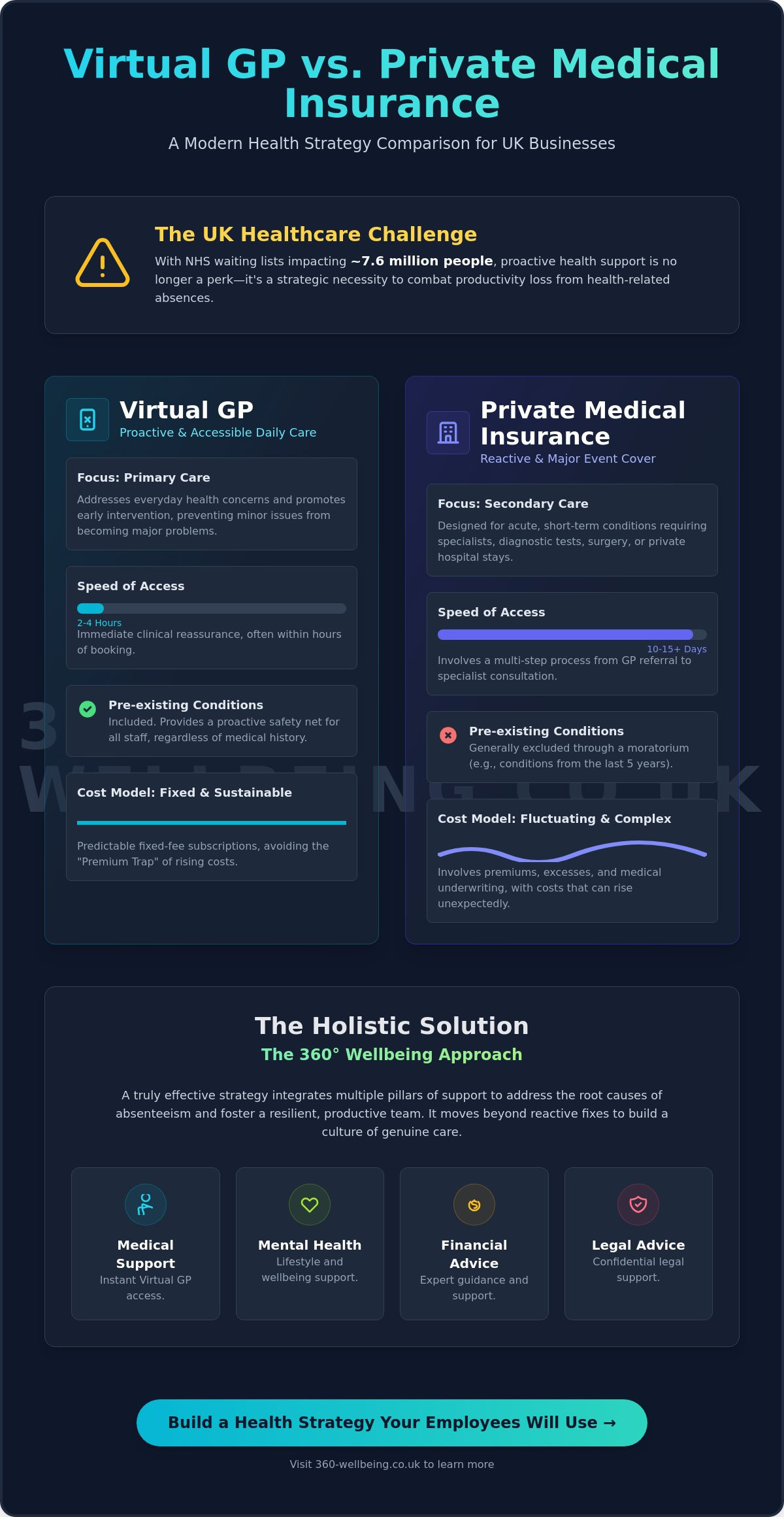
Choosing between a virtual gp vs private medical insurance isn’t just about cost; it’s about the speed of your team’s recovery and the depth of support they receive. A Virtual GP appointment usually happens within 2 to 4 hours of booking, providing immediate clinical reassurance. Conversely, seeing a specialist via Private Medical Insurance (PMI) typically involves a 3 to 5 day wait for an initial GP referral, followed by another 7 to 10 days for the specialist consultation. While PMI covers major surgical interventions and inpatient stays, a Virtual GP focuses on the immediate resolution of everyday health concerns that can otherwise derail a working week.
The handling of pre-existing conditions creates a significant divide between these two models. Most PMI policies exclude conditions an employee has suffered from in the last five years through a standard moratorium. Virtual GP services don’t have these barriers. Because they provide clinical advice and prescriptions rather than funding expensive surgeries, they offer a proactive safety net for every staff member regardless of their medical history. This inclusive approach mirrors the wider NHS digital services strategy, which prioritises making primary care more accessible and resilient through technology.
Primary Care vs. Secondary Care
Data from the Royal College of General Practitioners suggests that approximately 90% of all patient contacts in the UK start and end within primary care. A Virtual GP functions as this essential first port of call, resolving issues like respiratory infections, skin conditions, or mental health concerns without the need for a hospital visit. The threshold where a Virtual GP ends and PMI begins is the transition from diagnosis to specialist treatment. If an employee requires an MRI or a hip replacement, PMI provides the secondary care funding to bypass NHS waiting lists, which for some elective procedures exceeded 40 weeks in 2024.
Ease of Use and Employee Engagement
Complexity often kills engagement in corporate health schemes. PMI often requires employees to navigate complex claim forms and pay an excess, sometimes ranging from £100 to £500, which discourages them from seeking help for “minor” symptoms. A Virtual GP app removes this friction entirely. Statistics show that staff are 5 times more likely to use a digital health app than to file a traditional insurance claim. This on-demand access is a strategic asset for any business, as resolving health issues early can reduce short-term absenteeism by up to 20%.
When evaluating a virtual gp vs private medical insurance for your workforce, it’s vital to consider how a 360-degree approach to wellness can bridge the gap between these services. You can explore our holistic wellbeing solutions to see how integrated care keeps your team resilient and productive.
The Cost-Benefit Analysis: Why SMEs are Choosing Standalone Services
Small business owners are increasingly wary of what industry experts call the “Premium Trap.” Traditional medical insurance costs rose by an average of 11% in 2023, and that trajectory has continued as we head toward 2026. For an SME, these fluctuating costs make long-term financial planning difficult. When you weigh up virtual gp vs private medical insurance, the financial transparency of standalone services offers a refreshing alternative to unpredictable premiums that often spike following a year of high claims.
The return on investment for a Virtual GP service is often realised in a single afternoon. According to the Office for National Statistics (ONS), the average UK worker takes 5.7 sick days per year. If a quick video consultation prevents just one day of absenteeism for an employee on an average salary, the saved productivity pays for their entire annual subscription. Beyond the direct costs, PMI carries hidden administrative burdens. You have to manage complex P11D tax filings and navigate the time-consuming claims process, which drains your HR team’s capacity and adds to your operational overheads.
Affordability for the Whole Workforce
High costs often force businesses to restrict traditional insurance to senior management. This creates an unintentional health divide that can hurt morale and company culture. Standalone services allow you to democratise health by providing 24/7 clinical access to every staff member for a small monthly fee. It’s a proactive way to boost recruitment and retention. You’re telling your entire team that their resilience and vitality matter, ensuring that support isn’t a luxury reserved for those with a certain job title.
Predictable Budgeting in 2026
Financial leaders in 2026 are prioritising stability over risk. Moving from a “pay-per-claim” insurance model to a stable per-employee SaaS model removes the “renewal shock” that typically happens after a period of illness within the team. These platforms provide clear, fixed pricing that doesn’t punish your business for actually using the service. It’s a modern, compassionate approach to corporate wellness that treats healthcare as a manageable operational cost rather than a volatile financial gamble.
Beyond the Doctor: Integrating Mental Health and Lifestyle Support
A Virtual GP provides a vital first point of contact, but relying on a doctor alone is no longer enough to support a modern UK workforce. By 2026, the lines between physical health and mental wellbeing have blurred. Clinical data from the Health and Safety Executive (HSE) shows that 875,000 workers suffered from work-related stress, depression, or anxiety in 2023/24. This accounts for 54% of all working days lost due to ill health. When comparing a virtual gp vs private medical insurance, the deciding factor often isn’t the speed of a prescription, but how well the service addresses the “whole person” before they reach a breaking point.
Physical symptoms like chronic headaches or digestive issues are frequently the body’s way of signalling underlying stress or burnout. A standalone medical service might treat the symptom, but a comprehensive wellbeing platform looks deeper. It integrates therapy, life coaching, and nutritional advice into a single journey. This 360-degree perspective ensures that an employee isn’t just “not sick,” but is actively thriving and resilient against the pressures of the modern workplace.
The Mental Health Crisis in the Workplace
Standard Private Medical Insurance (PMI) often presents hurdles when employees seek mental health support. High excesses or the requirement for a specialist referral can delay care by weeks. In contrast, modern virtual platforms provide direct access to BACP-accredited counsellors and therapists. This removes the “wait and see” approach that often leads to long-term sick leave. By providing immediate tools for resilience and stress management, you help your team build the mental fortitude to handle challenges before they escalate into a crisis.
The Proactive Advantage
Proactive care is a strategic business asset rather than a cost. It shifts the focus from fixing a broken employee to maintaining a healthy one. Musculoskeletal (MSK) issues remain a primary cause of absence, affecting 473,000 workers according to recent HSE statistics. Integrating virtual physiotherapy allows employees to address minor aches from their desks, preventing them from becoming debilitating injuries. When you combine this with regular health checks and tailored lifestyle advice, you create a culture of vitality.
- Direct Therapy Access: Skip the 18-week NHS waitlists with immediate digital counselling sessions.
- Physiotherapy: Remote assessments that provide exercise plans for sedentary or physically demanding roles.
- Life Coaching: Proactive support to help employees manage life transitions and prevent burnout.
- Nutritional Support: Expert guidance to fuel the body and mind for sustained productivity.
Choosing between a virtual gp vs private medical insurance requires looking at the frequency of use. While PMI is a fantastic safety net for major surgeries, a proactive wellbeing platform is used daily to keep your team at their best. It transforms health from a reactive necessity into a fundamental pillar of your company’s success.
Making the Right Choice: The 360 Wellbeing Approach
Deciding between virtual gp vs private medical insurance isn’t just a financial calculation; it’s a strategic choice about how you value your team’s daily health. Traditional Private Medical Insurance (PMI) often functions as a reactive safety net, designed for when things go wrong. At 360 Wellbeing, we believe in a proactive philosophy. We prioritise holistic support that keeps your employees healthy, happy, and present, rather than waiting for a crisis to occur. By focusing on the whole person, we help businesses move away from restrictive, high-premium insurance models toward a more sustainable culture of care.
A Holistic 360-Degree Perspective
True health is a puzzle with many interconnected pieces. Physical ailments are frequently linked to external pressures like money worries or legal stress. This is why our platform integrates a Virtual GP service with comprehensive financial support and legal advice. We include unique value-adds such as debt counselling and “Rewards” programmes to boost morale and ease the cost of living.
Our approach removes the friction of disjointed services. Instead of juggling multiple providers for mental health, physical care, and legal aid, your team accesses everything through a single, intuitive platform. We provide complimentary will writing and 24/7 legal helplines, ensuring that life’s unavoidable complications don’t derail an employee’s performance. This all-encompassing strategy creates a sense of total security that a standard medical policy simply cannot match. Whether you are a sole trader or managing a large firm, this unified system provides a clear, structured path to resilience.
Implementation and Support
Speed and simplicity are at the heart of our service. While traditional PMI can involve weeks of medical underwriting and complex admin, we get your team live and protected in days. We’ve refined our onboarding process to be as smooth as possible, ensuring immediate access to clinical expertise without the 2026 price tag of private insurance.
- Fast Onboarding: Your entire workforce can be registered and active within 48 to 72 hours.
- Dedicated Account Management: We provide human support to help you drive platform engagement, ensuring your investment is actually used by your staff.
- Cost-Effective Scalability: Our packages offer a fixed-cost alternative to the fluctuating premiums of medical insurance.
When weighing up virtual gp vs private medical insurance, consider the value of daily accessibility. A benefit is only effective if your team feels empowered to use it. We act as a partner in your business’s success, offering a modern, compassionate alternative to cold, clinical insurance products. Ready to transform your workplace culture? Explore our 24/7 Virtual GP and Wellbeing packages to find a solution that fits your budget and your people.
Securing Your Team’s Future with a Proactive Health Strategy
Choosing the right path between virtual gp vs private medical insurance determines how effectively your business can respond to the evolving health landscape of 2026. You’ve seen that while traditional insurance offers depth, standalone virtual services provide the immediate, 24/7 access to UK-registered GPs that modern employees expect. For many SMEs, the absence of medical underwriting makes these services an accessible way to provide high-quality care without the administrative hurdles or high costs of legacy systems.
A resilient workforce requires more than just a doctor’s appointment. It’s why our approach integrates mental health, financial guidance, and legal support into one seamless experience. This 360-degree perspective transforms wellbeing from a corporate perk into a strategic asset. You can empower your team today by providing a reliable partner that’s invested in their long-term vitality and peace of mind.
Book a demo of the 360 Wellbeing platform to see how we can support your business goals.
We’re here to help you create a healthier, more harmonious workplace where every employee can truly thrive.
Frequently Asked Questions
Do I need private medical insurance if I have a Virtual GP?
You don’t necessarily need private medical insurance if you have a Virtual GP, but they function as complementary services rather than identical ones. A Virtual GP provides immediate access to primary care consultations, whereas private medical insurance covers the costs of specialist treatments and hospital stays. In 2024, the Association of British Insurers reported that health insurance claims reached £3.58 billion, highlighting the significant role insurance plays in covering expensive surgeries that a standalone Virtual GP service cannot provide.
Can a Virtual GP issue a private prescription or sick note?
Yes, Virtual GPs can issue private prescriptions and fit notes during your digital consultation. If the doctor determines that medication is necessary, they’ll send a private prescription directly to a local pharmacy or arrange for home delivery. It’s important to remember that private prescriptions incur the full cost of the medication plus a dispensing fee, unlike the fixed NHS prescription charge of £9.90 currently set in England for 2024.
Is Virtual GP access cheaper than traditional health insurance for businesses?
Virtual GP services are typically more cost-effective for businesses than full private medical insurance. While insurance premiums are calculated based on age and medical history, Virtual GP subscriptions often operate on a fixed monthly fee per employee. This makes it an accessible entry point for SMEs. When comparing virtual gp vs private medical insurance, businesses often find that a digital-first approach provides a 360-degree wellness solution at a fraction of the cost of comprehensive hospital cover.
What happens if a Virtual GP says I need to see a specialist or go to hospital?
If a Virtual GP identifies a need for further investigation, they’ll provide a private referral letter. You can use this letter to access specialist care through your private medical insurance or pay for a private consultation yourself. However, if the situation is an emergency, the GP will direct you to the nearest A&E department immediately. Statistics from the Care Quality Commission show that digital health providers must follow strict clinical protocols to ensure patient safety during these transitions.
Does a Virtual GP service cover pre-existing medical conditions?
Yes, Virtual GP services allow you to discuss pre-existing medical conditions without the exclusions typically found in private medical insurance. While an insurance policy might refuse to cover treatment for a chronic back issue diagnosed three years ago, a Virtual GP will still offer advice and management for that same condition. This inclusive approach ensures that every employee receives support, regardless of their medical history or previous health challenges.
How does a Virtual GP referral work with the NHS?
You can take a referral letter from a Virtual GP to your local NHS practice to request a referral into the NHS system. While the NHS GP isn’t legally required to accept the private recommendation, they’ll often use it as clinical evidence to speed up the process. This creates a bridge between private primary care and public secondary care, helping you navigate the healthcare system with greater confidence and clinical backing.
Is a Virtual GP service a taxable benefit for my employees?
Most Virtual GP services provided by an employer are considered a Benefit in Kind by HMRC. This means employees may pay tax on the value of the service, and the company will pay Class 1A National Insurance contributions. However, some specific occupational health assessments are exempt. According to HMRC’s 480 guide, the tax treatment depends on whether the service is viewed as a personal benefit or a necessary tool for maintaining workplace health.
Can my family use my corporate Virtual GP service?
Many corporate Virtual GP plans include coverage for an employee’s partner and children living at the same address. Providing family access is a proactive way to reduce employee stress and absenteeism related to family health concerns. When evaluating virtual gp vs private medical insurance, check the specific terms of your policy, as family extensions are a common feature in digital-first health packages designed to support a holistic 360-degree lifestyle.