
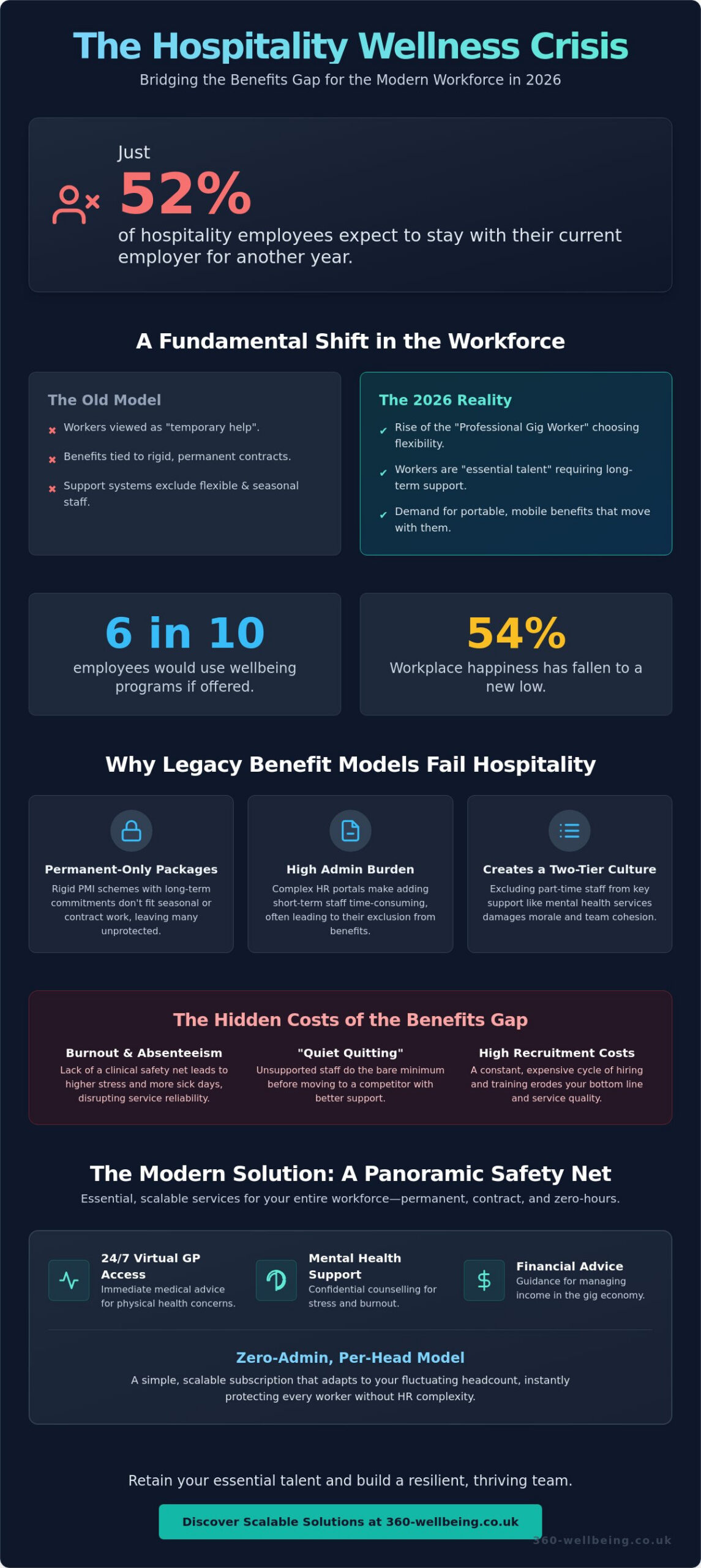
Just 52% of hospitality employees expect to remain with their current employer for another year, according to 2026 data from The Access Group. This represents a significant drop from previous years and signals a critical need for a new approach to retention. If you’re struggling with high staff churn or seeing the impact of mental health burnout in your teams, you aren’t alone. The pressure of the service industry is unique; it requires a specialized strategy for employee benefits for hospitality industry workers that accounts for both permanent staff and the growing gig economy.
We believe that every worker deserves to feel supported and valued, regardless of their contract type or hours worked. In this guide, you’ll discover how to bridge the benefits gap for your hospitality and flexible workforce with scalable wellbeing solutions that drive retention and productivity. We’ll look at how moving toward simple, per-head subscription models for essential care can reduce your recruitment costs and foster a culture of vitality and workplace harmony.
Key Takeaways
- Understand why traditional support models often fail flexible workers and how to close the gap that leaves many hospitality staff feeling overlooked.
- Discover the strategic advantage of offering portable wellbeing tools to attract and retain the most skilled contractors during seasonal peaks.
- Learn how to implement effective employee benefits for hospitality industry teams using scalable per-head models that adapt to your changing headcount.
- Explore the essential services for 2026, including 24/7 Virtual GP access, mental health support, and financial advice for your entire workforce.
- See how a zero-admin approach can instantly extend a panoramic safety net to your zero-hours and contract staff without HR complexity.
The State of Employee Benefits for the Hospitality Industry in 2026
The UK hospitality sector has undergone a profound transformation. We are no longer looking at a workforce primarily composed of temporary help or students passing through. Instead, 2026 has seen the rise of the “Professional Gig Worker”, individuals who choose flexibility as a career path rather than a stopgap. The hospitality Gig Economy in 2026 is defined by a shift from survival-based labour to a deliberate choice for professional autonomy and variety. This change forces a shift in UK hospitality strategy, moving from viewing workers as “temporary help” to recognising them as “essential talent” who require long-term support.
Recent research highlights a stark “Benefits Gap” that threatens industry stability. Six in ten hospitality employees report they would actively use wellbeing programmes if they were offered, according to 2026 industry trends. This desire for support exists alongside a decline in workplace happiness, which fell to 54% this year. When we discuss employee benefits for hospitality industry workers, we aren’t just talking about “perks”. We are discussing the essential infrastructure required to keep the industry running and healthy.
The Evolution of the Flexible Hospitality Workforce
Autonomy is the primary driver for today’s professionals. Highly skilled chefs, front-of-house managers, and mixologists are moving toward gig-based roles to gain control over their work-life balance. Platform-based staffing has moved beyond simple delivery services into high-end, luxury hospitality environments. This freedom often comes at the cost of personal health security. In the 2026 economy, workers expect their health support to be as mobile and flexible as their shifts. They seek a sense of completeness in their care that moves with them from contract to contract.
The Hidden Cost of the Hospitality Benefits Gap
There’s a direct, measurable correlation between worker health and service reliability. When workers lack a clinical or financial safety net, the result is often burnout and high absenteeism. This sense of “precarity” is a major operational risk for hotels and restaurants. It leads to “quiet quitting”, where staff do the bare minimum before moving to a competitor who offers better protection. High-pressure service environments demand mental and physical resilience. Without a tailored package of employee benefits for hospitality industry staff, businesses face a constant, expensive cycle of recruitment and training that erodes the bottom line.
Why Traditional Employee Benefits Models Often Fail Hospitality Workers
Traditional corporate benefit structures often crumble when applied to the fast-paced, fluid nature of hospitality. Most legacy systems are designed for the “standard” employee; someone with a permanent contract and a predictable schedule. In our sector, however, the workforce is a vibrant mix of full-time staff, seasonal contractors, and zero-hours professionals. When businesses try to force these workers into rigid Private Medical Insurance (PMI) schemes, the model fails. PMI typically demands long-term commitments and high individual premiums that don’t align with a three-month summer contract or a weekend-only shift pattern.
The administrative burden also creates a significant barrier. Many HR portals are so complex that adding a short-term contractor takes more time than the contract itself. This leads to an “all or nothing” approach where flexible workers are simply left out. According to official government data, access to medical and wellness benefits in the leisure and hospitality sector consistently lags behind other industries. This exclusion isn’t just a missed perk; it’s a gap in the safety net that these workers deserve. Small and medium enterprises (SMEs) feel this most acutely, as they struggle with the cost of supporting a fluctuating seasonal headcount under old-fashioned pricing models.
The Problem with Permanent-Only Packages
Restricting support to permanent staff creates a two-tier culture that damages morale. Part-time and seasonal workers often face the same high-pressure environments and physical demands as their full-time colleagues, yet they are frequently denied access to mental health support or 24/7 Virtual GP services. This incompatibility with the high-churn hospitality model means that traditional insurers often view our industry as a high-risk outlier rather than a valued partner. It’s time to move toward a more inclusive, holistic approach to wellness that values every contributor.
Addressing the IR35 and Worker Classification Concern
A common fear among hospitality operators is that providing employee benefits for hospitality industry contractors might inadvertently change their employment status. It’s a persistent myth that wellbeing support triggers IR35 or worker classification issues. In the eyes of HMRC, providing access to clinical support like physiotherapy or mental health counseling is viewed as a duty of care rather than a contractual “perk” of employment. You can maintain a compliant relationship with your flexible team while still ensuring they have the tools to stay healthy and productive. Providing a safety net isn’t about control; it’s about empowerment and foresight.
The Strategic ROI of Prioritising Wellbeing in Hospitality
Investing in your people is far more than a moral choice; it’s a vital financial necessity for any venue looking to thrive. High staff turnover is the “silent killer” of hospitality margins. With restaurant industry turnover exceeding 70% in most years, the cost of constant recruitment, vetting, and onboarding is staggering. When you offer employee benefits for hospitality industry contractors, you aren’t just paying for a subscription. You’re buying stability. A supported gig worker is far more likely to return to your platform for future shifts, which dramatically reduces the need to constantly source unproven talent.
The return on investment extends directly to the guest experience. A healthy, focused team provides a level of service that translates into repeat bookings and positive reviews. We’ve observed a clear trend: “A workforce that feels physically and mentally secure is significantly more efficient; when health anxiety is removed, service speed and accuracy naturally increase.” This isn’t just about moving faster. It’s about your team having the mental clarity to handle a complex table order or a difficult guest with grace and composure during a busy Saturday night.
Becoming the Client of Choice
Hospitality is a small world, and word spreads quickly among top-tier contractors about which venues treat their flexible staff with genuine respect. By providing access to mental health support or 360 Rewards, you position yourself as the “Client of Choice”. This reputation allows you to attract the most skilled professionals who might otherwise choose a competitor. In the 2026 market, empathy has become a competitive advantage, building brand loyalty in a sector that was once known for “disposable” labour. Showing foresight in how you care for your team builds a durable corporate reputation.
Productivity and the Health Connection
Minor illnesses frequently derail entire rotas, leaving your remaining staff overworked and stressed. Access to a 24/7 Virtual GP allows staff to get medical advice instantly, which often prevents a minor ailment from turning into a week-long absence. During peak holiday periods, mental health support acts as an essential pressure valve, helping teams manage the unique stress of high-volume service environments. This proactive care saves you significant long-term costs. When you prioritise employee benefits for hospitality industry workers, you’re investing in the durability of your most valuable asset and ensuring your business remains resilient during seasonal peaks.
Building a Modern Benefits Package for Hospitality Staff
A modern package needs to be more than a list of discounts; it must act as a portable safety net that follows the worker wherever they go. We focus on the “Core Four” essentials: clinical care, mental health support, financial guidance, and lifestyle rewards. This is how you deliver meaningful employee benefits for hospitality industry teams without the administrative weight of traditional corporate schemes. By using per-head subscription models, you can scale your support up or down based on seasonal peaks. This ensures you only pay for the staff currently on your books, whether you’re managing a small boutique hotel or a national restaurant chain. Because our delivery is digital-first, your on-the-go team can access every feature via their smartphone during a break or between shifts.
Clinical and Mental Wellbeing Essentials
For a worker without paid sick leave, a long wait for a GP appointment isn’t just an inconvenience; it’s a financial crisis that threatens their ability to pay rent. 24/7 Virtual GP access provides instant reassurance and clinical care when it’s needed most, reducing the time spent worrying about minor ailments. Similarly, our Employee Assistance Programme (EAP) and mental health therapy address the isolation and high-pressure nature of the service floor. We also include physiotherapy to support the physical toll of long shifts in kitchens and hotels. This helps your team stay agile and pain-free, preventing minor strains from becoming chronic issues that force staff out of the industry entirely.
Financial and Legal Safeguards for Flexible Staff
Fluctuating incomes and seasonal hours create unique anxieties for the professional gig worker. Integrating financial support helps staff manage debt and plan for the future, even when tips and hours vary month to month. We also provide complimentary will writing and legal helplines, which are often inaccessible to self-employed or zero-hours workers. 360 Rewards further stretches their earnings through a dedicated discount marketplace, making everyday costs more manageable for those on a tight budget. You can explore our scalable wellbeing solutions to see how these tools can be tailored to your specific workforce needs, providing a sense of completeness and balance to their professional lives.
How 360 Wellbeing Transforms Hospitality Workforce Support
360 Wellbeing provides a panoramic approach to health that aligns with the fast-moving nature of your business. We understand that your team is your most vital asset, and our platform is designed to offer a sense of completeness that traditional models lack. By integrating clinical expertise with a warm, human touch, we make complex wellbeing topics accessible for every member of your team. Our philosophy is rooted in the belief that health support is an essential human entitlement, not a luxury reserved for those in permanent office roles.
Administrative friction is often what prevents businesses from offering comprehensive employee benefits for hospitality industry staff. We’ve eliminated this barrier with zero-admin onboarding. You can add or remove seasonal staff instantly; this ensures that your workforce is always protected, even during the most volatile trading periods. It’s about providing affordable excellence through high-value clinical benefits for a fixed monthly fee, giving you predictable costs and your staff reliable care. This durability in your support strategy allows you to focus on growth while we look after your people.
We’ve seen the impact of this foresight in action. During a high-pressure summer peak, a flexible hospitality team was able to maintain high attendance levels despite a local seasonal illness. Because every worker had 24/7 Virtual GP access, they could consult with a UK-registered doctor the moment symptoms appeared. This proactive intervention kept the team healthy and the service running smoothly; it proved that clinical support is a professional necessity that directly impacts your bottom line.
A Holistic Toolkit for the Modern Worker
Our platform combines 360 Rewards with 24/7 Virtual GP access to create a balanced package that supports every aspect of a worker’s life. We offer mental health support, therapy, and life coaching specifically tailored for the high-stress service sector. Having a single app for all physical, mental, and financial wellbeing needs empowers your staff to take control of their health journey. This unified narrative of wellness ensures that no one is left behind, whether they’re working a single shift or a full-time contract.
Implementing Your 2026 Hospitality Benefits Strategy
Integrating our solutions into your existing contractor or staff onboarding is a seamless process. We help you customise the platform to fit the specific needs of your hotel, restaurant, or agency, ensuring the support feels personal and relevant. This partnership approach ensures that your employee benefits for hospitality industry workers are effective and highly utilised. You can book a demo to see how 360 Wellbeing supports your hospitality team and begin building a more resilient, loyal workforce today.
Securing the Future of Your Hospitality Team
The landscape of UK service has changed; the 2026 professional gig worker requires more than just a paycheck or occasional perks. To thrive, your business must offer a portable safety net that prioritises clinical reliability and financial stability. Implementing modern employee benefits for hospitality industry teams is no longer a luxury; it’s a strategic necessity to reduce churn and protect your bottom line. By moving away from rigid insurance models toward flexible, scalable care, you ensure that every member of your workforce feels valued and supported.
We invite you to Empower your hospitality workforce with 360 Wellbeing today and experience the difference of a panoramic approach to health. Our platform provides 24/7 UK-registered Virtual GP access, thousands of exclusive 360 Rewards, and comprehensive support for mental, physical, and financial health. This all-encompassing strategy creates a sense of safety and order for your staff, even during the most demanding seasons. Together, we can build a culture of vitality and workplace harmony that keeps your best talent exactly where they belong.
Frequently Asked Questions
Do I have to provide benefits to gig workers in the UK hospitality industry?
Legally, you’re required to provide statutory rights such as pension auto-enrolment for eligible workers and holiday pay. However, voluntary wellbeing benefits are optional. In the competitive 2026 market, providing additional support is a proactive choice that moves beyond simple compliance. It helps you stand out as a supportive partner to your flexible workforce, ensuring they feel valued and secure regardless of their contract length or hours worked.
What are the best employee benefits for hospitality industry staff in 2026?
The most effective packages focus on immediate clinical access and financial security. A combination of 24/7 Virtual GP services, mental health support, and debt advice addresses the high-pressure nature of the service floor. These tools provide a panoramic safety net that traditional office-based perks simply cannot match for on-the-go workers. By prioritising employee benefits for hospitality industry teams, you provide the essential support required for a healthy and durable workforce.
How do benefits affect IR35 status for hospitality freelancers?
Providing wellbeing support generally doesn’t impact IR35 status because it’s categorised as a duty of care rather than a contractual perk of employment. HMRC views clinical interventions, such as physiotherapy or mental health counselling, as measures to ensure a safe and productive working environment. This approach allows you to support your flexible team and maintain a compliant relationship without accidentally triggering “disguised employment” concerns or administrative complications for your business.
Can I offer a Virtual GP service to temporary or zero-hours hospitality staff?
Yes, you can extend Virtual GP services to all staff regardless of their contract type or the number of hours they work. Digital-first delivery makes these services highly accessible via smartphone, which is perfect for staff who don’t have predictable schedules. It ensures that even temporary workers have the clinical foresight to manage their health without waiting weeks for a local appointment, keeping your rotas full and your team agile.
What is the most valued benefit for gig economy workers in hospitality?
Financial security and immediate health access consistently rank as the most valued benefits for flexible workers. Since many hospitality staff lack paid sick leave, the ability to consult a doctor 24/7 or access financial support for fluctuating incomes provides immense reassurance. These practical tools are far more impactful than generic lifestyle discounts. They provide a sense of completeness and balance for those managing the unique demands of gig work.
How much do wellbeing platforms for hospitality contractors cost?
Costs depend on the level of support and the number of staff you wish to cover, but most modern platforms use a scalable per-head subscription model. This allows you to pay only for the workers active on your books at any given time. It’s a methodical way to manage your budget while providing high-value clinical and rewards packages. This scalability is essential for businesses that face significant seasonal shifts in headcount.
Will providing benefits help with staff retention in my restaurant or hotel?
Yes, offering a comprehensive package of employee benefits for hospitality industry staff is a proven strategy to reduce churn. When workers feel physically and mentally secure, they’re more likely to stay loyal to your brand. This reduces the constant, expensive cycle of recruitment and onboarding that often drains hospitality margins. A supported workforce is a more stable workforce, leading to better service quality and improved guest satisfaction across your venue.
Is mental health support included in gig worker benefits packages?
Mental health support is a core component of modern wellbeing packages designed for the flexible workforce. This typically includes access to an Employee Assistance Programme (EAP), life coaching, and professional therapy sessions. These services act as a vital pressure valve for staff working in high-stress, high-volume environments. They ensure your team remains resilient and balanced, which is essential for maintaining a positive workplace harmony during peak trading periods.