Did you know that while 75% of the British workforce has access to an Employee Assistance Programme, as few as 2% of staff actually use these services annually? It’s a disheartening statistic for HR leaders who invest in support only to see absenteeism costs exceed £850 per employee. You’ve likely noticed that traditional helplines often feel like a “break glass in case of emergency” solution, leaving your team to struggle in silence until a situation becomes critical. We understand the frustration of managing fragmented systems that don’t talk to each other while your staff face growing pressures from mental health challenges and long GP wait times.
In this guide, we’ll explore the vital differences between an eap vs employee wellbeing platform to help you build a proactive digital ecosystem that actually gets used. You’ll discover how a more holistic, “panoramic” approach to health can transform your workplace culture and deliver a clear ROI. We will compare reactive crisis management with modern, all-encompassing support structures like 24/7 virtual GPs and mental health therapy, providing you with a clear path to higher retention and a healthier, more engaged team in 2026.
Key Takeaways
- Learn why the widening “NHS Gap” makes immediate access to clinical support, such as 24/7 Virtual GPs, a necessity rather than a luxury for UK businesses.
- Understand the fundamental shift in an eap vs employee wellbeing platform, moving from a hidden safety net to a visible, daily engine for employee vitality.
- Identify how proactive engagement reduces the frequency of acute mental health crises, leading to higher staff retention and a more sustainable ROI.
- Discover how to conduct a “Benefit Audit” to ensure your support systems actually meet the modern needs of SMEs and sole traders.
- See how integrating physical, mental, and financial tools into one platform simplifies the user journey and removes the stigma often associated with traditional helplines.
The 2026 UK Workplace Health Crisis: Why Traditional Support is Failing
The UK workplace is currently navigating a quiet but profound crisis. The “NHS Gap” has become the primary driver of absenteeism, as employees often wait weeks for a standard GP appointment. When a team member can’t access clinical advice quickly, minor ailments frequently escalate into long-term health issues. This delay doesn’t just hurt the individual; it creates a ripple effect of missed deadlines and increased pressure on remaining staff. In 2026, comprehensive employee wellbeing is a fundamental strategic necessity for business survival rather than a discretionary luxury.
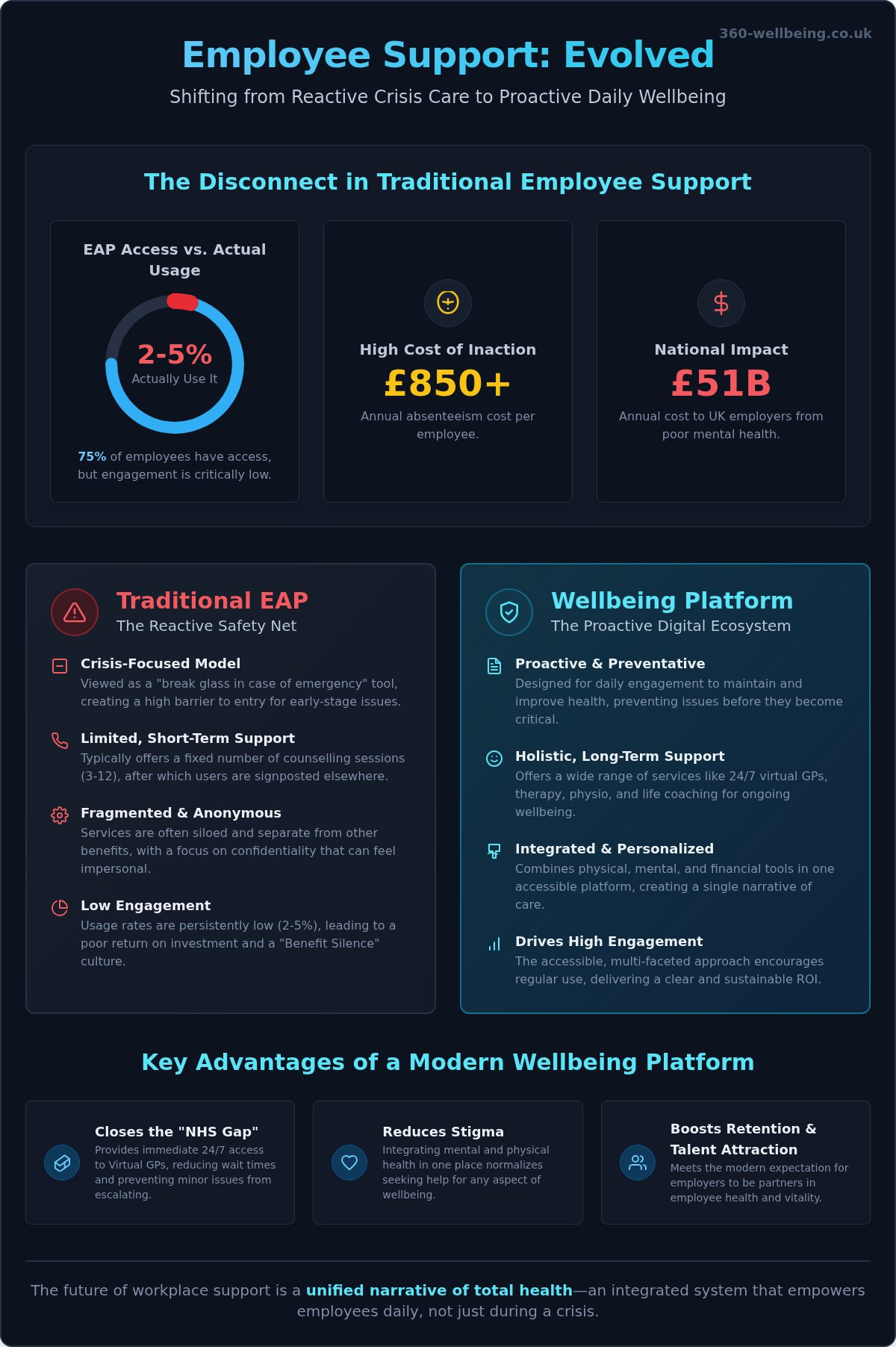
Many organisations believe they’re protected because they have an Employee Assistance Program in place. However, we’re seeing a “Benefit Silence” where these expensive services sit untouched while burnout rates climb. Research shows that traditional EAP usage rates in the UK remain stubbornly low, often between 3% and 5%, because staff simply don’t know the support exists or find the reactive, helpline-based model too intimidating to use during a non-crisis. Choosing between an eap vs employee wellbeing platform requires understanding that a safety net is only effective if your team feels empowered to use it every day.
The High Cost of Absenteeism and Presenteeism
Poor mental health now costs UK employers an estimated £51 billion annually through absence and reduced productivity. A significant portion of this figure comes from “presenteeism,” where staff are physically at their desks but mentally checked out due to stress or physical discomfort. When mental health support is delayed, a manageable period of stress can quickly spiral into a month of sick leave. Integrating 24/7 Virtual GP access into your strategy directly addresses this by providing immediate clinical answers. This reduces the need for staff to take half-days for medical appointments, keeping your workforce healthy and present.
The Evolution of Employee Expectations
In 2026, the battle for talent has moved beyond salary. Modern professionals prioritise holistic support and look for employers who act as expert caregivers. In our hybrid working world, staff demand digital-first solutions that provide immediate relief, whether that’s physiotherapy exercises via an app or a life coaching session booked during a lunch break. When evaluating an eap vs employee wellbeing platform, the core issue is engagement. A proactive platform creates a unified narrative of care, moving away from cold, insurance-style services toward a modern partnership that supports long-term vitality and workplace harmony.
Decoding the Models: EAP vs. Employee Wellbeing Platform
To choose the right support for your organisation, it’s essential to understand that these two models serve distinct purposes. A traditional Employee Assistance Programme acts as a confidential safety net, designed to catch employees when they fall into an acute crisis. In contrast, a modern wellbeing platform functions as a proactive digital ecosystem. It’s built for daily health maintenance, encouraging staff to engage with their vitality long before a problem becomes unmanageable. When we evaluate an eap vs employee wellbeing platform, we’re really looking at the difference between reactive rescue and preventive partnership.
The structural shift between these models is profound. While EAPs prioritise anonymity and one-off interventions, platforms focus on personalisation and foresight. By using a “Panoramic View” of health, these digital solutions integrate physical, mental, and social wellbeing into a single, unified narrative. This approach acknowledges that a person’s financial stress or a physical injury will inevitably impact their mental clarity and professional performance.
Core Pillars of a Traditional EAP
Traditional EAPs are primarily defined by their crisis helplines and short-term, solution-focused counselling sessions. They provide a vital service for employees facing immediate legal issues, bereavement, or severe trauma. Most programmes offer between three and twelve sessions of support, often signposting users to external services once that limit is reached. The limitation here is perception. Many employees view the EAP as a “break glass in case of emergency” tool, which creates a barrier for those who are struggling with lower-level burnout or persistent stress but don’t feel their situation is “bad enough” to call a helpline.
The Holistic Reach of a Wellbeing Platform
A wellbeing platform expands the definition of support by making clinical and lifestyle tools accessible every day. It moves beyond the telephone to provide a comprehensive suite of services that employees actually want to use. This includes integrated physical health features like 24/7 Virtual GP access and physiotherapy support, ensuring that medical advice is never more than a few clicks away. Mental vitality is supported through a combination of professional therapy and proactive life coaching, helping staff build resilience before they reach a breaking point.
Lifestyle and financial health are also central to this model. Features such as 360 Rewards provide tangible daily value, while debt advice and complimentary will writing offer peace of mind for the future. This variety of support ensures that every member of your team finds something relevant to their unique circumstances. If you’re looking to move beyond basic compliance, exploring a comprehensive wellbeing platform can help you foster a culture where health is celebrated as an essential human entitlement.
Reactive vs. Proactive: Comparing Engagement and ROI
The engagement gap between an eap vs employee wellbeing platform is perhaps the most compelling argument for a strategic shift. While traditional EAPs often report usage rates as low as 3% to 5%, modern digital platforms can achieve engagement levels of 20% to 40%. This isn’t just about numbers; it’s about the return on investment. For every £1 spent on holistic, preventative support, UK employers can see a return of £10.85. By transforming wellbeing from a crisis-only service into a daily habit, businesses can effectively lower the frequency of acute mental health absences. A significant driver of this daily interaction is the inclusion of 360 Rewards and discount marketplaces, which turn a health app into a valuable lifestyle companion that staff want to open every morning.
Why “Reactive Only” Models Struggle in 2026
Calling a crisis helpline carries a heavy emotional weight that many employees aren’t ready to bear until they’ve reached a breaking point. In contrast, booking a 24/7 Virtual GP appointment or messaging a life coach feels like a routine part of modern life. Reactive models naturally miss the early warning signs of burnout because they wait for the employee to self-identify as being in “crisis.” In our flexible working era, support must be available around the clock. When a team member can access physiotherapy or mental health support at 9 PM on a Sunday, they’re far less likely to call in sick on Monday morning.
Measuring Success: Beyond the Number of Counselling Sessions
True success isn’t just about how many people are currently in crisis counselling. We encourage HR leaders to track “Vitality Metrics” instead. These include app engagement rates, reward redemptions, and the uptake of preventative health checks. There’s also a deep link between financial security and employee retention. Providing robust financial support and debt advice helps remove the external stressors that often bleed into the workplace, affecting focus and morale. Modern platforms provide HR leaders with anonymised, high-level data trends. This allows you to identify if a specific department is struggling with stress or if there’s a sudden spike in physical health queries, enabling you to shape your future strategy with clinical precision and genuine compassion.
Strategic Selection: How to Choose for Your Organisation
Choosing the right support requires a clear-eyed assessment of your team’s unique reality. A construction firm facing physical strain needs different resources than a digital agency dealing with screen fatigue and hybrid-work isolation. When deciding on an eap vs employee wellbeing platform, you should start with a comprehensive “Benefit Audit.” Look at your current insurance or support lines. Are they just phone numbers on a poster that nobody notices? If your existing benefits don’t offer immediate clinical access or daily value, they aren’t meeting the needs of a 2026 workforce. This “Panoramic View” of health ensures that no aspect of your team’s vitality is left to chance, viewing wellbeing as a professional necessity rather than a luxury.
Tailoring Support for SMEs and Sole Traders
Small businesses often suffer most from “key person” absenteeism. In a team of five, one person being off for two weeks due to a mental health crisis or a delayed GP appointment can halt operations entirely. Modern platforms have democratised access to corporate-grade tools through affordable, per-employee subscription models. For an SME or a sole trader, a wellbeing platform acts as an outsourced HR function for health. It provides the durability your business needs by offering life coaching, financial support, and legal advice without the overhead of a dedicated internal department. It’s about building a resilient foundation that protects both the individual and the business’s long-term interests.
Integration: Making the Platform Your Culture’s Front Door
To ensure high engagement, your chosen solution must become the central hub for all health and reward needs. “App fatigue” is a real threat to productivity. If your staff have to log into four different portals for a GP, a therapist, their pension, and their shopping discounts, they simply won’t do it. A unified ecosystem solves this by providing a single front door to care. This includes everything from complimentary will writing to 24/7 Virtual GP access. We believe in being an expert caregiver that remains approachable and invested in your success. Effective onboarding and ongoing account management are essential to ensure the platform stays at the heart of your workplace culture. If you are ready to move beyond fragmented systems, you can find comprehensive support for your UK team that bridges the gap between clinical depth and daily engagement.
The 360 Wellbeing Advantage: A Unified Narrative of Total Health
We see ourselves as more than just a service provider. 360 Wellbeing acts as the essential bridge between high-level clinical expertise and the practical, daily support your team needs to stay healthy. By moving away from the fragmented approach of an eap vs employee wellbeing platform, we create a single, unified narrative of care. This ensures that every employee feels seen and supported, regardless of whether they’re dealing with a minor physical injury or a significant life transition. We don’t just offer a safety net; we provide a partner for long-term vitality and workplace harmony.
Clinical Excellence Meets Modern Convenience
Your staff shouldn’t have to navigate weeks of waiting lists to speak with a medical professional. Our platform provides immediate access to UK-registered GPs and mental health therapists at any hour of the day. This clinical depth is balanced with proactive tools like Life Coaching, which helps employees move from simply surviving their workload to truly thriving in their roles. For those with physical limitations, our physiotherapy support ensures that a mobile or desk-based workforce remains agile and pain-free. It’s a methodical approach that prioritises foresight and durability in health, making complex medical topics feel accessible and manageable for everyone.
Financial and Legal Peace of Mind
Stress doesn’t always start at the desk. Often, it begins with a worry about a mounting debt or the security of a family’s future. We address these underlying factors directly through complimentary will writing and expert debt helplines. These services remove the high cost and complexity often associated with legal and financial planning, providing genuine peace of mind for your team. When an employee feels their personal interests are protected, they can bring their full, focused selves to their professional responsibilities.
To support your team during the work week, 360 Rewards offers thousands of discounts that help staff combat the rising cost of living through daily savings. This consistent value keeps the platform at the front of your employees’ minds, ensuring that when they do need clinical help, they already know exactly where to find it. Choosing a unified platform is the logical conclusion of a modern health strategy. It’s an acknowledgement that wellbeing is a fundamental human entitlement, and providing it is the most durable way to ensure your organisation’s success in 2026.
Building a Resilient Future for Your Workforce
Navigating the 2026 health landscape requires a move away from the “break glass” mentality of traditional support. Choosing an eap vs employee wellbeing platform isn’t just a technical decision; it’s a commitment to your team’s long-term vitality. By integrating daily clinical access with lifestyle rewards, you transform wellbeing from an underused benefit into a cornerstone of your company culture.
You now have a clear path to bridge the “NHS Gap” and reduce the hidden costs of absenteeism. With 24/7 access to UK-registered Virtual GPs, inclusive mental health therapy and life coaching, and comprehensive financial and legal support packages, your staff can find help exactly when they need it. This unified approach ensures that every member of your team has the tools to thrive.
Empower your team with the 360 Wellbeing platform today.
Let’s build a workplace where health is an essential human entitlement and every individual feels empowered to reach their full potential.
Frequently Asked Questions
What is the primary difference between an EAP and a wellbeing platform?
The fundamental difference in an eap vs employee wellbeing platform lies in the approach to care. An EAP is typically a reactive safety net designed for crisis management via a confidential helpline. A wellbeing platform is a proactive digital ecosystem that encourages daily engagement through physical, mental, and financial tools. While one waits for an emergency to happen, the other provides the foresight needed to prevent issues from escalating.
Can a wellbeing platform replace my existing EAP?
Yes, a comprehensive wellbeing platform can serve as a modern replacement for a traditional EAP. It includes the essential legal and compliance frameworks of an EAP, such as crisis counselling, but integrates them into a more accessible interface. By combining these reactive services with proactive features like Virtual GPs and life coaching, you ensure that clinical support actually gets used rather than sitting untouched on a forgotten poster.
How does a Virtual GP service work within a wellbeing platform?
Our Virtual GP service provides 24/7 access to UK-registered doctors through the platform’s mobile app. Employees can book video or phone consultations at a time that suits their schedule, often bypassing the weeks of waiting associated with local surgeries. This immediate clinical advice allows for faster diagnosis and treatment, which is a key factor in reducing absenteeism and helping your team maintain their long-term vitality.
Is a wellbeing platform affordable for a small business or sole trader?
Modern wellbeing platforms are designed to be highly accessible for SMEs and sole traders through scalable subscription models. Previously, corporate-grade health tools were reserved for large enterprises, but today’s platforms democratise this care. By paying on a per-employee basis, small businesses can provide the same panoramic view of health as major corporations. This ensures that even the smallest teams have the protection and durability they need to stay productive.
What kind of financial and legal support is typically included?
We provide a robust suite of lifestyle support that goes beyond traditional medical care. This typically includes:
- Debt advice and financial planning helplines
- Complimentary will writing services
- Legal support for personal and professional matters
These features address the external stressors that often impact mental health, ensuring that every employee feels secure and empowered to manage their life both inside and outside the workplace.
How do you ensure high employee engagement with a digital platform?
High engagement is achieved by providing daily value that goes beyond clinical emergencies. Our 360 Rewards marketplace offers thousands of discounts on everyday shopping, which encourages staff to open the app regularly. When employees use the platform for positive reasons, like saving money, the barrier to seeking mental health support is significantly lowered. This consistent interaction creates a habit of proactive health management across your entire workforce.
Are the services on the 360 Wellbeing platform confidential?
Absolute confidentiality is a cornerstone of our expert caregiver model. All clinical consultations, mental health sessions, and legal advice remain strictly between the user and the professional provider. HR leaders only receive anonymised, high-level data that identifies general trends within the organisation without ever revealing individual identities. This creates a sense of safety and order, which is essential for employees to feel comfortable discussing sensitive topics.
What is the ROI of switching from a traditional EAP to a holistic platform?
The ROI of an eap vs employee wellbeing platform is measured through significantly higher engagement and reduced long-term costs. Research indicates that for every £1 spent on holistic, preventative support, UK employers can see a return of £10.85. This return is driven by lower absenteeism rates and improved staff retention. By investing in a proactive ecosystem, you’re protecting your business from the rising costs associated with workplace stress and ill health.