
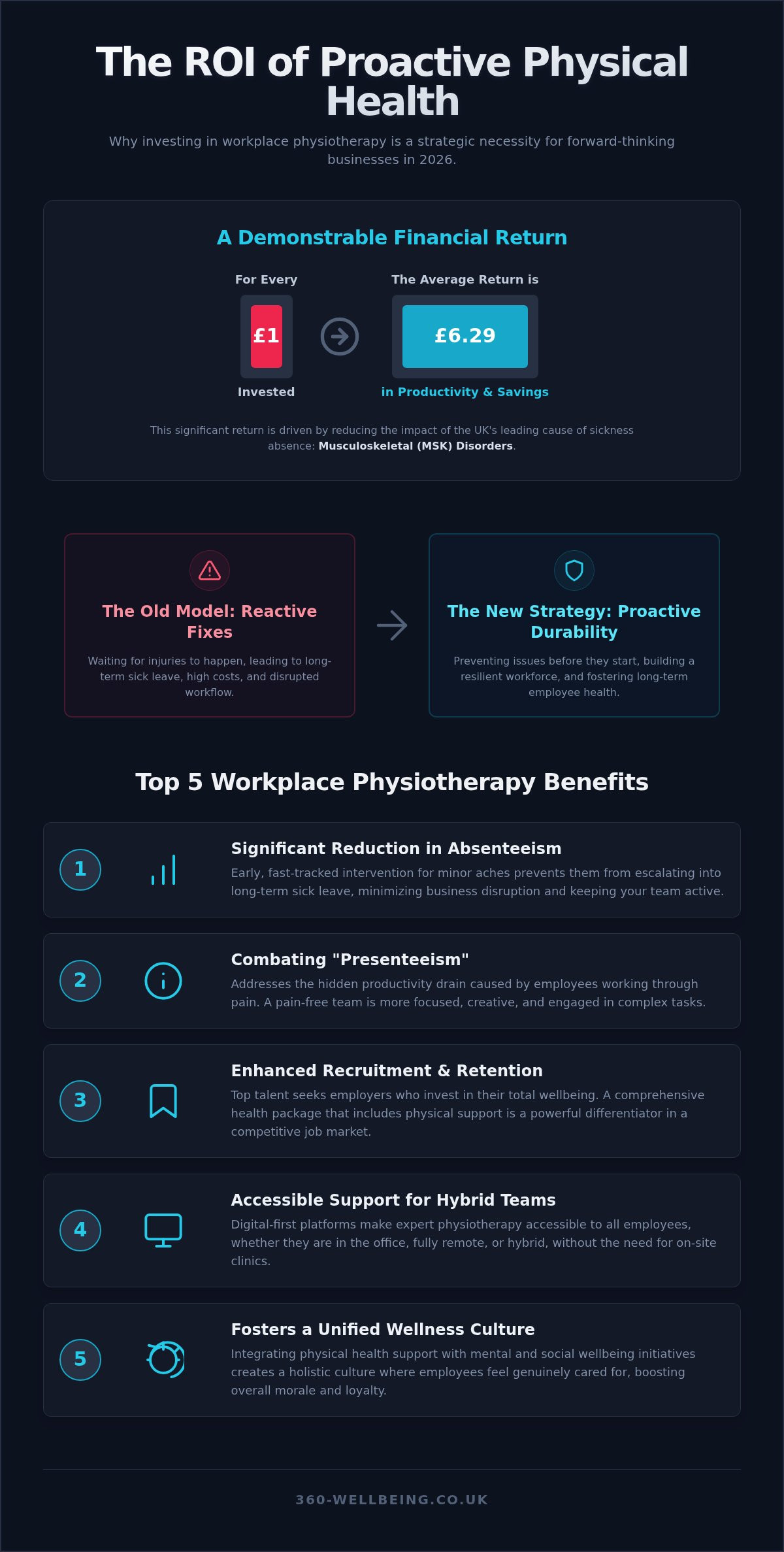
Did you know that for every £1 your business invests in physical health, you could see a return of £6.29? This isn’t just a hopeful estimate; it’s a documented reality in 2026 as musculoskeletal disorders remain a leading cause of sickness absence across the UK. You’ve likely noticed the rising costs of sick pay or felt the impact of “presenteeism,” where talented team members struggle through nagging back and neck pain instead of thriving. It’s a frustrating cycle that affects your bottom line, which is why understanding workplace physiotherapy benefits is now a professional necessity for any forward-thinking employer.
We understand that you want to protect your people as much as your business. This guide explains how integrating physiotherapy into your rewards package shifts health from a reactive fix to a proactive strategy for employee durability. You’ll discover how a digital-first, holistic approach reduces absenteeism and boosts productivity while fostering a resilient, happy workforce. We’ll walk you through the latest trends in hybrid care and show you how to provide the professional, compassionate support your employees deserve as a fundamental entitlement.
Key Takeaways
- Learn how to transition from a reactive “fix-it” mindset to a proactive strategy that builds long-term employee durability and prevents injuries before they arise.
- Discover the full range of workplace physiotherapy benefits, from reducing high sick pay costs to eliminating the productivity drain caused by “presenteeism.”
- Understand the measurable ROI of physical health support, including how targeted MSK care delivers a significant financial return for every pound invested.
- Explore how digital-first platforms make expert physiotherapy accessible to SMEs and hybrid teams across the UK without the need for on-site medical clinics.
- See why a unified approach that integrates physical, mental, and social health is essential for attracting top talent and fostering a resilient workforce in 2026.
Understanding Workplace Physiotherapy: More Than Just Injury Recovery
Workplace physiotherapy has evolved into a strategic pillar of occupational health rather than just a reactive solution for workplace accidents. In 2026, forward-thinking employers view it as a proactive investment in “employee durability,” ensuring that team members remain physically capable and resilient throughout their careers. By moving away from a “wait and see” approach, businesses can address small aches before they become debilitating chronic issues. This shift toward preventative musculoskeletal (MSK) care is essential for maintaining a high-functioning workforce.
The Scope of Modern Physiotherapy
Modern practice is incredibly diverse. It encompasses everything from correcting subtle postural imbalances to providing structured post-surgery rehabilitation. A significant part of Understanding Physiotherapy in a corporate context is recognising the power of education. When employees learn how to move correctly and manage their own physical health, they’re less likely to develop long-term conditions. This support is equally vital for manual workers lifting heavy loads and sedentary staff spending hours at a screen. One of the key workplace physiotherapy benefits is this universal applicability; it supports every person in your organisation regardless of their job description.
Why 2026 is the Year of Physical Wellness
The 2026 hybrid work landscape has brought unique challenges to the surface. Years of prolonged remote working, often in less-than-ideal ergonomic setups, have taken a visible toll on spinal health across the UK. Musculoskeletal health is the leading cause of UK work days lost in 2026. When an employee is in constant physical discomfort, their ability to focus and engage with their work diminishes rapidly. You cannot expect peak performance from someone struggling with a nagging neck or back issue. By providing easy access to professional support, you aren’t just treating a symptom; you’re restoring that person’s capacity to contribute and feel valued. Physical wellness is no longer a luxury benefit; it’s a professional necessity that underpins the harmony of your entire team.
The Top 5 Workplace Physiotherapy Benefits for Modern Teams
Providing physical support isn’t just a box-ticking exercise for HR departments; it’s about recognising health as a fundamental human entitlement. In a modern workplace, all-encompassing care means looking at the person behind the professional. When you integrate physical health into your culture, you move away from a fragmented approach to wellness and toward a unified narrative of total vitality. The most significant workplace physiotherapy benefits extend far beyond basic injury management, touching every aspect of your business from the balance sheet to the office atmosphere.
1. Significant Reduction in Absenteeism
Early intervention is the key to keeping your team on their feet. When a staff member feels a “twinge” in their back or neck, having instant access to professional advice stops that minor discomfort from spiralling into a long-term sick leave. Speed of recovery is dramatically improved when an employee doesn’t have to wait weeks for an initial assessment. By providing a direct path to care, you minimise business disruption and ensure that small issues are resolved before they require significant time away from the desk. Employers have a legal duty to protect staff, and following the UK guidance on musculoskeletal disorders is a vital starting point for any preventative strategy.
2. Combating the Hidden Cost of Presenteeism
Presenteeism occurs when employees are physically at work but mentally distant because they’re struggling with pain. It’s a quiet productivity killer. Pain relief directly correlates to cognitive performance; it’s difficult to solve complex problems or stay creative when you’re distracted by a throbbing shoulder. By addressing these physical limitations, you unlock a “panoramic” benefit where the entire workforce feels sharper and more engaged. A pain-free team is a focused team, capable of delivering their best work without the invisible weight of physical distress holding them back.
3. Enhanced Recruitment and Staff Retention
Top talent in 2026, particularly among Gen Z and Millennial professionals, expects more than a standard salary. They look for employers who demonstrate a “warm, human touch” and a genuine investment in their long-term durability. Offering physiotherapy as a core perk positions your company as a forward-thinking leader that values the person, not just the output. It shows you’re looking out for their interests for the long haul. Moving beyond basic benefits to a comprehensive health offering creates a sense of safety and loyalty that makes your business a destination of choice for the best in the industry.
The Strategic Impact: Calculating the ROI of Physical Health
The most common question we hear from UK business leaders is whether the investment truly balances out. It’s a fair question. When you look at the workplace physiotherapy benefits, you have to weigh them against the steep price of doing nothing. In 2026, a report from the Chartered Society of Physiotherapy found that physiotherapy delivers an average return of £6.29 for every £1 invested. This isn’t just about avoiding sick pay; it’s about preserving the engine of your business.
When employees are physically comfortable, they’re less susceptible to the burnout and stress that often follow chronic discomfort. This holistic resilience is further strengthened when you combine physical care with other pillars like financial support for your team. Total wellness isn’t a series of isolated perks; it’s a unified strategy where every element supports the other to create a stable, productive environment.
Mitigating Legal and Compliance Risks
Protecting your business means more than just meeting basic health and safety standards. In the UK, Display Screen Equipment (DSE) compliance is a rigorous requirement, especially with the prevalence of hybrid work. Professional physiotherapy advice ensures your team’s setups are clinically sound, which significantly reduces the risk of liability claims. Having access to clinical expertise provides a layer of reassurance that basic ergonomic checklists simply cannot match. It gives you the peace of mind that you’re fulfilling your duty of care to the highest standard.
The Link Between Physical Pain and Mental Health
It’s impossible to separate the mind from the body. Chronic physical pain often acts as a gateway to secondary mental health challenges, such as anxiety or low mood. If an employee is constantly worried about their ability to perform due to a persistent injury, their mental resilience begins to erode. Our “360” philosophy recognises that you can’t effectively support a person’s mental wellbeing if they’re in constant physical distress. Effective MSK support acts as a primary preventative measure against workplace-related mental health decline. By resolving physical issues early, you provide a sense of safety and order that allows your employees to focus on their personal and professional growth.
Implementing an Effective Physiotherapy Programme in Your Business
Launching a new health initiative shouldn’t feel like an administrative burden for your HR team. It’s about building a clear, low-friction bridge between your employees and the expert care they deserve. You don’t need a dedicated medical room or expensive on-site staff to unlock workplace physiotherapy benefits for your organisation. In 2026, the most effective programmes are digital-first, allowing for a seamless integration into the daily lives of a modern, hybrid workforce. This approach ensures that help is always just a few clicks away, regardless of where your team is working.
Step 1: Assessing Current Workforce Pain Points
Start by listening to the quiet signals within your company. Anonymous surveys are an excellent way to identify where your team is physically struggling without making individuals feel exposed. You might discover that your creative department is battling “tech neck” from long hours of focused design, while your logistics staff are dealing with repetitive strain. By identifying these high-risk roles early, you can set clear goals for what you want to achieve. Whether your priority is reducing MSK-related sick days or simply improving daily comfort, a data-driven starting point ensures your strategy is targeted and effective.
Step 2: Choosing an Accessible Delivery Model
For most SMEs and sole traders, the traditional model of on-site clinical assessments is often too complex and costly. Digital platforms have levelled the playing field, providing instant access to professional advice that was once reserved for large corporations. This 24/7 availability is essential for diverse work schedules, ensuring that support is available the moment a twinge occurs. A per-employee subscription model provides the scalability and financial predictability that businesses need. It allows you to offer world-class physical support without the overheads of physical infrastructure or long-term medical contracts.
Step 3: Communicating the Benefit to Your Team
Even the most sophisticated programme will fail if your team doesn’t feel empowered to use it. High uptake depends on clear, compassionate communication that removes the “stigma” of seeking help for physical issues. It’s vital to frame physiotherapy as a professional necessity rather than a sign of weakness. Integrate these services into your wider “holistic health” narrative, showing that you value the person’s total wellness. When employees see that their physical health is treated with the same importance as their mental or financial wellbeing, they’re far more likely to engage proactively. You can learn more about launching a digital wellbeing platform that supports every aspect of your team’s health journey.
The Future of Wellness: A Unified Approach to Employee Health
Fragmented care is a relic of the past. In 2026, we’ve moved beyond treating health as a collection of isolated symptoms or separate HR checkboxes. Modern employers recognise that a person’s physical comfort, mental clarity, and financial security are deeply intertwined. When you look at the workplace physiotherapy benefits we’ve explored, they truly shine when they’re part of a unified ecosystem. A siloed approach where an employee has to navigate different providers for a back injury, a stress-related issue, and a GP referral is inefficient and exhausting. A unified platform provides the panoramic viewpoint necessary for true workplace harmony and long-term employee durability.
Why Integration Trumps Isolation
A single portal for all health, financial, and legal needs isn’t just a convenience; it’s a strategic advantage. It allows for a seamless journey where a 24/7 Virtual GP can immediately triage an employee into physiotherapy the moment a musculoskeletal issue is identified. There’s no waiting for external referrals or lost paperwork. This integration extends to Life Coaching and mental health support, ensuring that the emotional impact of physical limitations is addressed simultaneously. For HR managers, the value of consolidated reporting is immense. You gain a clear, anonymised overview of your team’s health trends, allowing you to make informed decisions about your wellness strategy without juggling multiple, conflicting data streams.
The 360 Wellbeing Difference
At 360 Wellbeing, we present ourselves as more than just a service provider. We’re an expert caregiver and a long-term partner in your success, dedicated to making complex health topics feel manageable. Our platform brings together UK-registered clinical expertise with a modern, digital-first delivery model that fits the lives of hybrid teams and SMEs. We even include 360 Rewards to incentivise healthy living, making wellness a positive, daily habit rather than a chore. This proactive vision of vitality ensures your people feel supported, empowered, and valued as a whole person. It’s time to move toward a future where health is a professional necessity and a human entitlement. Book a consultation to see how our platform transforms your workplace health and discover a more resilient, balanced way to work.
Building a Resilient Future for Your Workforce
Investing in your team’s physical health is a choice that pays dividends in both business stability and human vitality. We’ve explored how transitioning from reactive treatments to proactive MSK care protects your bottom line while honouring wellbeing as a professional necessity. By embracing the full range of workplace physiotherapy benefits, you’re not just reducing sick leave; you’re building a culture where every individual feels durable and valued.
A unified health strategy is the most effective way to navigate the challenges of the 2026 hybrid work environment. Our digital-first platform offers an affordable monthly per-employee subscription model that brings clinical expertise directly to your team. With 24/7 access to UK-registered Virtual GPs alongside comprehensive mental health support and life coaching, you can provide a truly panoramic health offering without the need for on-site clinics.
Empower your team with 360 Wellbeing today and take the first step toward a more harmonious, productive workplace. Your team’s health is the foundation of your success, and we’re here to help you protect it for the long term.
Frequently Asked Questions
What are the most common musculoskeletal issues in UK offices?
The most frequent musculoskeletal (MSK) issues in UK offices include lower back pain, neck strain, and repetitive strain injuries (RSI) in the wrists and hands. These conditions often stem from poor ergonomic setups or prolonged sedentary behaviour. In 2026, we see a rise in “tech neck” due to the hybrid work model. Addressing these early through workplace physiotherapy benefits stops minor discomfort from developing into chronic conditions that require long-term leave.
How much does workplace physiotherapy typically cost per employee?
Rather than paying for individual appointments, modern employers typically use a recurring subscription model based on the number of enrolled staff. This approach makes costs predictable and manageable for SMEs. While private assessments in the UK can cost between £74 and £150, a per-employee subscription provides continuous access to support. This model is designed to be affordable while delivering a high return on investment through reduced absenteeism and improved productivity.
Can physiotherapy be delivered effectively through a virtual platform?
Yes, virtual physiotherapy is highly effective for many common workplace issues. Through video consultations, experts can assess movement, provide ergonomic advice, and prescribe tailored exercise programmes for self-management. This digital-first approach removes the need for expensive on-site medical clinics while ensuring employees receive immediate support. It’s particularly valuable for hybrid teams, as it provides consistent care regardless of whether a staff member is at home or in the office.
Do employees need a GP referral to access workplace physiotherapy?
No, employees don’t require a GP referral when using a direct-access platform. This removes a significant barrier to care and ensures that treatment begins as soon as a problem is identified. Since July 2022, registered physiotherapists in the UK can legally certify fit notes. This streamlined process saves time for the employee and the business, allowing for a faster return to full health and professional duty without waiting for a traditional doctor’s appointment.
Is workplace physiotherapy just for manual workers?
Physiotherapy is a professional necessity for every type of role. While manual workers face risks from lifting and physical exertion, sedentary employees are highly susceptible to postural issues and spinal strain from prolonged screen use. Modern physiotherapy focuses on “employee durability” across the entire organisation. Whether someone is on a warehouse floor or behind a laptop, they’re entitled to the physical support needed to perform their job comfortably and safely.
How does physiotherapy help with workplace stress and mental health?
Physical pain is a primary driver of workplace stress and anxiety. When an employee is in constant discomfort, their mental resilience naturally erodes, leading to burnout. By resolving physical issues, physiotherapy acts as a preventative measure against mental health decline. Our 360 approach ensures that physical, mental, and social health are integrated. This creates a sense of safety and order, allowing employees to focus on their work without the distraction of nagging pain.
What is the difference between occupational health and workplace physiotherapy?
Occupational health is a broad field concerned with the overall relationship between health and work, including legal compliance and fitness-to-work assessments. Workplace physiotherapy is a specific, clinical intervention that treats and prevents physical injuries. While occupational health identifies a problem, physiotherapy provides the direct solution. Integrating physiotherapy into your wider health strategy ensures that you aren’t just identifying risks but actively supporting your team’s recovery and long-term physical durability.
How quickly can we see a return on investment from a physiotherapy benefit?
You can see the intangible benefits, such as improved morale and reduced presenteeism, almost immediately after launch. Employees feel valued when they have instant access to professional care. From a financial perspective, the return is substantial. A 2026 report from the Chartered Society of Physiotherapy found an average return of £6.29 for every £1 invested. This ROI is driven by lower sick pay costs and the prevention of long-term productivity losses across the business.