What if support that helps an employee feel steadier also makes mediation seem less impartial? Supporting employee wellbeing during workplace mediation means recognising that people may feel anxious, unheard or emotionally overwhelmed, while keeping support separate from the mediator’s role and decisions.
It’s understandable to want employees to feel safe enough to take part constructively. At the same time, managers may be unsure what help to offer. Concerns about privacy or fairness can also make it harder for people to trust the process. Clear boundaries help address both needs.
This article explains how to support employees before, during and after mediation without influencing its outcome. You’ll learn how to prepare people, respond sensitively during meetings and arrange suitable follow-up. We’ll also cover when mental health support, an Employee Assistance Programme or GP care may help alongside mediation, not replace it.
Key Takeaways
- Plan practical arrangements in advance, including clear joining details, access needs and opportunities to take a break.
- Supporting employee wellbeing during workplace mediation works best when care and signposting remain separate from the mediator’s impartial role.
- Give employees a private, appropriate way to raise support needs without pressuring them to share more than they choose.
- Use a checklist to confirm the mediator, meeting format and process information before sending invitations.
- After mediation, check progress on agreed workplace actions and consider whether further support may help.
Supporting employee wellbeing during workplace mediation: why it matters
Workplace mediation is a structured conversation in which an impartial mediator helps people discuss a workplace disagreement and explore possible ways forward. The mediator facilitates communication but doesn’t decide who is right or impose an outcome. Mediation differs from counselling, which focuses on emotional or psychological support; a grievance process, which follows an organisation’s procedure for considering a formal complaint; and a manager-led discussion, where a manager takes part in their management capacity. The general Mediation overview offers further background on the process.
Conflict without a constructive way forward can affect how people communicate and feel at work. An employee may feel less confident about raising concerns or find it harder to concentrate when interactions are tense. These are possible responses, not inevitable outcomes. People experience the same events differently, so don’t assume both participants feel equally comfortable, distressed or ready to talk.
Supporting employee wellbeing during workplace mediation means making it easier for each person to take part as safely and constructively as possible. It doesn’t mean directing what they say, deciding what outcome they should accept or shaping the mediator’s conclusions. Wellbeing support and mediation have complementary but separate purposes.
What can employees find difficult about workplace mediation?
People may worry about being heard, discussing sensitive issues in front of another person or not knowing what will happen afterwards. One participant may feel ready to speak openly, while another may need time to organise their thoughts or ask about the meeting format. Neither response should be treated as a lack of goodwill.
Ask each employee privately what practical or wellbeing support could help them participate. An open question such as, “Is there anything about the arrangements that would help you feel more prepared?” lets them identify a need without having to share personal details. Their answer may point to an adjustment or support outside the mediation itself.
What does wellbeing support add to a fair process?
Preparation can help employees identify the concerns, questions and changes they want to discuss, rather than feeling they must respond immediately in the meeting. Clear process information and a chance to raise practical needs can reduce avoidable uncertainty. The mediator facilitates the conversation impartially; they aren’t there to provide therapy. If someone needs emotional or health support beyond the meeting, signpost them to an appropriate separate source of help.
Check how participation works in the specific process. If participation or decisions are voluntary, explain that clearly. Don’t pressure either person to attend, disclose more than they choose or agree to a particular resolution. Making these boundaries clear supports employee choice and the fairness of the conversation.
How to support employees before, during and after workplace mediation
A calm, predictable process can help employees focus on the conversation rather than practical details. Supporting employee wellbeing during workplace mediation means offering useful choices while leaving each person in control of what they share and say. The Framework for Workplace Mental Health and Well-Being offers a broader perspective on creating supportive conditions at work.
Prepare without scripting contributions
Before sending invitations, confirm the format, purpose, joining details and process boundaries with the mediator. Share that information with each participant in clear, neutral language. Invite them to make private notes about their concerns, what they would like to change and any questions they want to raise. Listen without rehearsing their case or suggesting what outcome they should seek.
Ask each person privately whether an adjustment or practical arrangement would help them participate. This could mean clarifying how to join, checking accessibility needs or agreeing how to request a break. Don’t ask for personal information you don’t need to arrange support.
Support participants during and after the meeting
On the day, make sure both participants know whom to contact about arrangements and how to ask for a pause. Offer breaks without asking anyone to explain why they need one. After the session, check in separately, explain the next practical steps and ask whether further support would be useful. Keep the conversation focused on wellbeing and arrangements, not on gathering one person’s account of what the other said.
If an employee may benefit from support beyond mediation, signpost an appropriate option separately. This might include mental health support, an Employee Assistance Programme or GP care, depending on what is available and suitable. Before recommending a service, check its eligibility, access conditions and privacy information. Don’t promise confidentiality terms you haven’t confirmed. Wellbeing support complements mediation; it doesn’t replace it.
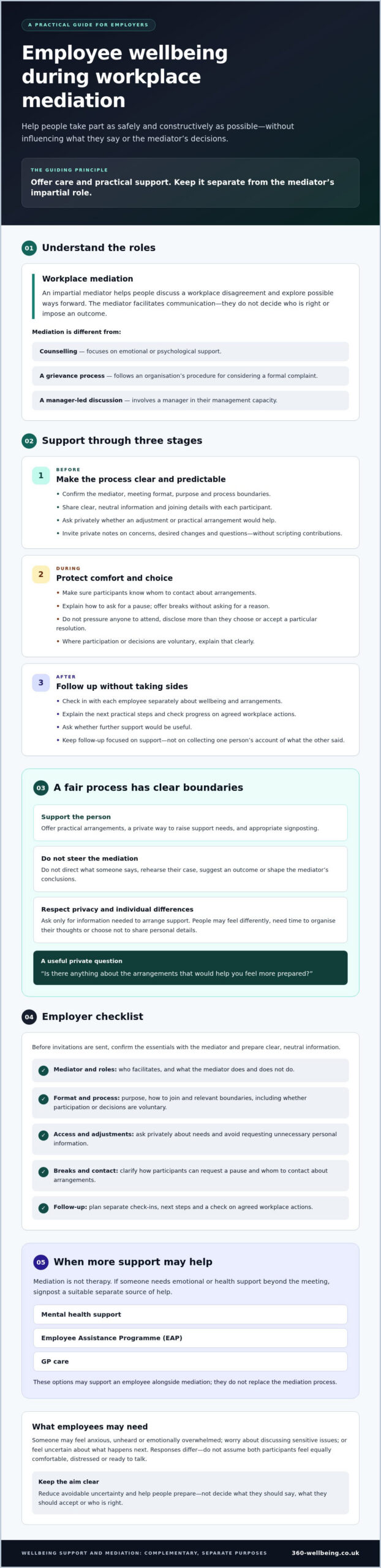
A three-stage guide to adapt to your process:
- Before: Confirm the mediator’s process details, share clear arrangements, invite questions and privately check participation needs.
- During: Keep a contact person available, make breaks possible and avoid coaching or pressuring either participant.
- After: Check in separately, clarify agreed next steps and signpost suitable support with accurate access and privacy information.
For employers reviewing how wellbeing support fits into their wider benefits approach, employee wellbeing support options may be a useful place to explore.
How to protect impartiality, privacy and employee choice
Wellbeing support doesn’t have to influence a mediation outcome. Keep roles clear: the mediator facilitates a fair conversation, while the employer arranges practical support and signposts employees to separate sources of help. Supporting employee wellbeing during workplace mediation should help each person participate, not encourage them to agree, disclose private details or take a particular side.
Privacy isn’t one blanket promise. What may be shared depends on the mediation arrangements and the terms of any separate support service. Before the process begins, explain what information is needed for arrangements, who may receive it and where employees can check the relevant privacy information. Don’t promise confidentiality on behalf of a mediator or provider unless you’ve confirmed the terms.
What should managers share with the mediator?
Agree information-sharing boundaries with the mediator before the meeting rather than assuming what they need to know. If an adjustment affects the format or arrangements, share only relevant information in line with applicable obligations and the agreed process. For example, it may be enough to arrange a suitable format without sharing personal details that aren’t needed.
For case-specific procedural questions, check current Acas guidance or seek qualified HR advice. This is particularly helpful if mediation is taking place alongside another workplace process.
How is mediation different from therapy or an EAP?
Mediation focuses on workplace communication and exploring possible ways forward. It isn’t clinical treatment, and the mediator’s role isn’t to provide therapy. Mental health support or an Employee Assistance Programme (EAP) may provide a separate route for personal wellbeing needs, but the scope, access conditions and privacy arrangements vary. Check the relevant service details before signposting someone.
You can offer an employee a support option without asking them to report what they discuss there. Keep information-sharing expectations separate and clear, and don’t make access to wellbeing support conditional on taking part in mediation.
Keep the boundaries visible:
- Mediation: Facilitates a workplace conversation. The mediator manages the process, and information-sharing boundaries should be agreed in advance.
- Employer support: Arranges practical participation needs and signposts appropriate help. Share only what is necessary for those arrangements, subject to applicable obligations.
- Mental health support or EAP: Provides a separate route for wellbeing needs. Confirm the service scope, access conditions and privacy terms, and don’t ask employees to disclose private discussions.
Clear roles can make support easier to trust. Employees can get help with wellbeing needs while mediation stays focused on the workplace conversation, without the employer steering either participant towards an outcome.
A practical workplace mediation wellbeing checklist for employers
A short checklist can help you offer consistent support without intruding on the mediation. Before invitations go out, confirm the mediator, meeting format and process information, then give each employee a private way to raise practical or wellbeing needs. Supporting employee wellbeing during workplace mediation should make participation more manageable while protecting each person’s choice about what they share.
Before mediation: confirm practical and access needs
Check that both participants understand the meeting’s purpose, the arrangements and whom to contact with process questions. Ask about adjustments without requesting unnecessary health details. Explain that employees can also ask about separate wellbeing support before the meeting, and confirm the access and privacy terms of any service before recommending it.
- Process: Confirm the mediator, format, joining details and information employees will receive.
- Participation: Ask privately whether timing, breaks or an accessible format would help.
- Support: Identify an appropriate contact for practical questions and a separate route to wellbeing support.
After mediation: check in and review next steps
Arrange a respectful follow-up with each participant. Ask about their wellbeing and practical workplace needs, not what the other person said or what was discussed privately. If actions were agreed, clarify who is responsible for each one and how progress will be reviewed. Use your organisation’s current procedures to address any health, safety or employment concerns that arise.
- Check-in: “Is there any practical support you need at work following the meeting?”
- Review: “Are the agreed workplace actions clear, and do you know whom to contact with questions?”
- Signpost: “Would you like information about support separate from mediation?”
These questions let employees ask for help without being pressed to recount confidential discussions. If financial pressure is affecting someone’s wellbeing, you could also share this guide to financial support for employees as a separate resource.
For organisations reviewing employee benefits that may complement workplace processes, explore employee wellbeing support options.
Sustaining employee wellbeing after workplace mediation
Mediation can open a route towards better workplace communication, but it doesn’t guarantee that every concern will be resolved or that relationships will change immediately. Follow-up helps employers see whether agreed actions are working and whether either person needs further support. Supporting employee wellbeing during workplace mediation therefore continues beyond the meeting, while responsibility for workplace issues remains with the organisation.
Recognising when additional support may help
Check in with employees without trying to diagnose how they’re feeling. If someone says they’re still distressed, struggling with day-to-day work or unsure how to manage contact with a colleague, listen and ask what practical help or signposting might be useful. Respect their choice about what they share.
Depending on the person’s needs, separate support might include mental health support, an Employee Assistance Programme (EAP) or access to a GP. 360 Wellbeing offers these options, including 24/7 access to a UK-registered GP. Before signposting, check eligibility, access conditions, service scope and privacy information. These routes can complement workplace action, but they don’t replace mediation, employment procedures or emergency care.
If someone appears to be in immediate danger, contact the appropriate emergency service. In the UK, call 999 for an emergency. For urgent medical advice that isn’t an emergency, NHS 111 may be appropriate. Follow your organisation’s current procedures too, and don’t leave a person at immediate risk without seeking help.
Make support part of a wider wellbeing approach
Make support routes visible to all employees, not only those involved in mediation. People should be able to find out what help is available without first disclosing a workplace conflict. Alongside signposting, continue to review agreed actions, address workplace issues through appropriate channels and help managers build confidence in listening and constructive communication.
A proportionate follow-up might check whether agreed changes are happening, whether work interactions feel manageable and whether practical support is still needed. Keep the conversation focused on current needs and actions rather than revisiting private mediation discussions. If a concern remains unresolved, consider the appropriate workplace process instead of expecting wellbeing support to resolve it.
For a broader approach, combine clear workplace processes with accessible, well-explained support options. 360 Wellbeing offers mental health support, an EAP and GP access as part of its employee benefits platform. Check the relevant service details before communicating availability to employees. Explore 360 Wellbeing’s employee support to see whether its support options may suit your organisation.
Build a fair process with support that continues
Supporting employee wellbeing during workplace mediation means preparing people thoughtfully, protecting impartiality and offering support without steering the conversation. Clear arrangements, space to raise practical needs and respectful follow-up can help employees take part while keeping mediation focused on workplace communication. After the meeting, review agreed actions and stay alert to ongoing support needs. Mediation can be a constructive step, but it doesn’t replace appropriate workplace action or guarantee that every concern is resolved.
Employees may also need help beyond mediation. 360 Wellbeing’s offerings include mental health support, an Employee Assistance Programme and access to a UK-registered GP 24/7. These are separate support routes, not mediation services. Before sharing them with employees, check eligibility, access conditions and relevant privacy information so people can make an informed choice.
Explore 360 Wellbeing’s employee support and consider how appropriate support could complement a fair, well-managed workplace process. Clear boundaries and consistent care can help create a more constructive path forward for everyone involved.
Frequently Asked Questions
Can an employer offer wellbeing support during workplace mediation without taking sides?
Yes. Give both participants the same clear information and access to appropriate support, while tailoring practical arrangements to individual needs. Keep wellbeing conversations separate from mediation, and don’t coach either person on what to say or agree. The mediator facilitates the discussion; the employer can arrange practical support and signpost separate services. This supports employee wellbeing during workplace mediation without directing the conversation or deciding its outcome.
Should employees receive counselling before or after workplace mediation?
There’s no general requirement for employees to receive counselling before or after mediation. Whether it would help depends on the person’s needs and preferences. Counselling or other mental health support is separate from mediation, which focuses on workplace communication and possible ways forward. Signpost support without making participation conditional on accepting it, and check the service’s scope, access arrangements and privacy information before recommending it.
What should a manager do if an employee becomes distressed during mediation?
Pause and check what the employee needs, without asking them to explain personal details in front of the other participant. The mediator can help manage the meeting, including whether to take a break or stop and discuss next steps. Speak privately if appropriate, listen calmly and consider whether the employee needs separate support. If there’s immediate danger, seek emergency help and follow your organisation’s current procedures.
Is workplace mediation confidential, and what can an employer share?
Confidentiality arrangements depend on the mediation process and the terms agreed with the mediator, so don’t assume confidentiality is absolute. Confirm in advance what may be recorded or shared, with whom and in what circumstances. Employers should share only information needed for agreed practical arrangements, subject to applicable obligations. Explain these boundaries clearly to participants, and seek qualified HR advice if you’re unsure what a particular case requires.
How can employers support employees who need adjustments for mediation?
Ask each employee privately whether anything about the format or arrangements would help them take part. Possible adjustments might include an accessible meeting format, clear joining instructions or the opportunity to request breaks. Ask only for information needed to consider the request, and agree how relevant arrangements will be shared with the mediator. Confirm the process details with the mediator before invitations are sent, and explain whom employees can contact with questions.
What happens if workplace mediation does not resolve the conflict?
Mediation may help clarify concerns or identify steps forward, but it doesn’t guarantee that every issue will be resolved. Review any agreed workplace actions and consider what remains outstanding. If the conflict continues, use the organisation’s relevant procedures or seek appropriate HR advice about next steps. Continue to check on practical workplace needs and signpost separate support where helpful, without treating that support as a substitute for addressing the issue.
Can an Employee Assistance Programme support employees involved in mediation?
Yes, an EAP may be a separate source of support for employees dealing with personal wellbeing concerns during a workplace dispute. Its scope, eligibility, access conditions and privacy terms depend on the specific service, so check these before signposting someone. An EAP doesn’t provide or replace mediation, and employees shouldn’t have to share details of private support conversations with their manager to take part in mediation.