In 2024, 63% of UK employees showed at least one characteristic of burnout, according to Deloitte. Choosing employee benefits to prevent burnout can be a practical step, but a benefits package alone can’t make unsustainable workloads or poor working conditions healthy.
It’s understandable to want support employees will actually use and that reflects their different needs. Benefits can make it easier to access help with mental health, physical health and financial concerns. They work best alongside attentive management and healthier ways of working.
This guide explains the supportive role and limits of employee benefits, and how to choose options that are accessible and relevant to your team. It also covers how to combine benefits such as mental health support, physiotherapy and financial support with practical attention to workload, working conditions and early conversations.
Key Takeaways
- Recognise the difference between everyday tiredness and burnout, and understand where employer support can help.
- Match support to employees’ varied needs, from mental and physical wellbeing to financial concerns, rather than prioritising a long benefits list.
- Use employee benefits to prevent burnout as one part of a wider approach, not as a substitute for addressing workplace pressures.
- Follow a practical process to listen to staff, choose relevant support, explain how to access it and review its usefulness.
- Explore how connected wellbeing services can complement healthier work practices and attentive management.
Employee benefits and burnout: what support can, and cannot, do
Employers often want to offer support before pressure builds to the point where someone feels unable to cope. Benefits can make support easier to reach, but they work best as part of a wider effort to understand and improve employees’ working conditions.
Employee benefits can widen access to help with work-related wellbeing concerns, but they cannot prevent burnout on their own or make harmful work conditions sustainable. Support should be available without making employees responsible for adapting to pressures the organisation can address.
What does burnout mean in a workplace context?
The World Health Organization describes burnout in the International Classification of Diseases as an occupational phenomenon, rather than a medical condition. It relates specifically to chronic workplace stress that has not been successfully managed. The term describes a work-related experience, but it isn’t a diagnosis for an employer to make about an individual.
Burnout differs from feeling tired after a demanding week. It may involve ongoing exhaustion, increased distance or negativity towards work, and a reduced sense of professional effectiveness. These features can offer context, but they aren’t a checklist for labelling colleagues. People’s experiences vary, and work pressures can overlap with personal circumstances and physical or emotional wellbeing. For further background on the concept and its development, see Occupational burnout.
Where do employee benefits fit into prevention?
Accessible support gives employees a route to discuss concerns, seek guidance or address needs before they feel more difficult to manage. For example, mental health support can give someone a chance to talk through distress, while physiotherapy can support a physical concern affecting their working day. Financial support and debt advice may be relevant when money worries add pressure. No single option suits everyone, and having a benefit available doesn’t mean employees will feel comfortable using it.
That’s why choosing employee benefits to prevent burnout is only one part of the work. Benefits complement, rather than replace, reasonable workloads, clear expectations, supportive management and attention to how work is organised. If an employee consistently faces excessive demands, a support service may help them access support, but it won’t remove the source of those demands.
A benefit’s value depends on whether it reflects employees’ needs, feels accessible and trusted, and sits alongside meaningful action at work. Employers can make a stronger start by treating support as one part of a broader prevention approach, not as a promise that burnout won’t happen.
Which employee benefits can support staff wellbeing and resilience?
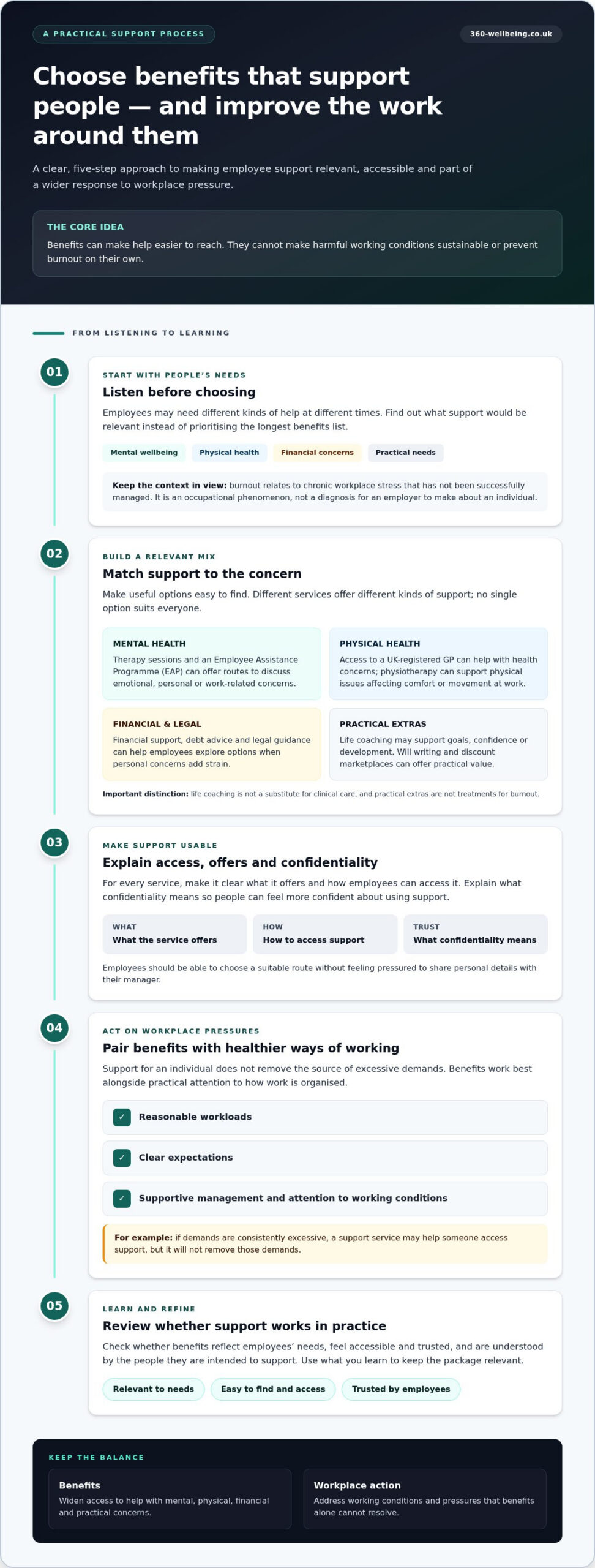
Employees may need different kinds of help at different times. A useful benefits package makes relevant support easy to find and understand, rather than simply offering the longest menu. Clear information about how to access each service and what confidentiality means can also help people feel more confident about using it.
Accessible, varied benefits can connect employees with support for different aspects of wellbeing, but no individual benefit can guarantee burnout prevention. The right combination depends on what employees need and whether they can use the support in practice.
Mental and physical health support
Mental health therapy sessions offer a route to professional support for people who want to talk through emotional difficulties. An Employee Assistance Programme (EAP) can provide another point of access for personal or work-related concerns. Explain what each service offers and how employees can access it, so they can choose a suitable route without feeling pressured to share personal details with their manager.
Access to a UK-registered GP can help employees discuss health concerns and understand possible next steps. Physiotherapy can support people seeking help with physical issues that affect comfort or movement at work. Life coaching has a different purpose: it can help with goals, confidence or development, but it isn’t a substitute for clinical care when that’s what someone needs.
The World Health Organization’s definition of burn-out frames it as an occupational phenomenon linked specifically to work. That context is a reminder to pair individual support with attention to employees’ working environment.
Financial and practical support
Money and legal concerns can add strain outside work and make it harder to focus during the working day. Financial support and debt advice can help employees explore their options, while legal support can provide guidance on relevant personal matters. For more on this area, read the financial support guide for UK employers.
Complimentary will writing and a discount marketplace can offer practical value, though they aren’t treatments for burnout. Present them as useful parts of a broader package, not as a response to excessive workload or ongoing stress.
For employers, the practical test is whether people know what’s available, trust the route to support and can access options that fit their circumstances. Explore 360 Wellbeing’s employee support as one way to bring different wellbeing resources together alongside thoughtful workplace practices.
Can employee benefits prevent burnout on their own?
No. Benefits can give employees more ways to access support, but they can’t independently remove workplace conditions that contribute to prolonged stress. If deadlines are consistently unrealistic, roles are unclear or staffing levels leave little room to recover, offering support outside the work itself won’t resolve those pressures.
Benefits can support the person experiencing pressure; employers also need to address the working conditions creating or intensifying it. Keeping both parts in view helps prevent wellbeing initiatives from feeling like a substitute for listening and making practical changes.
What benefits can help employers offer
Well-chosen benefits can make professional, practical and wellbeing support easier to access when employees choose to use it. Different routes may suit different needs: an employee might prefer a confidential conversation, practical guidance or help with a personal concern affecting their working day. Clear information about how to access support and reassurance about privacy can help employees decide whether it feels right for them.
Benefits can also show that wellbeing is an ongoing workplace concern, rather than something discussed only after a problem has escalated. Their value depends on whether employees can use them and whether the support reflects their circumstances. They’re one element of a supportive culture, not a promise of a particular outcome.
What workplace practices still need attention
Alongside benefits, employers and managers can review the conditions people are working in. Useful questions include:
- Are workloads and deadlines realistic, and is there enough time to recover after intense periods?
- Do employees understand their responsibilities, priorities and decision-making authority?
- Are staffing pressures or frequent changes making it harder to do the work well?
- Can people raise concerns constructively, and do managers respond with care and appropriate action?
Invite employees and managers into these conversations. Their day-to-day experience can reveal a mismatch between expectations and available time, unclear priorities or limited control over how work is done. Agree practical steps and review whether they help, rather than relying on a one-off discussion.
The Health and Safety Executive (HSE) provides guidance on stress risk assessments to help employers identify and manage work-related stress. Its Management Standards cover areas including demands, control, support, relationships, role and change. These offer a structure for looking beyond individual coping and considering how work is organised.
Employee benefits to prevent burnout are most meaningful when paired with attention to working conditions. Support can help people access resources; listening, sound work design and thoughtful management help address pressures where they arise.
How to choose, introduce and review benefits for burnout support
A thoughtful benefits approach starts with listening, not selecting a package. Use anonymous surveys, listening sessions and existing feedback to understand what support employees value and what makes it harder to access. Keep questions focused on needs and workplace experience. Employees shouldn’t have to disclose a diagnosis or personal history to help shape a benefits offer.
Start with employee needs and access barriers
Look for themes across teams, while considering whether different working arrangements create different barriers. Shift patterns, remote work, accessibility needs, language and confidence using digital services can all affect whether support feels practical. Explain how feedback will be used, who will see it and how privacy will be protected. Avoid promising absolute anonymity if responses could identify individuals in a small team.
Then identify the most relevant gaps and select support that addresses them. A clear, focused offer employees can understand and use may be more valuable than a broad menu that’s difficult to navigate. Treat this as a continuing process because employee needs and access barriers can change.
Communicate support and review its use
Introduce each benefit in plain language. Explain what it’s for, how to access it and what confidentiality means in practice, including what information is shared with the employer, if any. Brief managers so they can point employees towards support without pressuring them to use it or asking for sensitive details.
One announcement is easy to miss. Use repeated reminders through channels employees already rely on, and make the information available to people working remotely or outside standard office hours. Keep access instructions simple, and offer a route for employees to raise questions privately.
Review the approach in a measured way. Consider awareness, reported ease of access and employee feedback alongside workplace feedback about workload, deadlines, staffing, role clarity and management support. Uptake can show whether a service is being used, but low or high use alone doesn’t prove that burnout has been prevented. Positive feedback about a benefit doesn’t confirm that the underlying work pressures have changed.
A useful review asks both whether employees can reach support and whether the workplace conditions affecting wellbeing are improving. Use what you learn to refine communication, address access problems and identify practical changes to work. That gives employee benefits to prevent burnout a clearer role within a wider, needs-led approach.
To bring different wellbeing support options together, explore 360 Wellbeing’s employee benefits platform as part of your wider review.
Build a broader burnout-support approach with 360 Wellbeing
A needs-led wellbeing strategy works best when employees can find different forms of support in one accessible place. 360 Wellbeing brings together health, emotional and practical resources through a digital employee benefits platform designed for small businesses, sole traders and larger organisations. It can form part of an employer’s approach to support, while decisions about workload and working conditions remain essential.
Connect employees with support across different needs
Employees’ circumstances vary, so a range of routes can help them find relevant support. 360 Wellbeing includes 24/7 access to a UK-registered GP and mental health therapy sessions. Physiotherapy offers a distinct route for physical concerns, while an Employee Assistance Programme provides another avenue for employee support.
Life coaching serves a different purpose, helping employees explore personal or professional goals rather than replacing clinical care. Financial support, including debt advice, and legal support can also help with practical pressures outside work that may affect someone’s overall wellbeing. Together, these options recognise that wellbeing involves more than one aspect of health or life.
Make support part of a sustained workplace approach
Access to benefits is only one part of the picture. Employers can make the platform more useful by explaining how employees can access its support, listening to feedback about barriers and encouraging managers to respond constructively when concerns arise. At the same time, review workloads, deadlines, role expectations and recovery time with employees. These conversations help organisations consider whether changes to how work is designed are needed alongside individual support.
Introduce benefits without implying that employees are responsible for fixing workplace pressures themselves. Make it clear that seeking support is a personal choice, and keep reviewing whether the available options feel relevant and accessible. Feedback can guide improvements, but no platform or benefit can guarantee burnout prevention, improved retention or higher productivity.
Employee benefits to prevent burnout are most useful as part of a thoughtful, sustained approach that combines access to support with attentive management and healthier working practices. If you’re exploring ways to connect wellbeing resources for your team, explore 360 Wellbeing for your team.
Build a more supportive approach to workplace wellbeing
Employee benefits to prevent burnout can widen access to help, but they’re most effective as part of a broader approach. Choose support that reflects employees’ needs, make it straightforward to access, and review it alongside feedback about workloads, management and working conditions.
360 Wellbeing brings together 24/7 access to a UK-registered GP, mental health therapy sessions, Employee Assistance Programme support and life coaching. These options give employees different routes to support, while managers continue listening, addressing workplace pressures and shaping healthier ways of working. No benefit can guarantee burnout prevention, but combining accessible support with practical workplace action can help build a more caring environment.
Small, considered steps can help create a workplace where people feel listened to and supported. Explore 360 Wellbeing and the support available to your team as part of your wider wellbeing approach.
Frequently Asked Questions
Can employee benefits prevent burnout?
Employee benefits can make support easier to access, but they can’t prevent burnout on their own. Support such as therapy or practical advice may help employees address concerns, while employers also need to consider working conditions, including workload, role clarity and management support. Burnout is linked to chronic workplace stress that hasn’t been successfully managed. A thoughtful approach pairs relevant benefits with action on the pressures employees experience at work.
Which employee benefits can help support employees experiencing burnout?
Different benefits may suit different needs. Mental health therapy sessions and an Employee Assistance Programme (EAP) can offer routes to discuss concerns; access to a UK-registered GP can help with health questions, while physiotherapy can support physical issues. Financial support and debt advice may be useful if money worries add pressure. Life coaching can support personal or professional goals, but isn’t a substitute for clinical care when that’s needed.
Can an Employee Assistance Programme help with burnout?
An EAP can provide a route to support with personal or work-related concerns, which may be helpful for someone experiencing prolonged stress. Its role depends on the support available and whether the employee feels comfortable using it. Explain how to access the programme and what its confidentiality arrangements are, without asking staff to share private details with managers. An EAP can complement workplace changes, but it can’t resolve excessive demands by itself.
How can employers support staff wellbeing without increasing workloads?
Make wellbeing part of how work is organised, rather than adding extra tasks for employees. Review deadlines, priorities, staffing and recovery time with the people doing the work. Keep conversations manageable and build them into existing one-to-ones or team meetings where appropriate. Managers can clarify expectations, invite concerns and follow through on practical changes. Benefits should be easy to access, not another initiative employees are expected to manage on top of unsustainable work.
How should a business choose employee benefits for burnout support?
Start by asking employees about support needs and access barriers through confidential, non-judgemental feedback. Focus on themes rather than asking individuals to disclose diagnoses. Consider whether shift patterns, remote work, accessibility needs or digital access affect use. Then select relevant options, explain how to access them and review feedback over time. The most useful package isn’t necessarily the longest; it’s one employees understand, trust and can use alongside healthier work practices.
How can employers tell whether wellbeing benefits are being used?
Review awareness and employee feedback as well as available usage information, while respecting privacy. Aggregate or anonymised data, where available, may help show whether employees are accessing support, but uptake alone doesn’t prove that burnout has been prevented. Ask whether employees know what’s offered and find access straightforward. Consider these findings alongside feedback on workloads, role clarity and management support to understand where further changes may be useful.
Should employees speak to a GP about burnout symptoms?
Yes, an employee who is concerned about ongoing exhaustion, stress or changes in their wellbeing can speak to a GP. Burnout is a work-related concept, not a medical diagnosis, and a GP can discuss the person’s concerns and consider whether other health factors may be involved. Employers should encourage people to seek appropriate support without trying to diagnose them or requiring them to disclose private health details at work.