One in three small business owners feel the effects of burnout. For health and wellbeing support for self-employed individuals, Access to Work may help eligible people with a physical or mental health condition or disability that affects their ability to do their job. In England, Scotland and Wales, you can apply if you’re self-employed and meet the scheme’s criteria.
Working for yourself can make it harder to step back when stress builds or your health suffers. You may be managing client commitments, income and your own workload without the support an employer can provide. That can make it difficult to recognise when you need help, let alone know where to find it.
This guide explains where to find practical support with burnout, stress and mental health conditions, including how Access to Work can help and what other resources are available. It also explores how an employee wellbeing programme can bring health support together, helping you identify a useful next step for your circumstances.
Key Takeaways
- Explore Access to Work if a health condition or disability affects your work; in England, Scotland and Wales, applicants must be aged 16 or over.
- You can apply without a diagnosis, so focus on explaining how your health affects your ability to do your job or travel to work.
- Notice patterns in your stress and energy, then build practical routines and supportive connections into your working week.
- Consider how an employee wellbeing programme could bring physical and mental health support together in a way that fits your needs.
Support for employed and self-employed people with physical or mental health conditions
Access to Work can help eligible people whose physical or mental health condition or disability affects their job or journey to work. In England, Scotland and Wales, applicants must be aged 16 or over, according to the Department for Work and Pensions. Self-employed applicants need annual turnover of at least £6,500, and a formal diagnosis isn’t required. Support may include practical workplace adjustments or help managing mental health at work.
Starting or returning to paid work? In England, Scotland and Wales, people can apply for Access to Work if their work is due to begin within the next 12 weeks, according to the Department for Work and Pensions. Support for self-employed people can also include guidance from Mind’s Mental Health at Work resource and the mental wellbeing guide produced with the Federation of Small Businesses (FSB). These tools help small business owners consider practical ways to support mental health at work.
To start a supportive conversation, describe what you’ve noticed without judgement, such as missed deadlines or difficulty concentrating. Ask what would make work easier, then agree on one practical step. If depression or anxiety affects daily life, a GP can discuss care options.
Tax relief on counselling or workplace wellbeing costs isn’t automatic. Keep records, separate personal and business spending, and get advice on how the expense should be treated. Self-employed people don’t receive statutory sick pay. Access to Work may provide practical support for eligible applicants, while disability-related benefits have their own eligibility criteria.
For health and wellbeing support for self-employed individuals, Mind’s mental health resources and the FSB’s small-business guidance are useful starting points for stress, loneliness or burnout. To find local peer networks, look for FSB groups and community wellbeing organisations in England, Scotland, Wales or Northern Ireland. Support arrangements may differ depending on where you live. For health and wellbeing support for self-employed individuals during a mental health crisis, stay with someone you trust and seek urgent help from local emergency or crisis services.
Burnout, stress, anxiety and depression
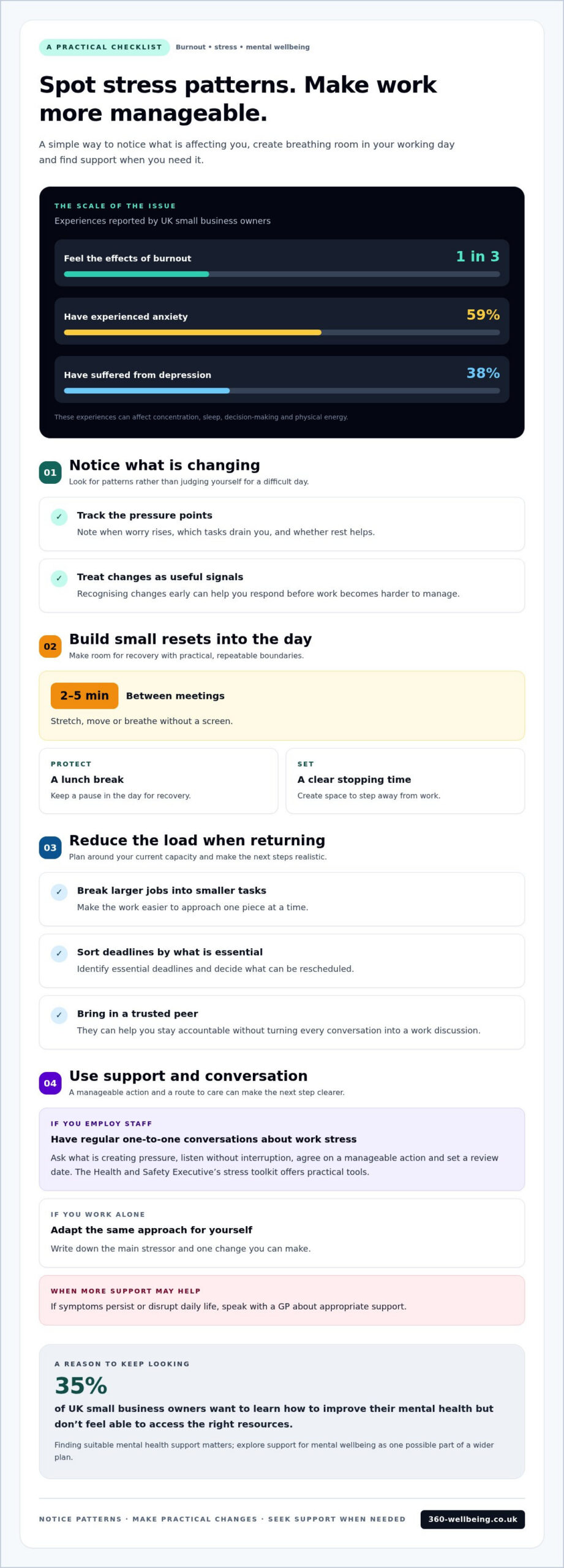
Self-employment can blur the boundary between earning a living and taking time to recover. One in three small business owners feel the effects of burnout; 59% have experienced anxiety, and 38% have suffered from depression. These experiences can affect concentration, sleep, decision-making and physical energy. Recognising changes early can help you respond before work becomes harder to manage.
Look for patterns rather than judging yourself for a difficult day. Note when worry rises, which tasks drain you, and whether rest helps. For a practical reset, leave 2-5 minutes between meetings to stretch, move or breathe without a screen. Protecting a lunch break and setting a clear stopping time can also create space for recovery. If symptoms persist or disrupt daily life, speak with a GP about appropriate support.
The Health and Safety Executive’s stress toolkit offers practical tools you can use quickly. If you employ staff, follow its advice on regular one-to-one conversations about work-related stress. Ask what is creating pressure, listen without interruption, and agree on a manageable action and a review date. If you work alone, adapt the approach by writing down the main stressor and one change you can make.
Returning to work after poor mental health can feel difficult, so plan a gradual, realistic routine around your current capacity. Break larger jobs into smaller tasks, identify essential deadlines, and decide what can be rescheduled. A trusted peer can help you stay accountable without turning every conversation into a work discussion. Since 35% of UK small business owners want to learn how to improve their mental health but don’t feel able to access the right resources, finding suitable mental health support matters. Explore support for mental wellbeing as one possible part of a wider plan.
Emotional and social self-care
When you work alone, regular social contact can take more effort, so schedule it. Arrange a weekly conversation with a peer, former colleague or friend that isn’t focused on finding clients. A coffee or short call can create space to talk about something beyond the next deadline.
Use a simple personal toolkit to notice what affects your mood. At the end of each working day, record one manageable moment, one source of tension and one thing you need tomorrow. This check-in can reveal patterns, such as client calls leaving you drained or time outdoors helping you reset. Health and wellbeing support for self-employed individuals can start with noticing these patterns and choosing a realistic response.
Set a boundary that protects time away from work. For example, choose a regular finish time, silence business notifications afterwards and keep one meal free from screens. If a client requests work outside your availability, offer a clear alternative deadline. These conversations can make expectations easier to manage while preserving time for family, friends and rest.
Social connection and physical activity can support a steadier routine. UK Chief Medical Officers recommend 150 minutes of moderate-intensity activity per week; walking with a friend can combine movement with conversation. Choose an activity that fits your schedule, such as a lunchtime walk or a regular class, rather than building a plan around an unrealistic routine.
For broader health and wellbeing support for self-employed individuals, identify which kind of help would make the biggest difference: peer connection, practical advice or professional care. If you employ workers, make regular workplace wellbeing conversations part of your routine and use the Health and Safety Executive’s toolkit to guide discussions about work-related stress. A government resource can help, but listening and following through on agreed actions make support meaningful.
Employee wellbeing programmes
A wellbeing programme can turn good intentions into practical support for workers. For a business owner, it might combine clear workload expectations, regular check-ins and routes to confidential help. If you work alone, apply the same structure to yourself: review your workload, physical health and emotional strain during a regular weekly check-in.
Start with the pressures affecting your workplace. List common problems, such as unpredictable deadlines, isolation or difficulty switching off, then choose a response for each. A workload review could identify tasks to delegate or reschedule. Regular conversations can help employees raise concerns early, while a confidential support service gives them another way to seek help.
For businesses with employees, the Health and Safety Executive toolkit offers practical tools for discussing work-related stress. Employers have a legal duty to protect employees from work-related stress by carrying out a risk assessment and acting on it. Use the assessment to identify work pressures, consider who may be affected and record practical changes. Review those changes with workers rather than treating the document as a one-off exercise.
A toolkit can also make everyday wellbeing easier to practise. One available programme includes a free, simple and confidential mobile app intended to encourage employees to look after their wellbeing. Free training and support are also available to businesses seeking to improve workplace wellbeing for employees. Choose resources that fit how your business works, then explain clearly what each offers and how workers can access it.
Keep the programme manageable: assign responsibility, communicate support options, and revisit them as work changes. A sole trader can apply the same approach without creating a formal staff scheme, using calendar reminders to review workload and personal wellbeing. For a structured way to explore workplace wellbeing support, review wellbeing programme options.
360 Wellbeing: 24/7 Virtual GP
360 Wellbeing brings several types of health support together for self-employed people and small businesses. Its 24/7 Virtual GP gives you access to a UK-registered GP when you need to discuss a health concern. Mental Health Support can help when emotional wellbeing needs attention, while Physiotherapy addresses physical health needs. 360 Rewards adds access to a discount marketplace.
A mix of support options can be useful when working for yourself makes it harder to fit care around a busy schedule. Consider what suits your current need, whether that’s speaking with a GP, accessing mental health support or seeking physiotherapy.
For information about these wellbeing resources, visit 360-wellbeing.co.uk.
Make wellbeing part of how you work
Your health deserves a place in your business plans, not just attention when work becomes difficult. Make health and wellbeing support for self-employed individuals part of your routine by choosing one small, sustainable action, such as setting a clear finish time or arranging a regular check-in with someone you trust. A consistent step can make it easier to notice what is working and where you need more support.
Think about what would make your working life more manageable now. You might want to discuss a health concern, find support for your mental wellbeing or explore options that suit your circumstances. Take the next step at your own pace and seek help before a challenge feels overwhelming.
Contact 360 Wellbeing for support and explore a considered next step for your wellbeing. Looking after yourself is part of building a working life that can last.
Frequently Asked Questions
Are small business owners at risk of burnout?
Yes, running a business can increase the risk of burnout, especially when work and personal time overlap. A sole trader may feel unable to pause during busy periods because clients rely on them. Watch for changes such as persistent exhaustion, irritability or difficulty making routine decisions. Treat these as prompts to review your workload and seek support, not as a personal failing.
What needs to be done to help small business owners’ mental wellbeing?
Make support practical, accessible and part of ordinary business planning. Set realistic deadlines, build recovery time between demanding projects and create a way to discuss concerns without judgement. If you employ people, ask focused questions about workload and what would help, then agree on an action and follow-up. As a business owner, identify who you can turn to when a problem feels difficult to manage alone.
What would make care access better for self-employed people?
Flexible access can help people fit care around client commitments, while clear explanations of eligibility make support easier to navigate. Remote appointments, straightforward booking and privacy-conscious options can also reduce practical barriers. A joined-up approach considers mental and physical health together, rather than treating work stress, pain or low mood as unrelated issues. Keep a short note of symptoms and questions to make appointments more focused.
What free or low-cost mental health support is available for freelancers and sole traders?
Free workplace wellbeing training and support are available to businesses, and practical tools can help identify work pressures. The Access to Work Mental Health Support Service, funded by the Department for Work and Pensions, may help eligible people manage mental health at work. Check whether your circumstances fit the scheme’s criteria, and use a GP appointment to discuss care options that suit your needs.
What practical steps can self-employed people take to prevent burnout and protect their wellbeing?
Before accepting a project, compare its deadline with existing commitments and decide what can realistically fit. Keep a simple weekly record of workload, energy and sleep, then use it to spot patterns. Set aside time for essential business administration instead of letting it spill into every evening. If strain continues, tell someone you trust what has changed and identify one specific adjustment to try.