
A benefits scheme can be affordable yet still miss the mark if it does not reflect what employees need. Knowing how to implement a new employee benefits scheme means choosing a balanced mix of support, setting a sustainable budget and making benefits easy to understand and use. In the UK, this can include health and wellbeing support alongside practical financial and workplace benefits.
It is understandable to want benefits that support staff without creating costs the business cannot sustain. Start by listening to employees and identifying your organisation’s priorities, then assess each option for cost, value and ease of access.
This guide explains what an employee benefits scheme can include, how to select options that fit your people and budget, and how to communicate and review the scheme after launch. It also covers core UK employer requirements, helping you distinguish between benefits you choose to offer and those you are legally required to provide.
Key Takeaways
- Understand how a benefits scheme can bring health, wellbeing and practical workplace support together.
- Use staff feedback and business priorities to shape a balanced benefits offer that fits your budget.
- Make benefits easier to use with clear communication and well-prepared managers and HR staff.
- Separate optional perks from employer obligations, including workplace pension duties and Statutory Sick Pay.
1. What is an employee benefits scheme in the UK?
An employee benefits scheme is the organised package of rewards and support offered alongside pay. It can combine workplace pension provision, wellbeing support, leave arrangements and practical benefits. A provider helps an employer shape the programme around staff needs, business priorities and available resources. The aim is a relevant offer employees understand and can use, not simply a longer list of perks.
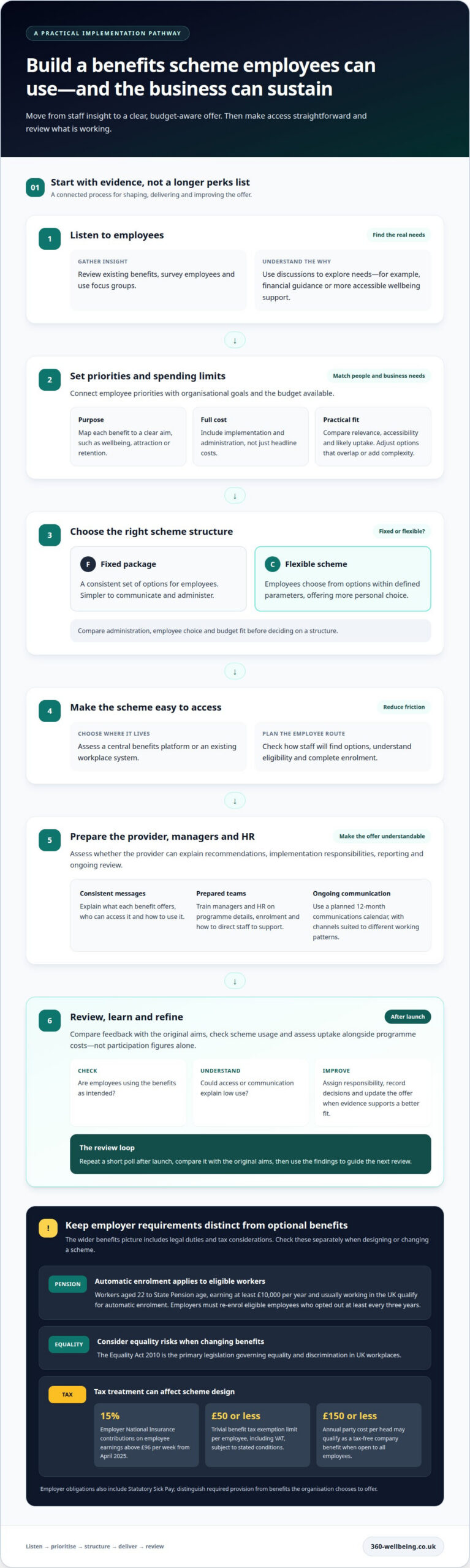
To develop a scheme, review existing benefits, survey employees and gather feedback through focus groups. Surveys show which options staff value; discussions can explain why, for example, whether employees need financial guidance or more accessible wellbeing support. After launch, repeat a short poll, compare responses with the original aims and identify where engagement needs attention. Regular reviews help keep the programme aligned with changing employee needs and business goals.
Workplace pension auto-enrolment remains a separate employer responsibility within the wider benefits picture. Workers aged 22 to State Pension age who earn at least £10,000 per year and usually work in the UK qualify for automatic enrolment. Employers must re-enrol eligible employees who opted out at least every three years, according to The Pensions Regulator. When changing benefits, employers should also consider equality risks: the Equality Act 2010 is the primary legislation governing equality and discrimination in UK workplaces, according to UK Parliament.
Tax treatment can affect the scheme’s design. HM Revenue & Customs says UK employer National Insurance contributions are 15% on employee earnings above £96 per week from April 2025. HM Revenue & Customs also allows a trivial benefit tax exemption when the cost is £50 or less per employee, including VAT, subject to stated conditions. It lists annual parties costing £150 or less per head and open to all employees among tax-free company benefits.
After launch, assess performance against the original objectives, staff feedback and scheme usage. If employees rarely use a benefit intended to support wellbeing, for example, feedback can reveal whether access or communication needs improvement. Review uptake alongside programme costs to judge return on investment, rather than relying on participation figures alone. Assign responsibility for reviewing results, recording decisions and updating the offer when evidence points to a better fit.
2. Choosing benefits to suit employees and budgets
Start by connecting employee priorities with the organisation’s goals and spending limits. Map each proposed benefit to a clear purpose, such as supporting wellbeing, helping attract staff or strengthening retention. Include full cost implications, including implementation and administration, rather than considering headline costs alone. This makes it easier to prioritise options with practical value for the workforce.
To decide how to implement a new employee benefits scheme, compare options by relevance, accessibility and likely uptake. A workforce with varied personal circumstances may value a choice of wellbeing and practical support, while a smaller team may prefer a focused package that is straightforward to explain. Assess the package against the employer’s aims, then adjust it if options overlap, add complexity or miss a priority.
Flexible and fixed schemes suit different needs. A fixed benefits package gives employees a consistent set of options, making it simpler to communicate and administer. A flexible scheme lets employees choose from options within defined parameters, offering more personal choice. A provider can compare administration, employee choice and budget fit before recommending a structure. This helps employers understand how to implement a new employee benefits scheme without creating unnecessary complexity.
Hosting is another practical decision. Assess whether a central benefits platform or an existing workplace system best suits administration and employee access. Consider how staff will find options, understand eligibility and complete enrolment. A clear, accessible route reduces friction and helps employees engage with the package.
Assess a provider by its ability to explain recommendations, implementation responsibilities, reporting and ongoing review. Ask how it will support the organisation’s objectives and adapt the scheme as needs change. Employers considering wellbeing as part of their package can explore employee benefits support as one element of a broader selection process.
3. Communicating benefits and training managers and HR staff
Turn the benefits package into clear, consistent messages for the whole workforce. Explain what each benefit offers, who can access it and how to use it. A launch plan should also clarify how benefits sit alongside salary and pension information, so employees can understand their overall reward. Clear wording helps staff make informed choices without confusing wellbeing support with contractual pay.
Presentation matters. A provider can create a simple scheme identity, then use the same names, descriptions and instructions across enrolment materials. For example, an employee should see the same eligibility details in a briefing pack and on the benefits platform. A planned 12-month communications calendar helps keep information visible after launch, rather than treating one announcement as the whole campaign.
Choose communication channels that suit different working patterns. Options include email announcements, posters, desk drops, flyers, briefing packs or face-to-face sessions. A roadshow or manager-led training before launch gives employees a chance to learn how access works. A platform can centralise details for staff who prefer to review options independently, while a short video can introduce key steps in an accessible format.
Train managers and HR staff before employees enrol. Walk them through programme details, enrolment procedures and how to direct staff towards support. Scenario-based practice can help, such as explaining where an employee can find help with financial concerns or mental wellbeing. Staff should know which questions they can answer and where to direct more sensitive queries.
Time and pace launch communications carefully. Teaser emails or posters can build awareness before enrolment opens; follow-up messages can explain next steps and remind staff how to access benefits. One in ten employees have not tried to use benefits they already have, so make utilisation easy to monitor and address confusion early. A clear feedback route also helps identify barriers that could affect engagement, workforce balance and productivity.
4. What employee benefits are legally required for UK employers?
UK employers should distinguish legal obligations from optional benefits before launching or changing a scheme. The Pensions Act 2008 requires employers to provide a workplace pension scheme and contribute to it. Automatic-enrolment rules determine which workers qualify, based on age, earnings and whether they usually work in the UK. A new package should sit alongside these duties, not replace them.
Statutory Sick Pay is another employment entitlement. According to the Department for Work and Pensions, you can get up to £123.25 per week Statutory Sick Pay (SSP) if you’re too ill to work. Employers should account for SSP processes separately from enhanced sick pay or other voluntary wellbeing benefits. Clear policy wording helps employees understand which support is statutory and which comes from the employer’s scheme.
Tax and payroll treatment also matter. Cash and cash-equivalent benefits are treated as earnings and attract income tax and National Insurance. Taxable benefits in kind may need reporting on a P11D or through payroll. Employers should identify each benefit’s treatment before communicating its value, then ensure payroll records reflect the arrangement. A provider can help organise scheme information, but it doesn’t remove the employer’s legal responsibility.
Changing eligibility or access can create equality and data-handling risks. The Equality Act 2010 is the primary legislation governing equality and discrimination in UK workplaces, according to UK Parliament. Employers should assess whether scheme rules treat staff fairly and communicate any changes clearly. Benefits administration also involves employee information, so data protection requirements belong in governance planning, alongside accurate records and defined responsibilities.
Before launch, employers can document required benefits, payroll treatment, eligibility rules and who owns each decision. This creates a clear distinction between statutory provision and additional rewards, while helping HR and managers answer staff questions consistently. A provider can support scheme design and communication, while the employer remains accountable for meeting legal duties. Explore employee benefits support as you plan your programme.
360 Wellbeing: Employee Assistance Programme (EAP)
360 Wellbeing’s Employee Assistance Programme (EAP) can form part of a benefits scheme when employees need practical, personal support. It sits alongside 24/7 Virtual GP access and Mental Health Support, helping employers include health and wellbeing in their wider offer. 360 Rewards adds another way to support employees through workplace benefits.
A well-chosen package can address different needs, from health support to rewards. These options may be relevant when staff feedback identifies wellbeing or practical support as a priority. A considered mix can make the scheme more useful to employees while keeping its purpose clear.
If you’re considering wellbeing support as part of your employee benefits scheme, contact 360 Wellbeing to discuss your needs.
Build a benefits scheme that can grow with your people
A benefits programme is not a one-off decision. Treat it as an evolving part of your workplace, ready to respond as employee priorities and business needs change. Before launch, agree who will own future decisions and what evidence will guide them, such as staff feedback, engagement and whether the scheme still supports its original purpose.
This forward-looking approach can keep the offer relevant without adding benefits just for variety. It also gives managers a clear way to raise emerging needs and helps the organisation make considered adjustments. Knowing how to implement a new employee benefits scheme means planning for an ongoing conversation, not just choosing a package and announcing it.
If you’re ready to explore a scheme shaped around your workforce, contact 360 Wellbeing to discuss the next step. A thoughtful, sustainable benefits approach can help make workplace support part of how your organisation grows.
Frequently Asked Questions
What is an employee benefits scheme in the UK?
An employee benefits scheme is an organised set of non-salary benefits and support an employer makes available to staff. For example, an employee might have access to workplace pension contributions, wellbeing resources and rewards through one programme. The mix depends on the employer’s objectives and workforce. Staff should understand what each benefit provides and how it fits alongside their pay.
What are the advantages?
A well-matched scheme can make an employer’s offer more attractive to prospective staff and support retention by recognising needs beyond salary. It can also give employees clearer routes to practical or wellbeing support. An employee balancing work with personal pressures, for example, may value support available through work. Benefits are most useful when staff can see their relevance and know how to access them.
What steps does a provider take to design and implement an employee benefits scheme in the UK?
A provider typically establishes the employer’s objectives, reviews the workforce’s priorities and proposes suitable options. It then helps organise eligibility details, enrolment information and launch communications. Before rollout, the provider can test the employee journey, such as whether instructions explain how to register and where to find each benefit. After launch, it can review participation and feedback to identify practical changes.
What are the UK tax and National Insurance rules for employee benefits and salary sacrifice?
Tax and National Insurance treatment depends on the type of benefit and how it is provided. Salary sacrifice reduces gross salary and can reduce National Insurance contributions for employers and employees. Restrictions introduced after 2017 mean many traditional benefits no longer receive salary-sacrifice tax advantages. Pension and electric vehicle schemes are examples where possible tax advantages may apply, so assess the specific arrangement and its payroll treatment.
How much does it cost to provide common employee benefits in the UK?
There is no single cost for a benefits scheme. The budget depends on the selected benefits, the number of employees included, implementation and administration, and any insurance premiums. Some options involve ongoing employer spending, while employees fund voluntary benefits partly or entirely. Set out these cost components to compare packages against the employer’s priorities and available budget.
How can a provider help employers choose benefits based on employee needs and budget?
Turn staff preferences and business priorities into a structured comparison of benefit options. Show which choices address key needs, explain their administration and cost implications, and identify where options overlap. If employees value different forms of support, for example, compare a fixed offer with a flexible choice of benefits, then recommend an arrangement that fits the budget.