Benefits only help when employees can find them, understand them and see why they matter. To encourage uptake of company benefits, make information easy to access, repeat it through the channels employees use and tailor messages to different roles and needs. This is especially important for frontline and deskless teams, who may not regularly check email or an intranet.
A benefits package can seem as though it should speak for itself, but employees may miss out when details are hard to find or feel irrelevant. This guide explains how to reach people across different workplaces, describe benefits in clear, practical language and use a central hub and personalisation to make the next step easier. It also shows how feedback and usage patterns can help refine your approach.
Key Takeaways
- Reach frontline and deskless teams through the communication channels they use at work, and repeat messages throughout the year.
- Use employee feedback and benefit-use patterns to identify what matters to different workforce groups and where information may be missing.
- Make benefits easier to understand with a central hub that organises clear information, guides and next steps in one place.
- Personalise communications around employees’ needs and life stages, making relevant support easier to recognise and access.
1. Using multiple communication channels
Reach employees where they work, not just through email. Combine break-room posters with QR codes, payslip inserts, team briefings and mobile-friendly updates. A deskless employee, for example, can scan a poster during a break and save the details for later. Repeat key messages across channels so that a missed email does not mean missed awareness.
Coordinate benefits communication with HR milestones. Introduce options during recruitment and induction, then revisit relevant benefits at appraisals or a benefits fair. Follow an in-person presentation with a digital guide employees can review in their own time. Wellbeing champions can also answer common questions and point staff towards available support.
Work with marketing and internal communications to give benefits updates a consistent identity. A recognisable name, visual style and plain-language format help employees distinguish them from routine company messages. Plan a calendar around timely events, such as sharing childcare information before school holidays or linking wellbeing content to an awareness week. Ask employees which channels and topics they find useful.
For UK benefits communication, explain the tax treatment of each benefit and distinguish optional rewards from workplace pension auto-enrolment. Make clear what employees need to do, what is optional and any relevant payroll implications. Tax and pension treatment depends on the benefit and scheme, so avoid suggesting one rule applies to every workplace benefit.
Managers and HR teams can encourage uptake without pressure by presenting options neutrally. Explain who may find each benefit useful, how to access it and where to ask questions. For example, provide a private way to learn about mental health support without asking employees to disclose personal circumstances.
Incentives can create pressure or obscure important information. The Financial Conduct Authority says communications encouraging employees to join a workplace savings scheme could constitute a financial promotion. Keep messages factual, make participation voluntary where applicable, and seek appropriate review before promoting savings schemes.
2. What does low benefits uptake cost?
Low use may mean a benefits package does not address workforce priorities, or that employees do not understand what is available. It can also make it harder for leaders to tell whether a benefit supports wellbeing, retention or recruitment. Treat low uptake as a reason to find out what employees value, not as proof that a benefit has failed.
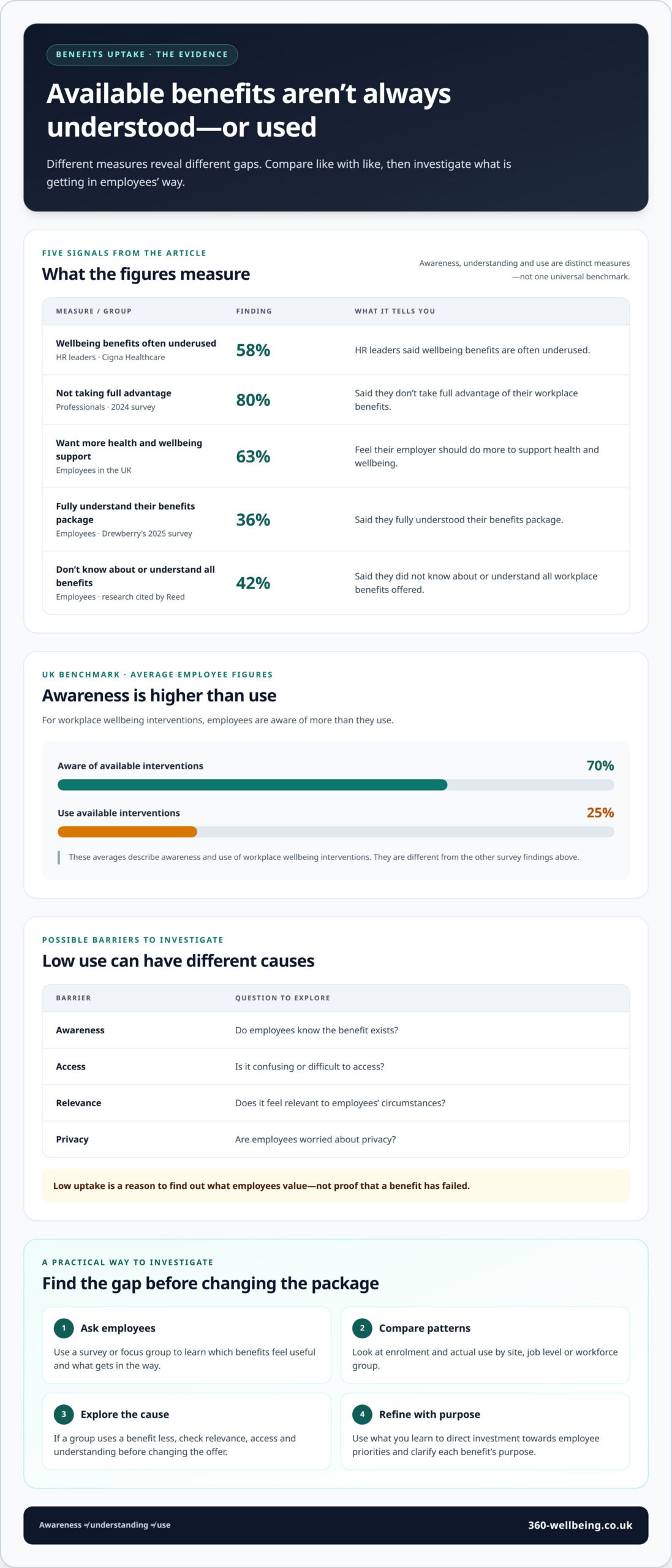
The gap between availability and use can be substantial. Cigna Healthcare found that 58% of HR leaders said wellbeing benefits are often underused. A 2024 survey found that 80% of professionals don’t take full advantage of their workplace benefits. In the UK, 63% of employees feel their employer should do more to support health and wellbeing. These figures point to a practical risk: a package may not meet its intended purpose if employees can’t use or value it.
Reasons vary across a workforce. Some employees may not know a benefit exists; others may find access confusing, see little relevance to their circumstances, or worry about privacy. A parent balancing school schedules may value family support, while a new starter may prioritise help with settling into work. Segmenting by role, location, working pattern and life stage can make communications and benefit choices more relevant without assuming everyone in a group has identical needs.
UK benchmarks offer context, but they measure different things. On average, employees are aware of 70% of workplace wellbeing interventions available to them, but use only 25%. In Drewberry’s 2025 survey, 36% of employees said they fully understood their benefits package. Understanding, awareness and use are distinct measures, so leaders should compare like with like rather than treating one figure as a universal target.
Start with an employee survey or focus group to find out which benefits feel useful and what gets in the way. Then compare enrolment and actual use by site, job level or workforce group. If one group uses a benefit less, explore whether the issue is relevance, access or understanding before changing the package. This helps direct investment towards employee priorities and gives leaders a clearer view of each benefit’s purpose.
3. Creating a central benefits information hub
Give employees one reliable place to find benefits information, such as an intranet or employee platform. Group benefits under clear categories, such as health, finance and family, and place user guides, booking forms and access instructions alongside each option. Employees should be able to move from understanding a benefit to taking the next step without searching elsewhere.
Clarity matters because employees may not know what’s available. Research cited by Reed found that 42% of employees said they did not know about or understand all the workplace benefits offered to them. Drewberry’s 2025 survey found that 36% fully understood their benefits package. These findings measure understanding differently, but both point to the value of straightforward, accessible information.
Use plain English to explain what each benefit does, who it may help and how to use it. Replace internal jargon with familiar language. For example, describe the support an Employee Assistance Programme provides and how employees can access it. Start with a short summary, then offer a guide for anyone who wants more detail.
Explain value with practical examples, not abstract labels. Rather than simply listing “wellbeing support”, describe situations in which a service may help and how to access it. Keep eligibility, limits and relevant conditions close to the explanation. Employees can then understand the offer without searching separate policy documents or guessing what applies.
Make the benefits hub work for different roles and schedules. Ensure deskless employees can access it on a phone, and offer printable guides where digital access is limited. Assign someone to review links, forms and descriptions when benefits change. Ask a new starter to find a benefit and explain the next step. If it takes several searches, simplify the page or wording.
4. Using benefits platforms to support personalisation
A benefits platform can turn a broad package into relevant choices for each employee. Use preference feedback to organise information around needs, then show what’s already available. The UK Government advises employers to communicate existing rewards after learning employees’ preferences. For example, someone interested in financial wellbeing could see relevant support first, rather than searching through unrelated options. The question of how to encourage uptake of company benefits starts with making useful choices easier to recognise.
Build a benefits roadmap around life stages, not assumptions about individuals. Starting a family, buying a home or planning for retirement can make different benefits more relevant. Use these milestones to point employees towards options, while leaving them to decide what fits. Explain each benefit’s purpose and next step without inferring personal circumstances from age or job title.
Personalisation also depends on access. A platform or app can bring benefits information together, while single sign-on can reduce the need to remember multiple passwords. For a frontline employee using a phone between shifts, a clear route to wellbeing support may be easier than navigating several systems. Keep the same information available to employees who prefer a desktop or printed guide.
Use platform insights to improve engagement, not just count visits. A portal login shows that someone opened the platform, but not whether they used a benefit. Review enrolment and actual use alongside employee feedback. If employees view a salary-related reward but do not proceed, simplify the explanation or clarify the next action. These insights can help employers encourage uptake of company benefits without assuming one message suits everyone.
Personalised videos or app messages can highlight relevant benefits, but keep choices voluntary and descriptions balanced. A short message about financial support, for example, should explain what it offers and how to find details without implying that every employee needs it. Tailored communication works best when employees control their choices and can explore the full range of support.
Explore a benefits platform that can support more personalised employee wellbeing.
Explore personalised wellbeing support
360 Wellbeing
360 Wellbeing brings employee support together across health, wellbeing and rewards, helping organisations offer relevant options to different teams. Its 24/7 Virtual GP, Mental Health Support, Physiotherapy and 360 Rewards can support varied employee needs within a broader benefits approach. Clear communication and easy-to-find information still matter: employees need to understand what each benefit offers and how to access it.
For organisations reviewing how to make benefits more visible and useful, 360 Wellbeing can be a practical next step. Explore how its wellbeing and rewards support could fit your workforce and existing communications.
Contact 360 Wellbeing to discuss your employee benefits needs.
Make the next step easier for every employee
Uptake grows when employees can connect a benefit with a real need, understand their options and choose how to engage. Keep listening after launch: employee questions and usage patterns can help shape clearer, more relevant communication over time. This ongoing attention makes benefits part of a supportive workplace, rather than a message employees see once and forget.
If you’re considering how to encourage uptake of company benefits, look at whether the support on offer reflects different aspects of employee wellbeing. 360 Wellbeing offers a 24/7 Virtual GP, Mental Health Support and 360 Rewards, bringing health and rewards options into the conversation about workforce needs.
Whether you’re reviewing an existing package or shaping a new approach, a practical next step is to explore which support could fit your organisation and how to make it easier for employees to understand. Contact 360 Wellbeing to explore options and take a considered step towards a more supportive employee experience.
Frequently Asked Questions
How do I reach frontline and deskless employees?
Build benefit reminders into routines frontline employees already follow. A supervisor can use a brief shift handover to explain where staff can get help, while payslip inserts can reach employees without regular work email. Give managers a concise script and a private way to direct questions, so nobody needs to discuss personal circumstances in front of colleagues.
What does low benefits uptake cost?
Low uptake can reduce the value employees get from a benefits package and make it harder to achieve its intended purpose. Staff may miss support that could address a need, while employers may keep investing in options that do not fit. Review the benefit’s aim alongside employee feedback before deciding whether to improve access, communication or the offer itself.
How can companies tailor benefits to different employee needs and life stages?
Offer meaningful choices without assuming someone’s needs from their age, family status or job title. Ask about preferences through a confidential survey or discussion, then use broad themes to shape communications. For example, present family, financial and health support as options employees can explore, rather than targeting individuals based on personal details they have not chosen to share.
What is the best time and frequency to promote employee benefits?
Set a communication rhythm, then add reminders when a benefit becomes especially relevant or changes. A complex benefit may need an explanation followed by a practical reminder, while a straightforward option may need less detail. Keep messages useful rather than repetitive, and remove outdated notices when eligibility, access steps or the benefit changes.
How can employers make benefits easier to find, compare and enrol in?
Present each benefit with the same basic details: what it offers, who can use it, any important conditions and how to enrol. Consistent information helps employees compare options without decoding different formats. If enrolment involves several steps, show them in order and explain what happens after submission, such as where confirmation will appear.
How can companies measure employee benefits awareness, uptake and value?
Measure awareness, uptake and outcomes separately. Ask employees what they know, review enrolment or usage records, then assess whether each benefit is meeting its purpose. A benefit designed to support wellbeing, for example, needs an outcome measure related to wellbeing, not just a count of sign-ins. Review results alongside employee feedback to understand what the figures may indicate.