Anonymised EAP data can help HR teams turn patterns in support use into practical decisions. Using anonymised EAP data to inform HR strategy means looking beyond overall uptake to understand which services employees access and what broad themes emerge. Used thoughtfully, these insights can guide investment, manager training and workplace policies without identifying individual callers.
It’s understandable to want clearer evidence before deciding where wellbeing resources can make the greatest difference. Usage figures are only part of the picture: shifts in support needs and recurring work-related themes can also indicate where earlier action may help.
This article explains how to interpret EAP reporting, review investment and connect emerging trends with manager training and policy updates. It also covers why reporting must remain anonymous, so your organisation can learn from patterns while respecting employees’ privacy.
Key Takeaways
- Read EAP uptake alongside the types of support employees use to build a more useful picture than a single utilisation figure can provide.
- Use reporting patterns to assess whether wellbeing investment is reaching employee needs and where support may need greater visibility.
- Recurring themes such as workplace conflict can help shape focused manager training and practical policy reviews.
- Keep insights at an anonymised, group level so HR can respond to trends while respecting employees’ privacy.
1. Interpreting usage levels and types of support accessed
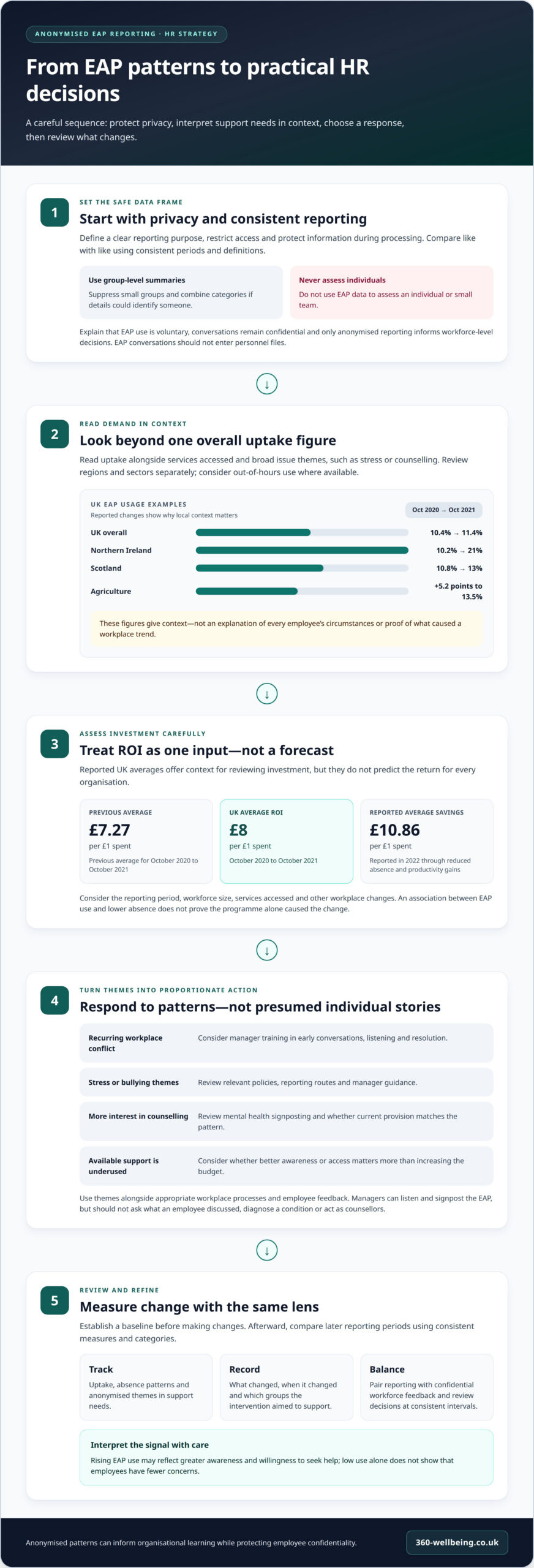
Start with uptake, then examine which services employees access and the broad themes reported. UK EAP usage rose from 10.4 per cent to 11.4 per cent from October 2020 to October 2021. That change gives context, but your workforce’s own reporting is more useful for planning support and understanding possible effects on productivity.
Compare like with like: use consistent reporting periods and definitions, then review regions and sectors separately. Northern Ireland’s usage rose from 10.2 per cent to 21 per cent, while Scotland’s rose from 10.8 per cent to 13 per cent. Agriculture saw an increase of 5.2 percentage points to 13.5 per cent. These differences show why a national figure alone may not reflect local employee assistance needs.
An EAP can provide anonymised reporting on programme use, services accessed and broad issue types, such as stress or counselling. Aggregated patterns help identify demand and inform support planning, but they don’t explain every employee’s circumstances or prove what caused a workplace trend.
Some UK EAPs offer a helpline available 24 hours a day, seven days a week. Reviewing out-of-hours usage alongside service types can show when employees seek support, without revealing individual conversations.
For UK GDPR and Data Protection Act 2018 governance, set a clear reporting purpose, restrict access and protect information during processing. Explain to employees how anonymised summaries inform HR decisions, that EAP use is voluntary, and that using or not using the service won’t adversely affect job security or development. EAP conversations should remain confidential, not enter personnel files, and only anonymised reporting should inform workforce-level decisions.
No single reporting threshold suits every organisation. Suppress small groups and combine categories where location, role, timing or issue details could identify someone. Never use EAP data to assess an individual or small team. That risks re-identification, undermines trust and can turn seeking support into an unfair employment judgement. Clarify what reporting is available and how uptake is monitored.
2. Using EAP reporting to guide investment
EAP reporting can help leaders assess whether spending aligns with employee needs. In the UK, employers saw an average return on investment of £8 for every £1 spent from October 2020 to October 2021. The previous average for that period was £7.27 per £1, while reported average savings in 2022 reached £10.86 per £1 spent through reduced absence and productivity gains.
These figures offer context, not a forecast for every organisation. An association between EAP use and lower absence doesn’t prove the programme alone caused the change. Consider the reporting period, workforce size, support accessed and other workplace changes before using ROI to set budgets.
To evaluate whether EAP-informed interventions improve employee wellbeing, establish a baseline before making changes. Then compare later reporting periods using consistent measures, such as uptake, absence patterns and anonymised themes in support needs. Pair the figures with confidential workforce feedback, and record what changed, when it changed and which groups the intervention aimed to support.
Use the results to guide the next investment decision. If reports show demand for counselling or clinical sessions, review whether current provision matches that pattern. If employees aren’t using available support, improving awareness or access may matter more than increasing the budget. Provider reports can also help distinguish service use from broader workforce outcomes.
Keep your interpretation balanced. A rise in EAP use may indicate greater awareness and willingness to seek help, rather than worsening wellbeing. Low use alone doesn’t show that employees have fewer concerns. Treat ROI as one input alongside service access, employee feedback and absence trends, then review the decision at consistent intervals.
For a practical next step, consider how confidential EAP support can fit into a wider review of employee wellbeing investment.
3. Using data to guide management training and workplace policies
Choose EAP reporting that shows broad issue themes, service use and changes across consistent periods. Ask how information is grouped and how reports are designed to avoid exposing individuals. For example, recurring references to workplace conflict may justify manager training, while increased interest in counselling may prompt a review of mental health signposting. Keep reporting focused on organisational learning, not individual monitoring.
Use themes to guide practical action. If anonymised reports flag stress or bullying, review relevant policies, reporting routes and manager guidance. Patterns involving conflict can point to training in early conversations, listening and resolution. These signals don’t establish what happened in a specific case, so consider them alongside appropriate workplace processes and employee feedback before changing policy. A proactive response should address conditions, not label employees.
Managers can encourage employees to contact the EAP directly when they raise personal or work-related concerns. Explain that support is voluntary and confidential, and don’t ask what an employee discussed. During a welfare check, listen, ask what workplace adjustments or support may help, and signpost the EAP. Managers shouldn’t try to diagnose a mental health condition or act as counsellors. Training can help them recognise concerns and respond consistently.
Use aggregated reporting alongside absence patterns to identify questions for further review, not to draw conclusions about individuals. For example, a recurring stress theme alongside absence concerns may lead HR to review workload expectations, manager check-ins and policy clarity. Set a review point after making changes, then compare later reports using the same categories and period. This helps leaders assess whether the response remains relevant without treating EAP use as proof of cause or performance.
4. Anonymised EAP data and trend insights for HR strategy
Anonymised EAP analytics can show broad patterns without identifying who called or why. This helps organisations understand themes affecting employees while protecting private conversations. To make reporting useful, compare consistent periods and categories, then look for changes in mental health concerns, personal circumstances or workplace issues. A trend is a prompt for thoughtful review, not a complete explanation of employee experience.
For example, 21% of EAP calls during a 12-month period concerned stress, anxiety or depression. That figure describes calls, not the proportion of the workforce experiencing those concerns. HR can use the theme to consider whether mental health information is easy to find, whether managers know how to signpost support, and whether workplace pressures deserve closer attention. Immediate action should focus on access and conditions, not identifying callers.
Patterns can also inform policy reviews. If anonymised reporting shows recurring addiction-related concerns, an organisation could review whether its drug and alcohol policy explains available support and how to seek help. Where reports distinguish personal circumstances from work-related issues, HR can consider whether different responses are appropriate. Neither theme proves the cause of an issue or identifies individual programme members’ needs.
Build a simple learning cycle around each trend: record the broad theme, agree on a practical response, then review later reporting for relevant changes. Consider engagement alongside service use, staff feedback and workplace context. For instance, clearer signposting may improve awareness without changing the underlying number of calls. Using anonymised EAP data to inform HR strategy works best when leaders treat trends as signals for supportive action, not measures of individual behaviour.
For employees whose reporting points towards mental health support, explore mental health support options as part of a considered wellbeing response.
360 Wellbeing
360 Wellbeing can help organisations turn wellbeing priorities into practical support for employees. When anonymised trends point to needs beyond policy or management training, its range includes Mental Health Support, a 24/7 Virtual GP, Physiotherapy and 360 Rewards. These options can contribute to a broader approach that recognises physical, mental and social wellbeing across the workforce.
Use reporting to identify themes, then consider which forms of support align with those needs. For example, a pattern of mental health concerns may inform how employees are signposted to support, while physical wellbeing needs may prompt consideration of physiotherapy. Keep individual EAP conversations confidential and use aggregate insights to guide organisation-wide decisions.
For a considered conversation about employee wellbeing support, contact 360 Wellbeing.
Turn insight into a thoughtful next step
Using anonymised EAP data to inform HR strategy is most valuable when insights lead to considered action, not assumptions about individuals. Choose a workplace response, make its purpose clear and keep employee trust central as your approach develops.
When planning the support behind that response, consider how different needs fit together. 360 Wellbeing offers Mental Health Support, a 24/7 Virtual GP and 360 Rewards. These options can sit within a wider employee wellbeing approach, alongside policies and management practices shaped by anonymised trends.
You don’t need to address every workforce concern at once. Start with a clear priority, consider what support could help and keep reviewing whether your approach remains relevant as needs change.
Contact 360 Wellbeing to discuss employee wellbeing support. A considered next step can help build a healthier, more supportive workplace.
Frequently Asked Questions
How can HR use EAP data to identify workforce wellbeing trends and inform strategy?
HR can use recurring anonymised themes to decide which workplace questions need closer attention. For example, repeated stress-related support use could prompt a review of workload practices across teams, alongside staff feedback. Treat the trend as a starting point for investigation, not a diagnosis of the organisation. Record the action taken and whether later reporting shows relevant changes.
How should organisations interpret EAP usage rates, presenting issues and outcome measures?
Interpret usage rates in context: confirm what counts as a user, which period the report covers and which employees can access the programme. Presenting issues describe reported support themes, not the prevalence of a condition across the workforce. Read outcome measures alongside their definitions and collection methods. A service-use count, for instance, isn’t evidence of improved wellbeing by itself.
How can HR combine EAP insights with absence, turnover and engagement data?
Bring the measures together at a broad organisational level and align their reporting periods as closely as possible. If absence rises while EAP reports show a related theme, HR can investigate relevant working conditions and gather staff feedback. Turnover and engagement may add context, but overlapping patterns don’t establish cause. Avoid matching records or comparing small groups where people could become identifiable.
How should employers assess EAP providers’ data reporting, security and analytics capabilities?
Ask providers which anonymised fields they report, how categories are defined and whether uptake can be monitored over consistent periods. Clarify how small groups and distinctive combinations of details are handled to reduce identification risk. Discuss how employee information is processed and protected, who can access reports, and whether analytics distinguish service activity from broader outcomes.
What minimum group sizes or reporting thresholds should be used for anonymised EAP reporting?
There is no single reporting threshold for every organisation. Suppress small groups and combine categories when details could identify someone.