A launch can reach every inbox and still fail to reach employees. A communication plan for a new wellbeing platform works best when each message connects a clear programme goal with an employee benefit, an appropriate channel and an easy next step. The aim is not just to announce what is available, but to help people see how the support could meet their needs and how to access it.
It is understandable to focus first on launch-day visibility. But employees work in different ways, have different communication preferences and may need different kinds of support. A single announcement is rarely enough to build lasting awareness.
This guide explains how to align communication objectives with wellbeing goals, choose channels for office-based, remote, hybrid and non-desk-based teams, and involve people who can make messages feel relevant. You will also learn how to build a practical communications calendar, reinforce key messages over time and make each next step clear. The result is a considered approach to introducing wellbeing support, with employee understanding and participation at its centre.
Key Takeaways
- Set communication objectives that support specific wellbeing programme goals, then decide how you’ll assess progress.
- Choose a mix of channels that fits how office-based, remote, hybrid and non-desk-based employees work.
- Involve trusted employee voices and leaders to make wellbeing messages feel relevant and invite useful feedback.
- Build a communications calendar that keeps support visible throughout the year without overwhelming employees.
1. Selecting channels for office-based, remote and hybrid workers
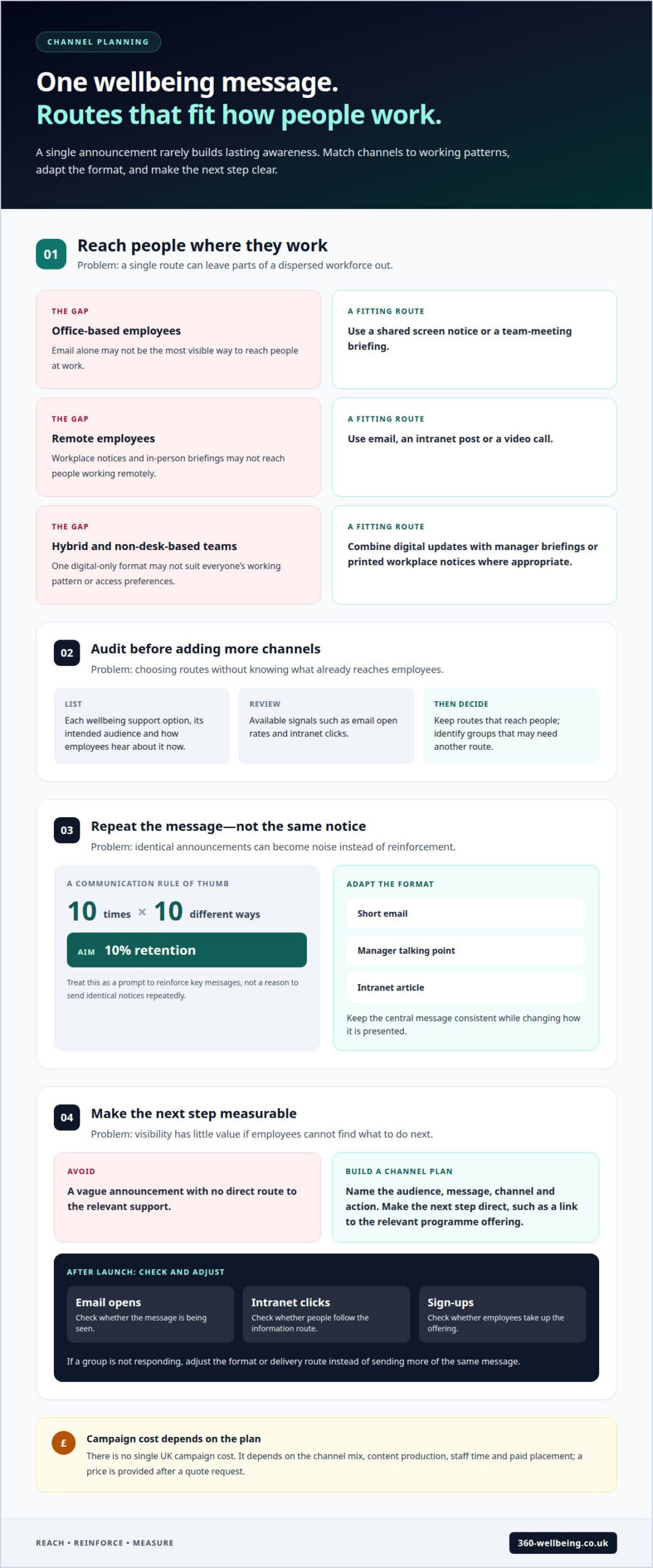
Start by auditing existing wellbeing offerings and communication channels. List each support option, its intended audience and how employees currently hear about it. Then review available data, such as email open rates and intranet clicks. This shows which channels already reach people and where you may need another route.
Map channels to working patterns, not just team names. Office-based staff might see a notice on a shared screen or hear a briefing in a team meeting. Remote employees may rely on email, an intranet post or a video call. For hybrid and non-desk-based teams, combine digital updates with manager briefings or printed workplace notices where appropriate. Make the next step direct, such as a link to the relevant programme offering.
Use more than one channel so employees with different technology skills and preferences can access the information. Keep the central message consistent, but adapt its format: a short email, a manager’s talking point and an intranet article can all explain the same support. A communication rule recommends saying something 10 times in 10 different ways, with the aim of helping people retain 10%. Treat this as a prompt to reinforce key messages, not to send identical notices repeatedly.
There is no single UK campaign cost: it depends on the channel mix, content production, staff time and paid placement, with a price provided after a quote request.
Create a channel plan that names each audience, message, channel and action. After launch, check engagement using measures such as email opens, intranet clicks and sign-ups. If a group is not responding, adjust the format or delivery route instead of sending more of the same message. This keeps channel choices practical and responsive across a dispersed workforce.
2. Engaging wellness champions, senior leaders and employee resource groups
Appoint wellbeing champions from different teams to make messages more relatable. Give each champion a concise briefing, key messages and answers to common questions. Senior leaders can explain why wellbeing matters to the organisation, while employee resource groups can highlight concerns their members want addressed. Agree who will share each message, through which channel and when.
For UK communications, keep promotional claims clear, accurate and supportable. Explain in plain language how employee information will be used, and protect access to sensitive health details. Build these safeguards into the campaign with input from those responsible for privacy and compliance.
Prepare ready-to-share materials that make action straightforward: a manager’s email, a short team-meeting script and a frequently asked questions document. Explain what support is available, who it may help and what to do next. For example, onboarding materials can explain how to access an Employee Assistance Programme, while a manager’s guide can introduce Mental Health Support. Revisit the information at key moments in the employee lifecycle, such as induction, role changes and return-to-work conversations. Keep the language consistent, but tailor examples to each moment.
Do not assume one format suits every employee. Ask about communication preferences through a short, confidential survey or feedback form, then compare responses with engagement data such as clicks, attendance and sign-ups. Invite comments after a campaign and explain how feedback will shape the next message. This helps distinguish low awareness from barriers such as unclear instructions or inconvenient timing.
Make participation easy for champions: provide approved copy, adaptable templates and a named contact for questions. Give them a simple way to share recurring feedback, without asking them to collect personal health details. For practical support employees can access, signpost mental health and employee assistance support within relevant messages.
3. Health and wellbeing communications calendar
Build a 12-month calendar around employee needs and programme priorities. Give each month or quarter a clear theme, then map messages, events and follow-up actions against it. A monthly focus keeps communications purposeful, while weekly touchpoints help maintain awareness between larger campaigns. Leave room to adapt themes when employee feedback or workplace priorities shift.
A typical launch sequence moves from preparation to announcement, practical guidance and ongoing reminders. Set the launch date once core messages, support routes and internal materials are ready, then schedule follow-up communications in the calendar. The timing depends on readiness, workforce patterns and how much explanation employees need.
For mental health communications, use clear, supportive language and explain how employees can access relevant help. May can provide a focus for Mental Health Awareness, while a weekly Wellbeing Wednesday can promote available support or an upcoming event. Make each message specific: state what the event covers, who it is for and how to take part. Do not present a campaign as a substitute for individual support.
Keep emergency alerts about health hazards separate from routine wellbeing promotion. Use the established workplace alert process, state the verified hazard, affected location and immediate action, then say where updates will appear. For example, an alert about a temporary workplace closure should prioritise practical instructions, not a general wellbeing campaign.
Reputational risks include overstating what a programme can do, using language that stigmatises employees or promoting support without clear access instructions. Protect trust by reviewing claims, checking every call to action and keeping messages respectful. If employees raise concerns, respond through a clear feedback route and update the calendar where appropriate.
Review each campaign after it ends: compare participation and feedback with its original objective. Use what you learn to shape the next theme, making communications more relevant and supporting the programme’s success over time.
4. Aligning communication objectives with well-being programme goals
Begin with the wellbeing outcome the programme is designed to support, then decide what communication can change. If the goal is greater awareness, measure whether employees understand what is available and how to access it. If the goal is increased use, track participation as well as awareness. This distinction connects communication activity to employee needs instead of treating message volume as success.
Healthwatch advises that communication objectives should be SMART: Specific, Measurable, Attainable, Relevant and Time-bound. Define the employee group, the change you want, how you will measure it and the deadline. A survey can assess awareness before and after a campaign. Keep questions clear and avoid collecting personal health details when measuring communication.
Choose measures that match the objective. Email opens can indicate that employees may have seen a message, but they do not by themselves show whether employees understood it. Pair channel data with relevant measures, such as attendance at an information session or engagement with an access route. According to Sequoia, 85% of companies with 500 or more employees measure programme success by participation and utilisation. Treat these measures as indicators, then interpret them alongside employee feedback and the programme’s intended outcomes.
The OASIS model offers a useful campaign structure: Objectives, Audience/Insight, Strategy/Ideas, Implementation, and Scoring/Evaluation. Use each stage to test the link between goal and message. Identify which employee groups need the information, choose messages that address their needs, then assess results against the original objective. If awareness rises but participation does not, revisit the call to action or access instructions before sending more messages.
Aligning objectives this way helps teams encourage meaningful engagement without overstating what a wellbeing programme can achieve. If an Employee Assistance Programme supports your goals, explore employee assistance support as part of your approach.
360 Wellbeing
360 Wellbeing brings together employee support that can sit behind a clear wellbeing communications plan. Its offering spans physical, mental and practical needs, including a 24/7 Virtual GP, Mental Health Support, Physiotherapy, 360 Rewards, and financial and legal support. This gives employers a range of support options to feature in messages, matched to programme goals and employee needs.
Turn to 360 Wellbeing when you’re considering how employee benefits can support a broader approach to workplace wellbeing. Clear communications can help employees understand what support is available and how to access it, while a considered programme connects those options with ongoing wellbeing priorities.
For a conversation about employee wellbeing support, contact 360 Wellbeing.
Make your next step count
A communication plan for a new wellbeing platform can become a lasting way for employees to find support, rather than just a launch announcement. Treat each campaign as a chance to learn: note which questions employees ask, where guidance needs to be clearer and what could make the next step easier. Use these insights to keep future communication connected to real workplace needs.
360 Wellbeing’s support includes 24/7 Virtual GP, Mental Health Support and 360 Rewards. These options give employers practical support to communicate as part of a broader approach to employee wellbeing, with messages shaped around the goals and needs of their workforce.
If you’re planning your next steps, contact 360 Wellbeing today to discuss how employee support could fit your approach. A thoughtful plan can help make wellbeing easier to understand and access, one clear step at a time.
Frequently Asked Questions
What should a communication plan for a new wellbeing platform include?
A communication plan for a new wellbeing platform should connect its purpose with employee actions and clear measures. Include a launch message, access instructions, answers to common questions and a named route for help. For example, explain whether employees need to activate an account before using a service. Assign responsibility for updating information when programme details or access steps change.
Who are the target audiences for a wellbeing platform launch in the UK?
Start with the employees who can use the platform, then consider the people who help them understand it. This may include line managers, HR teams, senior leaders and employee resource groups. Segment further by role, location or working pattern where needs differ. For example, a new starter may need account access explained during induction, while a manager may need guidance on signposting support.
What are the key messages and value proposition for a wellbeing platform?
Key messages should explain what support is available, who can use it and how to take the next step. Describe the practical value without promising a particular health outcome. For example, a message might explain that employees can find different kinds of support in one place. Use plain language and make the access route easy to spot.
Which communication channels are most effective for launching a wellbeing platform?
The most effective channels are those employees already use and can access during their working day. A team briefing gives staff a chance to ask questions, while an email or intranet page provides details they can revisit. For dispersed teams, pair a digital announcement with manager-led communication. Review engagement data after launch and adjust channels if particular groups are missing the message.
How should a wellbeing platform measure launch communications success?
Measure success against the change the launch aimed to create. If the priority was awareness, use a short employee pulse survey to assess recognition and understanding. If the aim was account activation, review activation activity alongside questions employees raise. Compare results with a starting point and examine differences between relevant employee groups. This helps show whether messages or access instructions need refinement.
How should communications differ for employees, employers, healthcare partners and the public?
Employees need clear access steps and a concise explanation of support. Employers need information to introduce the programme and answer workforce questions. Healthcare partners may need practical details about service pathways and appropriate points of contact. Public-facing messages should explain the platform’s purpose without assuming every reader is eligible. Tailor detail and tone to each audience while keeping core claims consistent.