
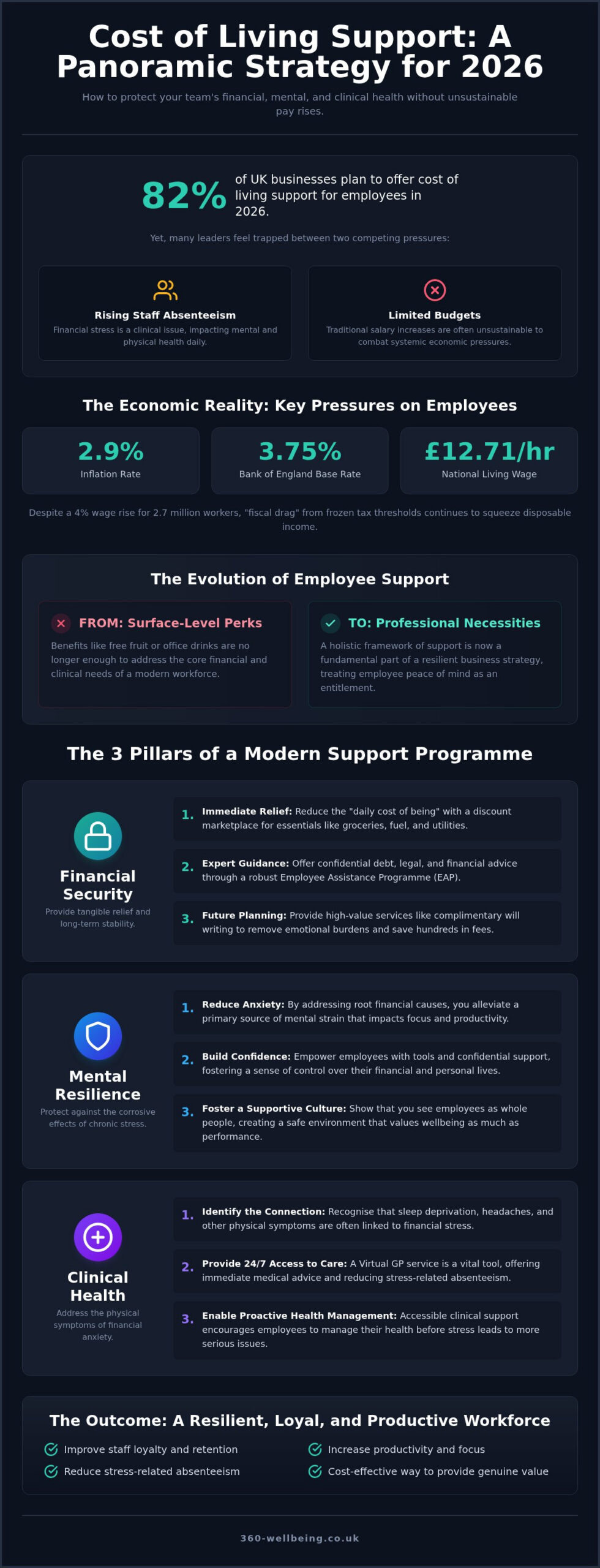
While 82% of UK businesses plan to offer some form of cost of living support for employees in 2026, many leaders feel trapped between rising staff absenteeism and the reality of limited budgets for salary increases. You likely recognize that your team’s financial stress isn’t just a payroll issue; it’s a clinical one that impacts their mental and physical health every day. It’s frustrating to watch talented people consider leaving for a few extra pounds elsewhere when you know your culture offers so much more.
We’re here to help you bridge that gap. This guide will show you how to implement a panoramic cost of living support strategy that protects your team’s financial, mental, and physical health without requiring unsustainable pay rises. We’ll explore how to provide genuine value through a curated ecosystem of care, from 24/7 virtual GP access to specialized debt advice. By the end of this article, you’ll have a clear, structured path to building a more resilient, loyal, and productive workforce that feels truly seen and supported in these challenging times.
Key Takeaways
- Understand why effective cost of living support for employees in 2026 has evolved from optional perks into a clinical necessity for maintaining a healthy workforce.
- Discover the panoramic three-pronged strategy that balances immediate financial relief, such as retail rewards, with long-term mental and clinical security.
- Learn how to identify the physical symptoms of financial anxiety and why 24/7 access to a Virtual GP is a vital tool for reducing stress-related absenteeism.
- Gain a clear framework for auditing your current benefits to ensure your Employee Assistance Programme provides confidential, expert debt and legal advice.
- Explore how a unified wellbeing platform offers a cost-effective way to improve staff loyalty and productivity without the need for unsustainable salary increases.
Defining Cost of Living Support for Employees in 2026
In 2026, the cost of living isn’t just an economic metric; it’s a daily reality that shapes how your team shows up for work. We define cost of living support as a holistic framework of financial, mental, and physical interventions provided by an employer. This represents a significant shift in the UK workplace. We’ve moved past the era of surface-level “perks” like free fruit or Friday drinks. Today, leading businesses embrace proactive wellbeing, recognizing that a person’s financial stability is inextricably linked to their clinical health and professional performance. Providing cost of living support for employees is now a fundamental part of a resilient business strategy.
This evolution has placed financial health at the center of corporate social responsibility. It’s no longer enough to offer a competitive salary and walk away. Modern employers act as expert caregivers, providing a safety net that protects their staff from the corrosive effects of chronic stress. By integrating support into your core business strategy, you acknowledge that your people are your most valuable asset and their peace of mind is an essential human entitlement rather than a luxury.
The Economic Reality of 2026
The current UK economic landscape presents unique challenges for households. With inflation recorded at 2.9% in July 2026 and the Bank of England base rate holding at 3.75%, the pressure on disposable income remains intense. While the National Living Wage increased to £12.71 per hour in April 2026, providing a 4% rise for 2.7 million workers, many still feel the pinch of “fiscal drag” as tax thresholds remain frozen. Traditional pay rises alone often struggle to combat these systemic pressures. We encourage a panoramic view of this situation. Financial worry creates a ripple effect, where a struggle to pay a bill tonight becomes a sleep-deprived, unproductive morning tomorrow. Understanding these underlying factors is the first step toward providing meaningful cost of living support for employees.
Support as a Professional Necessity
Reframing wellbeing benefits as a professional necessity is vital for workplace harmony. When you provide accessible support, you’re investing in the durability of your workforce. The business case is compelling. High levels of financial stress are directly linked to rising absenteeism and staff retention risks. If your team feels supported, they’re less likely to leave for a marginal pay increase elsewhere. This approach builds a culture of foresight, where employees feel empowered to manage their health and finances proactively through tools like a Virtual GP or confidential debt advice. It transforms the employer-employee relationship into a reliable partnership, ensuring your business remains a place where people can truly thrive despite external economic volatility.
Essential Pillars of a Modern Cost of Living Support Programme
Building a resilient workforce requires more than a single intervention. It demands a panoramic approach that addresses the three interconnected pillars of wellbeing: financial, mental, and clinical support. When an employee worries about their mortgage or the price of the weekly shop, the stress doesn’t stay at the kitchen table. It follows them into the office, affecting their focus and physical health. By implementing comprehensive financial support, you create a safety net that allows your team to perform with clarity and confidence.
A truly modern strategy also incorporates tools that are often overlooked but provide immense long-term value. Legal support and complimentary will writing are vital examples. These services provide families with foresight and durability, saving employees hundreds of pounds in solicitor fees and removing the heavy emotional burden of future uncertainty. This level of care moves your benefits package from a list of perks to a professional necessity that honors the human entitlement to security.
Immediate Relief: The 360 Rewards Model
Immediate relief is about reducing the “daily cost of being”. While long-term strategies are essential, your team feels the pressure of the 2.9% inflation rate every time they tap their card. Leveraging a discount marketplace like 360 Rewards effectively provides a salary boost without increasing your payroll costs. With thousands of offers on essentials like groceries, fuel, and utilities, employees can save significant amounts on their regular outgoings. These small, frequent savings have a powerful psychological impact. They provide a sense of control and ease the constant friction of rising prices, making cost of living support for employees feel tangible and helpful every single day.
Long-term Security: Professional Debt Advice
For those facing deeper challenges, immediate discounts aren’t enough. You must provide a clear, structured path toward long-term security. Integrating confidential debt helplines into your Employee Assistance Programme (EAP) is a compassionate way to help staff manage complex burdens. Professional advisors can guide employees through the differences between informal budgeting and formal debt solutions. In 2026, it’s particularly important to help staff access the statutory “Breathing Space” scheme. This provides a 60-day period of protection from creditor action, allowing individuals the mental room to find a sustainable way forward. By choosing a comprehensive wellness partner, you ensure your team has access to this expert guidance whenever they need it most.
The Clinical Connection: How Financial Stress Impacts Physical Health
Financial anxiety isn’t just a mental weight; it’s a physiological event. When your team members face the pressure of rising household expenses, their bodies often remain in a state of high alert. This constant “fight or flight” response floods the system with cortisol, the body’s primary stress hormone. Over time, elevated cortisol levels lead to profound sleep deprivation and increase the risk of developing chronic illnesses. Financial stress often manifests as physical symptoms like tension headaches, insomnia, and digestive issues.
A Virtual GP is a critical cost-of-living tool because it addresses these physical manifestations before they escalate. Providing 24/7 access to a UK-registered doctor allows staff to seek clinical advice at the first sign of a problem, whether that’s at 2:00 AM or during a lunch break. This immediate availability reduces the time and cost burden on employees, ensuring that medical concerns don’t go untreated due to financial or scheduling constraints.
Managing Health Costs for Employees
Traditional healthcare often carries hidden financial burdens that can be difficult for staff to manage. The cost of travel to a clinic, the need to take unpaid time off work for a mid-day appointment, or the struggle to find childcare can make seeking help feel impossible. Digital health platforms provide equitable access for all staff, removing these barriers and ensuring that cost of living support for employees includes their physical safety. For those experiencing stress-related musculoskeletal pain, easy access to physiotherapy can prevent long-term absenteeism and restore the physical vitality needed to perform their roles effectively.
The Feedback Loop of Wellbeing
There’s a persistent cycle where poor physical health exacerbates financial struggle. If an employee’s health declines, their ability to earn often decreases due to reduced productivity or missed opportunities for career growth. Breaking this cycle requires a panoramic approach that includes early clinical intervention and mental health therapy. We also find that life coaching is an essential tool for reclaiming focus and professional momentum. By addressing the root causes of anxiety and providing the clinical support to manage the physical fallout, you help your team maintain the durability required to navigate the 2026 economic landscape with confidence.
How to Implement Confidential Financial Support via an EAP
Implementing effective cost of living support for employees requires a structured approach that moves beyond simply offering a phone number. To build a truly panoramic strategy, start by auditing your current benefits to identify gaps in financial wellness. Many businesses discover their existing packages are fragmented and lack the depth needed to handle complex issues like debt management or legal disputes. Once you’ve identified these gaps, the next step is to onboard a comprehensive Employee Assistance Programme (EAP) that integrates clinical, mental, and financial care into a single, accessible platform.
Clear communication is the bridge between having a benefit and your team actually using it. You must explicitly communicate the “Confidentiality Guarantee” to all staff members. Finally, use platform analytics to monitor engagement and ROI. This data allows you to refine your offering, ensuring you provide the most value while protecting your budget. By following this path, you transform your support from a passive list of services into a proactive ecosystem of care.
The Firewall of Confidentiality
The single greatest barrier to accessing financial help is the fear of judgment. Employees often worry that admitting to debt might impact their career progression or lead to a breach of privacy. You must address the fear: “Will my boss find out I’m in debt?” directly. Modern EAPs operate under strict legal and ethical standards that create a total firewall between the user and the employer. Frame the service as a safe, non-judgmental space where seeking help is seen as an act of foresight and professional responsibility. When staff understand that their privacy is legally protected, they feel empowered to use the tools you’ve provided.
Maximising EAP Engagement
An EAP only provides value if it’s utilized when it matters most. Using 24/7 access ensures that support is available whenever an employee needs it, whether they’re worrying about bills at midnight or facing a legal query during their commute. Multi-channel support, including phone, chat, and video consultations, makes the service accessible to different personality types and lifestyles. We also recommend creating “Mental Health Champions” within your team to signpost financial support internally. These peer advocates can normalize the conversation around wellbeing, making it easier for colleagues to take the first step. To see how a unified platform can streamline this process for your business, you can explore our holistic EAP solutions today.
The 360 Wellbeing Approach: A Panoramic Vision for 2026
At 360 Wellbeing, we believe that true health is never a single-track journey. Our approach is rooted in a panoramic vision that seamlessly integrates physical, mental, and financial health into one intuitive platform. For SMEs and sole traders, we act as an expert caregiver, providing the clinical depth and empathetic support usually reserved for much larger corporations. By centralizing cost of living support for employees, you remove the friction of fragmented care and provide a clear, structured path toward vitality. It’s time to move beyond survival mode and foster a workplace where harmony and productivity are the natural results of a supported team.
A Partner in Corporate Strategy
Our platform is built specifically to address the unique challenges of the UK workforce in 2026. We understand that a person’s mental health is often tied to their financial security. That’s why we emphasize the synergy between mental health therapy and professional debt advice. When an employee can access both in one confidential space, they build the durability needed to navigate economic pressure. We help you create a robust benefits package that provides genuine value without the administrative burden or high costs associated with Private Medical Insurance. This strategy ensures that your support is both impactful for the user and sustainable for your business.
Next Steps for Employers
Reclaiming your team’s peace of mind is a strategic priority that starts with a few immediate actions. You can begin today by reviewing your current staff engagement and identifying where financial stress might be impacting your bottom line. We invite you to book a demo of the 360 Wellbeing platform to see how our 24/7 Virtual GP, rewards marketplace, and EAP services work together to protect your staff. Remember, providing cost of living support for employees isn’t just about ticking a box; it’s about protecting your most valuable asset. You’re building a foundation of foresight and care that will define your company culture for years to come.
Securing Longevity Through Panoramic Care
Navigating the economic pressures of 2026 requires a shift from reactive fixes to a proactive, holistic strategy. You’ve seen how financial anxiety directly impacts clinical health and why a unified platform is the most effective way to provide cost of living support for employees. By combining immediate relief through thousands of retail discounts via the 360 Rewards marketplace with long-term security like confidential debt helplines, you foster a culture of durability and workplace harmony.
It’s time to move beyond the limitations of traditional benefits and embrace a model that treats wellbeing as a professional necessity. Providing 24/7 access to UK-registered GPs ensures your team has total peace of mind; while expert financial counselling helps them reclaim their focus. You don’t have to manage these complex challenges alone. Empower your team with 360 Wellbeing’s comprehensive financial and health support platform. We’re here to help you build a resilient workforce that feels genuinely valued and ready to thrive.
Frequently Asked Questions
What is the most effective cost of living support for employees?
The most effective cost of living support for employees is a panoramic strategy that integrates financial, mental, and clinical care into a single platform. Instead of isolated perks, this approach addresses the root causes of stress. By providing tools like 24/7 Virtual GP access alongside debt advice and retail discounts, you ensure staff feel supported in every aspect of their lives. This comprehensive care builds the long-term resilience and loyalty needed in the 2026 economic climate.
Is financial debt advice through an EAP really confidential?
Yes, confidentiality is a cornerstone of any professional Employee Assistance Programme. A strict legal and ethical firewall exists between the service provider and the employer, ensuring that your business never sees individual usage data or personal financial details. This non-judgmental space allows employees to discuss sensitive issues like debt or legal concerns with total peace of mind. Protecting this privacy is essential for building a culture of trust and encouraging staff to seek help early.
How much does an employee wellbeing platform cost for a small business?
Employee wellbeing platforms typically operate on a recurring SaaS model, where businesses pay a fixed monthly fee per staff member. This structure makes holistic support accessible and affordable for SMEs and sole traders without the high overheads of traditional medical schemes. While exact costs depend on the number of enrolled staff and specific service tiers, this per-user approach ensures your investment scales directly with your team size. It provides a cost-effective alternative to high-cost private medical insurance.
Can cost of living support help reduce staff turnover?
Implementing robust cost of living support for employees significantly improves staff retention and loyalty. When a team feels their employer is genuinely invested in their financial and physical health, they’re less likely to leave for a marginal salary increase elsewhere. This sense of security creates workplace harmony and reduces the high costs associated with recruitment and training. By protecting your most valuable asset, you build a durable workforce that is more productive and engaged over the long term.
What is the difference between an EAP and a discount marketplace?
An Employee Assistance Programme (EAP) provides clinical and professional support, such as mental health therapy, debt helplines, and legal advice. In contrast, a discount marketplace like 360 Rewards focuses on immediate financial relief through savings on everyday essentials. While the EAP addresses deep-seated issues and long-term security, the marketplace helps reduce the daily “cost of being”. Both are essential pillars of a panoramic wellbeing strategy, working together to provide immediate value and long-term stability.
How does a Virtual GP help with cost of living pressures?
A Virtual GP reduces cost of living pressures by removing the hidden expenses associated with traditional healthcare. Employees save money on travel, parking, and childcare, while also avoiding the need to take unpaid time off for daytime appointments. With 24/7 access to UK-registered doctors, staff can address clinical concerns immediately, preventing minor issues from escalating into chronic conditions that could impact their ability to work. This provides both financial relief and essential peace of mind.
What legal support is typically included in an employee benefits package?
A comprehensive benefits package often includes access to expert legal support and complimentary will writing. These services provide employees with the foresight needed to manage complex personal matters without the burden of high solicitor fees. Whether they’re dealing with consumer disputes, property queries, or planning for their family’s future, having professional legal guidance readily available reduces significant emotional and financial stress. This level of care is a vital component of a modern, all-encompassing wellbeing strategy.
How do I introduce financial support without making staff feel uncomfortable?
Introduce financial support by framing it as a professional necessity and a universal entitlement for all staff. Use clear, empathetic communication that emphasizes the total confidentiality of the services provided. By presenting the platform as a proactive tool for everyone, you act as an expert caregiver and remove the stigma often associated with financial struggle. Normalizing these conversations through internal advocates or “Mental Health Champions” helps create a supportive environment where staff feel safe accessing the help they need.