
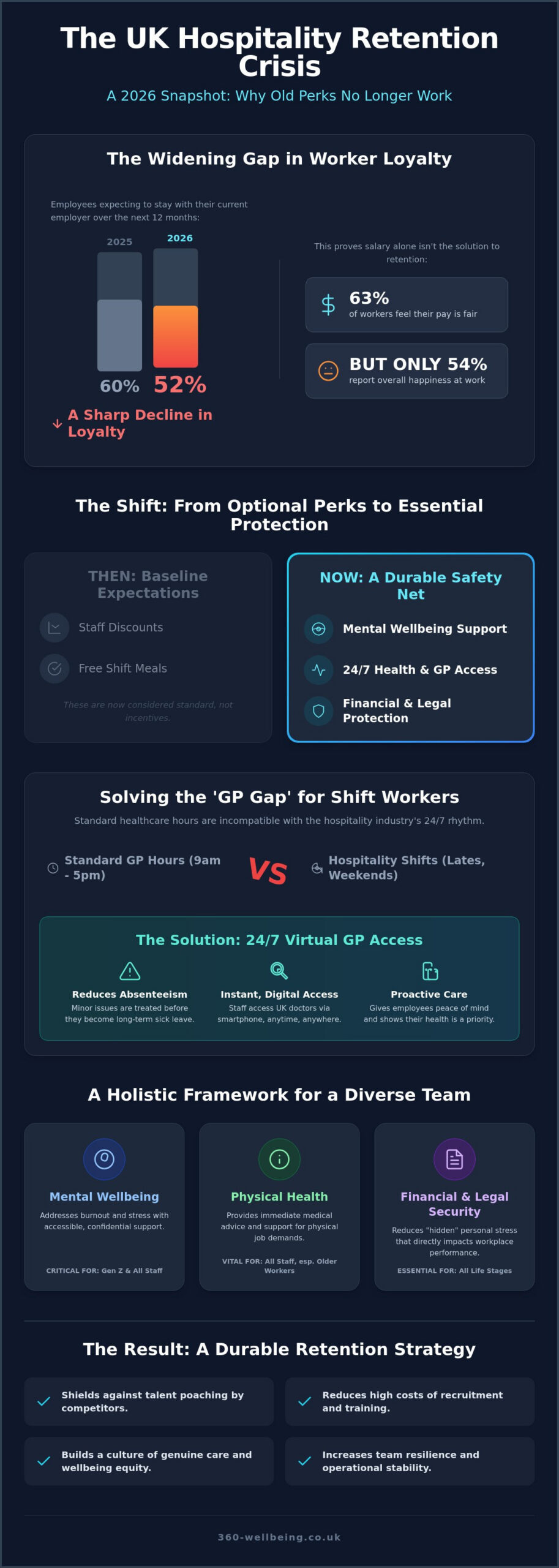
Did you know that only 52% of hospitality workers in the UK expect to stay with their current employer over the next 12 months? This sharp decline from 60% in 2025 reveals a widening gap between traditional perks and the actual needs of a modern workforce. You’ve likely experienced the fatigue of constant recruitment and the quiet strain of seeing your best team members struggle with burnout or mental health challenges. It’s a heavy burden to carry, especially when you’re trying to maintain service standards while managing rising operational costs and the new requirements of the Employee Rights Act 2026.
The good news is that meaningful change is within reach. By evolving your approach to employee benefits for hospitality industry uk, you can move beyond basic compliance to create a culture of genuine care and durability. This article explains how to build a competitive strategy that reduces turnover and supports mental wellbeing without overstretching your budget. We will preview the most effective, tax-efficient tools available in 2026, from 24/7 clinical support to financial guidance, ensuring your business remains a place where people truly want to stay and grow.
Key Takeaways
- Learn why traditional perks like free meals are now baseline expectations and how to shift your strategy toward meaningful employee protection.
- Understand the “GP Gap” affecting shift workers and how 24/7 virtual medical access can significantly reduce absenteeism and stress.
- Discover the critical link between personal legal or financial stress and workplace performance, and why these “hidden” supports are highly valued in 2026.
- Explore a scalable framework for implementing employee benefits for hospitality industry uk that allows SMEs to provide high-level care without high-level costs.
- Gain practical insights into building a durable retention strategy that aligns your benefits package with the 24/7 heartbeat of the hospitality sector.
The Evolution of Employee Benefits for the Hospitality Industry in 2026
The hospitality landscape in 2026 has undergone a fundamental transformation. We’ve moved past the era where a simple staff discount or a free shift meal was enough to secure loyalty. As the cost of living continues to influence worker priorities, there’s a clear shift from optional perks to essential protection. Employees are no longer looking for surface-level extras; they’re seeking a safety net that supports their life outside the kitchen or front desk. When designing employee benefits for hospitality industry uk, it’s crucial to look beyond the immediate work environment and consider the holistic health of your team.
While traditional employee benefits in the UK often focused on tangible goods, modern expectations are rooted in security and accessibility. Data from July 2026 shows that while 63% of hospitality workers feel their pay is fair, overall happiness has dipped to 54%. This suggests that salary alone isn’t the solution to retention. Digital-first solutions have replaced clunky paper-based schemes, allowing staff to access support instantly via their smartphones. This immediacy is vital for a workforce that doesn’t operate on a standard 9-to-5 schedule and needs help that matches their pace of life.
Why Retention is the New Recruitment
Recruitment fatigue is a heavy reality for many UK operators. Replacing a single team member in 2026 involves significant costs, including specialized training and the hidden drain on productivity during the handover period. Adopting an expert caregiver mindset means you see your staff as individuals with complex lives, not just names on a rota. A robust package of employee benefits for hospitality industry uk serves as a durable shield. It makes it much harder for local competitors to poach your talent simply by offering an extra few pence per hour, as they can’t easily replicate a culture of genuine support.
Meeting the Needs of a Diverse Workforce
Your team is likely a mix of Gen Z digital natives, career-focused Millennials, and experienced older workers. Each group has unique stressors. Gen Z often prioritizes mental health support and transparency, while older workers might value legal advice or physiotherapy to manage the physical demands of the job. Building a culture of inclusivity means providing tools that resonate across these different demographics. Wellbeing equity in the hospitality workplace means ensuring every team member, regardless of their role or background, has equal access to the resources required to maintain their physical, mental, and financial health. This approach creates a sense of belonging that transcends the workplace and builds lasting loyalty.
Prioritising Health: Solving the ‘GP Gap’ for Shift Workers
The standard 9-to-5 model of primary care is fundamentally incompatible with the heartbeat of the hospitality sector. While most GP surgeries close their doors just as the evening rush begins, your team is often only halfway through their shift. This creates a “GP Gap” where staff working lates, weekends, or split shifts find it nearly impossible to secure a medical appointment without sacrificing sleep or missing work. When considering the most effective employee benefits for hospitality industry uk, addressing this accessibility crisis is the first step toward building a resilient team.
Virtual GP services have transitioned from a modern convenience to an essential lifeline. By providing your staff with digital access to UK-registered doctors, you remove the friction of travel and the anxiety of crowded waiting rooms. This immediacy is a powerful tool for reducing absenteeism. When a chef or a server can consult a professional at 11 PM after a busy service, minor symptoms are treated before they escalate into long-term sick leave. It is a proactive approach that protects both the individual’s vitality and your business’s operational continuity.
24/7 Access: A Necessity, Not a Luxury
In an industry that never truly sleeps, medical support should follow suit. Offering 24/7 GP access provides a level of reassurance that standard benefits cannot replicate. It tells your team that their health is a priority, regardless of the hour they clock off. This round-the-clock availability is particularly vital for younger staff who may not have a permanent GP or those living in areas with overstretched local services. Providing immediate medical reassurance through a smartphone app simplifies the journey to wellness, making complex health needs feel manageable and supported.
Mental Health and the Hospitality High-Pressure Environment
The high-pressure nature of kitchens and front-of-house roles requires more than just physical stamina. Burnout is a genuine risk, often exacerbated by the mental weight of financial stress and retention challenges across the sector. To combat this, modern employee benefits for hospitality industry uk must include confidential mental health support and life coaching. These services provide a safe space for staff to navigate personal and professional hurdles before they reach a breaking point.
Physical durability is equally important. The physical demands of standing for ten-hour shifts can lead to musculoskeletal issues that often go untreated. Integrating physiotherapy alongside mental health therapy creates a panoramic support system. By addressing the physical, mental, and social aspects of wellbeing, you create a culture where staff feel genuinely seen. To see how a unified health platform can support your specific team requirements, you might explore the holistic support options available for modern hospitality businesses.
Beyond the Kitchen: Why Legal and Financial Support are Critical
While physical and mental health are visible pillars of wellbeing, the invisible weight of legal and financial anxiety often dictates a team member’s capacity to perform. In a high-pressure environment, a server distracted by a tenancy dispute or a chef worried about rising debt isn’t just less productive; they’re at a higher risk of burnout and resignation. Comprehensive employee benefits for hospitality industry uk must look beyond the shift and provide security for the personal challenges that happen after the apron comes off. By offering these safety nets, you transform the workplace from a source of stress into a source of stability.
Financial support for employees has emerged as the most requested “hidden” benefit in 2026. Despite salary satisfaction increasing to 63% across the sector, the variable nature of income in hospitality, particularly with tips and service charges, makes long-term budgeting difficult. Providing access to professional debt helplines and financial education helps staff manage their qualifying earnings more effectively. This proactive approach aligns with UKHospitality’s Workforce Strategy, which emphasizes the need for a holistic approach to employee welfare to stabilize the industry’s talent pool.
Legal Security as a Mental Health Tool
Unresolved legal issues are a primary driver of presenteeism, where staff are physically present but mentally absent. Whether it’s a family law matter or a dispute with a landlord, these complexities feel overwhelming without professional guidance. Offering legal support empowers your team to resolve these issues before they spiral. This sense of agency directly reduces life-anxiety, allowing staff to focus on their roles with a clear mind. For a deeper look at how these protections integrate with broader stability, you can explore our guide on financial support and debt management for the 2026 landscape.
Proactive vs. Reactive Support
There is a significant difference between offering crisis help and providing life-building tools. While debt helplines provide reactive support during tough times, benefits like complimentary will writing offer proactive security. This is particularly impactful for younger hospitality staff who might otherwise view such legal documentation as an inaccessible luxury. Providing these services builds deep, durable trust between the employer and the employee. It demonstrates that you are invested in their long-term success and protection, rather than just their immediate output. This shift from providing “perks” to providing “protection” is the hallmark of a modern retention strategy that values the human being behind the job title.
How to Implement a Scalable Benefits Strategy for Hospitality SMEs
Implementing a sophisticated package of employee benefits for hospitality industry uk doesn’t require a sprawling HR department or a massive corporate budget. For independent restaurants, boutique hotels, and local pub groups, the key lies in a methodical and scalable approach. Start by auditing your “invisible” benefits. These are the existing perks you already provide, such as shift meals, staff parking, or provided uniforms. While these are foundational, they often go unmeasured. Once you have a clear view of your current baseline, survey your team to identify their primary stressors. Understanding whether they are more concerned about physical health, financial stability, or time management allows you to tailor your strategy to their actual needs.
Predictability is vital for businesses operating on tight margins. Choosing a per-employee subscription model ensures that your costs remain fixed and grow only as your team does. This SaaS-style approach removes the traditional barriers to entry that once kept comprehensive support out of reach for smaller operators. To ensure high adoption, launch your new scheme with a “Wellbeing Champion.” This should be a trusted member of the team who can speak authentically about the tools available, turning a digital platform into a lived part of your workplace culture. You can then measure the success of your investment through tangible metrics like reduced turnover rates and improved employee Net Promoter Scores (eNPS).
Making Benefits Affordable for Low-Margin Businesses
Many hospitality SMEs assume that high-level care requires expensive Private Medical Insurance (PMI). However, the per-head subscription model is significantly more cost-efficient and accessible for small teams. Instead of viewing these services as a sunk cost, frame them as a strategic investment. The expense of a monthly wellbeing subscription is often a fraction of the cost of a single recruitment drive. By protecting the health of your current staff, you directly reduce the high spend associated with constant turnover and agency fees. It’s a proactive way to ensure your business remains durable in a competitive market.
Communicating Value to Your Team
A benefit is only valuable if it is used. Onboarding should be simple and personal, showing staff exactly how to access the Virtual GP or legal tools when they need them most. Confidentiality is the cornerstone of trust here. Your team must feel certain that their medical consultations and financial queries are entirely private and protected from management. Once this trust is established, these benefits become a powerful recruitment tool. Mentioning specific supports like 24/7 clinical access or debt advice in your job advertisements will help you attract a higher calibre of applicants who are looking for a professional and supportive employer. To start building your own scalable package, you can explore the wellbeing solutions designed specifically for the hospitality sector.
Stabilising Your Workforce with the 360 Wellbeing Solution
The 360 Wellbeing platform is designed to match the relentless pace of the UK hospitality sector. It’s not just a collection of disconnected tools. Instead, it’s a unified ecosystem that brings together 24/7 Virtual GPs, mental health therapy, and legal support into a single, accessible app. This integration is vital because health is rarely siloed. A physical ailment often leads to mental strain, which might be rooted in a legal or financial worry. By addressing the person as a whole, we provide the stability needed to keep your team engaged and present. It’s about creating a panoramic view of health that supports the individual long after their shift ends.
Many hospitality teams have already seen the impact of this all-encompassing approach. For example, independent hotel groups have reported significant drops in turnover by prioritising proactive health interventions over reactive crisis management. When staff know they can speak to a doctor at 2 AM or get debt advice during a split-shift break, their loyalty to the business deepens. Total Wellness isn’t a luxury for 2026. It is the only sustainable strategy for maintaining a high-performing workforce in a variable market where staff expectations have fundamentally shifted toward security and care.
The 360-Degree Perspective on Hospitality Care
Our solution simplifies the complex world of employee benefits for hospitality industry uk. We provide an Expert Caregiver persona through every interaction, ensuring your staff feel supported by knowledgeable authorities who are genuinely invested in their success. For busy managers, the setup is designed to be effortless. You don’t need a background in occupational health or insurance to provide “big company” protection. We handle the technical and clinical heavy lifting, allowing you to focus on delivering exceptional service to your guests while we look after the people delivering it. This partnership ensures that professional wellbeing becomes a durable part of your business’s DNA.
Take the Next Step for Your Team
Moving away from fragmented perks toward a unified platform is the most effective way to build a durable workforce. When your team feels truly protected, they are more resilient to the unique pressures of the hospitality environment. This shift creates a culture where health is viewed as an essential human entitlement rather than a temporary bonus. It’s time to move beyond baseline compliance and invest in a strategy that protects your people and your bottom line for the long term. Discover how 360 Wellbeing can protect your hospitality team and transform your approach to employee benefits for hospitality industry uk today. By choosing a proactive path, you ensure your team has the vitality and support they need to thrive in 2026 and beyond.
Securing the Future of Your Hospitality Team
Leading a hospitality team in 2026 requires more than just competitive pay. It demands a panoramic approach to care that recognizes the human being behind the uniform. By bridging the “GP Gap” and providing a safety net for legal and financial anxieties, you create a workplace where loyalty is built on trust and durability. This shift from surface-level perks to genuine protection is the defining factor in a successful strategy for employee benefits for hospitality industry uk.
Implementing these changes doesn’t have to be a complex or costly burden. With an affordable per-employee subscription model, even the smallest SMEs can offer “big company” support. Your team gains 24/7 UK-registered GP access to fit their unsocial hours, alongside complimentary will writing and legal support to resolve personal stressors before they reach the workplace. This integrated approach ensures your staff feel seen, supported, and ready to thrive.
It’s time to move toward a unified vision of wellness. Empower your hospitality workforce with 360 Wellbeing’s all-in-one platform and start building a more resilient, happy team today. You have the power to transform your business into a sanctuary of support, ensuring long-term success for both your people and your brand.
Frequently Asked Questions
What are the most valued employee benefits for hospitality industry UK workers in 2026?
Hospitality workers in 2026 increasingly value “safety net” protections over traditional lifestyle perks. While salary satisfaction has risen to 63%, the most utilized services are those that resolve real-life stressors, such as 24/7 Virtual GP access and mental health therapy. Training and development have also become the second most used benefit, reflecting a desire for career durability and personal growth in a competitive post-2025 market.
How much does it cost to provide a comprehensive benefits package for a small restaurant?
Providing a robust package of employee benefits for hospitality industry uk is more accessible than many SMEs believe. While the sector typically spends 8% to 12% of total salary costs on benefits, a modern per-employee subscription model offers a fixed monthly fee that is significantly lower than traditional private medical insurance. This allows even small independent restaurants to provide “big company” care while keeping their overheads predictable and manageable.
Can part-time or zero-hours hospitality staff access employee benefits?
Yes, part-time and zero-hours staff can and should have access to these platforms. Under the Employee Rights Act 2026, many statutory entitlements now begin from day one of employment, including changes to Statutory Sick Pay. Extending your voluntary wellbeing benefits to these workers is a strategic move that builds loyalty across your entire rota, ensuring that your flexible workforce feels as protected and valued as your full-time management team.
How does a Virtual GP benefit a hospitality business specifically?
Virtual GP services solve the “GP Gap” by providing 24/7 medical access that fits around the unsocial hours common in hospitality. Instead of staff missing shifts or working while unwell because they cannot secure a 9-to-5 appointment, they can consult a UK-registered doctor via their phone at any time. This leads to earlier medical intervention, preventing minor health issues from escalating into long-term sick leave or burnout.
Is legal support included in standard Employee Assistance Programmes (EAPs)?
Standard Employee Assistance Programmes often focus primarily on short-term counselling and may only offer very basic legal signposting. However, a comprehensive wellbeing solution should go further by including proactive tools like complimentary will writing and specific debt helplines. These specialized services address the root causes of life-anxiety, providing much deeper security than a generic advice line that only reacts to crises once they have already peaked.
How can I improve staff retention in my hotel without raising wages significantly?
Improving staff loyalty often comes down to addressing work-life balance and personal security rather than just base pay. Since only 52% of hospitality employees currently expect to stay with their employer for a year, offering a suite of health and financial protections can provide a significant recruitment edge. Providing tools that resolve personal stressors, like life coaching or physiotherapy, creates a supportive culture that high wages alone cannot replicate.
What is the difference between a discount perk and a wellbeing benefit?
The difference lies in whether the offering is a luxury or a professional necessity. A discount perk, such as a voucher for a cinema or restaurant, is a lifestyle extra that many employees may never use. In contrast, a wellbeing benefit provides essential protection, such as mental health support or legal advice. In 2026, employees view these protections as a human entitlement that provides durability and peace of mind during difficult times.
How does providing legal support help with workplace stress in kitchens?
Providing legal support helps mitigate kitchen stress by resolving the personal “life noise” that often follows chefs and kitchen porters into the workplace. Tenancy disputes or family law issues create a mental weight that leads to presenteeism and mistakes under pressure. When a team member has access to professional legal guidance, they can resolve these complexities quickly, allowing them to return to their role with the focus and clarity required for a high-intensity environment.