
Did you know that 91% of UK adults reported experiencing high or extreme levels of pressure and stress over the last year? With 148.8 million working days lost to sickness in 2025, it’s clear that the traditional, reactive approach to staff care is no longer enough. Developing a modern employee wellbeing strategy is no longer a corporate luxury; it’s a fundamental necessity for any business that wants to protect its people and its bottom line.
You’ve likely seen the limitations of standard Employee Assistance Programmes or felt the strain of rising medical costs while mental health absences continue to climb. We understand the frustration of seeing low engagement with tools that should be helping. This guide will show you how to build a proactive, holistic framework that reduces absenteeism and boosts retention by integrating 24/7 clinical access with financial and mental support. We’ll explore how modern digital tools can create a panoramic support system, ensuring your team feels valued, secure, and ready to perform at their best.
Key Takeaways
- Move beyond crisis management by shifting to a proactive model that supports employee vitality before health issues escalate.
- Discover how to integrate the four pillars of health, physical, mental, financial, and social, into a single, unified narrative of care.
- Learn the step-by-step process for auditing your current benefits to build a truly holistic employee wellbeing strategy that fits your unique workforce.
- Explore how digital tools like 24/7 Virtual GPs and mental health platforms provide immediate, reliable support that bypasses traditional wait times.
- Understand how a structured wellbeing framework can significantly reduce staff turnover and absenteeism, creating a more resilient and productive business environment.
Employee Wellbeing Strategy: Why it’s Essential in 2026
An employee wellbeing strategy is much more than a collection of office perks. It’s a structured framework meticulously designed to support the physical, mental, and financial health of your entire workforce. For a comprehensive guide to workplace wellness, one must look at how these elements interconnect to create a resilient culture. In 2026, we’ve moved past the era of reactive crisis management. Businesses can’t afford to wait until a team member reaches a breaking point. Instead, the focus has shifted toward proactive vitality support, where the goal is to maintain health rather than just treating illness.
Why is this shift so critical right now? The UK’s current landscape features unique pressures, including significant NHS wait times and the complexities of permanent hybrid working models. A digital-first approach ensures that support is accessible whether an employee is at their kitchen table or in a central office. By linking wellbeing directly to retention and productivity, you address the root causes of presenteeism, where staff are physically present but mentally disengaged.
The ROI of a Proactive Wellbeing Framework
Investing in a proactive framework isn’t just a moral choice; it’s a sound financial decision. Data from the Office for National Statistics published in May 2026 shows that 148.8 million working days were lost to sickness in the previous year. By intervening early, you can directly reduce absenteeism and the high costs associated with staff turnover. Beyond the balance sheet, a robust employee wellbeing strategy transforms your employer branding. In a competitive talent market, prospective hires look for foresight and durability in how a company treats its people. You’ll see the results in improved morale and a culture of genuine loyalty.
The Panoramic View: Beyond Physical Health
For too long, corporate wellness was synonymous with discounted gym memberships or fruit bowls in the breakroom. While physical health is vital, a panoramic viewpoint requires looking at the whole person. A truly effective strategy integrates four key pillars: physical, mental, financial, and social health. This holistic approach is the only way to achieve sustainable results. If an employee is struggling with debt or social isolation, a gym pass won’t solve the underlying stress. By addressing every facet of a person’s life, you create a unified narrative of total wellness that feels both scientifically grounded and deeply personal.
The Four Pillars of a Comprehensive Wellbeing Strategy
A durable employee wellbeing strategy stands on four essential pillars: physical, mental, financial, and social. These aren’t isolated departments but rather a connected ecosystem that supports an individual’s total health. By moving away from fragmented benefits, you create a sense of safety and order for your team. This structure aligns with UK government guidance on employee wellbeing, which advocates for evidence-based toolkits that address the whole person.
Clinical and Physical Support Essentials
Physical health is the most visible pillar, yet it’s often the most reactive. A modern approach focuses on clinical foresight. When an employee can access a UK-registered GP via a 24/7 Virtual GP service, they don’t have to wait weeks for an appointment or take a half-day off work. This immediate access is a practical solution to the current pressures on the NHS. Integrating physiotherapy and preventative health screenings into your digital toolkit allows for early intervention. It encourages employees to take ownership of their health before small aches become chronic issues that lead to long-term absence.
Mental Health and Emotional Resilience
Mental health support must be more than a crisis line. While traditional Employee Assistance Programmes (EAPs) serve a purpose, a modern employee wellbeing strategy prioritizes proactive mental health coaching and life coaching. This moves the conversation from “fixing a problem” to “building resilience”. Providing confidential, digital-first access to professional therapy helps destigmatize seeking help. It’s equally important to equip managers with the skills to spot early signs of burnout, such as withdrawal or decreased productivity, before they lead to long-term leave.
Financial and Legal Wellbeing: The Missing Link
Financial stress is often a hidden driver of poor mental health and reduced focus. Providing debt advice and financial helplines gives employees the tools to manage their lives outside of work. High-perceived-value benefits, such as complimentary will writing and legal support, offer a sense of security and durability that traditional perks often miss. These services address the long-term interests of your staff, showing that you’re invested in their success both inside and outside the office. You can find more detail on these essential safety nets in our Financial Support for Employees guide.
Building these pillars into a single, accessible platform simplifies the health journey for your staff. You can discover how a unified approach supports your team by exploring our holistic benefits suite. Finally, social and lifestyle support helps build a culture of recognition. Shared values and rewards create a sense of belonging, which remains the cornerstone of a healthy, vibrant workplace.
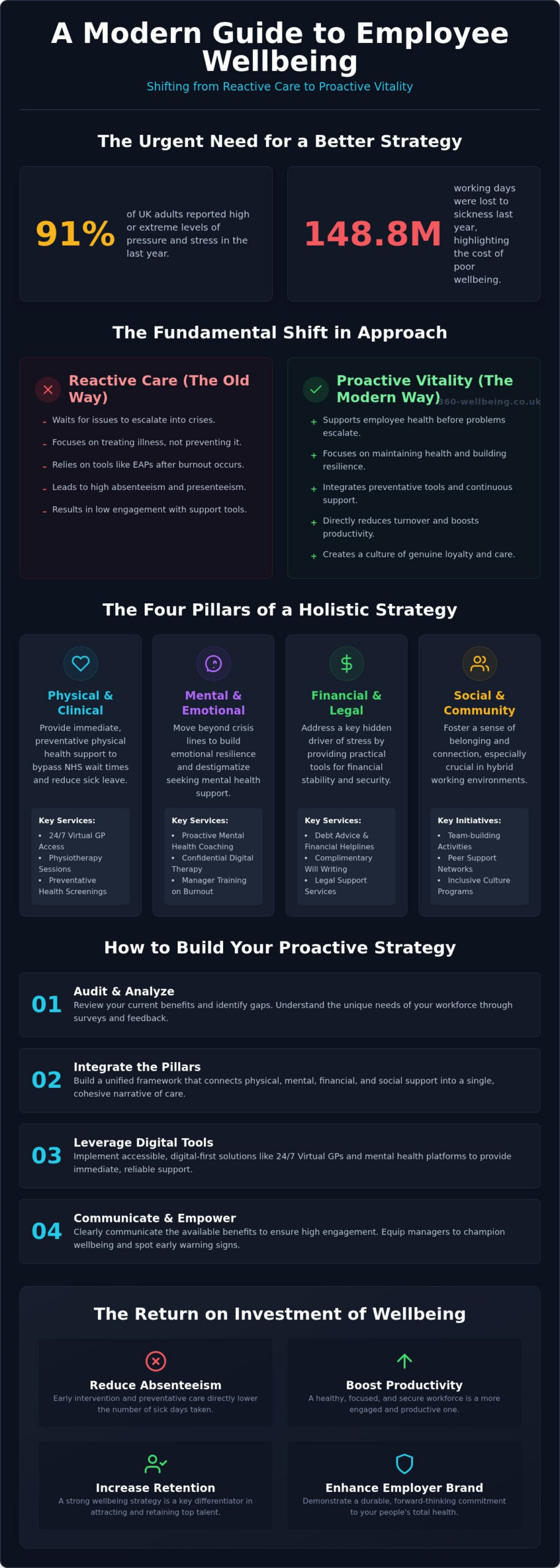
Comparing Reactive vs. Proactive Wellbeing Strategies
A reactive approach is essentially a form of crisis management. It waits for an employee to reach out with a mental health struggle or for a physical injury to lead to long-term leave. In contrast, a proactive employee wellbeing strategy acts as a continuous safety net, providing tools that identify and address stressors before they escalate. Technology plays a pivotal role here. It bridges the gap between a worker feeling “unwell” and actually receiving clinical care. For small and medium-sized businesses, the shift to a fixed-fee SaaS model makes this level of support affordable. It replaces unpredictable costs with a steady, per-employee subscription, ensuring that high-quality care isn’t a luxury reserved for large corporations.
The Limitations of Traditional EAPs
Many businesses rely on traditional Employee Assistance Programmes (EAPs), but these often suffer from low utilization rates. They’re frequently viewed as a “tick-box” exercise rather than a genuine support system. Modern employees demand immediate, digital-first responses. They don’t want to wait days for a callback or navigate complex phone menus. They’re looking for a holistic platform that covers everything from mental health therapy to financial support. By moving away from “counselling only” models, you provide a panoramic viewpoint of health that feels relevant to their daily lives. This transition ensures that support is not just available, but actually used.
Virtual GPs: The Cornerstone of Modern Strategy
Access to a 24/7 Virtual GP is a game-changer for the modern workplace. It removes the friction of seeking medical help while juggling a busy schedule. When an employee can speak to a UK-registered GP from their desk or home, they’re more likely to address health concerns early. This has a direct impact on absenteeism. Instead of a minor issue developing into a week-long sick leave because of NHS wait times, it’s resolved through a digital consultation. This proactive step ensures that physical health is managed with the same clinical expertise and empathy as mental health. It’s about empowering your team to maintain their vitality, keeping them productive and engaged. By integrating these tools, you demonstrate a commitment to the long-term interests of your workforce.
How to Build and Implement Your Strategy: A Step-by-Step Guide
Creating an effective employee wellbeing strategy requires a methodical approach that moves from abstract goals to concrete clinical support. For smaller businesses and sole traders, this process must be lean and impactful; it should focus on high-value interventions that address the specific pressures of a lean team. You don’t need a massive HR department to build a world-class framework. You simply need a clear path that prioritizes accessibility and holistic care. By engaging stakeholders early and defining clear KPIs, such as target absenteeism rates, you create a roadmap for success that everyone can support.
Auditing and Assessing Employee Needs
The first step is a thorough audit of your current benefits. Many SMEs discover they’re paying for “perks” that nobody uses while missing critical safety nets. Use anonymous surveys to identify the primary stressors in your workforce. Are people worried about NHS wait times? Is financial anxiety affecting their focus? Analyzing your absenteeism data can reveal patterns in health-related leave that a 24/7 Virtual GP could solve. By identifying these hidden needs, such as legal concerns or debt anxiety, you ensure your strategy is built on reality rather than assumptions.
Effective Communication and Onboarding
A strategy fails if your team doesn’t know how to use it. A clear, empathetic internal launch is essential to build trust and encourage adoption. Make sure your chosen platform is accessible through both mobile apps and desktop portals to suit different working styles. You might consider appointing “Wellbeing Champions” within your team. These are individuals who can share their positive experiences and drive engagement naturally. When people see their colleagues benefiting from life coaching or legal support, they’re more likely to explore the tools themselves.
Once your strategy is live, the work isn’t over. Select a panoramic platform that integrates multiple pillars of support into one place to avoid “app fatigue.” Use the data provided by your SaaS platform to review usage patterns and identify which services are most valued. This allows you to iterate and refine your approach based on real-world feedback. If you’re ready to move from planning to action, you can start building your panoramic wellbeing platform today. This methodical review ensures your investment continues to deliver a healthier, more productive workforce for the long term.
Scaling Wellbeing with Technology: The 360 Wellbeing Approach
Technology is the engine that drives a modern employee wellbeing strategy from a set of values into a daily reality. 360 Wellbeing provides a seamless digital ecosystem where physical health, mental support, financial security, and social rewards live together in one hub. This unified approach eliminates the friction of managing multiple platforms or navigating complex referral paths. For business owners and finance directors, the fixed monthly per-employee subscription model offers much-needed budget predictability. You can plan your growth with the confidence that your team’s health costs are stable, transparent, and manageable, regardless of how often the services are accessed.
A Unified Platform for Health and Lifestyle
HR teams frequently face an overwhelming administrative burden when trying to coordinate separate health services and benefit providers. By choosing a single-vendor solution, you simplify your internal processes and provide your staff with a sense of all-encompassing care. Employees can access UK-registered GPs, mental health experts, and life coaching at the touch of a button. Whether it’s a 24/7 Virtual GP consultation or financial support for debt advice, everything is available in one place. The addition of the 360 Rewards marketplace ensures that your strategy also provides social and lifestyle value, making the platform a daily destination for positive reinforcement and shared value.
Future-Proofing Your Workforce for 2026 and Beyond
As we look toward the future, workplace health standards like ISO 45003 are becoming the benchmark for corporate excellence. Adapting to these evolving standards and employment laws requires a partner who understands the long-term interests of your organization. Investing in employee vitality today is a commitment to the durability of your business. It’s about creating a panoramic viewpoint where health is treated as an essential human entitlement rather than a luxury perk. This foresight ensures your team remains resilient in the face of changing work patterns and external pressures.
Getting started with a tailored employee wellbeing strategy doesn’t have to be complex or intimidating. By integrating physiotherapy, legal support, and complimentary will writing into your benefits package, you build a foundation of security that supports your team through every life stage. This proactive stance ensures your workforce remains productive and deeply connected to your company’s mission. It’s a methodical, calm, and supportive way to ensure your business thrives by looking after the people who make it possible.
Empowering Your Workforce for a Vibrant Future
Building a resilient business starts with a commitment to the people who power it. By moving away from fragmented perks and embracing a proactive employee wellbeing strategy, you provide your team with the security and vitality they deserve. We’ve explored how a panoramic viewpoint, covering everything from clinical physical care to financial safety nets, creates a culture where employees can truly thrive. This shift doesn’t just reduce absenteeism; it fosters deep-rooted loyalty and long-term productivity.
The tools to implement this vision are now more accessible than ever. With 24/7 UK-registered Virtual GP access, comprehensive EAP and mental health support, and dedicated financial and legal helplines, you can offer all-encompassing care that feels both personal and scientifically grounded. It’s time to move beyond reactive fixes and invest in the durability of your workforce. Discover how 360 Wellbeing can transform your strategy and help you build a healthier, more harmonious workplace today. Your team’s success is your success, and together, we can create a future defined by wellness and vitality.
Frequently Asked Questions
How do I start an employee wellbeing strategy with a small budget?
Focus on high-impact, low-cost digital platforms that offer a fixed per-employee subscription model. This approach allows SMEs to access clinical-grade support without the overhead of private medical insurance. Start by auditing your existing culture to identify the most pressing needs, then implement a single, unified platform that addresses physical and mental health simultaneously. This creates a durable foundation that grows with your business and supports your people effectively.
What are the most important elements of a workplace wellbeing strategy?
A truly effective strategy must be holistic and panoramic, covering physical, mental, financial, and social health. While physical clinical access is vital, you shouldn’t overlook the “hidden” stressors like debt or legal concerns. Providing a unified ecosystem where employees can find professional therapy, life coaching, and financial advice ensures that no aspect of their vitality is neglected. This completeness is what builds long-term resilience and genuine workplace harmony.
How can I measure the success of our wellbeing program?
Success is measured through both quantitative data and qualitative feedback from your team. Track key performance indicators like sickness absence rates and staff retention figures over a twelve-month period to see the impact. You should also analyze platform engagement metrics to see which services, such as the 24/7 Virtual GP or mental health support, are most valued. Regular, anonymous pulse surveys provide insights into shifts in morale and perceived support levels.
What is the difference between an EAP and a wellbeing platform?
Traditional Employee Assistance Programmes are often reactive, focusing on crisis management and telephone counselling when issues have already peaked. In contrast, a modern wellbeing platform is proactive and holistic. It integrates a wider range of services including Virtual GPs, physiotherapy, and financial support into a single digital hub. This approach encourages daily engagement and preventative care, moving away from the “tick-box” exercise often associated with traditional, low-utilization EAP models.
How does a Virtual GP benefit my employee wellbeing strategy?
Integrating a 24/7 Virtual GP into your employee wellbeing strategy provides immediate clinical access that bypasses long NHS wait times. It allows staff to consult with UK-registered doctors from any location, reducing the need for half-day absences for routine appointments. This rapid intervention helps resolve health issues before they escalate into long-term sickness, ensuring your workforce remains healthy, productive, and reassured that their long-term health is a genuine business priority.
Should financial support be part of a corporate wellbeing strategy?
Financial health is an essential pillar of total wellness because money-related stress is a primary driver of poor mental health and reduced focus. Including debt advice, financial helplines, and legal support like complimentary will writing in your employee wellbeing strategy helps alleviate these daily anxieties. When employees feel financially secure and supported in their future planning, they’re more likely to remain engaged, loyal, and productive within your organization over the long term.
How do we encourage employees to actually use wellbeing benefits?
High adoption starts with clear, empathetic communication and an accessible digital-first interface. You should launch the platform with a dedicated onboarding session and use internal “Wellbeing Champions” to model positive engagement. Regularly highlighting specific features, such as rewards or life coaching, keeps the platform top-of-mind for everyone. Ensuring total confidentiality is also critical, as employees need to feel safe when accessing sensitive mental, legal, or financial support services.
What legal requirements do UK employers have for staff wellbeing?
UK employers have a legal “duty of care” to ensure the health, safety, and welfare of their employees as far as is reasonably practicable. This includes conducting risk assessments for workplace stress and providing a safe environment for both physical and mental health. While specific wellbeing platforms aren’t mandated by law, adhering to standards like ISO 45003 helps organizations meet their statutory obligations and demonstrate a commitment to best-practice health management and employee vitality.