
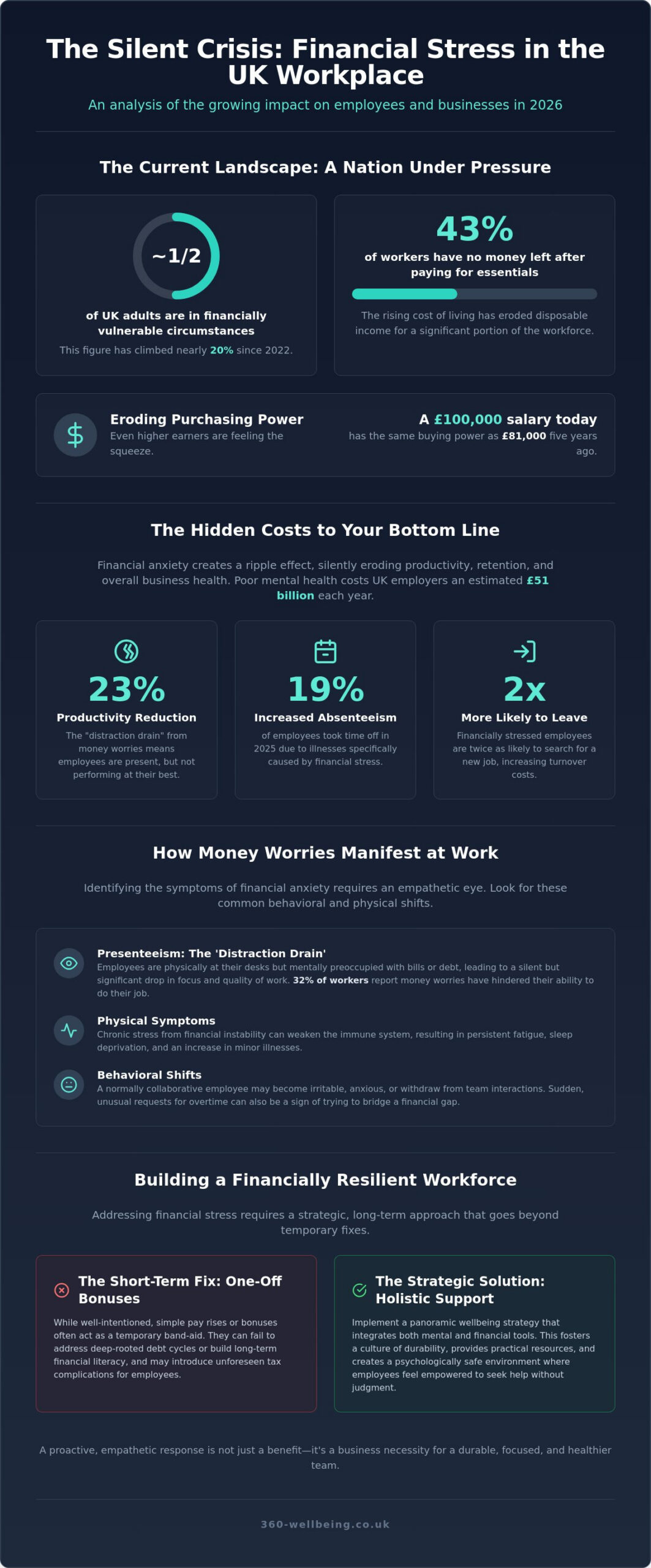
Did you know that financial stress in the workplace uk is now reducing productivity by a staggering 23%? As we move through 2026, nearly half of all UK adults are living in financially vulnerable circumstances, a figure that has climbed nearly 20% since 2022. You likely see the impact of this every day through rising absenteeism or the quiet struggle of presenteeism, where your team members are physically at their desks but mentally overwhelmed by the reality that 43% of workers now have no money left after paying for essentials.
We understand that you want to protect your people and provide a sense of security, yet you’re likely facing budget constraints that make massive pay rises impossible. It’s a difficult balance to strike, but supporting your staff is a professional necessity that doesn’t always require a larger payroll. This guide provides a clear, empathetic framework to help you identify, address, and mitigate the impact of money worries on your workforce. You’ll discover how to build a more resilient business by integrating proactive wellbeing strategies, leading to lower staff turnover and a more focused, healthier team.
Key Takeaways
- Recognise why monetary instability is a clinical health priority that requires a proactive and empathetic response from leadership.
- Discover the true cost of the “distraction drain” and how financial stress in the workplace uk impacts your business through hidden absenteeism.
- Compare the long-term benefits of holistic support platforms against one-off bonuses to avoid tax complications for your staff.
- Follow a structured path to launch your initiative, from conducting confidential surveys to building a compelling business case for stakeholders.
- Learn how a panoramic approach to wellbeing, combining mental and financial tools, fosters a culture of durability and focus.
Understanding Financial Stress in the UK Workplace (2026)
Financial stress is far more than a simple concern about bank balances. It is the persistent psychological and physical strain triggered by monetary instability, manifesting as a chronic state of “fight or flight” that wears down even the most resilient team members. In the UK of 2026, this pressure has reached a tipping point. With nearly half of adults living in financially vulnerable circumstances, the economic landscape has shifted dramatically. Inflation and the rising cost of living mean that 43% of workers have no disposable income left after paying for essentials. Even those on “reasonable incomes” are struggling; a £100,000 salary today carries the same purchasing power that £81,000 did just five years ago.
Many employers assume a simple pay rise is the ultimate cure. While fair compensation is vital, it often fails to address deep-rooted anxiety or complex debt cycles. Without a holistic approach to Understanding Financial Stress, a salary bump can be a temporary fix rather than a long-term solution. Indeed, workplace financial stress is now recognized as a primary driver of modern occupational burnout.
The Warning Signs: How Money Worries Manifest at Work
Identifying the symptoms of financial anxiety requires a keen, empathetic eye. One of the most pervasive issues is “presenteeism,” where staff are physically at their desks but mentally preoccupied with mounting bills or debt. This “distraction drain” is a silent productivity killer. Beyond the mental fog, you might notice physical symptoms such as persistent fatigue from sleep deprivation or a sudden increase in minor illnesses as chronic stress weakens the immune system. Behavioral shifts are also common. A normally collaborative employee might become irritable, withdraw from social interactions, or suddenly request excessive overtime to bridge a widening financial gap.
Why UK Employees Are Reluctant to Speak Out
Despite the prevalence of financial stress in the workplace uk, many employees remain silent. There is a deep-seated social stigma in British culture surrounding debt, often viewed as a personal failure rather than a systemic challenge. Workers frequently fear that disclosing their struggles will lead to being labeled as “unreliable” or “unstable” by management, potentially stalling their career progression. To break this silence, businesses must foster a psychologically safe environment where financial wellbeing is treated with the same clinical importance as physical health. Creating a culture where people feel empowered to seek help without judgment is the first step toward a more durable and focused workforce.
The Hidden Costs: How Financial Anxiety Affects Your Bottom Line
Poor mental health costs UK employers an estimated £51 billion each year. A significant portion of this figure is driven by the silent weight of financial anxiety. The impact of financial stress in the workplace uk extends far beyond the individual; it creates a ripple effect that touches every part of your balance sheet. In 2025, 19% of employees took time off due to illness specifically caused by money worries. These aren’t just missed days; they represent a fundamental erosion of your business’s operational durability.
The “distraction drain” is perhaps the most insidious cost. When your team members are preoccupied with mounting bills, their cognitive capacity for work diminishes. According to data from HRZone in January 2026, financial stress reduces productivity by 23%. This means that for nearly a quarter of the working week, a stressed employee may be physically present but mentally absent. CIPD research from May 2026 confirms this, with 32% of workers reporting that money worries have actively hindered their ability to do their job over the past year.
Retention also takes a hit. Financially stressed employees are twice as likely to look for new opportunities elsewhere. In a competitive 2026 talent market, your ability to attract top-tier candidates depends on more than just the base salary you offer. Modern professionals seek a culture that acknowledges their total wellbeing. If your employer branding doesn’t reflect a commitment to holistic care, you risk losing your best people to competitors who provide integrated support systems that address life beyond the office.
The Link Between Financial Health and Mental Wellbeing
Financial trouble and mental health struggles often exist in a vicious cycle. Debt can lead to depression, which in turn makes it harder for an individual to manage their finances effectively. Breaking this cycle requires more than just debt advice; it requires clinical empathy. Our 24/7 Virtual GP access plays a vital role here, allowing employees to discuss the physical symptoms of chronic stress, like insomnia or hypertension, as soon as they arise. Combining mental health therapy with practical financial guidance ensures that the root causes and the emotional symptoms are treated together, fostering a more resilient mindset.
Impact on Workplace Safety and Decision Making
When an employee is in “survival mode,” their brain prioritises immediate threats over long-term strategic thinking. This high cognitive load significantly increases the risk of workplace accidents and poor decision-making. Strategic foresight becomes impossible when the mind is consumed by the immediate need to bridge a financial gap. Teams that feel financially secure consistently outperform those in distress, simply because they have the mental bandwidth to innovate and collaborate. Transitioning your team from a state of survival to one of vitality is not just a kind gesture; it’s a professional necessity for a safe and focused workplace.
Evaluating Financial Support: Bonuses vs. Holistic Wellbeing Platforms
When faced with rising levels of financial stress in the workplace uk, the instinctive reaction for many business owners is to issue a one-off “cost of living” bonus. While these gestures are well-intentioned, they often act as a temporary sticking plaster rather than a cure. Bonuses are quickly absorbed by immediate debts or rising utility bills, leaving the underlying causes of anxiety untouched. Additionally, simple salary increases can inadvertently trigger “tax cliff edges” or affect eligibility for certain state benefits, meaning the employee sees very little of the intended support in their take-home pay.
A more durable strategy involves building a long-term support infrastructure. By choosing a holistic wellbeing platform, you provide a consistent safety net that grows with your team. This digital approach is particularly effective for UK SMEs, offering a scalable way to deliver high-level care without the administrative burden of managing multiple individual services. It moves the conversation from a one-time transaction to an ongoing partnership in your employees’ health, addressing the root causes of their concerns with precision and care.
What Makes an Effective Financial Wellbeing Programme?
Unlike simple financial education, which focuses only on knowledge, a truly impactful programme provides immediate crisis support. This must include access to FCA-regulated debt advice and confidential helplines to manage urgent pressures. We also look at the bigger picture of life planning. Tools like complimentary will writing might seem secondary, but they provide immense peace of mind by securing a family’s future. When combined with 360 Rewards, our discount marketplace, your team can make their existing salaries stretch further on daily essentials, providing a practical, tangible boost to their monthly budget.
The ROI of Proactive Support
Investing in Financial Support for Employees: A Comprehensive Guide for UK Employers in 2026 isn’t just a moral choice; it’s a sound financial decision. Research shows that employers typically see a £3 return for every £1 invested in financial wellness through improved productivity and reduced turnover. By providing preventative care like life coaching and mental health support, you address the emotional weight of debt before it leads to total burnout. This foresight reduces the heavy costs associated with recruitment and retraining, keeping your most experienced people focused and loyal to your business.
Implementation Strategy: How to Launch a Financial Wellness Initiative
Launching a support programme doesn’t have to be a multi-month corporate overhaul. For UK SMEs, the path to mitigating financial stress in the workplace uk is most effective when it’s streamlined and human-centric. Start with a confidential survey. This isn’t about prying into bank statements; it’s about identifying the specific pressures your team faces, whether that’s rent increases or a lack of emergency savings. Once you have this data, present it to leadership alongside the productivity and retention statistics we discussed earlier. Showing that financial wellness is a business necessity, not just a “nice-to-have,” secures the necessary buy-in to move forward.
The third step is choosing a partner that offers an all-in-one platform. A SaaS-based solution is ideal for smaller businesses because it provides 24/7 expert access without requiring a dedicated internal HR team to manage the details. After the platform is live, communicate the benefits with total transparency. Employees must feel certain that their use of the service is entirely confidential. Finally, treat this as an evolving journey. Monitor engagement levels and use staff feedback to adjust the support you provide, ensuring it remains relevant to their changing needs. Ready to protect your team? Explore our holistic wellbeing platform and start your journey today.
Breaking the Silence: Communication Best Practices
Language is your most powerful tool in reducing stigma. When introducing these tools, use empathetic, non-judgmental terms that frame wellbeing as an essential human entitlement. Consider appointing “Financial Wellbeing Champions” within your team. These are staff members who can help signpost colleagues to support in a peer-to-peer fashion, which often feels safer than going to a manager. Ensuring total anonymity in support requests is the only way to build the deep trust required for people to actually use the resources available.
Integrating Financial Support into Daily Operations
For support to be effective, it must be accessible. Mobile apps allow your team to engage with tools like debt advice or rewards at a time that suits them, away from the office environment. We believe in a panoramic viewpoint, so we link our financial tools directly to our mental health support and Virtual GP services. This acknowledges that a physical symptom like a stress headache often has a financial root. You might even consider providing dedicated “wellbeing hours” during the working week. This sends a clear message: your health and focus are worth the company’s time.
The 360 Wellbeing Approach to Financial Resilience
Addressing financial stress in the workplace uk requires more than just a helpline; it demands a panoramic strategy that treats physical, mental, and financial health as a single, unified narrative. Our approach at 360 Wellbeing is built on this foundation of completeness. By combining these three essential pillars into one manageable subscription, we provide a sense of safety and order for both employers and their teams. This holistic model ensures that no aspect of an individual’s vitality is left to chance, moving away from fragmented care toward a proactive vision of workplace harmony.
For many small businesses and sole traders, the administrative weight of traditional insurance or medical services is often a barrier to providing high-quality support. We’ve simplified this journey through our SaaS platform, allowing for rapid onboarding and immediate access to expert care. Whether you are managing a small team or operating as an independent professional, our platform offers the durability and customization needed to foster long-term resilience without the complexity of corporate-level HR requirements.
One of the most tangible ways we support your workforce’s daily life is through the 360 Rewards marketplace. This feature provides direct cost-of-living relief by offering discounts on everyday essentials, effectively increasing the purchasing power of your team’s existing salaries. It’s a practical, empathetic solution that demonstrates a genuine investment in their comfort and success, helping to mitigate the constant mental load that financial stress in the workplace uk can create.
Holistic Health: Why GP Access Matters for Financial Stress
There is a profound link between monetary worry and physical health. Our UK-registered Virtual GP is available 24/7, providing a vital diagnostic tool for identifying when chronic stress has begun to manifest as physical ailment. Rapid medical access means your employees don’t have to wait weeks for an appointment or take significant time off work for health concerns. Having professional medical and financial advice in one accessible place provides a level of reassurance that is essential for maintaining a focused and healthy team.
Securing the Future: Wills and Long-term Planning
Foresight is a cornerstone of durability. We believe that legal support is a fundamental part of a total wellness strategy. By offering complimentary will writing, we help your employees navigate the psychological weight of “getting their affairs in order,” which significantly reduces long-term anxiety. When legal, financial, and mental health support work together, it creates a sense of balance and completeness. This panoramic viewpoint ensures your team feels supported in every dimension of their lives. Empower your team with 360 Wellbeing today and build a more resilient future together.
Cultivating a Resilient and Focused Future
Building a workforce that thrives in 2026 requires a shift from reactive fixes to a panoramic strategy of care. We’ve explored how financial stress in the workplace uk acts as a silent drain on productivity, affecting everything from cognitive load to physical immunity. By moving beyond one-off bonuses and embracing holistic support infrastructure, you create a culture of durability where employees feel truly seen and supported. This isn’t just about managing numbers; it’s about nurturing the human heartbeat of your organization.
Integrating 24/7 access to UK-registered GPs with comprehensive mental health and financial debt support provides the reassurance your team needs to stay focused. This proactive approach doesn’t just improve individual vitality; it significantly reduces absenteeism and improves employee retention, securing the long-term interests of your business. You have the power to transform financial anxiety into a narrative of total wellness that benefits everyone involved.
Protect your business and your people with a 360 Wellbeing subscription. Together, we can build a more resilient, harmonious, and successful workplace where every team member has the opportunity to flourish.
Frequently Asked Questions
What are the main causes of financial stress in the UK workplace?
The primary drivers are the rising cost of living and a lack of emergency savings. Nearly half of UK adults are now in financially vulnerable circumstances. This pressure isn’t limited to low earners; even those with reasonable incomes are juggling high debt levels. Economic uncertainty and inflation have made it harder for workers to bridge the gap between their salary and essential monthly outgoings.
How can I tell if an employee is struggling with money worries?
You can often identify a struggle through changes in behavior, such as increased irritability or withdrawal from team activities. Some employees may suddenly request excessive overtime or show signs of “presenteeism,” where they are physically present but mentally distracted. Physical symptoms like persistent fatigue or frequent minor illnesses are also common markers of financial stress in the workplace uk that require an empathetic response.
Is it legal for an employer to offer financial advice to staff?
It is perfectly legal to provide financial guidance and signpost staff to professional resources. However, you should avoid giving specific investment or tax advice yourself. The most effective way to help is by providing a platform that connects employees with FCA-regulated debt advice and legal support. This ensures they receive professional care while protecting your business from the risks of providing unregulated financial opinions.
How does financial stress impact employee productivity?
It creates a significant “distraction drain” that lowers productivity by approximately 23%. When an individual is preoccupied with mounting bills, their mental bandwidth for innovation and collaboration shrinks. This cognitive load can lead to poor decision-making and a higher frequency of workplace accidents. Addressing financial stress in the workplace uk is essential for maintaining a safe, focused, and operationally durable team environment.
What is the difference between a traditional EAP and a financial wellbeing platform?
While a traditional EAP offers general counseling, a financial wellbeing platform provides a more integrated, panoramic viewpoint. It combines mental health support with specific tools like debt helplines, complimentary will writing, and discount marketplaces. By linking financial health directly to 24/7 Virtual GP access, these platforms address the physical symptoms of stress alongside the monetary causes, offering a more complete narrative of wellness.
Can financial support improve staff retention in 2026?
Providing financial support is a powerful tool for improving staff retention. Employees who feel financially secure are far less likely to seek new opportunities elsewhere. In 2026, a comprehensive wellbeing package is seen as a professional necessity rather than a luxury. By investing in your team’s long-term resilience, you build a loyal workforce and reduce the significant costs associated with recruitment and retraining.
How much does it cost to implement a financial wellbeing programme for a small business?
Implementation costs are typically structured as a manageable per-employee subscription. This model allows small businesses to access a panoramic suite of tools, including 24/7 Virtual GP services and debt advice, without the high costs often associated with traditional medical services. It’s a scalable solution that fits the budget constraints of most SMEs while providing a high return on investment through improved retention and focus.
What immediate steps can I take to help an employee in financial crisis?
Start by creating a psychologically safe space for them to speak without fear of judgment. Once they’ve disclosed their situation, immediately signpost them to your confidential financial support and debt advice tools. If they are showing physical signs of distress, encourage them to use the 24/7 Virtual GP service. Taking these steady, methodical steps helps move them from a state of crisis toward a path of resilience.