
Bullying at work isn’t just a difficult disagreement: it involves repeated, unreasonable behaviour that can put someone’s health and safety at risk. Understanding how an EAP helps with workplace bullying starts with its role: EAP counselling can give people affected a confidential space to talk through what’s happening and access emotional support. It can support targets, witnesses and people accused of bullying, but it doesn’t replace an employer’s responsibility to address a complaint.
Speaking up can be difficult, especially if the behaviour has gone on for a long time or you fear unfair treatment for raising concerns. Feeling distressed doesn’t mean you have to work out the right label or next step alone.
This article explains what workplace bullying can look like, how it differs from harassment, discrimination and performance management, and how counselling can support people involved. It also looks at support for witnesses and people accused, alongside a fair workplace response.
Key Takeaways
- Look for repeated, unreasonable behaviour and consider its impact, rather than dismissing concerns as a personality clash.
- Learn how bullying differs from harassment, discrimination and reasonable performance management, so you can describe the concern clearly.
- Understand how counselling can offer a confidential space to process the emotional impact while a workplace complaint is being handled.
- Find practical ways to support witnesses and people accused, as well as the person who raised the concern.
- Explore what details may help when recording incidents and why wellbeing support can matter during and after a complaint.
1. What is workplace bullying?
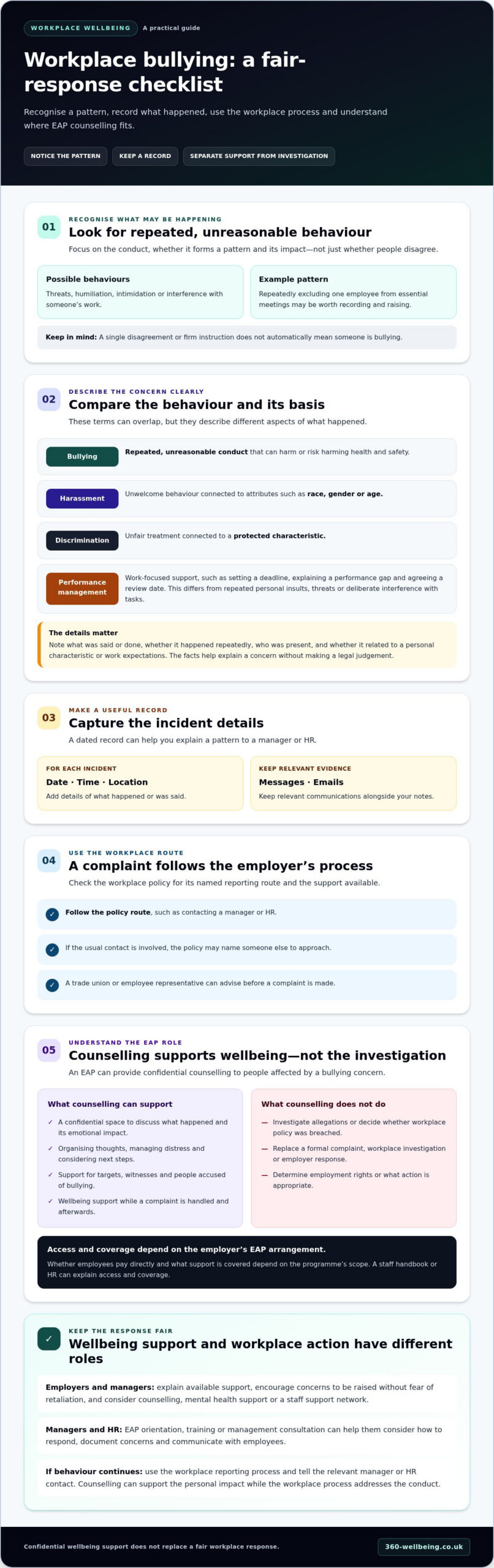
Workplace bullying involves repeated, unreasonable behaviour that harms or risks harming an employee’s health and safety. It can include threats, humiliation, intimidation, or interference with someone’s work. A manager repeatedly excluding one employee from essential meetings, for example, may create a pattern worth recording and raising.
In the UK, protections depend on the conduct. Bullying may overlap with harassment or discrimination, which can engage legal protections, but not every instance of unreasonable behaviour is unlawful harassment. The details matter, including whether the conduct relates to a protected characteristic.
Employees involved in a bullying or discrimination complaint may need support while it is handled and afterwards. Employers and managers should explain what support is available, encourage people to raise concerns without fear of retaliation, and consider counselling, mental health support or a staff support network. These measures support wellbeing, but don’t replace a fair workplace response.
Understanding how an EAP helps with workplace bullying starts with its role: confidential counselling gives affected employees space to discuss what happened and how it has affected them. An EAP can help someone organise their thoughts, manage distress and consider next steps. It doesn’t investigate allegations or decide whether workplace policy was breached.
Whether employees pay directly depends on their employer’s EAP arrangement. The programme’s scope matters too: counselling can support wellbeing, while a formal complaint, workplace investigation or decision about employment rights follows the employer’s process. Employees can consult their staff handbook or ask HR how to access the programme and what support it covers.
To report bullying under a workplace policy, follow its named reporting route, such as contacting a manager or HR. Record each incident’s date, time, location and details, and keep relevant messages or emails. If the usual contact is involved, the policy may name someone else to approach. A trade union or employee representative can advise before a complaint is made.
If bullying continues after an EAP conversation, use the workplace reporting process and tell the relevant manager or HR contact that the behaviour is ongoing. A trained adviser may help you consider how to describe the concern, while counselling supports you with its personal impact. An EAP offers support, but doesn’t replace reporting continuing conduct or seeking advice about a complaint.
2. What is the difference between bullying, harassment, discrimination (vs performance management)?
Consider the behaviour, its pattern and its basis. Workplace bullying means repeated, unreasonable conduct that can harm health and safety. For example, a supervisor who repeatedly humiliates one employee may raise a bullying concern. A single disagreement or firm instruction doesn’t automatically make someone a bully.
Harassment is unwelcome behaviour connected to attributes such as race, gender or age. Discrimination concerns unfair treatment connected to a protected characteristic. These behaviours can overlap with bullying, but the terms describe different aspects of what happened. For instance, an employee might report repeated insults about their age because they feel both targeted and intimidated.
Performance management has a different purpose: helping someone meet clear work expectations. A manager may set a deadline, explain a performance gap and agree a review date. The distinction lies in how feedback is delivered and applied. Specific, work-related feedback differs from repeated personal insults, threats or deliberate interference with someone’s tasks.
Look at the details before deciding how to describe a concern. Note what was said or done, whether it happened repeatedly, who was present, and whether it related to a personal characteristic or work expectations. A dated record can help you explain the pattern to a manager or HR, without making a legal judgement.
Bullying can come from a coworker, supervisor or another manager. A colleague who repeatedly withholds information may obstruct someone’s work; a manager who publicly humiliates an employee may misuse their authority. Either way, the impact can include stress or anxiety. Both the relationship and the behaviour matter when considering a response.
Mentorship and coaching can help employees build confidence, practise a difficult conversation or plan how to raise concerns. Stress-management techniques may also help someone manage the psychological effects of a tense workplace. These forms of support don’t determine whether bullying occurred, and shouldn’t shift responsibility onto the affected employee.
An EAP can help managers, HR and supervisors understand bullying through orientation and training. A management consultation offers a structured opportunity to consider how to respond, document concerns and communicate with employees. Training can use examples such as exclusion from meetings or humiliating comments to help managers distinguish firm feedback from harmful conduct.
For individual development, life coaching support can help someone set goals and prepare for workplace conversations. Coaching is distinct from a formal investigation: HR or the employer’s process must address allegations and decide what action is appropriate.
3. Counselling and mental health support through an EAP
Bullying can affect sleep, concentration, confidence and relationships at work. For example, an employee who dreads team meetings may feel anxious before each shift. EAP counselling provides a confidential space to discuss these emotional effects and consider what support might help. Talking things through can also help someone who feels overwhelmed organise their thoughts.
A first conversation can focus on immediate concerns: what happened, how it is affecting daily life, and what feels manageable next. Someone who has been repeatedly undermined might want help preparing to speak with HR. Another person may need space to process fear, anger or self-doubt before deciding what to do.
Counselling supports wellbeing; it doesn’t investigate allegations or decide whether workplace policy was breached. An EAP counsellor can help an affected employee identify coping strategies and consider options, while the employer remains responsible for handling the complaint. Keeping these roles clear lets employees seek emotional support without confusing it with a formal finding.
Support during and after a bullying or discrimination complaint can help prevent mental health problems from developing or existing problems from worsening. This matters when the process takes time or contact with the person accused continues. For example, an employee might use counselling to manage distress during an investigation and return for support after a decision or workplace change.
Employees may find it hard to speak up when they’re upset, have experienced mistreatment for a long time or fear unfair treatment for making a complaint. An EAP provides a confidential place to explain what is happening and explore how to raise it. It can also help them consider practical steps, such as noting how incidents affect work or identifying someone they trust.
Managers can support employees by explaining how to access the EAP and what mental health support is available. They should also address reported behaviour through workplace procedures, rather than treating counselling as the solution to bullying. If incidents are ongoing, a manager can ask what immediate workplace support is needed and explain the next step in the complaint process.
Someone who has been bullied may need support even after the immediate concern appears resolved. Returning to the same team, rebuilding confidence or working with a colleague involved in the complaint can bring fresh stress. Ongoing counselling gives the employee a place to discuss these changes and identify which parts of work still feel difficult.
Colleagues and managers can help by listening without pressing for details, explaining available support and taking reports seriously. An EAP can complement this response with confidential counselling, while the employer handles the workplace issue. Together, these forms of support address both the employee’s emotional wellbeing and the conditions affecting it.
4. Support for witnesses and people accused of bullying or discrimination
Witnessing repeated bullying can be distressing, even when someone isn’t the direct target. A colleague who sees a team member mocked in meetings may feel anxious, guilty or unsure how to respond. People accused of bullying can also experience stress while an allegation is considered. Support should treat everyone with respect without assuming what happened.
If you witness conduct, first consider whether intervening is safe. You could check privately on the affected colleague, offer to accompany them when they speak to a manager, or record what you personally observed. Avoid confronting someone if that could escalate the situation. A witness can provide factual information through the workplace’s reporting process without trying to investigate the complaint.
Managers should explain what support is available to everyone involved in a complaint, including the person who raised the concern, witnesses and the person accused. For example, HR can explain how to access counselling, identify a staff support network and clarify who will handle questions during the process. Clear, respectful communication helps people understand what to expect without promising a particular outcome.
After a traumatic workplace incident, employers can follow up with the whole team, reassure colleagues and ask how they’re doing. A manager might arrange a private check-in after employees witness an aggressive confrontation. This gives staff a chance to raise immediate concerns and learn where to find support. Follow-up matters even for colleagues who weren’t directly involved.
An employee assistance programme can provide a confidential space to discuss the emotional effects of witnessing bullying or being accused. Someone shaken after seeing a colleague humiliated could use counselling to process the event and consider next steps. A person facing an allegation could also discuss stress, disrupted sleep or worries about returning to work, while the employer handles the complaint separately.
Support doesn’t mean deciding who is right. The person who raised the complaint should be heard, witnesses should be treated fairly, and the person accused should have an opportunity to respond through the employer’s process. Managers can avoid sharing unnecessary details with colleagues while explaining how employees can access support and whom to approach with concerns.
Check in again after the initial conversation. A supervisor might ask whether a witness still feels uncomfortable working alongside the people involved, or whether the accused needs support during workplace meetings. If someone describes persistent distress or signs of depression, guide them towards appropriate mental health support. These conversations help employers notice ongoing effects without treating counselling as a substitute for addressing reported behaviour.
A practical next step for employees is to speak with a manager, HR contact, union representative or staff support network. Witnesses can explain what they saw, while people accused can ask how to respond and what support is available. Everyone deserves a respectful process and support suited to their situation.
5. Definition and forms of workplace bullying
Workplace bullying is repeated, unreasonable behaviour directed at an employee or group that creates a risk to health and safety. The pattern matters: one sharp exchange may be upsetting, but repeated humiliation or intimidation can indicate a wider problem. An organisation should consider the conduct and its effects on workers, rather than dismissing it as a personality clash.
Some forms of bullying are direct and visible. A colleague might repeatedly threaten someone, mock them in front of the team or use intimidating language during meetings. Other behaviour is less obvious: a manager could repeatedly withhold information needed for a task, exclude one worker from relevant discussions or interfere with their work. These examples can harm the work environment and undermine someone’s ability to do their job.
Bullying can also involve sabotage. For example, someone might deliberately alter a shared file, conceal materials or give a colleague misleading instructions, then blame them for the resulting error. A single mistake doesn’t establish a pattern. Repeated conduct, context and impact help explain why an employee believes they’re being targeted.
People experiencing bullying may feel anxious, lose confidence or struggle to concentrate. Witnesses can also be affected when they see a coworker repeatedly humiliated. The impact may extend across a team: employees might avoid meetings, hesitate to share ideas or worry about becoming the next target. This can damage working relationships and productivity.
Keep your account specific. An incident record can include the date, time, location and details of what happened. For example, note the words used in a meeting, the task affected and who was present. Save relevant work messages or emails where appropriate. A clear record helps explain repeated behaviour instead of relying only on a general description.
Employers should respond to reports promptly and fairly, document concerns and monitor the working relationship. A practical resolution may involve stopping the behaviour, addressing its effects and checking whether the employee feels safe at work. Counselling can support wellbeing, but doesn’t replace action to investigate or address reported conduct.
Physical violence or a threat of violence changes the immediate priority. The employer should focus on safety and arrange appropriate support for anyone affected. Even without physical contact, repeated threats or intimidation deserve a serious response because they can create a harmful work environment.
Employees who recognise a pattern can use their workplace reporting route and describe concrete incidents. Managers can strengthen prevention by explaining expected conduct and making reporting procedures clear. For help building a healthier approach to workplace wellbeing, explore workplace wellbeing support.
360 Wellbeing: 24/7 Virtual GP
360 Wellbeing offers Mental Health Support for employees affected by workplace bullying, witnesses and people dealing with an accusation. It gives employers a practical way to include wellbeing support alongside their workplace process, while reports and allegations are handled through the appropriate internal channels.
Employees can also access a 24/7 Virtual GP, which may be useful when a health concern needs attention alongside the stress of a difficult work situation. Physiotherapy and 360 Rewards provide further wellbeing support for different employee needs. These services complement, but don’t replace, action to address bullying or discrimination at work.
If you’d like to explore wellbeing support for your organisation, contact 360 Wellbeing.
Build a more supportive next step
Responding to workplace bullying means more than resolving a complaint. It also means creating a culture where people know how to seek support and managers take concerns seriously. Understanding how an EAP helps with workplace bullying can help organisations make wellbeing part of their response, alongside clear reporting and fair procedures.
For employees, reaching out for support can be a constructive step while they consider what they need next. For employers, making support visible helps show that wellbeing matters to the whole team. 360 Wellbeing offers Mental Health Support, a 24/7 Virtual GP and 360 Rewards as part of its wider employee wellbeing provision.
Contact 360 Wellbeing for support and explore a thoughtful next step towards a healthier workplace.
Frequently Asked Questions
What is workplace bullying?
Workplace bullying is a repeated pattern of unreasonable behaviour that creates a risk to someone’s health and safety. For example, regularly excluding a colleague from information they need or repeatedly humiliating them in meetings may form part of a pattern. A single disagreement or difficult conversation doesn’t automatically amount to bullying. Consider what happened over time, its context and its effect on the person concerned.
Should you approach the bully?
You don’t have to confront the person accused of bullying, especially if it feels unsafe or could escalate matters. If you feel comfortable, you could calmly explain how a specific behaviour affects you, such as being interrupted in team meetings. Otherwise, use your workplace reporting route and ask a manager, HR contact or employee representative for support. Keep a record of relevant incidents and communications.
What are the signs of bullying at work?
Look for a recurring pattern rather than relying on one uncomfortable interaction. Examples include repeated insults, threats, deliberate exclusion, withholding information needed for a task or interference with someone’s work. Changes in team communication can also be a prompt to pay attention, such as one employee being consistently left out of work discussions. Record specific actions and their context rather than relying on labels alone.
What is the difference between bullying, harassment, discrimination (vs performance management)?
Bullying describes repeated, unreasonable behaviour; harassment involves unwelcome conduct related to attributes such as race, gender or age. Discrimination concerns unfair treatment connected to a protected characteristic. Performance management, by contrast, focuses on work expectations, such as discussing missed deadlines and agreeing support or a review. Consider whether feedback is specific and work-related or involves personal attacks, threats or repeated humiliation.
Can employees contact an EAP confidentially without telling their employer?
EAP counselling provides a confidential space to discuss workplace or personal concerns, and employees can seek support without first raising a formal complaint. The programme should explain its confidentiality arrangements and any limits before counselling begins. An EAP conversation doesn’t automatically notify HR or start an investigation. Employees who want workplace action need to use the employer’s reporting process separately.
What support do UK EAPs offer for workplace bullying, such as counselling or legal advice?
Depending on the programme, support may include confidential counselling or mental health support for people affected by a complaint. Some employee benefits also include legal support, but its scope varies between programmes. EAP support can help someone manage distress or consider next steps; it doesn’t investigate allegations or replace the employer’s complaint process. Check what support your workplace programme provides.
How can a manager or HR team use an EAP to address workplace bullying?
Managers can explain how staff access the EAP and offer support to complainants, witnesses and people accused. HR can use EAP training to help managers recognise bullying concerns and respond appropriately. Understanding how an EAP helps with workplace bullying means keeping its wellbeing role distinct from investigation: document reports, follow the organisation’s process and explain available support without promising an outcome.