
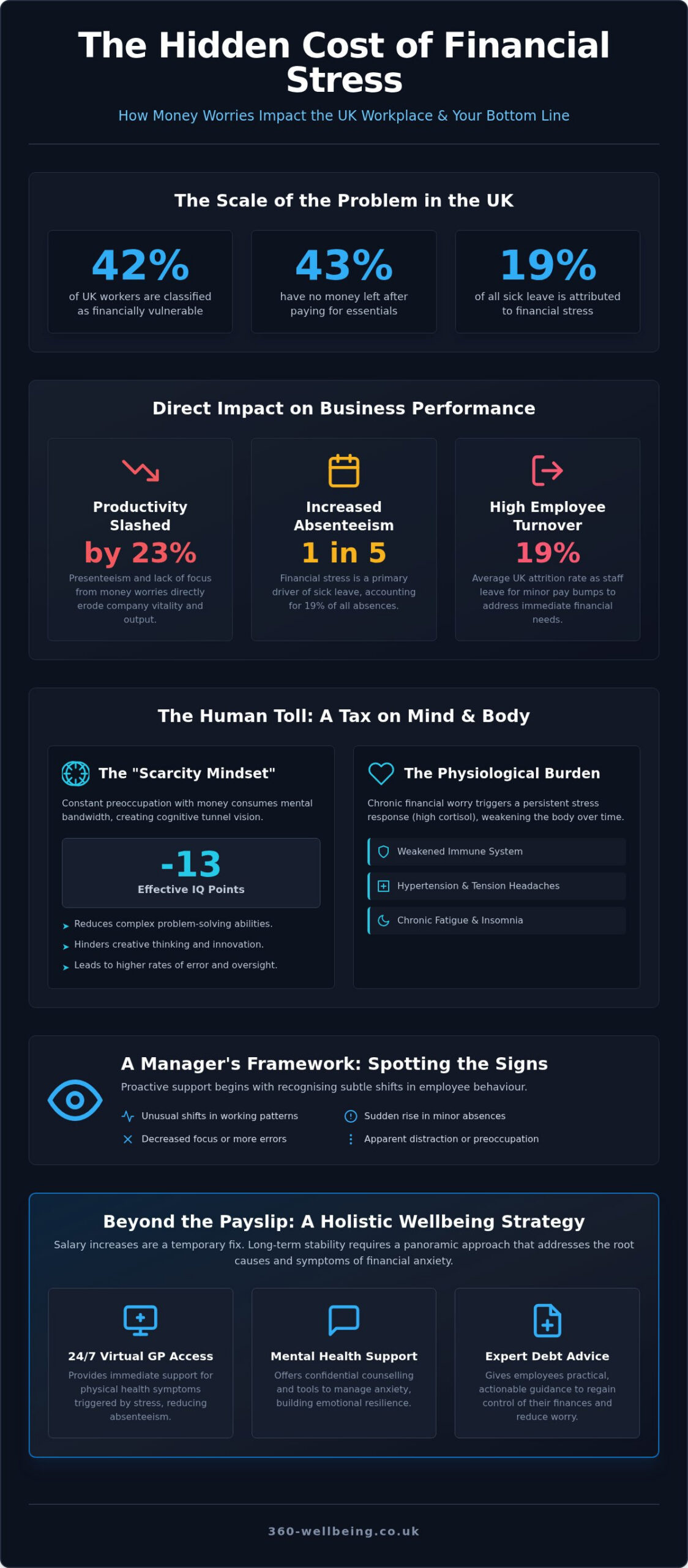
Did you know that financial stress is now responsible for 19% of sick leave in Britain and can slash individual productivity by as much as 23%? In a 2026 market where nearly half of UK adults are in financially vulnerable circumstances, understanding how financial stress affects employee performance uk is no longer just a HR concern; it’s a core business imperative. Whether it’s the 43% of your team who have no money left after paying for essentials or those struggling with the rising cost of living, the mental weight of debt doesn’t stay at the front door. It follows them to their desks, manifesting as presenteeism and a lack of focus that quietly erodes your company’s vitality.
You’ve likely noticed the rising absenteeism or the sudden departure of talented staff for minor pay bumps elsewhere, and it’s natural to feel ill-equipped to step into your employees’ personal ledgers. We believe that supporting your team’s financial health is a professional necessity and a human entitlement that benefits everyone. This guide will show you the direct link between financial anxiety and your bottom line, offering a clear framework to implement holistic support. We’ll explore how a panoramic approach to wellbeing, from debt advice to virtual healthcare, can restore engagement and protect your business from the high costs of recruitment and turnover.
Key Takeaways
- Understand why financial stress is a physiological barrier and discover how financial stress affects employee performance uk through reduced focus, increased absenteeism, and lower productivity.
- Learn about the “scarcity mindset,” a cognitive state where constant worry about money reduces an employee’s effective IQ and decision-making capacity.
- Recognise why salary increases alone are rarely a silver bullet; long-term stability requires a panoramic approach that addresses the emotional and physical symptoms of financial anxiety.
- Gain a practical framework for managers to identify subtle signs of distress, such as unusual shifts in working patterns or a sudden rise in minor health-related absences.
- Discover how to build a durable wellbeing culture by integrating 24/7 virtual GP access, mental health support, and expert debt advice into a single, unified strategy.
The Reality of Financial Stress in the UK Workplace
Financial stress isn’t a temporary hurdle or a simple lack of funds. It’s a chronic state of worry regarding debt, rising bills, and long-term security that weighs heavily on the mind. In 2026, the UK economy continues to place significant pressure on household budgets. Even with the National Living Wage at £12.71 per hour, 42% of workers are now classified as financially vulnerable. There’s a vital distinction between simply “not having enough” and the exhausting “anxiety of management,” where an individual must constantly calculate and recalculate every penny just to survive. This mental load explains exactly how financial stress affects employee performance uk, turning a standard workday into a struggle for focus.
For HR leaders and business owners, financial wellbeing has shifted from a peripheral perk to a business-critical KPI. When nearly half of your workforce is preoccupied with their bank balance, your company’s overall health is at risk. We view this not just as a corporate challenge, but as a human one. Addressing it requires a panoramic viewpoint that sees the employee as a whole person, not just a line on a payroll. This is why understanding the link between personal finances and professional output is essential for any modern strategy aiming for durability and growth.
The Rise of Presenteeism and Absenteeism
Money worries are a primary driver of presenteeism, where employees are physically present but mentally absent. Instead of focusing on tasks, they’re often preoccupied with debt repayments or housing costs. This mental distraction takes a heavy cognitive and physiological toll, which frequently manifests as physical illness. Data shows that financial stress is responsible for 19% of sick leave in the UK. This often presents as frequent, short-term absences or “sick building syndrome,” where the stress of the environment makes existing health issues feel unmanageable. When your team is too worried to focus, your productivity inevitably drops by nearly a quarter.
The Hidden Cost of Employee Turnover
When financial pressure becomes unbearable, employees often feel forced to make short-term decisions. This is one reason why people leave stable, supportive roles for a minor pay increase of just a few pence per hour elsewhere. They’re looking for an immediate “fire extinguisher” for their debt, even if the new role offers less long-term security. With the average UK attrition rate reaching 19% in 2025, the cost of recruitment is a major drain on resources. Investing in a robust support system, such as an Employee Assistance Programme (EAP) or debt advice, is much more cost-effective than constant re-hiring. It shows your team that you’re a partner in their success, which is a powerful way to reduce how financial stress affects employee performance uk while building lasting loyalty.
The Cognitive and Physiological Toll on Performance
Financial stress doesn’t just occupy a corner of the mind; it creates what researchers call a “scarcity mindset.” When an individual is constantly preoccupied with money, their brain’s bandwidth is consumed by survival calculations. This mental tunnel vision can reduce effective IQ by up to 13 points, making complex problem solving and creative thinking nearly impossible. Understanding how financial stress affects employee performance uk requires looking at this biological reality. It’s not a lack of willpower; it’s a cognitive depletion that leaves little room for professional excellence.
This mental strain quickly becomes a physical burden. Chronic financial worry triggers the persistent release of cortisol, the body’s primary stress hormone. Over time, high cortisol levels weaken the immune system and lead to hypertension, tension headaches, and chronic fatigue. This is why 7% of UK employees have taken time off work specifically due to financial stress. The “panoptic” impact means that money worries rarely stay isolated. They bleed into every aspect of health, creating a cycle of exhaustion that destroys next-day concentration. Money-related insomnia further compounds this, as the quiet hours of the night often become a breeding ground for financial anxiety.
Impact on Focus and Error Rates
Cognitive load in the context of personal finance is the mental energy consumed by the constant, exhausting monitoring of bank balances and debt repayments. This depletion leads to a measurable increase in safety incidents and quality errors. For those in high-risk or precision-based roles, the inability to “switch off” from personal debt is neurologically impossible. The brain prioritizes the perceived threat of a mounting bill over the task at hand, which is a primary way how financial stress affects employee performance uk. When the mind is elsewhere, mistakes that were once rare become frequent and costly.
The Mental Health Spiral
There is a profound feedback loop between debt and mental health. Financial anxiety often acts as a gateway to clinical depression and long-term anxiety disorders. When employees feel trapped by their circumstances, the resulting tension manifests as physical symptoms like chronic back pain or minor illnesses that keep them away from their desks. Early intervention is vital for breaking this cycle and restoring vitality. Access to Virtual GP services allows employees to address these physical and mental symptoms before they escalate into a crisis. By providing a comprehensive support platform, you help your team regain the mental clarity needed for both their personal health and their professional success.
Beyond the Payslip: Why Traditional Support Fails
It’s a common misconception that a salary increase is the only way to solve money worries. While the National Living Wage is set to rise to £12.71 in April 2026, many employers find that pay rises alone don’t always translate into better focus or higher engagement. For the 43% of UK workers who have no money left after essentials, a small bump in pay is often swallowed by debt interest or the rising cost of living before it can provide any emotional relief. This is a primary reason why traditional fixes fail to address how financial stress affects employee performance uk. Stress is as much about the anxiety of management as it is about the numbers on a payslip.
Reactive support, such as emergency pay advances, often acts as a temporary sticking point rather than a cure. These measures can inadvertently create a cycle of dependency without addressing the underlying causes of financial fragility. Similarly, one-off financial literacy workshops often miss the mark because they provide theory when the employee needs a lifeline. True stability comes from a proactive, durable strategy that offers support long before a crisis hits. It requires a culture of trust where employees can seek help anonymously, without the fear that their personal struggles might affect their professional standing.
Education vs. Practical Tools
Knowledge is certainly power, but it isn’t always a solution in a crisis. Knowing how to budget doesn’t help when an unexpected car repair or a high utility bill derails a month’s finances. This is where practical tools outperform simple education. A 360 Rewards marketplace stretches an existing salary by providing thousands of discounts on daily costs, offering immediate relief that a workshop cannot match. When paired with professional Financial Support & Debt Advice, employees gain a structured path forward. This combination of daily savings and expert guidance provides a tangible sense of control, directly reducing the mental load that hinders workplace output.
The Need for Holistic Benefits
We believe that financial health cannot be separated from a person’s mental or social wellbeing. A panoramic viewpoint is essential because money worries often bring legal anxieties and health concerns in their wake. Integrating services like Complimentary Will Writing and Legal Support helps remove the weight of life-stage stressors that often distract staff during working hours. When these are unified with Mental Health Support on a single platform, you create a robust safety net. This all-encompassing approach ensures that wellbeing is treated as a professional necessity rather than a luxury, helping to mitigate how financial stress affects employee performance uk by protecting the whole person.
Spotting the Signs: A Manager’s Framework for 2026
Managers often feel like they’re stepping into a minefield when personal finances enter the workplace conversation. However, spotting the early signs of distress is essential for maintaining a healthy, productive team. Identifying these markers requires a panoramic viewpoint of your team’s daily interactions. It isn’t about prying into bank balances; it’s about noticing subtle shifts in energy and focus. When you understand how financial stress affects employee performance uk, you can move from reactive discipline to proactive support. This shift protects your bottom line while reinforcing a culture of genuine care and durability.
Behavioural Red Flags
In 2026, the signs of financial anxiety are often quiet and easy to miss. You might notice a high-performing staff member suddenly opting out of team lunches or social events to save costs. Alternatively, an employee may start requesting excessive overtime or shifts that don’t align with their previous patterns, often driven by an urgent need for immediate cash flow. A sudden drop in engagement or increased irritability can also be a signal. These aren’t just “attitude problems”; they’re often the result of the cognitive load discussed earlier. Recognising the “distraction factor,” such as frequent personal calls during work hours to deal with creditors, is another vital clue in understanding how financial stress affects employee performance uk.
The Manager’s Role in Signposting
Opening a conversation about money requires a warm, human touch. You don’t need to be a financial advisor; you simply need to be a supportive partner. Start by mentioning observable changes, like “I’ve noticed you’ve been a bit quiet lately, is everything okay?” without being clinical or intrusive. Your primary goal is to act as a professional buffer by signposting your team to expert help. An Employee Assistance Programme (EAP) is an invaluable tool here, offering a safe, confidential space for employees to discuss their debt or anxiety.
By maintaining confidentiality and offering access to Life Coaching or Financial Support & Debt Advice, you help employees regain a sense of control over their lives. This methodical approach ensures that wellbeing is treated as a professional necessity rather than a luxury. To see how these tools can be integrated into your workplace, explore our holistic wellbeing solutions today.
Implementing a Holistic Financial Wellbeing Strategy
Moving from reactive crisis management to a durable wellbeing culture is the most significant step a UK employer can take in 2026. While we’ve explored the biological and cognitive impact of money worries, this final stage is about building a permanent solution. A panoramic wellbeing strategy doesn’t just address debt; it acknowledges that financial, physical, and mental health are inextricably linked. By integrating these elements, you create an environment where employees feel secure, valued, and capable of performing at their best.
Measuring the success of such a strategy is straightforward when you look at the bottom line. With financial stress responsible for 19% of sick leave and a 23% drop in productivity, the cost of inaction is far higher than the investment in support. Research indicates a clear return on investment, with employers often seeing a £3 return for every £1 spent on financial wellbeing programmes. This ROI comes from reduced recruitment costs, lower absenteeism, and a significant decrease in how financial stress affects employee performance uk. When your team isn’t preoccupied with survival, they have the mental bandwidth to focus on growth.
The Components of a 2026 Wellbeing Strategy
A modern, effective strategy must be multifaceted to meet the diverse needs of a workforce where 42% are classified as financially vulnerable. A successful approach involves providing 24/7 Virtual GP access to handle the physical fallout of chronic stress, such as hypertension or fatigue. This allows staff to seek medical advice without the need for time-consuming appointments that take them away from their desks. Additionally, professional Financial Support & Debt Advice gives employees immediate crisis support and a structured path out of debt. Finally, the 360 Rewards marketplace offers tangible, daily cost-of-living relief by providing thousands of discounts, helping the £12.71 National Living Wage go much further.
Next Steps for UK Employers
Your journey toward a more resilient workforce starts with a wellbeing audit of your current benefits package. Identify the gaps where your current support might be too reactive or fragmented. Consider moving toward a unified platform that offers a per-employee subscription model, ensuring that every member of your team has access to the same high-standard care. Clear, empathetic communication is vital; employees need to know that these services are a professional necessity provided for their benefit, not a clinical intervention. Discover how 360 Wellbeing can transform your team’s performance and help you build a workplace where everyone has the opportunity to thrive.
Empowering Your Team Through Panoramic Wellbeing
Understanding how financial stress affects employee performance uk is the first step toward creating a truly durable workplace culture. We’ve explored how money worries act as a cognitive drain, reducing focus and increasing physical illness among even your most talented staff. While salary increases have their place, the real solution lies in providing a unified safety net that addresses the mental, physical, and financial facets of health simultaneously.
By choosing a proactive path, you move beyond crisis management and toward a vision of total vitality. Our platform is already used by UK businesses to reduce absenteeism and improve retention through a no-hassle, per-employee monthly subscription. With access to 24/7 Virtual GP services and Mental Health therapy, your team receives the clinical expertise they need with the human touch they deserve. Secure your team’s wellbeing with 360 Wellbeing today.
Taking this step doesn’t just protect your bottom line; it honours the commitment you’ve made to the people who drive your success. Together, we can build a future where every employee feels supported, secure, and ready to excel.
Frequently Asked Questions
How does financial stress specifically impact productivity in the UK?
Financial stress primarily hits productivity through “presenteeism,” where staff are physically present but mentally preoccupied with bills or debt. This mental “scarcity mindset” consumes cognitive bandwidth, leading to slower problem solving and higher error rates. When evaluating how financial stress affects employee performance uk, it’s vital to recognize that this distraction is a physiological response to insecurity that can reduce overall output by nearly a quarter.
What are the first signs of financial stress I should look for in my employees?
Look for subtle shifts in routine or social engagement rather than obvious distress. You might notice a previously social employee suddenly opting out of team lunches or communal coffee runs to save money. Other indicators include a sudden increase in requests for overtime or shifts that don’t match their usual patterns. These shifts often suggest an urgent need to manage immediate cash flow or reduce daily outgoings.
Can an Employee Assistance Programme (EAP) really help with debt?
A comprehensive EAP acts as a professional buffer, offering employees a safe, confidential space to discuss their struggles. While the EAP provides the gateway, the integrated Financial Support & Debt Advice delivers the practical solution. By connecting staff with debt specialists and helplines, an EAP helps move them from a state of crisis to a structured, manageable path toward stability without involving their manager in the details.
Is it legal for an employer to offer financial advice to staff?
Employers should distinguish between “financial guidance” and “regulated financial advice.” While you shouldn’t give personal investment or debt advice yourself, it’s entirely legal and encouraged to provide access to professional services. By offering a platform that includes Financial Support & Debt Advice, you’re giving your team the tools they need to make informed decisions through qualified experts without taking on the legal liability yourself.
How do I talk to an employee about their financial stress without overstepping?
Approach the conversation with empathy by focusing on observable changes in their wellbeing or work patterns. Instead of asking about their bank balance, try saying, “I’ve noticed you haven’t seemed yourself lately, and I want to make sure you’re supported.” Your role is to be a supportive partner who signposts them to professional help, such as an EAP or Life Coaching, rather than trying to solve their personal finances.
What is the ROI of an employee wellbeing platform for a small business?
The ROI comes from significantly reduced recruitment costs and lower absenteeism. For small businesses, where one person’s absence is felt acutely, the impact is even greater. Research suggests that for every £1 invested in these programmes, employers see a return of approximately £3. This return is driven by higher engagement and a reduction in how financial stress affects employee performance uk, as staff feel more secure and loyal.
How can a Virtual GP help with workplace stress?
A Virtual GP handles the physical fallout of chronic stress, such as tension headaches, fatigue, and insomnia. By providing 24/7 access to UK-registered GPs, employees can address these health concerns before they escalate into long-term sick leave. This early intervention ensures that the physiological symptoms of financial worry are managed professionally, allowing the individual to regain their vitality and return to full focus at work.
Why is financial wellbeing considered part of holistic health?
Financial wellbeing is a core pillar of holistic health because money worries are never isolated. They directly trigger mental health challenges like anxiety and physical issues like high blood pressure or chronic pain. Taking a panoramic viewpoint means recognizing that a person’s financial stability is just as essential to their wellness as their physical fitness. When financial health is prioritized, it creates a durable foundation for total workplace harmony.