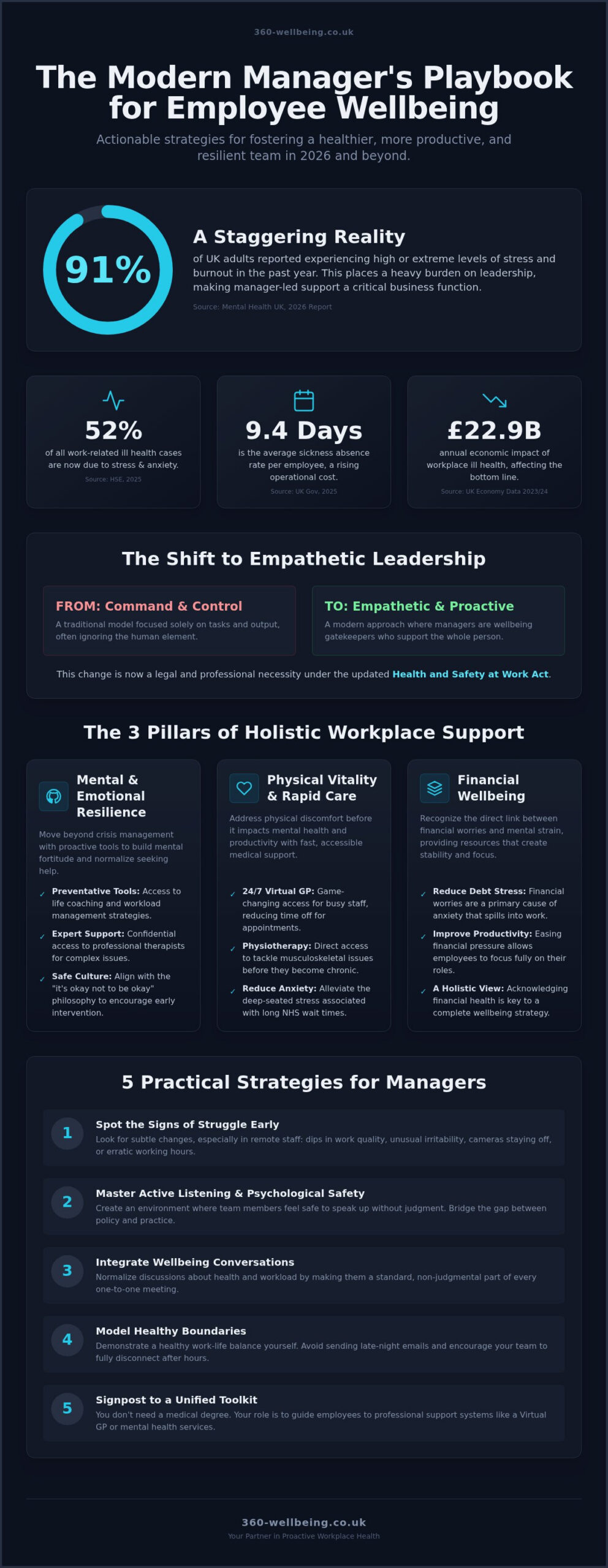
91% of UK adults reported experiencing high or extreme levels of stress and burnout in the past year, according to Mental Health UK’s 2026 report. It’s a staggering figure that places a heavy burden on leadership teams across the country. You probably recognise the weight of this responsibility, yet you might feel unqualified to navigate the complexities of psychological health or manage the rising tide of absenteeism. Understanding how managers can support employee wellbeing is no longer a secondary HR concern; it’s a core legal and professional necessity under the updated Health and Safety at Work Act.
We know you want to be a supportive partner in your team’s health journey without feeling like you need a medical degree to do so. This guide provides actionable strategies and essential tools that empower you to foster a healthier, more productive workplace culture. We’ll outline a clear framework for manager-led wellbeing, showing you how to replace fragmented systems with integrated support like 24/7 Virtual GP access and mental health therapy. By the end of this article, you’ll have a methodical path forward to improve team morale, boost retention, and reduce the operational costs associated with sickness absence.
Key Takeaways
- Understand the shift from traditional command structures to empathetic leadership and why it’s the primary influence on team stress levels.
- Discover practical ways how managers can support employee wellbeing through proactive mental resilience and rapid access to physical health services.
- Master core 2026 management competencies, including active listening and signposting, to bridge the gap between policy and practice.
- Learn to model healthy boundaries and integrate wellbeing conversations into every one-to-one meeting to normalize workplace health.
- Explore how a unified digital toolkit can provide 24/7 Virtual GP access and mental health support, reducing the pressure on individual leaders.
The Crucial Role of Line Managers in Employee Wellbeing
Managers are the heartbeat of an organisation. You aren’t just overseeing tasks; you’re the primary influence on your team’s daily stress levels. In the UK, work-related stress and anxiety now account for 52% of all work-related ill health cases, as reported by the Health and Safety Executive in November 2025. This reality has forced a shift from the old ‘command and control’ style to a more empathetic leadership model in 2026. Understanding how managers can support employee wellbeing is now a core competency. You act as a wellbeing gatekeeper, identifying small hurdles before they spiral into long-term sickness absence or burnout. This proactive stance is the most effective way to reduce the average sickness absence rate, which rose to 9.4 days per employee in 2025.
Why Empathy is a Business KPI
Empathy isn’t just a soft skill; it’s a vital driver for retention and productivity. When staff feel heard and valued, they’re far more likely to remain loyal to the organisation. Conversely, ignoring health leads to presenteeism, where employees are physically present but mentally disengaged. This hidden cost contributes significantly to the £22.9 billion annual impact of workplace ill health on the UK economy recorded in 2023/24. Manager-led wellbeing is the proactive management of mental, physical, and financial health. By prioritising workplace wellness, you’re protecting the bottom line while fulfilling your legal duty to assess psychological risks under the 2026 Health and Safety at Work Act updates.
Identifying the Signs of Struggle
Spotting trouble early requires a keen eye for subtle changes in behaviour. You might notice a dip in work quality, unusual irritability, or a team member withdrawing from social chats. For remote or hybrid staff, these signs are often digital and harder to catch. Look for cameras staying off during calls, a sudden lack of contribution in meetings, or erratic working hours that suggest a struggle with boundaries. Creating psychological safety is essential here. If your team feels safe to speak up without judgment, they’re more likely to flag issues early. Learning how managers can support employee wellbeing starts with observing these nuances and opening the door for honest, supportive conversation. It’s about being proactive rather than reactive, ensuring every team member feels supported in their whole life, not just their job role.
Identifying the 3 Pillars of Holistic Workplace Support
Total wellness isn’t a siloed experience. If an employee is worried about rising debt, their mental health inevitably suffers. If they have chronic back pain from a poor desk setup or manual strain, their focus and productivity drop. Understanding how managers can support employee wellbeing requires a panoramic view of these interconnected factors. By moving away from reactive “firefighting” and toward a proactive model, you create a durable foundation for your team. This holistic approach ensures that support is available for the whole person, not just the worker, which is essential for maintaining a harmonious and high-performing environment.
Mental and Emotional Resilience
We need to move beyond just managing crises when they occur. Proactive resilience involves giving staff tools before they reach a breaking point. Life coaching is a powerful preventative measure here, helping individuals set boundaries and manage heavy workloads effectively. While peer support is valuable for day-to-day empathy, access to professional therapy ensures that clinical expertise is available when complex issues arise. Aligning your team’s culture with the Mental health at work action plan helps normalise the “it’s okay not to be okay” philosophy. When employees don’t feel judged for their struggles, they’re much more likely to seek help early, preventing long-term burnout.
Physical Vitality and Rapid Care
Sedentary work and repetitive physical tasks are quiet drains on team vitality. For both desk-based and manual workers, physical discomfort often leads to mental fatigue and increased irritability. Rapid medical access is a significant game changer in the modern workplace. 24/7 Virtual GP services are particularly beneficial for working parents and busy staff who can’t easily attend daytime appointments. Providing direct access to physiotherapy also helps address musculoskeletal issues before they result in long-term absence. These tools reduce the deep-seated anxiety often associated with long NHS wait times, giving your team the reassurance that professional care is always within reach when they need it most.
Financial and Legal Stability
Financial stress is often cited as the primary source of employee distraction in 2026. When a team member is preoccupied with debt or legal worries, they cannot bring their full energy to their role. Providing financial support through debt advice and legal helplines removes these heavy emotional burdens. Even perks like complimentary will writing offer significant peace of mind for families. This level of care shows you’re invested in their long-term security and durability, not just their immediate output. To see how these tools fit into a wider strategy, you can explore the integrated wellbeing solutions available for modern UK organisations.
Training for New Line Managers: Equipping Your Team for Success
Traditional management training has historically focused on output, deadlines, and technical KPIs. While these are essential for business growth, they often ignore the human infrastructure that makes those results possible. In 2026, the definition of a successful leader has evolved. You’re now expected to be an empathetic partner in your team’s health journey. Understanding how managers can support employee wellbeing is a specific skill set that requires intentional development. Without this training, new managers often feel overwhelmed. This leads to a phenomenon known as ‘Manager Burnout,’ where the pressure of supporting others without adequate tools causes the leader’s own resilience to crumble.
Core competencies for modern leadership include active listening, setting firm digital boundaries, and effective signposting. It’s not about becoming a therapist or a doctor; it’s about being the bridge between a struggling employee and the professional support they need. When you equip your leaders with these skills, you create a culture of durability where challenges are caught early. Team members then feel safe to be authentic about their needs, knowing they’ll be met with understanding rather than judgment.
Essential Skills for New Line Managers in the UK
Conducting a wellbeing 1-to-1 is a delicate balance. It should feel like a supportive check-in rather than an intrusive interrogation. Start by asking open-ended questions like, “How are you finding your current workload?” rather than “Are you stressed?” This allows the employee to lead the conversation. You must also understand the legal boundaries of your role. UK managers should never attempt to provide medical or psychological advice. Instead, your training should focus on how to signpost to an Employee Assistance Programme (EAP) or other corporate health tools. This ensures the employee receives clinical expertise while you maintain a professional, supportive relationship.
Training vs. Technology: What Works Best?
Training provides the ‘how,’ but technology provides the ‘what.’ Even the most empathetic manager will struggle if they don’t have immediate solutions to offer a team member in distress. This is where a unified wellbeing platform becomes an essential toolkit. When you spot a need, you can offer ‘just-in-time’ support, such as 24/7 Virtual GP access or mental health therapy, rather than asking the employee to wait for internal HR processing. This immediate action is a key way how managers can support employee wellbeing effectively. Digital platforms also provide anonymised data and reporting. This allows you to measure the effectiveness of your support strategies and identify team-wide trends before they impact your operational costs.
5 Practical Strategies for Managers to Boost Team Vitality
Moving from a theoretical understanding of health to daily practice requires a shift in management habits. While previous sections highlighted the necessity of training and a holistic viewpoint, these tactical steps provide the “boots on the ground” approach needed in a modern UK workplace. Implementing these strategies helps clarify how managers can support employee wellbeing without adding significant administrative weight to their own schedules. By weaving health into the fabric of the working day, you transform it from a separate initiative into a shared cultural value.
- Normalise wellbeing in every 1-to-1: Don’t wait for a crisis to ask how someone is doing. By making a health check-in a standard agenda item in every meeting, you remove the stigma and encourage early disclosure of stress.
- Model healthy boundaries: Your team will follow your lead. If you send emails at 9:00 PM or skip your lunch break, they’ll feel pressured to do the same. Demonstrate durability by switching off on time and taking full breaks.
- Utilise 360 Rewards: Use the marketplace tools to celebrate team wins. Offering discounts on everyday essentials helps mitigate the stress of the UK’s cost-of-living challenges, directly supporting the financial pillar of health.
- Implement ‘Wellbeing Minutes’: Dedicate the first sixty seconds of every team huddle to a health tip or a brief moment of mindfulness. It signals that the organisation values the person as much as the project.
- Empower Virtual GP usage: Encourage staff to use 24/7 Virtual GP services during work hours for quick consultations. This prevents minor ailments from escalating and reduces the need for full days off due to travel and waiting times.
Small Changes, Big Impact
Not every intervention needs to be a major policy change. Micro-breaks are essential for maintaining cognitive focus, particularly for staff in high-pressure roles. Consider introducing ‘walking meetings’ for your 1-to-1 sessions; the combination of physical movement and a change of scenery often leads to more creative problem-solving and honest conversation. Social health is another critical factor. Encouraging non-work-related interactions, such as a team coffee morning or a shared ‘wellbeing library’ of books and resources, builds the social capital that sustains teams during difficult periods.
Supporting the Hybrid Workforce
Hybrid and remote models present unique challenges for visibility. Digital isolation can set in quickly, making regular ‘pulse checks’ a necessity. You should ensure that your remote staff have identical access to mental health therapy and physiotherapy tools as their office-based colleagues. Manage the ‘always-on’ culture by setting clear expectations around response times for digital messages. This proactive boundary setting is a primary way how managers can support employee wellbeing in a dispersed team, ensuring that the home remains a place of rest rather than just another branch of the office. To see these tools in action, you can explore our employee benefits platform and discover how to integrate them into your leadership strategy.
Scaling Support with the 360 Wellbeing Platform
While empathy and active listening are the foundations of great leadership, even the most dedicated managers cannot be available every hour of the day. You don’t need to be a clinical expert or a financial advisor to be an effective leader. Instead, you need a reliable system that takes the pressure off your shoulders while ensuring your team receives the highest standard of care. The 360 Wellbeing platform acts as a digital companion for your leadership team, providing a unified space where employees can access professional help instantly. This centralised approach is the most effective way how managers can support employee wellbeing, as it replaces fragmented spreadsheets and outdated leaflets with a single, intuitive toolkit.
By integrating physical, mental, and financial support into one interface, you remove the ‘signposting burden’ that often leads to manager burnout. You no longer have to worry about whether you’ve remembered every available benefit or if you’re qualified to handle a specific health query. The platform provides professional mental health therapy and life coaching at the touch of a button, ensuring that your staff are always one step away from expert guidance. This steady, methodical path to wellness creates a sense of safety for the employee and a sense of order for the organisation.
The Manager’s Digital Toolkit
One of the most significant challenges for new leaders is the anxiety of ‘saying the wrong thing’ when a team member shares a personal struggle. With our platform, you can confidently refer staff to 24/7 UK-registered GPs, knowing they’ll receive professional medical attention without long wait times. This immediate access is vital for business continuity, as it prevents minor health issues from escalating into long-term absences. Additionally, the 360 Rewards marketplace helps employees’ salaries go further by providing discounts on everyday essentials. This proactive approach to the cost-of-living crisis shows your team that you understand their panoramic needs, both inside and outside the workplace.
Implementing a Culture of Total Wellness
Whether you are leading a small SME or a large organisation, the onboarding process is designed to be seamless. A culture of total wellness isn’t built overnight, but having the right infrastructure makes the journey far more manageable. By providing your team with access to legal support, debt advice, and complimentary will writing, you’re investing in their long-term durability and peace of mind. Measuring the ROI of these interventions becomes clear through improved retention rates and a more engaged, focused workforce. When your managers have the right tools, they can lead with confidence and compassion. Ready to empower your managers? Discover the 360 Wellbeing platform today and take the first step toward a healthier, more productive workplace.
Transforming Your Workplace Culture Through Action
The landscape of the UK workplace has shifted significantly. Success in 2026 is measured not just by output, but by the durability and vitality of the people behind every project. By moving from reactive crisis management to a proactive, holistic model, you’ve already taken the most important step in protecting your team’s future. You’ve seen that understanding how managers can support employee wellbeing requires a blend of empathetic leadership and the right digital infrastructure.
When you integrate mental, physical, and financial health into a single, unified narrative, you remove the heavy burden of signposting from your managers. This allows them to lead with confidence while your staff receive the expert care they deserve. Whether it’s 24/7 Virtual GP access or tailored financial advice, having these tools at your fingertips ensures that no one struggles in silence. It’s about viewing health as a panoramic necessity and an essential human entitlement, not a luxury.
We’re here to help you bridge the gap between policy and practice with a solution trusted by UK SMEs and large enterprises alike. Empower your managers with the 360 Wellbeing platform today. You’re not just managing a team; you’re nurturing a community where everyone has the opportunity to thrive with total wellness.
Frequently Asked Questions
How can a manager support an employee with mental health issues?
Managers support employees with mental health issues by providing a safe space for disclosure and signposting to professional help. You aren’t a therapist; your role is to listen without judgment and guide them toward clinical resources like mental health therapy or life coaching. Using a platform that offers immediate intervention ensures the employee feels supported while you maintain professional boundaries within the team structure. This proactive approach is a key way how managers can support employee wellbeing.
What are the first signs of employee burnout that managers should look for?
Burnout often manifests as emotional exhaustion, a sense of detachment from work, and a noticeable drop in professional efficacy. You might notice a team member who was previously engaged becoming cynical or consistently missing deadlines they used to meet easily. Physical symptoms can include frequent headaches or fatigue. Spotting these early allows you to intervene before the situation requires long-term sickness absence or impacts the wider team’s morale.
Is it a manager’s responsibility to manage employee wellbeing?
Yes, it is a manager’s professional and legal responsibility to manage workplace wellbeing. Under the 2026 updates to the Health and Safety at Work Act 1974, UK employers must include psychological harm in their risk assessments. Managers are the front line of this duty. Your role is to foster a culture of durability where staff can thrive without facing preventable mental or physical hazards that could lead to enforcement action.
How can managers support wellbeing in a remote or hybrid team?
Supporting wellbeing in a dispersed team requires intentional communication and digital boundary setting. You should conduct regular pulse checks to combat digital isolation and ensure all staff have equal access to 24/7 Virtual GP services and physiotherapy. Modelling healthy habits, such as taking full breaks and avoiding out-of-hours messages, helps prevent the ‘always-on’ culture that frequently leads to remote worker burnout and decreased long-term productivity.
What training do new line managers need for employee wellbeing in the UK?
New line managers in the UK need training that covers active listening, the legalities of workplace health, and signposting. In 2026, it’s essential to understand the ‘Healthy Working Lifecycle’ standard and how to conduct wellbeing-focused 1-to-1s. This training ensures you know how managers can support employee wellbeing effectively without overstepping into medical advice. It provides the confidence to identify issues early and use corporate health tools correctly.
How can an EAP help managers support their staff?
An Employee Assistance Programme (EAP) provides a confidential toolkit that removes the pressure from individual managers. It allows you to offer immediate solutions, such as debt advice or legal support, when a team member is struggling. By providing professional resources, the EAP ensures employees get expert help for complex issues while you focus on managing their workload. This integrated approach creates a sense of safety and order for everyone involved.
Can a manager ask an employee about their health and wellbeing?
You can ask an employee about their wellbeing if the conversation is framed around support and work-related adjustments. It’s best to focus on how their health might be affecting their role rather than asking for a specific medical diagnosis. Always ensure these discussions happen in a private setting and reassure the employee that their disclosure is confidential. This approach builds trust and ensures the organisation meets its duty of care.
What is the best way to introduce a wellbeing platform to a team?
The best way to introduce a wellbeing platform is by leading from the front. Share how you use the tools yourself, such as the 360 Rewards marketplace or the Virtual GP, to normalise the service. Highlight the privacy and 24/7 accessibility of the platform to reassure staff. When the team sees that leadership values health as a professional necessity rather than a luxury, they’re more likely to engage with the support provided.