
Did you know that replacing a single member of your team in the UK now costs an average of £30,614? When you factor in the loss of vital institutional knowledge and the inevitable dip in team morale, it’s clear that learning how to prevent employee turnover is no longer just an HR goal; it’s a financial and operational necessity. You’ve likely felt the pressure of a sudden resignation and the subsequent scramble to fill the gap, all while trying to maintain the steady rhythm and harmony of your workplace.
We believe your employees are the heart of your organization’s vitality and deserve support that looks at the whole person. This 2026 guide provides a panoramic view of retention, offering evidence-based strategies to reduce staff attrition by focusing on holistic wellbeing and proactive management. You’ll discover how to navigate the latest legislative changes, such as “Day One” rights for sick pay and parental leave, while building a supportive environment where your team feels truly empowered. We’ll show you a clear, structured path toward creating a stable, high-performing workforce that’s built for durability and long-term success.
Key Takeaways
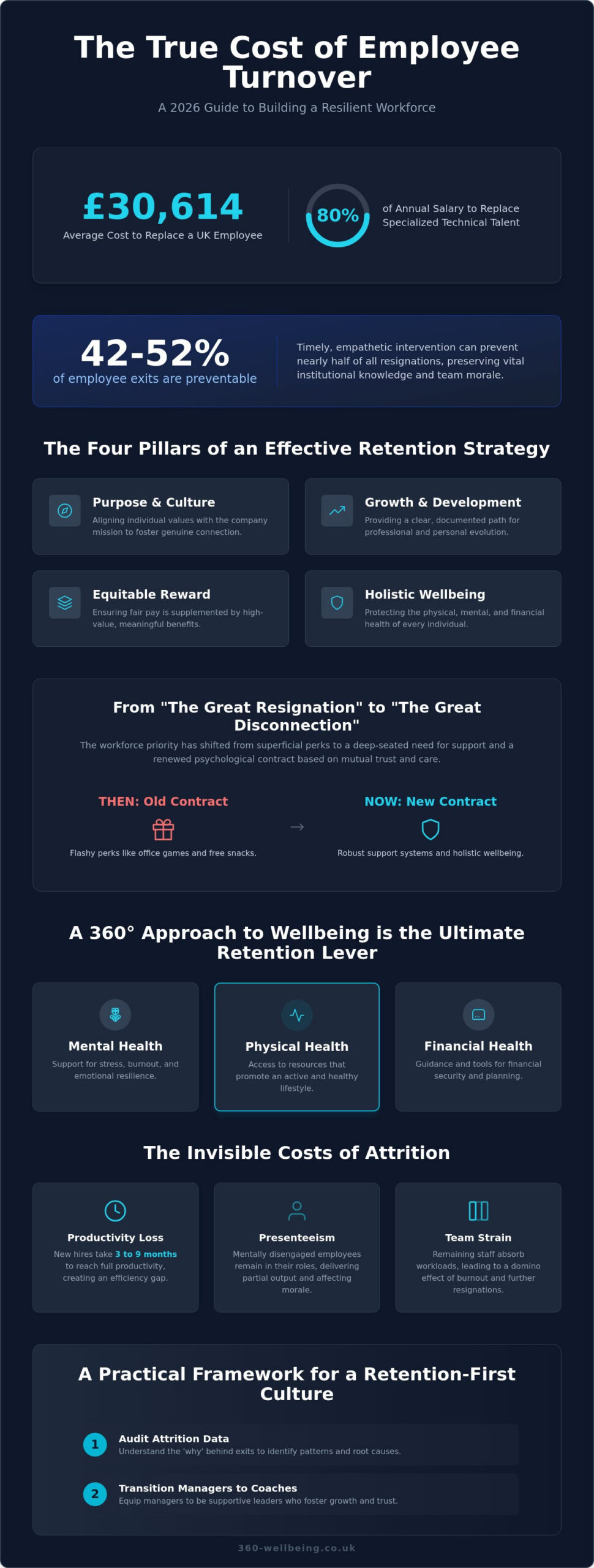
- Understand the true financial impact of attrition in the 2026 market, where replacing technical talent can cost up to 80% of an annual salary.
- Discover how to prevent employee turnover by implementing the four strategic pillars of purpose, culture, growth, and development.
- Learn why a 360-degree approach to wellbeing—integrating mental, physical, and financial health—is the ultimate lever for building team loyalty.
- Gain a practical five-step framework to audit your attrition data and transition your managers from task-masters to supportive coaches.
- Explore how a unified wellbeing platform provides the essential infrastructure to support your team’s total wellness and future-proof your workforce.
The True Cost of Staff Attrition in the 2026 UK Job Market
Understanding the financial and emotional weight of a resignation is the first step in learning how to prevent employee turnover. It isn’t just about a vacant desk or an empty chair. Industry data suggests that between 42% and 52% of employee exits are entirely preventable through timely, empathetic intervention. When someone walks out the door, they take more than just their skills; they take a piece of the company’s momentum and institutional memory with them. This loss creates a vacuum that is both expensive and exhausting to fill.
The financial drain is staggering. For specialized or technical roles, replacement costs often reach 80% of an annual salary once you account for recruitment fees, advertising, and the time spent by senior staff on interviews. To truly grasp what is employee turnover and its wider impact, we must look beyond the balance sheet. In a small team, one resignation often triggers a ripple effect. It creates a wave of uncertainty that can lead others to question their own commitment. By 2026, the UK market has shifted decisively. Employees no longer settle for a simple base salary. They look for a “Total Reward” package that acknowledges their human needs and provides a sense of long-term security.
The Invisible Costs: Productivity and Institutional Knowledge
A new hire doesn’t become fully efficient overnight. Depending on the complexity of the role, the “ramp-up” period can last anywhere from three to nine months. During this time, the organization pays a full salary for partial output. Even more damaging is the impact of “presenteeism.” This happens when employees stay in their roles but are mentally checked out, often due to burnout or a lack of support. The remaining staff also feel the strain. They must absorb the departing colleague’s workload, which frequently leads to a cycle of exhaustion and further resignations. It’s a heavy burden that threatens the harmony of the entire workplace.
Why ‘The Great Resignation’ Evolved into ‘The Great Disconnection’
By 2026, the trend known as the Great Resignation has matured into the Great Disconnection. Workers today value robust support systems over flashy corporate perks like office games or free snacks. They are looking for a renewed “psychological contract,” which is the unwritten set of expectations regarding mutual trust and care. When this contract is broken, engagement plummets. Bridging this gap requires a partner who understands the integration of health and work. This is where 360-wellbeing.co.uk helps employers reconnect with their people by providing the holistic care that modern professionals expect as a standard right. Learning how to prevent employee turnover starts with restoring this vital human connection and showing your team that their vitality is your priority.
The Four Pillars of an Effective Employee Retention Strategy
Building a resilient workforce requires a shift from reactive problem-solving to a durable, panoramic strategy. If you’re looking for how to prevent employee turnover, you must look beyond the immediate exit interview and focus on the foundations of the employee experience. We’ve identified four essential pillars that create a sense of completeness and balance within an organization. These pillars ensure that employees don’t just stay because they have to, but because they feel deeply invested in the collective success of the business.
- Purpose and Culture: Aligning individual values with the company mission to foster genuine connection.
- Growth and Development: Providing a clear, documented path for professional and personal evolution.
- Equitable Reward: Ensuring pay is fair and supplemented by high-value, meaningful benefits that reflect modern needs.
- Holistic Wellbeing: Protecting the physical, mental, and financial health of every individual as a fundamental entitlement.
This structured approach mirrors insights found in official UK government data, which highlights how shifting workforce dynamics require more than just traditional management. It’s about creating a partnership where the employer acts as a knowledgeable authority and a supportive caregiver for the employee’s career and health journey.
Creating a Culture of Belonging and Recognition
It’s a common mistake to confuse “perks” with “culture.” While a ping-pong table or a stocked fridge might seem appealing, they rarely influence a person’s decision to stay during difficult times. True culture is built on the unwritten rules of how people treat one another and the sense of safety they feel. Micro-recognition plays a vital role here. Small, frequent “thank-yous” and public acknowledgments of hard work build long-term loyalty far more effectively than a single annual bonus. Belonging is the primary emotional anchor that keeps a person tethered to their team even when external pressures arise. When an employee feels they truly belong, their work becomes more than just a job; it becomes a source of personal pride and workplace harmony.
Professional Development as a Retention Tool
Stagnation is often the primary reason high-performers look for new opportunities. If a talented individual can’t see a future within your walls, they’ll inevitably look for one elsewhere. To counter this, proactive leaders use “stay interviews” to understand an employee’s career aspirations before they ever think about leaving. This foresight allows you to customize their journey and show them a path forward. Integrating services like Life Coaching can help employees align their personal goals with their professional roles, creating a unified narrative of total wellness. By investing in their durability, you’re not just filling a role; you’re nurturing a partner. This is a fundamental step in mastering how to prevent employee turnover through genuine empowerment and support.
Why Holistic Wellbeing is the Ultimate Retention Lever
Holistic wellbeing is no longer a peripheral perk; it’s an essential human entitlement and a professional necessity. When we look at how to prevent employee turnover, we must acknowledge that a person’s health, financial security, and mental clarity are deeply intertwined with their performance at work. If an employee is struggling with health anxiety or financial stress, they become a flight risk. They aren’t just looking for a new job; they’re looking for a life that feels more manageable and supported. By addressing these needs through a panoramic viewpoint, you create a workplace where people feel seen and valued as whole individuals.
A “360-degree” approach ensures that no aspect of vitality is left to chance. Mental health support is vital, but it remains incomplete if the employee is physically unwell or burdened by debt. Providing “uncommon” benefits creates a high barrier to exit because these services become integral to the employee’s daily quality of life. While some leaders worry that they can’t afford traditional private medical insurance, the modern platform model offers a more inclusive and affordable alternative. It provides high-level care without the prohibitive costs often associated with legacy insurance schemes.
The Impact of 24/7 Virtual GP Access on Staff Loyalty
In the current UK climate, the stress of trying to book a traditional GP appointment can be overwhelming. Employees often find themselves stuck in phone queues at 8:00 AM, right as the workday begins, leading to increased absenteeism and distraction. Offering 24/7 Virtual GP access removes this hurdle entirely. It shows that you, as an employer, genuinely care about their time and their health. Knowing a doctor is just a click away at any hour provides immense peace of mind. This level of foresight builds a deep sense of reliability and trust, making it much harder for a competitor to lure your talent away with a slightly higher salary alone.
Mental Health Support: Beyond the Crisis Point
Effective retention requires moving from reactive crisis management to proactive support. Offering therapy sessions and mental health resources before burnout sets in is a hallmark of an expert caregiver. An Employee Assistance Programme (EAP) acts as a confidential safety net, providing a space where staff can navigate personal challenges before they impact their professional output. This commitment to durability ensures that your team remains resilient and engaged. For a deeper look at your role in this process, we recommend reviewing our mental health and wellbeing in the workplace guide.
Recent analysis of staff turnover trends suggests that when support systems are absent, turnover rates inevitably climb as employees seek better security elsewhere. By integrating physical, mental, and social health into a single narrative of total wellness, you aren’t just filling a role. You’re building a partnership. This is the most effective way to understand how to prevent employee turnover in a market that increasingly values compassion and comprehensive care.
5 Practical Steps to Implement a Retention-First Culture
Moving from understanding the costs to taking decisive action requires a structured management plan. Building a culture that prioritizes retention isn’t a one-time event; it’s a methodical process of aligning your operational goals with the human needs of your team. If you’re looking for how to prevent employee turnover, these five steps provide a clear path forward to ensure your workforce remains stable and engaged.
- Step 1: Audit your turnover data. Distinguish between “healthy turnover,” such as natural career progression or poor cultural fits leaving, and “harmful attrition,” where your top talent departs for competitors. Identifying these patterns allows for targeted intervention.
- Step 2: Train managers to be coaches. Shift the focus from strictly monitoring tasks to nurturing people. Empathetic leadership is the cornerstone of a supportive environment.
- Step 3: Deploy a comprehensive benefits platform. Address the daily pain points your staff face, from health concerns and rising costs to mental stress. A unified platform provides the infrastructure for this support.
- Step 4: Establish continuous feedback loops. Move beyond the traditional annual survey. Implement quarterly pulse checks to identify and resolve frustrations before they lead to a resignation.
- Step 5: Communicate your ‘Total Reward’ package. Ensure every employee understands the full scope of the support available to them, including both financial and wellbeing benefits.
Training Managers to Lead with Empathy
The relationship between a manager and their direct report is the single most influential factor in an employee’s decision to stay. When managers act as expert caregivers rather than task-masters, they create a sense of safety and reliability. Conducting regular “wellbeing check-ins” is a practical way to foster this connection. These conversations should focus on the individual’s vitality and work-life balance rather than just project deadlines. Ask open-ended questions like, “What support do you need to feel more balanced this week?” People don’t quit jobs; they quit unsupported environments.
Communicating the Value of Your Benefits Package
A common challenge for UK employers is the “Value Gap,” where staff remain unaware of the full worth of their benefits. If an employee doesn’t know they have access to a Virtual GP or financial advice, they can’t value it. You can bridge this gap by providing a clear “Benefits Statement” and utilizing digital marketplaces. For example, using 360 Rewards allows employees to see daily, tangible value through discounts on essentials, which eases financial pressure. This constant reminder of your support reinforces their loyalty. To begin building this supportive infrastructure for your team, you can explore our comprehensive wellbeing solutions today. This is a vital step in learning how to prevent employee turnover by making your care visible and accessible.
Future-Proofing Retention with the 360 Wellbeing Platform
The 360 Wellbeing platform acts as the essential glue that holds a modern retention strategy together. It transforms abstract promises of care into a tangible, daily reality for your team. For many UK SMEs, the barrier to providing high-level support has often been the complexity of managing multiple providers or the high cost of traditional insurance. We’ve simplified this by offering a unified system with a fixed fee per employee, ensuring that every member of your workforce has access to the same high standard of care. By integrating 24/7 Virtual GP access, Mental Health Support, Physiotherapy, and Legal Support into one accessible hub, you provide a panoramic safety net that covers every aspect of an individual’s life.
The return on investment for this proactive approach is clear. When you consider that the average cost to replace an employee in the UK is approximately £30,614, a small monthly investment in their wellbeing is a sound financial decision. It’s much more effective to invest in durability than to pay the heavy price of staff attrition. Learning how to prevent employee turnover is ultimately about choosing foresight over reaction, ensuring your team feels supported long before they ever reach a breaking point.
Reducing Financial Stress with Professional Support
The ongoing cost of living crisis has changed why people quit. We often see employees leaving for a modest £1,000 pay rise because they’re feeling the immediate pressure of rising bills. While a salary increase is helpful, it doesn’t always solve the underlying anxiety. Our platform provides a more sustainable answer through debt advice and financial helplines. These services empower staff to manage their finances with confidence, offering a long-term solution that a one-off bonus simply can’t match. For a deeper dive into these strategies, read our guide on financial support for employees. This comprehensive care is a vital part of how to prevent employee turnover by stabilizing the external factors that often drive people away from their roles.
Legal and Life Support: The Ultimate Differentiator
Trust is built when an employer supports their team through life’s most sensitive moments. Offering benefits like legal helplines and complimentary will writing sets your organization apart as a truly expert caregiver. These aren’t just perks; they’re essential tools that provide security and peace of mind. Similarly, Life Coaching helps employees navigate personal transitions or career hurdles without feeling the need to resign. It aligns their personal growth with their professional role, creating a sense of balance and completeness. By providing this level of customized care, you aren’t just an employer; you’re a partner in their success. Protect your team and prevent turnover with 360 Wellbeing and start building a loyal, high-performing workforce today.
Building a Resilient Future for Your Workforce
Creating a workplace where people choose to stay requires more than just a competitive salary; it demands a genuine commitment to their total wellness. We’ve explored how a panoramic approach to support, from empathetic management to accessible health services, forms the foundation of a stable and thriving team. By integrating physical, mental, and financial care into your corporate strategy, you aren’t just filling roles. You’re building a partnership based on mutual trust and long-term durability. Successfully mastering how to prevent employee turnover means recognizing that your employees are your most valuable asset and treating their health as a professional necessity.
You don’t have to navigate this transition alone. Our platform provides the essential infrastructure to protect your team, offering 24/7 access to UK-registered GPs, comprehensive Mental Health and EAP support, and thousands of exclusive 360 Rewards discounts. This all-encompassing care ensures that your staff feels supported through every life transition. We invite you to book a demo to see how 360 Wellbeing can transform your retention strategy and help you foster a culture of vitality. Together, we can create a workplace where every individual has the opportunity to flourish.
Frequently Asked Questions
What is the number one cause of employee turnover in the UK?
A lack of career development opportunities and poor management relationships are the leading causes of staff attrition in the UK. Many employees feel their contributions aren’t recognized or that their personal wellbeing isn’t a priority for their leadership. When workers don’t see a clear path for their future or feel unsupported during personal challenges, they naturally begin looking for a more empathetic environment.
How do you calculate employee turnover rate accurately?
You calculate your employee turnover rate by dividing the number of leavers during a specific period by your average headcount for that same period, then multiplying by 100. This percentage provides a clear snapshot of your workforce stability. Monitoring this metric quarterly helps you identify seasonal trends and determine how to prevent employee turnover before it impacts your operational harmony.
Is it possible to have 0% employee turnover?
Achieving 0% turnover is neither realistic nor desirable for a healthy organization. Some healthy attrition is necessary to bring in fresh perspectives, new skills, and diverse viewpoints that drive innovation. The goal isn’t to stop every exit, but to prevent the loss of high-performing talent whose departure would damage team morale and institutional knowledge.
How much does it really cost to replace an employee in 2026?
The average cost to replace an employee in the UK is approximately £30,614 as of 2026. This figure accounts for recruitment fees, the time spent on interviews, and the significant productivity loss during a new hire’s training period. For technical or senior roles, these costs can climb significantly higher, making proactive retention a vital financial strategy for any business.
Can better employee benefits really stop people from quitting?
Comprehensive benefits can significantly reduce turnover if they address the fundamental human needs of health, security, and balance. When you provide tools like 24/7 Virtual GPs or mental health support, you remove the daily stressors that often lead to burnout. These support systems act as a tangible demonstration of your care, making it much harder for employees to leave a supportive ecosystem.
What is the difference between voluntary and involuntary turnover?
Voluntary turnover occurs when an employee chooses to resign, while involuntary turnover happens when the employer initiates the departure through dismissal or redundancy. Understanding the balance between these two is essential for a panoramic view of your workplace health. High voluntary turnover is often a signal that your retention strategies or culture require immediate refinement to protect your long-term interests.
How can small businesses compete with corporate salaries for retention?
Small businesses can compete by offering a more personalized, flexible, and supportive culture that larger corporations often lack. While you might not always match a corporate salary, you can provide packages that include holistic wellbeing platforms and life coaching. This focus on individual vitality and professional necessity creates a sense of belonging that high salaries alone cannot buy.
What are the early warning signs that an employee is about to leave?
Early warning signs include a noticeable drop in engagement, increased short-term absences, or a withdrawal from team social activities. You might also see a sudden decline in productivity or a change in communication style during check-ins. Recognizing these shifts early allows for the kind of proactive intervention that is central to how to prevent employee turnover effectively through supportive partnership.