
Did you know that poor mental health cost UK employers an estimated £51 billion in 2024, according to Deloitte’s latest research? You likely already recognize that your team is your most valuable asset, yet the pressure of meeting legal obligations under the Equality Act 2010 can feel overwhelming. It’s difficult to know exactly how to support employees with mental health issues when you’re also juggling productivity targets and rising absenteeism. You want to do the right thing, but the fear of saying the wrong word or missing early burnout signs often leads to hesitation.
We’re here to help you move from uncertainty to confident, proactive leadership. This guide provides a comprehensive roadmap to mastering the practical steps and legal frameworks required to build a truly resilient workplace. You’ll gain a clear action plan to reduce staff turnover and foster a 360-degree culture where your people feel safe to speak up. We’ll explore how to identify subtle changes in behavior and implement tailored strategies that protect both your employees’ wellbeing and your business’s long-term success.
Key Takeaways
- Understand your 2026 legal obligations under the Equality Act 2010 and how to implement reasonable adjustments that protect both your team and your business.
- Learn to recognise the subtle behavioural and physical red flags of stress and burnout before they escalate, allowing for earlier and more compassionate intervention.
- Master a practical, step-by-step framework on how to support employees with mental health issues using the “Ask, Listen, Reassure” method for sensitive workplace discussions.
- Uncover the “vicious cycle” between financial anxiety and mental health, and why addressing external pressures like debt is vital for maintaining workplace harmony.
- Explore how to build a proactive 360-degree support ecosystem using tools like 24/7 Virtual GPs and EAPs to bridge the gap between work and clinical care.
Understanding Your Duty of Care: Mental Health in the UK Workplace
Your duty of care represents the legal and ethical responsibility to maintain a work environment that prioritizes the psychological safety and emotional integrity of every employee. In 2026, this commitment has evolved beyond basic safety checks. It’s now about recognizing that mental health exists on a fluid spectrum. An individual might move from high-functioning wellness to a period of clinical illness, often influenced by a mix of workplace pressure and personal life events. Understanding how to support employees with mental health issues starts with acknowledging this 360-degree reality.
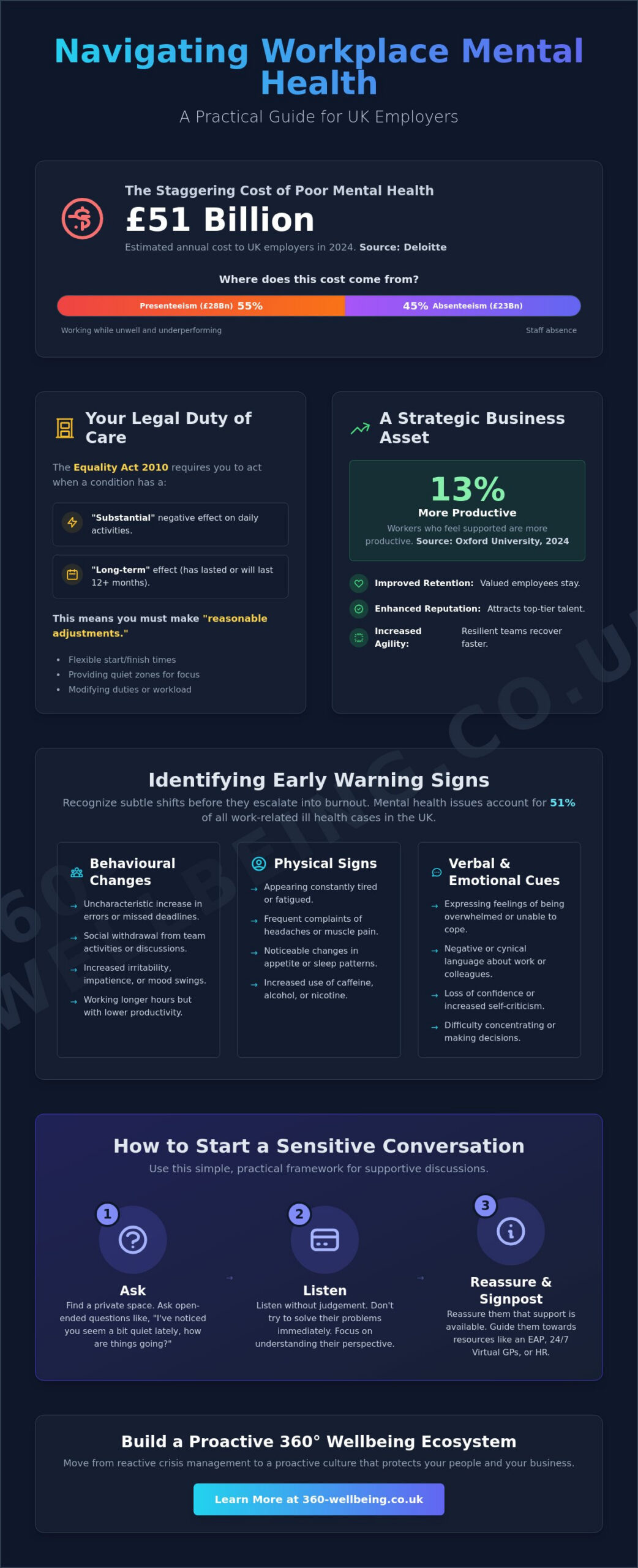
The business case for this support is undeniable. Deloitte’s 2024 analysis revealed that poor mental health costs UK employers approximately £51 billion per year. While absenteeism is a visible factor, presenteeism, where staff work while unwell and underperform, accounts for roughly £28 billion of that total loss. By treating mental health as a core business metric, you protect your bottom line and foster a culture where people feel safe to bring their full selves to work.
The Legal Obligations for UK Employers
The Equality Act 2010 remains the cornerstone of workplace protection. A mental health condition is considered a disability if it has a “substantial” and “long-term” negative effect on an individual’s ability to carry out daily activities. “Long-term” typically means the condition has lasted, or is expected to last, at least 12 months. When this threshold is met, you’re legally required to implement reasonable adjustments. These might include flexible start times for those with medication side effects or providing quiet zones to reduce sensory overload.
Legal compliance also involves the Health and Safety Executive (HSE) standards. Employers must conduct regular risk assessments that specifically address workplace stress and psychological hazards. While the Mental Health Act 1983 primarily governs clinical detention and treatment, its principles inform the broader duty of care you owe to your staff. Proactive policies help you avoid discrimination and harassment claims, ensuring your management team remains supportive rather than punitive.
Why Mental Health Support is a Strategic Asset
Shifting from reactive crisis management to a proactive wellbeing culture transforms your organization’s resilience. Research from Oxford University in 2024 suggests that workers who feel supported are 13% more productive on average. A comprehensive strategy guides managers on how to support employees with mental health issues by moving away from “one-off” fixes toward sustained, tailored care. This 360-degree perspective reduces hidden costs like high staff turnover and the loss of institutional knowledge.
- Retention: Employees stay where they feel valued and safe.
- Brand Reputation: A public commitment to wellbeing attracts top-tier talent.
- Agility: Resilient teams recover faster from market shifts and high-pressure projects.
Treating mental health as a strategic asset means integrating it into every level of your business. It’s not just an HR initiative; it’s a fundamental right that empowers your workforce to thrive. When you invest in the psychological safety of your team, you’re building a foundation for long-term growth and harmony.
Identifying Early Signs of Mental Health Issues in Your Team
Understanding how to support employees with mental health issues begins with keen observation. It’s about noticing the subtle shifts in a colleague’s baseline before these changes settle into chronic burnout. In the UK, mental health issues account for approximately 51% of all work-related ill health cases, making early detection a vital commercial and ethical priority. Recognizing these signs early allows for proactive adjustments rather than reactive crisis management.
The HSE guidance on mental health highlights that while stress isn’t a medical diagnosis, it can lead to clinical conditions like anxiety or depression if left unmanaged. It’s essential to distinguish between temporary pressure, which might last for a specific project deadline, and long-term mental health conditions that persist for weeks or months. When stress becomes the default state, the body’s resilience depletes, leading to physical and psychological exhaustion.
Physical and Behavioural Red Flags
Physical symptoms often manifest well before an employee feels comfortable discussing their mental state. Managers should look for a pattern of “minor” ailments that suggest a compromised immune system or high cortisol levels. A sudden drop in work quality often signals an underlying health issue. Watch for these indicators:
- Physical signs: Persistent fatigue despite rest, frequent headaches, and an increase in short-term absences for minor illnesses.
- Behavioural shifts: Unusual irritability, loss of humour, or a visible lack of engagement during team discussions.
- Social withdrawal: Identifying social anxiety symptoms is crucial, as employees might start avoiding collaborative tasks, turning off their cameras in meetings, or declining social interactions they previously enjoyed.
Monitoring Wellbeing in Remote and Hybrid Teams
In 2026, the “always-on” culture remains a significant risk factor for digital burnout. Without the physical cues of an office environment, managers must become more intentional in their observations. Signs of exhaustion in a remote context often include “green light” anxiety, where an employee stays active on messaging platforms until late at night to prove their productivity. You might also notice a colleague becoming uncharacteristically quiet on shared channels or taking longer to respond to simple queries.
Virtual 1-to-1s should be used as a dedicated space to gauge emotional health. Instead of focusing solely on KPIs, ask open-ended questions about their current capacity and work-life balance. Utilizing proactive wellbeing platforms can help track aggregate team sentiment, allowing leaders to see health trends without infringing on individual privacy. This data-driven approach ensures that support is tailored to the actual needs of the workforce, fostering a culture of genuine care and resilience.
How to Start a Mental Health Conversation: A Practical Framework
Initiating a dialogue about wellbeing requires more than just an open-door policy; it demands a structured, proactive approach. Before the meeting, choose a neutral, private space where interruptions are impossible. Timing is vital. Avoid Friday afternoons when people are rushing to finish tasks. Instead, opt for a mid-week morning when energy levels are stable. Setting the right tone means being calm, approachable, and prepared to listen more than you speak.
The “Ask, Listen, Reassure” method is a cornerstone of how to support employees with mental health issues effectively. Start by asking open-ended questions that invite a narrative rather than a simple yes or no. Listen without interrupting, even if there are long silences. Reassure the individual that their disclosure is a sign of strength and that the company is committed to their wellbeing. If an employee becomes tearful, offer tissues and a glass of water. Allow them time to compose themselves; don’t rush to fill the silence. It’s vital to maintain professional boundaries by focusing on workplace support rather than attempting to provide therapy yourself.
Documentation must be handled with extreme care. Keep notes focused on the impact of their health on work and the support agreed upon. Avoid recording specific clinical diagnoses unless the employee explicitly requests it for the record. All notes must be stored securely in line with UK GDPR and medical confidentiality regulations, ensuring only essential personnel have access.
Creating a Safe Space for Disclosure
To encourage honesty, phrase your observations neutrally. You might say, “I’ve noticed you haven’t been yourself lately and I wanted to check in,” rather than asking what is wrong. This removes pressure and opens the door for a genuine conversation. Active listening involves validating their feelings with phrases like “I can see why that would be difficult.” Your role is to understand their experience, not to “fix” the person. Explicitly state that their information will remain confidential to build the trust necessary for a transparent discussion.
Implementing Reasonable Adjustments
Under the Equality Act 2010, UK employers have a legal duty to consider reasonable adjustments for employees with mental health conditions. Practical examples include:
- Flexible start and finish times to accommodate medication side effects or therapy appointments.
- Redistributing high-pressure tasks during periods of acute stress.
- Providing a quiet workspace or noise-cancelling headphones to manage sensory overload.
A Wellness Action Plan (WAP) is a highly effective tool for managing ongoing support. This document, co-created by the manager and employee, outlines triggers and the specific steps both parties will take to maintain health. When a situation requires clinical expertise, signpost the employee to professional intervention via a Virtual GP or an Employee Assistance Programme (EAP). This ensures they receive the 360-degree care they need while you focus on how to support employees with mental health issues within the professional environment.
Addressing the Root Causes: The Link Between Financial and Mental Health
Understanding how to support employees with mental health issues requires looking beyond the office walls. In the UK, the Money and Pensions Service has previously highlighted that nearly 24% of workers lose sleep over money worries. By 2026, the lingering effects of the cost-of-living crisis continue to erode employee resilience. When a team member is preoccupied with rising mortgage rates or mounting debt, their cognitive load is exhausted before they even start their first task. This creates a vicious cycle where financial anxiety fuels clinical depression or anxiety, which then makes managing finances even harder. It’s a physiological response; chronic stress keeps the body in a state of high alert, making it impossible for the mind to find the calm necessary for productive work.
Legal worries often act as a silent catalyst for workplace stress. Issues like probate, family law disputes, or tenant disagreements don’t stay at home. They follow employees to their desks, manifesting as distraction, irritability, or sudden drops in performance. Employers who recognize this link can move from being reactive to being proactive, positioning financial and legal stability as a fundamental pillar of their mental health strategy.
Providing Financial and Legal Support
Employers can break the cycle of anxiety by offering practical, structured tools. Debt advice and one-on-one financial coaching remove the stigma associated with “money talk,” replacing panic with a clear path forward. There is also a profound psychological benefit to offering “peace of mind” services. For example, providing access to will writing or legal helplines gives employees a sense of control over their future, which directly lowers cortisol levels. For a deeper look at these strategies, explore our Financial Support for Employees guide.
Holistic Wellbeing: The 360-Degree Approach
Physical, mental, and financial health don’t exist in silos; they’re parts of a single ecosystem. We define the 360-degree approach as a unified strategy that treats every aspect of a person’s life as vital to their professional vitality. If an employee is struggling financially, their mental health suffers, which often leads to physical ailments like tension headaches or insomnia. Data from the Centre for Economics and Business Research suggests that financial stress costs UK employers billions each year in lost productivity. However, companies that integrate financial wellness into their mental health plans see immediate returns.
- Reduced Absenteeism: Case studies show that reducing financial stress can lead to a 15% reduction in short-term sick leave.
- Enhanced Focus: Employees with access to legal support report 20% higher levels of resilience during personal crises.
- Long-term Retention: Workers stay longer at companies that demonstrate a genuine interest in their total life stability.
By addressing these root causes, you aren’t just managing symptoms; you’re building a foundation for long-term health and harmony. Build a more resilient workforce today by viewing our complete wellbeing solutions.
Building a Proactive Ecosystem with 360 Wellbeing
Support isn’t a one-off event; it’s a continuous cycle of care. Understanding how to support employees with mental health issues requires a shift from reactive fixes to a 360-degree health strategy. This ecosystem uses digital tools to bridge the gap between clinical necessity and daily workplace culture. By combining 24/7 Virtual GPs with Employee Assistance Programmes (EAPs), you create a safety net that catches people before they reach a breaking point. It’s about moving from a culture of “coping” to a culture of genuine vitality.
- 24/7 Virtual GPs: Provide immediate clinical reassurance and referrals.
- EAPs: Offer a direct bridge between workplace stress and professional therapy.
- Life Coaching: Helps employees navigate personal transitions and professional goals.
- Physiotherapy: Addresses the physical manifestations of stress and sedentary work.
Immediate Clinical Access: The Virtual GP Advantage
NHS mental health referrals can sometimes take 18 weeks or longer depending on the local trust. This delay often causes a person’s condition to spiral, leading to long-term sickness absence. 24/7 access to a UK-registered Virtual GP changes this dynamic completely. Employees get clinical advice within hours, not weeks. This speed of intervention is vital for recovery. It allows managers to integrate professional medical advice into workplace adjustments and return-to-work plans immediately. When staff know they can speak to a doctor at 2 AM on a Sunday, their baseline anxiety levels drop. It removes the “waiting room anxiety” that often prevents people from seeking help in the first place.
Long-term Resilience and Prevention
Resilience is built through holistic care that looks at the “whole person.” Our platform provides EAPs that connect staff with qualified therapists, but we recognise that mental health doesn’t exist in a vacuum. Chronic physical pain is linked to a 40% increase in depression risk. Providing physiotherapy is a mental health strategy as much as a physical one. Life coaching offers the tools for personal growth, while our rewards and discounts programme addresses the financial wellness that’s so often at the root of employee stress. In 2024, financial pressure remains a leading cause of workplace anxiety, so these perks provide practical, everyday relief.
We help you train Mental Health Champions who are backed by digital health tools. This creates a peer-to-peer support network where seeking help is normalised and encouraged. By using the 360 Wellbeing platform, you empower your team to take charge of their own health journey with a sense of agency and dignity. This comprehensive approach ensures that every team member feels seen, heard, and supported from every angle.
Leading the Way Toward a Healthier Workforce
Creating a resilient workplace for 2026 requires moving beyond reactive policies to a proactive ecosystem where duty of care is a lived reality. By identifying early signs of distress and addressing the critical link between financial stress and mental health, you protect both your people and your business productivity. According to the Health and Safety Executive (HSE) 2023/24 report, 875,000 workers suffered from work-related stress, depression, or anxiety, highlighting why mastering how to support employees with mental health issues is a strategic necessity for every UK employer. It’s about seeing the person, not just the role.
At 360 Wellbeing, we’re already helping UK SMEs reduce absenteeism through our comprehensive support framework. Our partners enjoy 24/7 access to UK-registered GPs and a robust Employee Assistance Programme (EAP) that includes professional mental health therapy. We believe that health is a strategic asset and a fundamental right, not a luxury. By integrating physical, mental, and social health into one unified narrative, we help you build a culture of vitality and workplace harmony.
Discover how 360 Wellbeing can support your team’s mental and financial health. Your commitment to their wellbeing today builds the foundation for a more vibrant, loyal, and successful team tomorrow.
Frequently Asked Questions
What are reasonable adjustments for mental health in the UK?
Reasonable adjustments are changes to work patterns or environments that remove barriers for staff with mental health conditions. Under the Equality Act 2010, these might include flexible start times for those on medication, quiet zones in the office, or adjusted workloads. Implementing these shows how to support employees with mental health issues while maintaining productivity. A 2023 report by Deloitte found that proactive support provides a return of £4.70 for every £1 spent.
Can I fire an employee for mental health issues?
You can’t legally dismiss someone solely because they have a mental health condition, as this often constitutes disability discrimination. If performance or attendance is affected, you must first follow a fair capability process and explore all reasonable adjustments required by the Equality Act 2010. ACAS reports that unfair dismissal claims can lead to uncapped compensation if discrimination is proven. It’s always better to focus on a supportive return to work plan rather than termination.
How do I support a remote employee with social anxiety?
Supporting a remote worker with social anxiety involves reducing high-pressure interactions and offering flexible communication channels. You can allow them to keep their camera off during large team calls or use instant messaging instead of unscheduled phone calls. Providing clear agendas 24 hours before meetings helps reduce anticipatory anxiety. This tailored approach ensures they feel safe and capable while working from home, fostering a more inclusive 360 degree culture.
What should I do if an employee refuses mental health support?
You can’t force an employee to accept help, but you should document that you offered support and remain available if they change their mind. Focus on performance standards and safety rather than the underlying health condition if they decline clinical intervention. If their behavior impacts the team, follow your standard HR policies while keeping the door open for future wellbeing conversations. Respecting their autonomy is a key part of maintaining a professional partnership.
How much does an Employee Assistance Programme (EAP) cost for an SME?
For a small or medium enterprise in the UK, an Employee Assistance Programme typically costs between £5 and £15 per employee per year. This investment provides 24/7 access to counseling and legal advice, which reduces long-term absence costs. According to the UK EAPA, every £1 spent on an EAP provides an average return of £10.85 through improved productivity and reduced turnover. It’s a cost-effective way to provide comprehensive care to your workforce.
Is a Virtual GP appointment as effective as an in-person one for mental health?
Virtual GP appointments are highly effective for mental health because they provide a private, familiar environment that reduces the stress of travel. A 2022 study in the Journal of Medical Internet Research found that tele-psychiatry outcomes are comparable to face-to-face care for depression and anxiety. These services allow employees to access professional clinical advice in under 24 hours, which is vital for early intervention and proactive recovery journeys.
How do I train managers to spot mental health red flags?
Training managers involves teaching them to spot behavioral shifts, such as increased irritability, withdrawal, or missed deadlines. Using a structured framework like the i-act training for managers provides them with the clinical knowledge needed to handle sensitive conversations. When managers understand how to support employees with mental health issues, they become a vital first line of defense. This proactive approach helps prevent burnout before it leads to long-term sick leave.
What is the role of a Mental Health First Aider in a small business?
A Mental Health First Aider acts as a confidential point of contact for colleagues experiencing distress. They aren’t therapists; instead, they listen and signpost individuals to professional clinical services or EAPs. In a small business, they help build a culture of openness and psychological safety. Having at least one trained person per 50 employees is a common benchmark to ensure adequate support coverage across the team and promote workplace harmony.