
Did you know that 86% of companies investing in coaching services report that they’ve recouped their investment and more? In a competitive market where high staff turnover and reactive mental health absences are draining UK business resources, this figure represents more than just a financial gain; it’s a shift toward true workforce vitality. You likely agree that supporting your team is a professional necessity, yet the lines between therapy, EAP services, and personal development can often feel blurred and confusing.
This guide will show you how life coaching for employees uk acts as a proactive bridge, transforming your workforce from simply surviving to actively thriving. We’ll explore the strategic benefits of coaching, how to integrate it into a holistic wellbeing framework via a digital platform, and the measurable impact it has on your employer brand and retention rates for 2026. By the end, you’ll have a clear, structured path to move away from reactive health warnings and toward a positive vision of workplace harmony.
Key Takeaways
- Understand the vital distinction between reactive mental health therapy and proactive life coaching to ensure your team receives the right support at the right time.
- Learn how implementing life coaching for employees uk can boost retention and productivity by aligning personal growth with your company’s long-term goals.
- Discover why a digital platform offers a more scalable and affordable way to democratise coaching for your entire workforce compared to traditional freelance models.
- Explore how a panoramic approach to wellbeing creates a unified narrative of health that includes physical, mental, and social support.
What is Life Coaching for Employees in the UK Context?
To understand What is coaching in a modern professional setting, we must look beyond traditional training or management. Life coaching for employees uk is a future-focused, action-oriented partnership. It isn’t about fixing what is broken; it’s about unlocking what is possible. While many workplace interventions focus on basic job competency, life coaching addresses the person behind the role with a warm, human touch. It provides a structured, safe space for individuals to identify their personal and professional goals, creating a roadmap that bridges the gap between where they are and where they want to be. This partnership fosters a sense of reliability and reassurance, helping employees feel seen and supported in their long-term growth.
The core philosophy centers on a shift from merely functioning to truly thriving. In the past, workplace support often stopped once an employee met their basic job requirements. By 2026, the modern UK workforce expects more. They seek vitality. This involves gentle, achievable steps that lead to long-term durability and personal satisfaction. Common areas of focus include mastering work-life balance in a hybrid world, navigating complex career transitions, improving time management, and fostering healthier professional relationships. When an employer invests in this panoramic viewpoint of health, they aren’t just checking a box; they’re building a culture of empowerment that values the individual’s social and mental growth alongside their output.
The Non-Medical Nature of Coaching
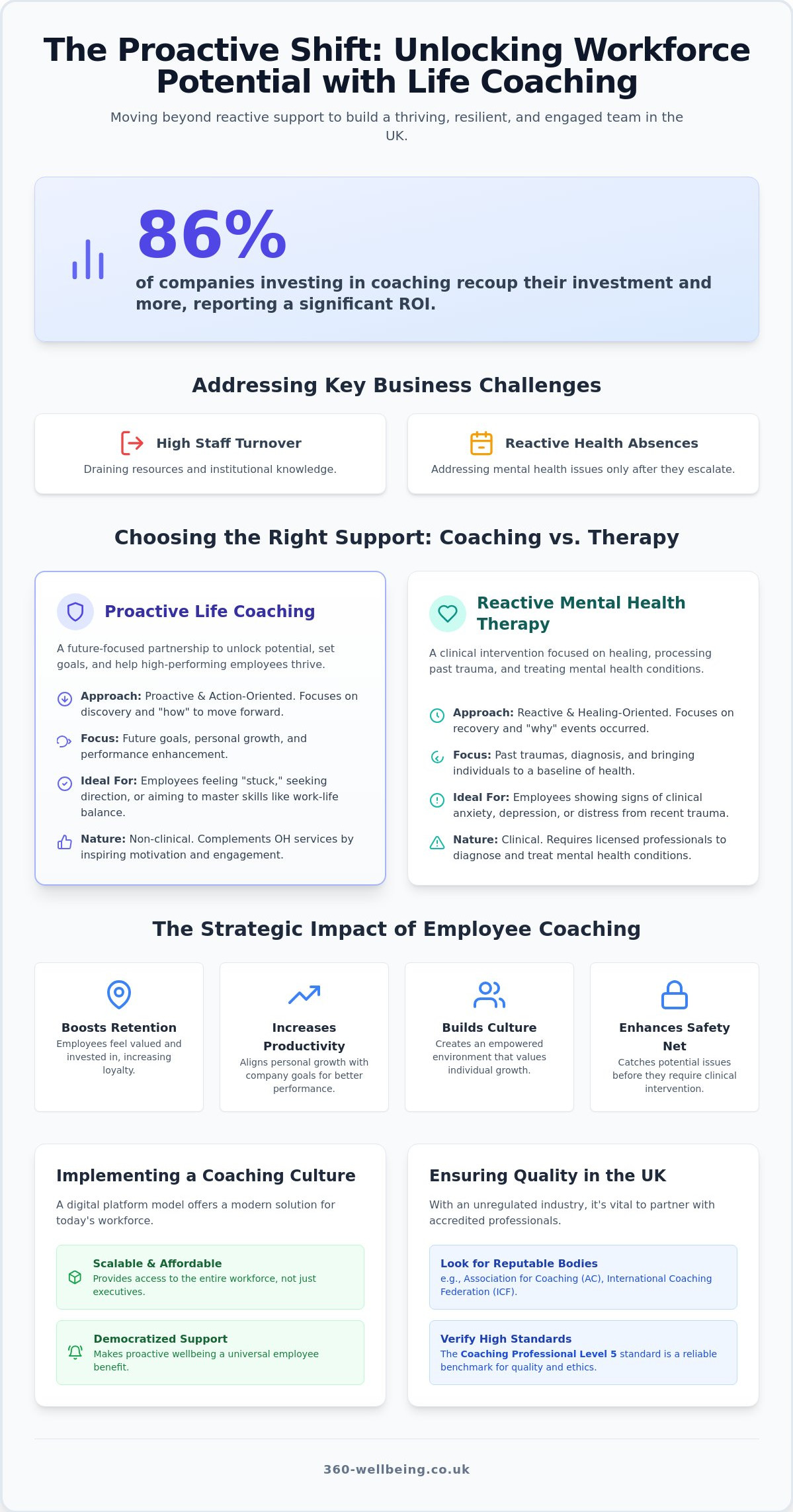
Coaching is a non-clinical intervention, which is a vital distinction for any HR leader or business owner to make. Unlike therapy or clinical counseling, it doesn’t seek to diagnose or treat mental health conditions. Instead of dwelling on past traumas or asking “why” things happened, a coach asks “how” the employee can move forward toward their specific objectives. This proactive approach complements traditional Occupational Health (OH) services perfectly. While OH ensures an employee is fit for work, life coaching ensures they are inspired and motivated within that work, providing a safety net that catches potential issues before they escalate into clinical absences.
Accreditation and Standards in the UK
The coaching industry in the UK remains largely unregulated, meaning there are no legal requirements for certification. This makes it essential for employers to do their due diligence when selecting a provider. You should look for practitioners who align with reputable bodies such as the Association for Coaching or the International Coaching Federation (ICF). These organisations maintain high ethical standards and rigorous training requirements, ensuring a sense of safety and order for your staff. The Coaching Professional Level 5 standard serves as a reliable benchmark for quality, ensuring that a practitioner has the advanced skills and ethical grounding required to support employees effectively.
Life Coaching vs. Mental Health Therapy: Knowing the Difference
Distinguishing between clinical therapy and life coaching is essential for any employer committed to a healthy, high-performing workforce. While both services provide vital support, they serve different purposes and address different stages of the human experience. Therapy is fundamentally reactive; it focuses on healing, clinical diagnosis, and processing past traumas to bring an individual back to a baseline of health. In contrast, life coaching for employees uk is proactive. It looks toward the future, focusing on personal growth, goal-setting, and the untapped potential within each member of your team. Understanding this boundary ensures your staff receives the specific care they need without confusion or delay.
The UK government guidance on coaching highlights its role in professional development and performance, framing it as a tool for those ready to take active steps forward. Therapy is about recovery, while coaching is about discovery. By offering both, you create a comprehensive safety net that addresses the entire spectrum of human needs. This dual approach moves away from a one-size-fits-all model, providing a panoramic viewpoint that values both the clinical necessity of mental health support and the aspirational nature of personal coaching.
Triage for HR: Identifying the Need
HR managers often act as the first point of contact for employees in distress. Knowing which path to suggest is a key part of the expert caregiver role. You might notice signs that an employee requires a therapist, such as persistent clinical anxiety, signs of depression, or the impact of recent trauma. These situations require clinical expertise. On the other hand, an employee might need a life coach if they express feeling “stuck,” lack a clear sense of direction, or struggle with time management despite being technically competent. In any case of clinical concern, the 24/7 Virtual GP should remain the first point of contact to ensure a safe, medically-grounded assessment before proceeding with further support.
The Synergy of Holistic Support
When these services work together, the results are transformative. Proactive coaching can often prevent minor daily stressors from escalating into more serious clinical mental health issues. For example, a coach helping an employee manage a heavy workload can reduce the risk of burnout. This support is further strengthened when integrated with other pillars of wellness, such as financial support. Reducing the stress of debt or financial planning allows an employee to focus more clearly on the growth-oriented goals they set with their coach. This seamless integration of physical, mental, and social health creates a unified narrative of total wellness. To see how these services can be tailored to your organisation, you can explore our integrated wellbeing platform for more information.
The Strategic Impact: Why UK Employers are Investing in Coaching
In a competitive UK market, the ability to retain talent depends on more than just a salary. Investing in life coaching for employees uk is a strategic move that builds long-term durability by showing your team that you value their future as much as their current output. When an individual feels that their employer is an expert caregiver invested in their personal growth, they develop a sense of loyalty that is difficult for competitors to break. This proactive support transforms the employer-employee relationship from a simple transaction into a partnership based on mutual growth and vitality.
The impact on performance is equally clear. According to recent industry data, over 70% of individuals who receive coaching benefit from improved work performance, better relationships, and more effective communication. By helping staff set clear personal goals, you naturally align their focus with workplace objectives. This doesn’t just improve the bottom line; it enhances your employer brand. In 2026, being known as a “compassionate employer” who offers more than basic reactive support is a powerful differentiator. It signals that your organisation views wellbeing as an essential human entitlement, attracting high-calibre candidates who seek a balanced and supportive work environment.
The ROI of Proactive Wellbeing
Moving away from fear-based health warnings toward a positive vision of vitality is the cornerstone of a modern corporate strategy. Coaching addresses “life stress” before it manifests as physical or mental burnout, significantly reducing absenteeism. More importantly, it tackles the hidden cost of presenteeism, where staff are physically at their desks but mentally disengaged due to personal hurdles. For every £1 spent on wellbeing, UK businesses typically see a significant return in productivity. In fact, 86% of companies that have used coaching services believe they’ve recouped their investment and more, proving that proactive care is a sound financial decision.
Empowering the “Whole Person”
Modern employees expect support that extends beyond the office walls. They’re looking for a panoramic viewpoint of health that acknowledges their lives outside of work. As outlined in the Life coach job profile, these professionals help individuals navigate diverse life stages, from the challenges of returning from parental leave to the complexities of retirement planning. This all-encompassing care promotes a sense of completeness and balance. When you empower the “whole person,” you create a more motivated, goal-oriented workforce that is better equipped to handle the pressures of the modern world with resilience and confidence.
Implementing a Coaching Culture: Platform vs. Freelance
When you decide to embed a coaching culture within your organisation, the delivery method you choose determines how accessible and sustainable that culture becomes. Historically, businesses relied on a traditional freelance model, hiring individual consultants for one-off sessions or specific leadership programmes. While these coaches bring expertise, the model is often admin-heavy, requiring significant time for scheduling, invoicing, and quality control. Because of the high costs associated with individual day rates, this support is frequently reserved for senior executives, leaving the wider workforce without the tools they need to thrive. This creates a “wellbeing gap” where only those at the top receive proactive development.
Shifting to a SaaS-based platform changes this narrative by providing democratised access to life coaching for employees uk. Instead of a luxury for the few, coaching becomes a professional necessity available to everyone, from entry-level staff to middle management. For SMEs and sole traders, this subscription-based approach is particularly transformative. Predictable, monthly per-employee fees make high-quality coaching affordable and scalable, allowing smaller teams to compete with larger corporations for talent. This model also ensures a level of consistency in care that is difficult to achieve with a fragmented network of independent contractors.
Trust and privacy are the cornerstones of this partnership. Employees are often hesitant to share their personal aspirations or work-life hurdles if they feel their manager is looking over their shoulder. Using a confidential, third-party platform provides a sense of safety and order. It allows individuals to engage deeply with their growth journey, knowing their data is secure and their conversations are private. This psychological safety is essential for moving a workforce from a state of “functioning” to one of genuine vitality and durability.
Digital Accessibility and Inclusion
In our modern, hybrid UK work environment, geographic barriers shouldn’t dictate who gets support. Virtual coaching sessions allow remote or site-based teams to access the same high standard of care from anywhere. A digital-first approach also helps reduce the stigma sometimes associated with seeking help. By providing discreet access via a smartphone or laptop, you empower employees to take control of their own wellbeing journey. This creates a single source of truth for health, where support is just a few clicks away, regardless of an employee’s location or schedule.
Integration with Other Benefits
Coaching is most effective when it doesn’t exist in a silo. On a unified platform, life coaching is seamlessly linked to other pillars of health, such as physical vitality and financial stability. If a coach identifies that an employee’s stress is rooted in physical pain or debt, they can easily be guided toward physiotherapy or financial support. This panoramic viewpoint allows the employer to see high-level, anonymised trends across the workforce, providing the foresight needed to adjust corporate strategy. To see how an integrated approach can benefit your team, you can explore our SaaS employee benefits platform today.
Leading with Compassion: The 360 Wellbeing Approach
At 360 Wellbeing, we believe that true workplace vitality is only achieved through a panoramic viewpoint of health. We position ourselves as an expert caregiver for your organisation, acting as a dedicated partner rather than just a service provider. Our approach to life coaching for employees uk isn’t a standalone feature; it is part of a unified narrative that balances clinical expertise with a warm, human touch. By integrating proactive coaching with our clinical services, such as the 24/7 Virtual GP and mental health support, we ensure that every individual has a clear, structured path forward, regardless of their starting point.
The simplicity of our model is designed to remove the traditional barriers to corporate wellness. We provide total coverage through a straightforward, fixed-fee SaaS platform, making it easy for SMEs and larger firms alike to plan their 2026 strategy with confidence. You don’t have to worry about the unpredictable costs of hiring individual consultants or the administrative burden of managing multiple vendors. Instead, you gain a reliable, all-encompassing safety net that treats wellbeing as a professional necessity and a human entitlement. This methodical approach creates a sense of safety and order, allowing you to move away from reactive crisis management toward a proactive culture of durability and growth.
A Partnership for Long-Term Success
Our commitment to individualized care means we look out for the long-term interests of your team. While life coaching focuses on future potential and personal goals, our 24/7 Virtual GP and mental health therapy provide the essential clinical backbone that makes this growth possible. If a coaching session uncovers an underlying health concern, the employee has immediate, discreet access to medical professionals. This seamless integration ensures your team feels empowered and supported every day, knowing that their physical, mental, and social health are all being cared for within a single, unified narrative of wellness.
Get Started with Holistic Wellbeing
Moving your organisation toward a more compassionate, goal-oriented future is a straightforward process. Onboarding your team to the 360 Wellbeing platform is designed to be accessible and manageable, providing an immediate impact on your employer brand and retention rates. By offering a comprehensive suite of tools, from life coaching to financial support, you provide the balance your employees need to truly thrive in a modern work environment. It’s time to embrace a forward-thinking vision of workplace harmony that values the “whole person.”
If you are ready to transform your workforce and invest in the long-term vitality of your staff, we’re here to guide you through every step of the journey. You can enquire about our life coaching and wellbeing packages to see how we can tailor our panoramic approach to fit the unique needs of your organisation.
Cultivating a Future of Workplace Vitality
By choosing to prioritise growth and foresight, you’re doing more than just filling a benefits gap; you’re investing in the long-term durability of your most valuable asset. We’ve explored how life coaching for employees uk acts as a proactive catalyst for vitality, bridging the distance between basic support and true professional thriving. You now understand the vital distinction between clinical therapy and future-focused coaching, as well as the strategic advantage of using a scalable digital platform to democratise access for your entire team. This shift from reactive management to proactive empowerment is the key to a resilient organisation in 2026.
Our holistic approach ensures that your staff has a reliable safety net, combining human-centric coaching with the clinical reassurance of access to UK-registered GPs 24/7. Our platform is designed specifically for the needs of UK SMEs, integrating mental, physical, and financial support into one seamless narrative. It’s about creating a culture where every individual feels seen, supported, and empowered to reach their full potential. Discover how 360 Wellbeing integrates life coaching into your benefits package and begin your journey toward a more motivated, goal-oriented workforce today. The path to a harmonious workplace is within your reach, and we’re here to help you every step of the way.
Frequently Asked Questions
Is life coaching for employees different from an Employee Assistance Programme (EAP)?
Yes, these services serve different purposes within a wellbeing strategy. While an EAP typically provides reactive support for crises or personal issues, life coaching for employees uk is a proactive development tool focused on future potential. Coaching helps staff move from a state of “functioning” to “thriving” by setting actionable goals. It works alongside your EAP to provide a more panoramic viewpoint of employee health and vitality.
Can life coaching help with employee retention in small UK businesses?
Investing in your team’s personal growth builds deep loyalty and professional durability. For small UK businesses, providing access to a coach shows that you’re invested in the individual’s long-term success, not just their daily output. This sense of being valued as a “whole person” makes employees significantly more likely to stay, as they feel their professional necessity and personal happiness are genuinely supported.
Is employee life coaching confidential from the employer?
Confidentiality is a professional necessity that ensures the coaching partnership remains effective. While employers can access high-level, anonymised data to understand broad wellbeing trends across the organisation, the specific content of individual sessions remains private. This creates a sense of safety and order, allowing employees to speak openly about their challenges and goals without fear of judgement or professional repercussions.
How many life coaching sessions do employees typically need?
Most employees experience a significant shift in perspective and motivation within three to six sessions. While some may reach their specific goals quickly, others benefit from ongoing, monthly check-ins to maintain their work-life balance and focus. The subscription-based model allows for this flexibility, ensuring that support is available whenever an employee feels they need to recalibrate their personal or professional roadmap.
What is the difference between a life coach and a career coach?
A career coach focuses strictly on job-related progression, while a life coach looks at the “whole person” through an all-encompassing lens. Life coaching addresses the intersection of work-life balance, social health, and personal confidence. This holistic approach recognizes that personal hurdles often impact professional performance. By supporting the individual outside of their job description, you foster a more resilient and motivated workforce.
How much does it cost to provide life coaching for a whole team?
Providing coaching through a SaaS-based platform is far more cost-effective than hiring individual freelance consultants. Instead of paying high hourly rates or daily fees for a few executives, businesses pay a predictable, monthly per-employee fee. This model democratises access, making it affordable for SMEs to offer a high standard of care to every member of their team regardless of their rank.
Can life coaching help employees returning from long-term sick leave?
Coaching is a powerful tool for supporting a durable return to work after a period of absence. It helps employees rebuild their confidence and set gentle, achievable steps for reintegration. By working in tandem with clinical services like our 24/7 Virtual GP, coaching ensures the transition is handled with empathy and foresight, reducing the risk of future burnout or a relapse into ill health.
Do life coaches in the UK need specific medical qualifications?
Life coaches don’t require medical qualifications because coaching is a non-clinical, growth-oriented intervention. However, it’s vital to choose coaches aligned with professional bodies like the Association for Coaching or the ICF. These standards ensure your team receives high-quality, ethical support. At 360 Wellbeing, we balance this human-centric coaching with the clinical expertise of medical professionals to provide a truly unified narrative of wellness.