
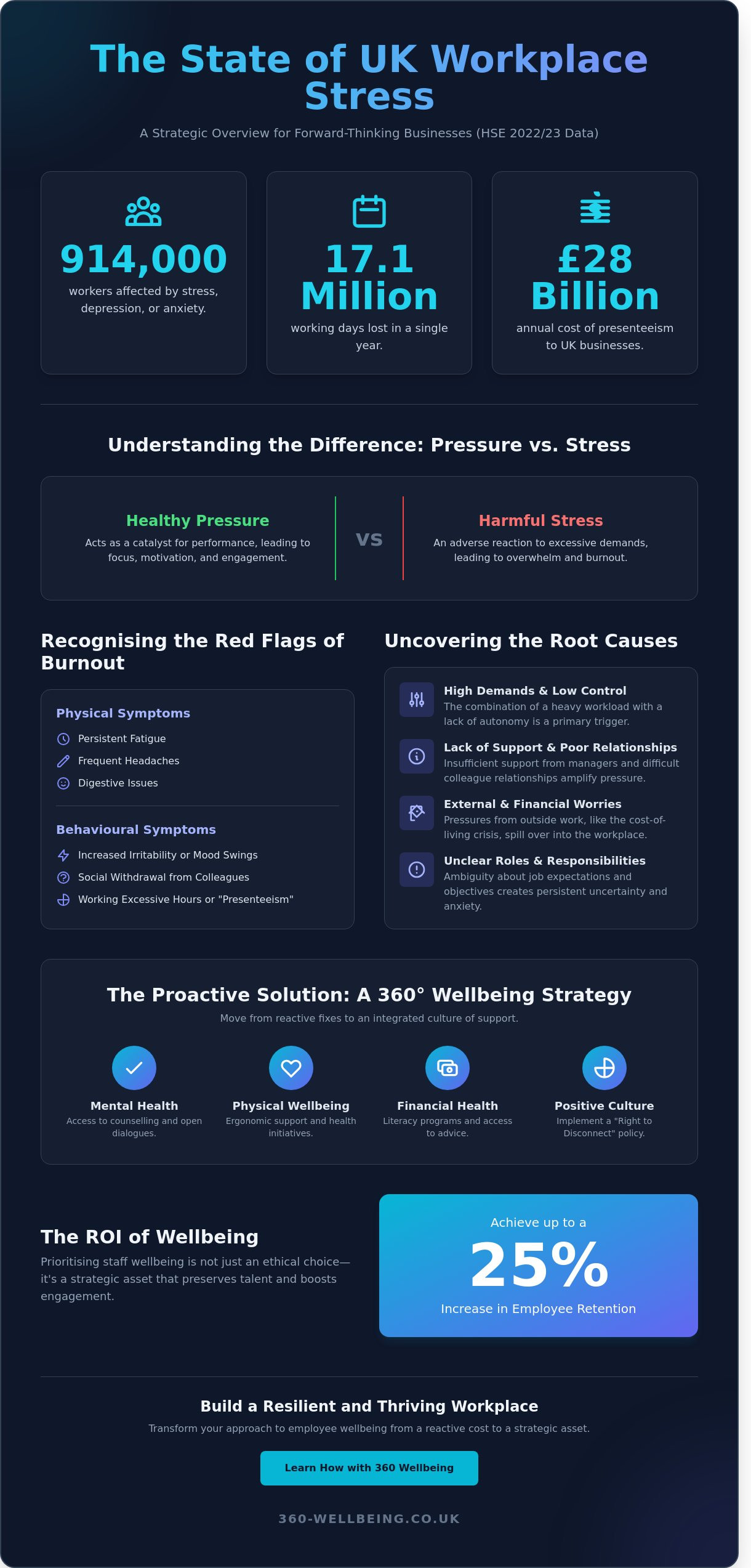
In the 2022/23 reporting period, the Health and Safety Executive (HSE) found that 914,000 workers in Great Britain suffered from work-related stress, depression, or anxiety. This crisis resulted in 17.1 million working days lost, proving that managing workplace stress uk has become a vital strategic priority for any forward-thinking business.
You’ve likely seen the impact of these figures firsthand, perhaps through rising turnover rates or the quiet struggle of a previously high-performing colleague. It’s difficult to balance a legal duty of care with the daily pressures of running a team, especially when the signs of burnout are often hidden behind a professional veneer. We understand that you want to protect your people, but the path to doing so isn’t always clear when you’re juggling commercial targets.
We promise to show you how to move beyond reactive fixes by adopting a proactive, holistic approach that addresses the root causes of tension. You’ll gain a clear understanding of stress triggers and a practical framework to support your staff through 2026. We will outline a 360-degree strategy that transforms wellbeing from a luxury into a powerful asset for engagement and growth.
Key Takeaways
- Understand the critical distinction between healthy pressure and harmful stress by applying the Health and Safety Executive (HSE) framework to your organisation.
- Learn to recognise the subtle physical and emotional red flags in your staff to address the root causes of burnout before they escalate.
- Discover proactive strategies for managing workplace stress uk, including how to implement a clear “right to disconnect” to protect work-life boundaries.
- Move beyond fragmented perks by adopting a unified 360-degree wellbeing strategy that integrates mental, physical, and financial health into a single, supportive culture.
The Landscape of Workplace Stress in the UK
Workplace stress isn’t just a personal struggle; it’s a systemic challenge affecting the heartbeat of UK industry. The Health and Safety Executive (HSE) defines it as the adverse reaction people have to excessive pressures or other types of demand. While a certain level of pressure can act as a catalyst for performance, it becomes harmful when it exceeds an individual’s ability to cope. Understanding Occupational stress is the first step toward building a resilient culture. In 2022/23, the HSE reported that 875,000 workers suffered from work-related stress, depression, or anxiety, resulting in 17.1 million working days lost. These figures highlight why managing workplace stress uk wide is no longer optional but a core business requirement for 2026.
Taking a 360-degree perspective on health allows us to see that stress isn’t an isolated incident. A proactive approach saves more than just money; it preserves the human spirit of an organisation. Reactive crisis management often comes too late, after morale has dipped and talent has left. By shifting the focus toward prevention and holistic wellbeing, businesses can transform their environment into one where staff don’t just survive, they thrive.
The Legal and Ethical Duty of Care
Under the Health and Safety at Work etc. Act 1974, UK employers have a clear legal obligation to ensure the health, safety, and welfare of their employees. This includes protecting them from psychological harm. Beyond compliance, there’s a powerful ethical case. In a competitive talent market, your brand’s reputation as a supportive employer is a strategic asset. Prioritising staff wellbeing can lead to a 25% increase in retention rates in certain sectors, as employees feel valued as individuals rather than just units of production.
The Hidden Costs of Unmanaged Stress
The financial impact often hides beneath the surface. Presenteeism, where staff are physically present but mentally disengaged due to ill health, costs UK businesses approximately £28 billion every year according to Deloitte’s 2022 analysis. This creates a ripple effect where stressed individuals may struggle with collaborative behaviour, unintentionally lowering the morale of the entire team. For small businesses, the impact is even more acute. A single employee struggling with chronic stress can disrupt the entire workflow of a five-person team, making managing workplace stress uk a vital survival strategy for SMEs.
Identifying the Signs and Root Causes of Stress
Effective managing workplace stress uk begins with a shift in perspective. We must move beyond viewing stress as an inevitable byproduct of a busy office and see it for what it truly is: a physiological and psychological alarm system. When an employee’s perceived pressure outweighs their ability to cope, the body enters a state of heightened arousal that, if sustained, leads to burnout. This imbalance often stems from a lack of autonomy. Research consistently shows that high workloads are manageable when staff feel they have control over their tasks, yet the combination of heavy demands and low control remains a primary trigger for chronic stress.
Environmental factors and a lack of visible support structures often turn manageable pressure into a mental health crisis. Employers have a clear duty of care to mitigate these risks. Following the HSE guidance on managing workplace stress ensures that organisations aren’t just reacting to crises but are building robust, preventative frameworks. Regular 1:1 check-ins are vital here; they provide a safe space to spot subtle shifts in performance or temperament before they escalate into long-term absence.
Physical and Behavioural Symptoms to Watch For
Stress rarely stays hidden for long. It manifests physically through persistent fatigue, frequent headaches, or sudden digestive issues that can’t be explained by other factors. You might notice behavioural shifts such as a previously collaborative team member becoming irritable or withdrawing from group social interactions. Some employees react by working excessive hours, mistakenly believing that “powering through” will alleviate the pressure. While office-based stress often presents as visible irritability or physical withdrawal, hybrid workers frequently mask their struggle through digital presenteeism or by becoming increasingly unresponsive to asynchronous communication.
Hidden Drivers: Financial and Legal Worry
True wellbeing requires a 360-degree view of an employee’s life. In 2026, external pressures like the cost-of-living crisis remain a significant driver of workplace anxiety, with approximately 38% of UK workers reporting that financial concerns directly impact their daily focus. Personal legal complications, such as a difficult divorce or a complex probate process, consume vast amounts of mental bandwidth and reduce cognitive resilience. Proactive leaders recognise these external stressors and offer tailored resources, such as Financial Support for Employees, to help staff navigate life’s hurdles. If you want to build a more resilient workforce, consider how a tailored wellbeing strategy can support your team’s unique needs.
Moving from Reactive Support to Proactive Prevention
Historically, many British businesses have treated mental health like a broken office chair; they only address the issue once it’s visibly snapped. By 2026, the strategy for managing workplace stress uk must shift toward building inherent resilience rather than just repairing damage. This evolution requires senior leadership to move beyond “wellbeing wash” and truly integrate health into the company’s DNA. When directors and executives openly discuss their own balance, it creates a culture of psychological safety where employees feel they can speak up before reaching a breaking point.
The Health and Safety Executive (HSE) reported that 875,000 workers suffered from work-related stress, depression, or anxiety in 2022/23. To combat this, a stress risk assessment can’t be a dusty PDF hidden on an intranet. It must be a live, collaborative document that examines the six key areas of work design: demands, control, support, relationships, role, and change. Effective assessments involve staff in the solution, leading to tangible adjustments like revised shift patterns or clearer reporting lines that actually reduce the daily cognitive load.
Training Managers as Wellbeing Champions
Line managers are the primary influence on an employee’s mental state. We must equip them with the confidence to hold sensitive, empathetic conversations without expecting them to be clinical psychologists. It’s vital to avoid the “hero manager” trap, where leaders take on their team’s emotional burdens at the expense of their own health. Training should focus on setting professional boundaries while maintaining a supportive, human touch that prioritises early intervention and active listening.
The Power of Wellness Action Plans (WAPs)
A Wellness Action Plan is a practical, proactive tool that helps employees and managers collaborate on staying healthy at work. It’s not a performance review; it’s a personalised map of an individual’s needs. These plans allow for tailored support by identifying specific triggers and preferred working styles. Implementation is simple and shouldn’t add to the administrative workload. Instead, a WAP saves time by providing a clear framework for support. Key benefits include:
- Providing a structured way to start difficult conversations about mental health.
- Identifying exactly what support looks like for each individual, from flexible start times to quiet zones.
- Creating a clear “early warning system” for when an employee is starting to feel overwhelmed.
By 2026, these personalised strategies will be the standard for any organisation serious about managing workplace stress uk effectively. This 360-degree perspective ensures that every member of the team feels seen, heard, and supported long before a crisis occurs.
Practical Strategies for Reducing Workplace Stress
Effective managing workplace stress uk requires a shift from reactive fixes to proactive, structural changes. According to the Health and Safety Executive (HSE), stress, depression, or anxiety accounted for 49% of all work-related ill health in 2022/23. To reverse this trend by 2026, businesses must prioritise the ‘right to disconnect’. This policy, highlighted in the 2024 Employment Rights Bill, encourages clear boundaries where staff aren’t expected to monitor emails outside their contracted hours. When employees have a genuine chance to recharge, their cognitive function and productivity remain stable rather than declining under pressure.
- Review job descriptions annually to ensure roles haven’t suffered from ‘scope creep’, which often triggers burnout.
- Encourage micro-breaks every 90 minutes to prevent physical fatigue and mental stagnation.
- Provide access to professional counselling or occupational health support before a minor concern becomes a long-term absence.
- Implement flexible working arrangements that allow for personal responsibilities, reducing the ‘double burden’ of home and work life.
Building Resilience through Holistic Health
Physical vitality is the foundation of mental clarity. Poor sleep hygiene can reduce a worker’s decision-making ability by 30% after just one restless night. Leaders should promote ‘wellbeing hours’ where staff can engage in physical movement or nutrition workshops. By viewing health as a strategic asset, companies create a culture where resilience is built during the working day, not just on weekends. A 360-degree approach ensures nutrition and fitness are integrated into the corporate schedule, rather than treated as optional extras. This creates a protective buffer against the daily pressures of the UK labour market.
Streamlining Communication to Reduce Information Overload
Digital fatigue is a significant contributor to anxiety. The 2023 Microsoft Work Trend Index revealed that 68% of employees struggle with a lack of focus time due to constant notifications. To combat this, set firm expectations for email response times; for instance, a ‘no-reply’ rule after 6pm. Reducing meeting durations from 60 minutes to 45 minutes allows for essential transition time. Using collaborative tools to centralise tasks removes the need for endless status update meetings and lowers the overall cognitive load on your team. This methodical approach to communication ensures that managing workplace stress uk becomes a shared responsibility rather than an individual burden.
Empower your workforce with a tailored wellbeing strategy that addresses every angle of health. Learn how we can support your team at 360 Wellbeing.
Implementing a 360-Degree Wellbeing Strategy
Many UK businesses rely on fragmented benefits like one-off gym discounts or occasional fruit bowls. These perks fail to address chronic stress because they don’t tackle the root causes of burnout or provide a continuous safety net. A truly effective approach to managing workplace stress uk requires a unified platform. It’s about creating a cohesive ecosystem that covers physical, mental, and financial health under one roof, ensuring that support is always within reach when an employee feels overwhelmed.
Staff with family commitments often face the highest pressure, balancing professional deadlines with domestic responsibilities. Providing 24/7 Virtual GP access removes the stress of waiting weeks for a local appointment; it allows parents to get medical advice for their children at 10 pm on a Sunday without the anxiety of a missed work day. Similarly, Employee Assistance Programmes (EAPs) shouldn’t just be a tick-box exercise for crises. By integrating EAPs with long-term therapy options, organisations ensure that employees receive sustained, professional support rather than a temporary fix for deep-seated issues.
The Role of Integrated Digital Health
Instant access to a UK-registered GP provides immediate reassurance when health concerns arise, preventing minor worries from escalating into serious anxiety. This speed is vital for maintaining a focused workforce. Life coaching complements this clinical support by focusing on professional development and resilience; it helps employees build the mental tools to handle heavy workloads with confidence. Our “360 Rewards” programme can alleviate financial stress through daily savings on essential shopping, putting money back into employees’ pockets during the ongoing cost-of-living challenges.
Measuring the ROI of Wellbeing Investments
Proving the value of a wellbeing platform relies on hard data rather than guesswork. According to the Health and Safety Executive (HSE), work-related stress, depression, or anxiety accounted for 49% of all work-related ill health in 2022/23. By tracking absenteeism and retention rates, HR leaders can see the tangible impact of their strategy for managing workplace stress uk. When staff feel supported, they stay longer; this reduces recruitment costs which often exceed £3,000 per hire for many UK roles. Using regular employee feedback allows you to tailor the support offered by 360 Wellbeing, ensuring your investment matches the actual needs of your team.
Shaping a Healthier Future for Your Organisation
As we look toward 2026, the shift from reactive crisis management to proactive prevention is no longer optional. With the Health and Safety Executive (HSE) reporting that 47% of all work-related ill health in the UK is due to stress, depression, or anxiety, businesses must prioritise a holistic approach. Effective managing workplace stress uk strategies involve identifying root causes early and providing tools that address the whole person, not just their job description. Resilience isn’t built in a day. It’s sustained through consistent, high-quality support that bridges the gap between physical health and mental clarity.
You can empower your staff to thrive by providing professional, round-the-clock care. Support your team with a 360-degree wellbeing platform that offers 24/7 access to UK-registered GPs alongside comprehensive mental health and life coaching support. Our integrated financial and legal advice ensures total peace of mind for every employee, helping them navigate life’s challenges with confidence. It’s time to transform your workplace into a sanctuary of health and productivity where every individual feels truly valued and secure.
Frequently Asked Questions
What are the main causes of stress in the workplace in the UK?
The primary drivers of workplace stress in the UK include heavy workloads, lack of managerial support, and organisational changes. According to the Health and Safety Executive (HSE) 2023 report, workload alone accounts for 44% of all work-related ill health. Other factors like poor working relationships or a lack of role clarity contribute to the 875,000 workers suffering from work-related stress, depression, or anxiety.
How can I tell if my employees are suffering from work-related stress?
You can identify stress by observing changes in an individual’s usual behaviour, such as increased irritability, frequent absences, or a dip in performance. The CIPD Health and Wellbeing at Work 2023 report highlights that presenteeism and “leaveism” are common indicators. Look for physical signs like fatigue or social withdrawal during team meetings. Early intervention is vital for managing workplace stress UK wide to prevent long-term burnout.
Is an employer legally responsible for an employee’s stress in the UK?
Yes, UK employers have a legal duty of care to protect employees from stress at work under the Health and Safety at Work etc. Act 1974. This includes assessing the risk of stress-related ill health arising from work activities. Failure to comply can lead to costly tribunal claims or intervention from the HSE. It’s a statutory requirement to ensure the workplace environment doesn’t harm an employee’s mental or physical health.
What is an Employee Assistance Programme (EAP) and how does it help?
An Employee Assistance Programme (EAP) is a confidential benefit that provides staff with 24/7 access to professional counselling and mental health support. It helps by offering immediate intervention for personal or professional issues before they escalate. Data from the UK Employee Assistance Professionals Association (EAPA) shows that these programmes deliver a high return on investment, often returning over £10 for every £1 spent by reducing sickness absence.
Can a Virtual GP help with managing workplace stress?
A Virtual GP helps manage stress by providing employees with rapid access to clinical advice and mental health referrals without the long wait times associated with traditional surgeries. This 360-degree approach ensures that physical symptoms of stress, like insomnia or headaches, are addressed alongside psychological needs. It empowers staff to take proactive control of their health, reducing the anxiety caused by waiting weeks for a medical appointment.
How do I conduct a stress risk assessment for my team?
To conduct a stress risk assessment, follow the HSE Management Standards to identify areas where employees feel pressured. This involves surveying your team, analysing sickness data, and holding focus groups to pinpoint specific stressors. You must record your findings and create an action plan to mitigate these risks. Documenting this process is a legal necessity for companies with five or more employees to demonstrate compliance with UK safety laws.
What are the best ways to reduce stress for remote or hybrid workers?
The best ways to support remote or hybrid staff include setting firm digital boundaries and scheduling frequent, informal video check-ins. With 44% of the UK workforce operating in a hybrid capacity as of 2023, preventing isolation is a priority. Provide clear guidance on “log-off” times and ensure they have access to the same wellbeing platforms as office-based staff to maintain a sense of belonging and support.
How much does an employee wellbeing platform cost for a small business?
While costs vary based on the level of support, many UK wellbeing platforms for small businesses start from approximately £2 to £6 per employee per month. This investment provides a comprehensive suite of tools, including mental health resources and fitness tracking. Investing in these platforms is often more cost-effective than the average £1,500 cost per employee that unmanaged stress-related absence incurs annually, according to Deloitte’s 2022 mental health report.