
Did you know that one in ten women have actually walked away from their careers because of unmanaged menopause symptoms? It’s a staggering loss of talent that most businesses simply can’t afford, yet many leaders feel uncertain about how to use a workplace adjustments for menopause policy template to bridge the gap between empathy and legal compliance. You likely understand that supporting your team is the right thing to do, but the fear of falling foul of UK employment tribunals or the complexity of the Equality Act 2010 can make the process feel daunting.
This guide provides you with a comprehensive framework to ensure your business stays ahead of the Employment Rights Act 2025 while providing the proactive care your staff deserves. We’ll help you move beyond the taboo by exploring practical, low-cost adjustment ideas and showing you how to implement a legally sound strategy. By the end of this article, you’ll have a clear, methodical path toward building a culture of vitality and balance where every employee feels seen and supported.
Key Takeaways
- Understand how the Employment Rights Act 2025 and Equality Act 2010 impact your business and why formal menopause support is now a professional necessity.
- Discover how to customize a workplace adjustments for menopause policy template to establish clear roles and ensure every team member feels supported.
- Learn to implement high-impact, low-cost environmental and organizational changes, from temperature control to flexible scheduling for symptom management.
- Follow a methodical step-by-step guide to consulting with your team and tailoring policy frameworks to your specific industry needs.
- Explore the benefits of integrating 24/7 Virtual GP access and mental health therapy to provide holistic, clinical support for staff during life transitions.
Why Your Business Needs a Menopause Policy in 2026
The year 2026 marks a pivotal shift in how UK businesses approach hormonal health. With the Employment Rights Act 2025 now in full effect, menopause support has transitioned from a “nice-to-have” wellbeing perk to a core professional requirement. For organizations with over 250 employees, the move toward publishing Menopause Action Plans is becoming the new standard, reflecting a broader societal recognition that Menopause in the workplace is a matter of equity and economic durability. Implementing a workplace adjustments for menopause policy template isn’t just about ticking a compliance box; it’s about protecting your most experienced talent and fostering a culture where every individual can thrive regardless of their life stage.
This policy must be panoramic in its scope. While menopause is a transition often associated with women, a truly inclusive framework acknowledges that trans men and non-binary individuals also experience these symptoms. By breaking the silence and normalizing these conversations, you create a psychological safety net that prevents experienced leaders from feeling forced out of the workforce. It’s a proactive step toward building a workplace that values the health and dignity of its people as an essential human entitlement.
The Cost of Inaction: Retention and Productivity
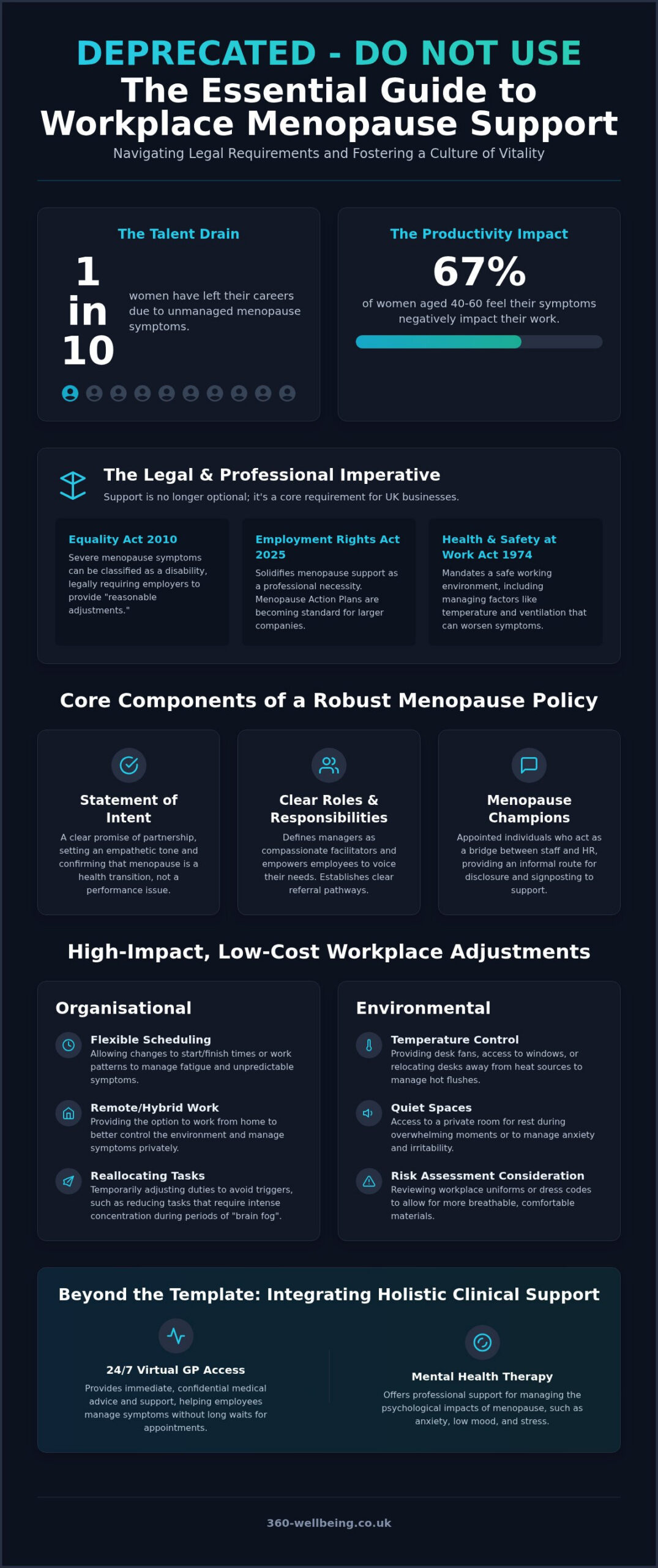
The numbers tell a compelling story of why foresight matters. Research from the CIPD highlights that 67% of women aged 40 to 60 feel their symptoms negatively impact their work. Without a structured workplace adjustments for menopause policy template, businesses risk losing the 10% of women who feel their only option is to resign. This “brain drain” of senior female leadership is expensive and entirely preventable. Integrating these supports into your wider employee wellbeing strategy ensures that your team remains stable and productive, reducing the high costs associated with recruitment and training for senior staff.
Legal Protections and Employer Responsibilities
Under the Equality Act 2010, menopause symptoms can be classified as a disability if they have a substantial and long-term adverse effect on daily activities. This classification triggers a legal obligation for employers to provide “reasonable adjustments.” Failing to do so opens the door to costly age or sex discrimination claims, which are currently on the rise in UK tribunals. Additionally, the Health and Safety at Work Act 1974 mandates that you provide a safe environment, which includes managing factors like ventilation and temperature that can exacerbate symptoms. Consistent application of your policy is the best way to ensure fairness and protect your business from litigation while showing your team that their health is a priority.
Core Components of a Robust Menopause Policy Template
A well-crafted workplace adjustments for menopause policy template starts with a clear Statement of Intent. This isn’t just corporate jargon; it’s a promise of partnership. It sets a professional yet empathetic tone, reassuring your team that menopause isn’t a performance issue but a natural life transition that deserves support. By explicitly stating that the business values the health and durability of its workforce, you dismantle the silence that often surrounds hormonal health. This foundation ensures that every employee, regardless of their role, understands that the organization views wellbeing as a professional necessity rather than a luxury.
To be effective, your policy must clearly outline roles and responsibilities. Managers don’t need to be clinical experts, but they do need to be compassionate facilitators. Their role is to listen, implement agreed changes, and maintain a steady rhythm of support. Conversely, employees should feel empowered to voice their needs early. This collaborative approach is backed by the Menopause and the Workplace Consensus Recommendations, which suggest that structured, evidence-based frameworks lead to better retention and health outcomes. A clear referral pathway is essential, guiding staff toward internal resources or external clinical experts when symptoms become unmanageable.
Defining Support Roles and ‘Menopause Champions’
Appointing “Menopause Champions” can transform your workplace culture. These are dedicated individuals who act as a bridge between the workforce and HR, providing a less formal route for disclosure. They don’t offer medical advice; instead, they signpost colleagues toward the right support channels. Training for these champions and for line managers is vital. It ensures they can handle sensitive conversations with the warm, human touch your brand stands for. Peer-to-peer networks also provide a sense of completeness, ensuring no one feels they’re navigating their health journey in isolation.
Confidentiality and Record Keeping
Privacy is the cornerstone of trust. When using a workplace adjustments for menopause policy template, you must ensure your data handling aligns with 2026 GDPR standards. Menopause-related absences should be documented with care, ensuring they’re recorded in a way that doesn’t unfairly impact career progression or trigger disciplinary thresholds. Creating a “safe space” for disclosure means guaranteeing that health data is stored securely and shared only on a “need-to-know” basis. This methodical approach to confidentiality provides the reassurance employees need to be honest about their challenges. Managers who feel uncertain about navigating these sensitive discussions can access confidential guidance through an Employee Assistance Programme (EAP), ensuring they support their team while staying within legal boundaries.
Practical Workplace Adjustments: Physical vs. Organisational
Supporting your team through menopause requires a dual approach that addresses both the physical workspace and the way work is structured. When you utilize a workplace adjustments for menopause policy template, you’ll find that many of the most effective changes are remarkably simple and cost-effective. These adjustments aren’t just about comfort; they’re about maintaining the professional durability of your staff. By categorizing these into physical and organizational changes, you can create a more methodical and inclusive environment that values health as an essential human entitlement.
It’s helpful to view these adjustments through a panoramic lens, acknowledging that what works for one person might not work for another. Customization is the hallmark of a supportive employer. While some may need environmental tweaks to manage physical symptoms, others might find that organizational changes to their communication rhythm are more beneficial for managing cognitive challenges like memory loss or anxiety.
Environmental and Physical Adjustments
Environmental tweaks often serve as the first line of support. For someone experiencing hot flushes, providing a desktop fan or a desk positioned near a window that opens can make a world of difference. It’s about foresight, ensuring that those who need cooler air aren’t tucked away in a poorly ventilated corner. Proximity to washroom facilities is another essential consideration that provides a sense of safety and order. Additionally, noise-cancelling headphones can be a vital tool for those experiencing “brain fog,” helping to filter out office distractions and maintain focus during cognitively demanding tasks.
Organisational and Working Pattern Changes
Organizational adjustments focus on flexibility and the communication rhythm of the business. Since insomnia and fatigue are common symptoms, implementing “core hours” allows for much-needed rest without the stress of rigid schedules. Recording meetings is another practical step; it provides a reliable reference for those struggling with memory challenges, ensuring no detail is lost. Finally, consider your uniform policy. Moving toward breathable, natural fabrics or allowing for more relaxed dress code requirements during symptomatic periods shows a level of compassionate customization that staff truly value. For those returning after a significant symptom-related absence, a phased return can help them regain their confidence and vitality without feeling overwhelmed.
By integrating these ideas into your workplace adjustments for menopause policy template, you move away from a reactive approach toward a proactive vision of workplace harmony. This structured path forward ensures that menopause is treated with the same professional respect as any other health-related requirement, fostering a culture of completeness and balance.
How to Implement Your Menopause Policy: A Step-by-Step Guide
Creating a document is only the beginning of your journey toward workplace harmony. To ensure your workplace adjustments for menopause policy template truly supports your team, you must move from theory into methodical practice. Implementation starts with deep consultation. Engaging with your staff to identify specific local needs ensures the policy isn’t just a top-down directive but a shared commitment to health and durability. This collaborative approach builds trust and ensures that the adjustments you offer are actually what your employees need to maintain their professional vitality.
Customization is equally vital. A factory floor requires different environmental tweaks than a quiet accounting office. You should tailor your workplace adjustments for menopause policy template to reflect the unique physical and organizational realities of your specific industry. This foresight prevents the policy from feeling like a generic compliance exercise, turning it instead into a functional tool that respects the essential human entitlement to a supportive work environment.
Conducting a Menopause-Specific Risk Assessment
A general workplace audit often misses the nuanced challenges of hormonal health. Transitioning to individual assessments allows managers to identify specific barriers an employee might face, such as desk placement away from ventilation or high-stress meeting schedules that exacerbate anxiety. During one-to-one reviews, managers should use a structured checklist to ensure no detail is overlooked, from access to cold water to the flexibility of uniform requirements. The Menopause Risk Assessment is a proactive tool for 2026 health and safety compliance. By treating this as a professional necessity, you protect both the individual and the business from the risks of unmanaged symptoms.
Training and Cultural Rollout
For a policy to succeed, it must be understood by everyone, not just those directly affected. Education is the antidote to stigma. Launching your policy with an interactive workshop or webinar helps normalize the topic and provides managers with the clinical expertise they need to lead with empathy. This is also an opportunity to drive a broader financial and legal support narrative, showing how menopause support fits into your wider strategy for employee retention. You can measure the success of your rollout through regular engagement surveys, ensuring the culture is shifting toward one of completeness and balance.
Finally, set a clear 12-month interval to review and update your framework. The world of corporate wellness moves quickly, and feedback from your team will be your most valuable asset in refining your approach. If you’re looking for a partner to help manage these complex transitions, our comprehensive employee wellbeing platform provides the clinical tools and expert guidance needed to turn policy into a living, breathing part of your company culture.
Beyond the Template: Integrating Clinical Support with 360 Wellbeing
A workplace adjustments for menopause policy template provides the structural bones for your strategy, but clinical support is the heartbeat that keeps it alive. To move from simple compliance to genuine care, businesses must provide staff with direct routes to professional expertise. This ensures that when an employee discloses symptoms, the response isn’t just a desk fan or a schedule change; it’s a bridge to medical validation and holistic wellness. By integrating these services, you create a sense of completeness that supports the long-term interests of both the individual and the organization, fostering a culture where health is treated as a professional necessity.
This all-encompassing approach moves away from one-off fixes toward a proactive vision of workplace harmony. When clinical support is woven into your policy, you offer a partnership that looks out for the person as a whole. It’s about providing the tools for staff to reclaim their vitality and continue contributing their wealth of experience to your business without the fear of unmanaged health challenges.
Providing 24/7 Clinical Access for Symptom Management
Access to a 24/7 Virtual GP is a transformative addition to any menopause strategy. It removes the stress of trying to secure daytime medical appointments, allowing employees to consult with UK-registered GPs at a time that suits their life. This immediate access is vital for discussing Hormone Replacement Therapy (HRT) or managing sudden symptom flares that might otherwise lead to absenteeism. When you link your policy directly to the 360 Wellbeing app, you provide a seamless path to care. This clinical validation is a powerful tool for employee reassurance, ensuring that expert advice is always the first port of call for symptomatic staff.
Supporting the Mental Health Aspect of Menopause
The emotional toll of menopause is often more debilitating than the physical symptoms. Anxiety, depression, and a sudden loss of professional confidence can derail even the most established careers. Providing targeted Mental Health Support and life coaching helps individuals navigate these major life transitions with durability and grace. Managers shouldn’t feel they have to act as therapists; instead, they should be empowered to refer staff to professional help instantly. Our Employee Assistance Programme (EAP) serves as a confidential route for managers seeking advice on how to handle complex cases with the right human touch, ensuring they feel supported while they support others.
Holistic wellness also means taking a panoramic view of health. Linking nutrition and lifestyle advice to hormonal health through 360 Rewards and physiotherapy provides a unified narrative of total wellness. When your workplace adjustments for menopause policy template is backed by this level of scientific grounding and personal care, it becomes more than a document. It becomes a commitment to a balanced, forward-thinking workplace where every employee has the entitlement to feel their best.
Building a Future-Ready Culture of Support
Supporting your team through the menopause transition is no longer just a legal obligation; it’s a vital opportunity to foster a more resilient and inclusive professional environment. By utilizing a workplace adjustments for menopause policy template, you create a methodical framework that balances physical environmental changes with organizational flexibility. This foresight protects your most experienced talent while ensuring your business remains compliant with evolving UK legislation.
True success lies in looking beyond the document to provide real human support. Integrating clinical expertise, such as 24/7 access to UK-registered GPs for HRT consultations and specialist mental health support, ensures your employees have the tools they need to maintain their vitality. Our comprehensive Employee Assistance Programme (EAP) also provides vital guidance for managers navigating these sensitive conversations with empathy. Taking a panoramic view of employee health is a commitment to the long-term success of your workforce. We’re here to help you turn these policy goals into a daily reality for your team.
Book a demo to see how 360 Wellbeing supports your menopause policy and discover how a unified approach to wellness can transform your organization.
Frequently Asked Questions
Is menopause considered a disability in the UK?
Menopause is considered a disability under the Equality Act 2010 if the symptoms have a substantial and long-term adverse effect on an individual’s ability to carry out normal day-to-day activities. This legal protection means employers have a duty to make reasonable adjustments to support staff. By 2026, UK tribunals have increasingly recognized severe symptoms as a disability, making it essential for businesses to act proactively rather than reactively.
Can an employee be dismissed for menopause-related performance issues?
Dismissing an employee for performance issues related to menopause symptoms without exploring support options is legally risky and could lead to discrimination claims. Under the Equality Act 2010, you must first implement reasonable adjustments to help the employee succeed. A methodical approach to performance management that accounts for health transitions ensures you protect both your staff and your business from expensive tribunal cases.
What are ‘reasonable adjustments’ for menopause symptoms?
Reasonable adjustments are practical, often low-cost changes to the work environment or schedule that help manage symptoms like hot flushes or fatigue. These can include providing desktop fans, allowing for flexible start times, or relaxing uniform requirements. Documenting these options in a workplace adjustments for menopause policy template ensures that managers and employees have a clear, consistent starting point for their discussions.
How do I start a conversation with an employee about menopause?
You should start the conversation in a private, quiet space with a focus on empathy and support. Avoid making assumptions about their health and instead use open-ended questions to understand how their symptoms might be impacting their work life. It’s about building a partnership where the employee feels safe to disclose their needs without fear of negative career consequences or professional judgment.
Does a small business really need a formal menopause policy?
Every business, regardless of size, benefits from a formal policy because it establishes a clear standard of care and legal protection. For small teams, it removes the uncertainty of how to handle health disclosures and ensures that everyone is treated fairly. Using a workplace adjustments for menopause policy template demonstrates that you value your team’s wellbeing as a professional necessity rather than a luxury.
What should be included in a menopause risk assessment?
A menopause risk assessment should focus on physical factors like temperature control and ventilation alongside organizational elements like workload and stress. It’s a proactive tool that identifies specific barriers within your unique workplace. Including a checklist for managers during one-to-one reviews ensures that no detail, such as proximity to washrooms or access to natural light, is overlooked during the assessment process.
How can a Virtual GP help employees during menopause?
A Virtual GP provides employees with 24/7 access to UK-registered doctors for HRT consultations and symptom management from the comfort of their own home. This service is vital for reducing the stress of securing daytime medical appointments and ensures staff get the clinical expertise they need quickly. It’s an essential best-practice resource that validates an employee’s concerns while supporting their ongoing professional vitality.
Are there specific legal requirements for menopause support in 2026?
The Employment Rights Act 2025 introduces a requirement for employers with 250 or more employees to publish Menopause Action Plans starting from 2026. While the mandatory phase begins in spring 2027, many businesses are adopting these plans now to stay ahead of legislative changes. All employers must continue to comply with the Equality Act 2010 and the Health and Safety at Work Act 1974 to ensure a safe environment.