
A 10% discount on a high-street coffee won’t cure a week of burnout or provide a fast diagnosis for a worrying physical symptom. While rewards platforms were once the gold standard for office culture, many UK employers are now questioning if these perk-heavy models truly support a modern workforce. If you’ve noticed your team isn’t engaging with their benefits or you’re tired of paying for discounts that staff never use, you aren’t alone.
It’s frustrating to invest in a package only to find that your people still struggle to access a GP or find professional mental health support when they need it most. In this article, we’ll dive deep into the most common perkbox limitations and complaints to help you decide if it’s the right fit for your team’s future. You’ll learn how to move away from low-value vouchers toward a wellbeing strategy that delivers clinical value and tangible health security. We’ll examine the shift toward holistic, 24/7 care that actually reduces absenteeism and ensures every employee feels genuinely protected, not just rewarded. By the end, you’ll have a clear path toward a benefits package that provides real peace of mind for your whole workforce.
Key Takeaways
- Understand the shift from simple lifestyle perks to clinical health support as a necessary evolution for modern UK workplaces.
- Identify the most frequent perkbox limitations and complaints, including “perk fatigue” and the frustration of finding lifestyle tips when urgent medical care is required.
- Learn to apply the “Clinical Priority” test to ensure your benefits package offers immediate access to UK-registered GPs and professional mental health therapy.
- Discover how bridging the gap between rewards and clinical intervention can significantly reduce absenteeism and improve overall workforce engagement.
- Gain a clear framework for selecting a wellbeing strategy that provides genuine health security and long-term value for both your employees and your organisation.
Navigating the Employee Benefits Landscape in 2026
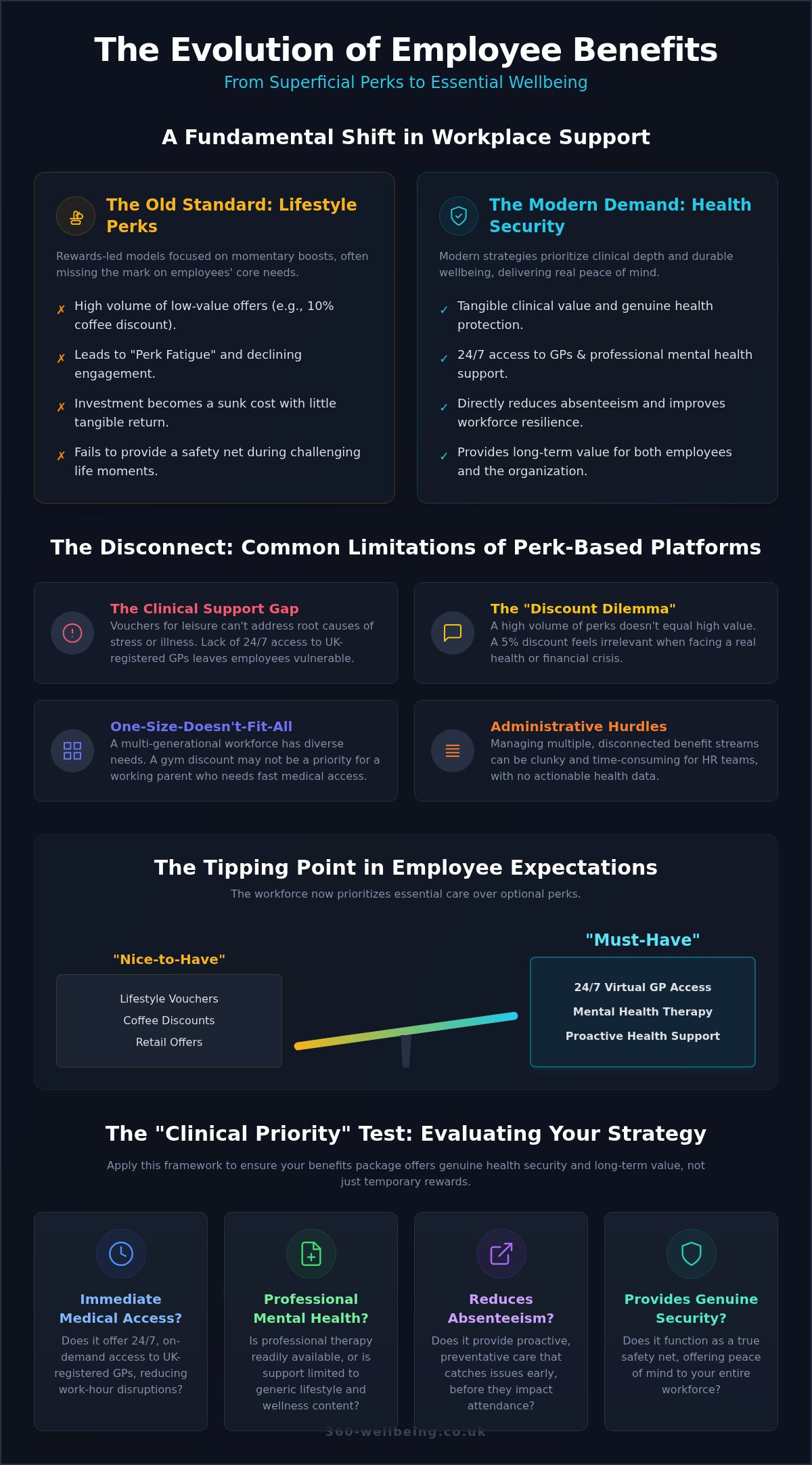
The UK workplace has undergone a profound transformation. We’ve moved past the era where a simple discount code or a free coffee could define a company’s culture. In 2026, the focus has shifted toward clinical depth and long-term vitality. HR departments across the country are increasingly reporting “perk fatigue,” a phenomenon where employees feel overwhelmed by a high volume of low-value offers that don’t address their fundamental needs. It’s no longer enough to offer a shiny app; the support behind the screen must be substantial and reliable.
The very definition of employee benefits has expanded to include health security as a core pillar. This change is why we see a rise in discussions around perkbox limitations and complaints. While digital-first platforms are essential for supporting a hybrid and diverse workforce, the substance matters more than ever. There’s a clear distinction between lifestyle rewards, which provide a momentary boost, and essential wellbeing, which offers a safety net during life’s most challenging moments.
The Rise of the Wellbeing Economy
Since 2024, employee expectations have matured significantly. The demand for “must-have” medical access has replaced the novelty of “nice-to-have” vouchers. People are looking for foresight and durability in their care. SMEs are now seeking the same professional-grade health tools that were once the exclusive domain of large corporations. This is a panoramic shift from superficial rewards to a unified narrative of total wellness. It’s about providing clinical support that catches people before they reach a point of crisis, ensuring workplace harmony remains intact.
Why Perkbox Became the Industry Standard
It’s easy to see why rewards-led models gained such traction initially. They provided an immediate sense of engagement and a user-friendly interface that made benefits feel accessible to everyone. In the early 2020s, these platforms were a revelation for workplace culture, offering a simple way to say “thank you” to staff. However, as the novelty fades, many businesses are identifying perkbox limitations and complaints that suggest a need for more robust support. When an employee faces a mental health challenge or needs a 24/7 Virtual GP, a discount on a gym membership doesn’t provide the clinical intervention required. We are moving into a phase where customization and expert care are the hallmarks of a truly successful corporate strategy.
Common Perkbox Limitations: Why One Size Doesn’t Fit All
The “Discount Dilemma” is a growing concern for many UK businesses. While a platform might boast thousands of perks, a high volume of discounts doesn’t always equate to high value for your team. If an employee is struggling with a chronic health issue or financial anxiety, a 5% discount on designer trainers feels disconnected from their reality. Perk fatigue is the point where employees stop seeing value in minor discounts. When this happens, engagement drops, and the investment becomes a sunk cost for the business.
True impact isn’t measured by how many times an employee logs into an app to find a voucher. It’s measured by actual health improvements and a reduction in absenteeism. Supporting a multi-generational workforce requires a panoramic viewpoint that acknowledges different life stages. A younger team member might appreciate a gym discount, but an older employee or a working parent may prioritise rapid medical access or legal support. Addressing these perkbox limitations and complaints requires a shift from “lifestyle” rewards to a more durable wellbeing foundation.
The Clinical Support Gap
Vouchers for leisure activities simply don’t address the root causes of workplace stress or physical illness. Many standard rewards platforms lack integrated, 24/7 access to UK-registered GPs, leaving staff to navigate the complexities of the NHS alone during work hours. This absence of immediate clinical intervention can leave your most vulnerable employees without a safety net. Following UK government guidance on workplace health, it’s clear that proactive support is essential for a thriving organisation. Without professional mental health therapy or physiotherapy, a benefits package remains a surface-level offering rather than a genuine health security tool.
Administrative and Integration Hurdles
Managing multiple benefit streams can become incredibly clunky for HR teams. A common frustration involves the difficulty of extracting actionable health data to inform future strategies. If you can’t see which services are actually improving employee health, it’s impossible to justify the spend. Small businesses often feel this most acutely, as the “per-head” value of broad platforms can be poor if engagement is low. It’s often more effective to look at a unified health and rewards platform that combines clinical depth with meaningful incentives. This structured path forward ensures that your strategy is both scientifically grounded and deeply personal, moving away from the “one-size-fits-all” trap.
Analysing User Complaints: Beyond the Technical Glitches
When we examine the feedback landscape, it becomes clear that user dissatisfaction often stems from a lack of tangible substance. While technical bugs are inevitable in any software, the most significant perkbox limitations and complaints often centre on the “hollow” nature of the rewards. Users frequently report frustration with expired discount codes or offers that provide negligible savings on high-cost items. This creates a sense of “benefit dilution,” where a platform attempts to cover every possible base but fails to provide deep support in any single area. For an employee facing a genuine crisis, a library of lifestyle tips is a poor substitute for professional intervention.
The impact of poor customer support also cannot be overlooked. When a benefit is supposed to provide reassurance, a slow or unhelpful response to a query can damage the employer-employee relationship. It sends a message that the wellbeing of the staff is a secondary concern to the administration of the platform itself. This is particularly problematic when the service in question relates to health or financial security, where time is often of the essence. It’s vital that the support behind the screen mirrors a professional consultation: calm, methodical, and genuinely invested in the user’s success.
The “Fluff” Factor in Employee Rewards
In the current economic climate, employees are more discerning about where they spend their money. Many complaints highlight the psychological toll of “trivial” rewards. Offering a small discount that requires a significant upfront spend can feel insensitive during a cost-of-living crisis. It’s vital to identify if your current platform is being used for its intended purpose or if it’s merely a digital ornament. Real value comes from benefits that address essential human entitlements, such as legal support or complimentary will writing, rather than just incentivising more consumer spending. This panoramic approach ensures that the support offered is both scientifically grounded and deeply personal.
Reliability and Accessibility Issues
Accessibility is a professional necessity, not a luxury. Technical complaints often focus on app stability or login persistence, which can prevent staff from using the service when they actually need it. For critical services like a 24/7 Virtual GP or mental health support, any barrier to entry is a risk. A “9-to-5” support model fails a modern, flexible workforce that operates across different shifts and weekends. Reliability means knowing that expert care is available at the exact moment a challenge arises, providing a steady and clear path forward for your team.
Evaluating Benefit Substance: A Framework for UK Employers
Choosing a benefits platform requires a shift from counting perks to measuring clinical depth. When you look beyond the surface level of perkbox limitations and complaints, you find that the most successful strategies prioritise health security over lifestyle incentives. A robust framework allows you to distinguish between “noise” and “necessity.” This process begins with the Clinical Priority test: does the platform provide immediate, 24/7 access to a UK-registered GP? If the answer is no, the package may be failing to provide the primary safety net your employees actually need.
Calculating the true ROI of your investment involves looking at more than just app login rates. Real value is found in the reduction of absenteeism and the prevention of long-term illness. When an employee can secure a virtual consultation or a physiotherapy assessment within hours rather than weeks, they return to health and productivity much faster. This clinical intervention is what transforms a benefits package from a corporate luxury into a professional necessity that protects your bottom line.
The Hierarchy of Employee Needs
We can map modern benefits to a hierarchy of needs where physical health and financial security form the foundation. Before an employee can appreciate a cinema discount, they must feel that their basic wellbeing is secure. Comprehensive financial support, such as debt advice and complimentary will writing, provides a sense of durability that lifestyle vouchers simply cannot match. Identifying these “must-have” features is essential for creating a package that resonates across your specific industry. It’s about providing foresight and care that supports the whole person, not just their leisure time.
Clinical vs. Non-Clinical Wellbeing
It’s vital to distinguish between a lifestyle app and a professional Employee Assistance Programme (EAP). While many platforms offer wellness “tips,” a clinical-first approach provides real therapy sessions with qualified professionals. In 2026, 24/7 Virtual GP services have become the most requested benefit for UK staff because they offer tangible health security. You should always evaluate the qualifications of the experts behind the screen to ensure your team receives scientifically grounded care. To see how clinical depth can transform your workforce, you can explore our clinical-first wellbeing solutions. This steady and methodical path forward ensures that your strategy remains both modern and deeply compassionate.
Beyond the Voucher: The 360 Wellbeing Approach
While many platforms focus on “celebration” and “recognition,” these elements alone cannot address a physical health crisis or a complex legal worry. The most significant perkbox limitations and complaints often highlight a lack of depth when employees need it most. 360 Wellbeing bridges this gap by positioning clinical intervention as the primary driver of workforce health, with rewards acting as a supportive secondary benefit. This approach ensures that your team has a safety net that is both durable and scientifically grounded.
The cornerstone of this model is the 24/7 Virtual GP. By providing immediate access to UK-registered doctors, you significantly reduce the anxiety associated with long NHS wait times. Employees no longer have to wait weeks for a consultation; they can receive expert advice and prescriptions from the comfort of their home or office. This rapid response not only supports the individual’s recovery but also maintains workplace harmony by reducing the duration of health-related absences.
Beyond medical care, true health security includes mental, social, and financial stability. Integrating mental health therapy and life coaching into a single, empathetic platform allows for a panoramic view of employee wellness. Often, the “quiet heroes” of employee retention are the services that provide peace of mind during life’s administrative challenges. Complimentary will writing, legal support, and debt advice offer a level of protection that a simple discount voucher could never replicate. These services demonstrate a deep commitment to the long-term interests of your staff.
Holistic Health as a Retention Strategy
Adopting a caregiver brand persona transforms how your employees perceive their relationship with the company. When you support the “whole person,” you acknowledge that physical pain, financial stress, and mental health are often interconnected. 360 Wellbeing is designed specifically for UK SMEs and sole traders, ensuring that onboarding is methodical and clear. This foresight allows even small teams to access professional-grade health tools that foster a sense of completeness and balance within the organisation.
Your Next Steps: Auditing Your Current Benefits
Transitioning from a perk-heavy model to a health-heavy model doesn’t have to mean losing momentum. Start by auditing your current engagement levels and identifying where perkbox limitations and complaints are most prevalent. Look for the gaps where your staff are left vulnerable without clinical-grade support. Choosing a partner that prioritises clinical expertise alongside human touch is the most effective way to ensure your wellbeing strategy delivers genuine value. Explore our 24/7 Virtual GP and wellbeing solutions to begin your journey toward a more resilient and empowered workforce.
Securing Your Team’s Health for the Future
The transition from a culture of simple discounts to a strategy of clinical health security is a hallmark of the modern UK workplace. We’ve explored how moving past perkbox limitations and complaints allows you to build a foundation of genuine trust and durability. By prioritising immediate medical access and professional mental health support, you ensure your team feels protected during life’s most challenging moments. This shift doesn’t just reduce absenteeism; it fosters a sense of workplace harmony where every individual is treated as a priority rather than a number.
It’s time to choose a partner that provides foresight and all-encompassing care. You can discover a wellbeing platform with clinical depth that provides 24/7 access to UK-registered GPs, professional mental health therapy sessions, and an integrated 360 Rewards marketplace. This unified narrative of wellness offers the durability that lifestyle vouchers lack. We’re here to help you navigate this evolution with a steady, methodical approach that puts your people first. Your journey toward a more resilient, empowered, and healthy workforce starts today.
Frequently Asked Questions
What are the main differences between Perkbox and 360 Wellbeing?
The primary difference lies in the shift from a rewards-first model to a clinical-first approach. While Perkbox focuses on global recognition and discounts, 360 Wellbeing prioritises health security through 24/7 Virtual GP access and professional mental health therapy. We treat rewards as a secondary benefit rather than the core offering. This ensures that when your staff face a health challenge, they receive expert medical intervention rather than just lifestyle tips.
Why do employees complain about “perk fatigue”?
Employees often experience perk fatigue when they are bombarded with high volumes of minor discounts that require spending more money to save a little. This is a common theme in perkbox limitations and complaints, as staff start to see these vouchers as trivial during a cost-of-living crisis. Real value is found in benefits that provide tangible support, such as debt advice or rapid medical access, which address essential human entitlements.
Is a Virtual GP service better than a standard Employee Assistance Programme (EAP)?
A Virtual GP service provides a higher level of medical intervention than a standard EAP. While an Employee Assistance Programme is excellent for initial advice and counselling, a 24/7 Virtual GP can offer clinical diagnoses, referrals, and prescriptions. 360 Wellbeing integrates both services into a single platform. This panoramic approach ensures that your workforce has access to both emotional support and the professional medical care necessary to maintain long-term vitality.
Can a small business afford a clinical-grade wellbeing platform?
Clinical-grade wellbeing is now highly accessible for small businesses and sole traders through a recurring SaaS model. Unlike traditional private medical insurance, which can be prohibitively expensive, our platform operates on a fixed fee per staff member. This allows smaller organisations to offer professional-grade health tools, such as physiotherapy and life coaching, that were previously reserved for large corporations. It’s an affordable way to demonstrate a caregiver persona and improve employee retention.
How does 24/7 Virtual GP access reduce workplace absenteeism?
Access to a 24/7 Virtual GP reduces absenteeism by removing the need for employees to take time off for traditional NHS appointments. Staff can secure a consultation from their home or office at a time that suits them, often on the same day. This rapid intervention catches minor health issues before they escalate into long-term sickness. By providing foresight and immediate care, you help your team return to health and productivity much faster.
What financial and legal support should be included in a 2026 benefits package?
A modern benefits package should include holistic safeguards like complimentary will writing, debt helplines, and legal support. These are the “quiet heroes” of employee retention because they address the financial and social stressors that often lead to poor mental health. In 2026, employees expect their workplace to support the “whole person.” Providing these essential entitlements creates a sense of durability and peace of mind that lifestyle rewards simply cannot match.
How do I know if my employees are actually using their perks?
You can track engagement through the reporting tools provided by your wellbeing partner. If you notice a high volume of perkbox limitations and complaints regarding low engagement, it’s often a sign that the benefits don’t resonate with your team’s actual needs. We provide actionable data that helps HR departments understand which services, from mental health therapy to 360 Rewards, are being utilised. This allows for a more customised corporate strategy.
Can I switch from Perkbox to 360 Wellbeing easily?
Switching to 360 Wellbeing is a methodical and clear process designed to maintain your momentum. We provide dedicated account management to handle the onboarding of your staff, ensuring a smooth transition from a perk-heavy model to a clinical-first platform. Our team guides you through every step, from license maintenance to administrative support. This partnership approach ensures that your new wellbeing strategy is scientifically grounded and ready to deliver immediate value to your workforce.