
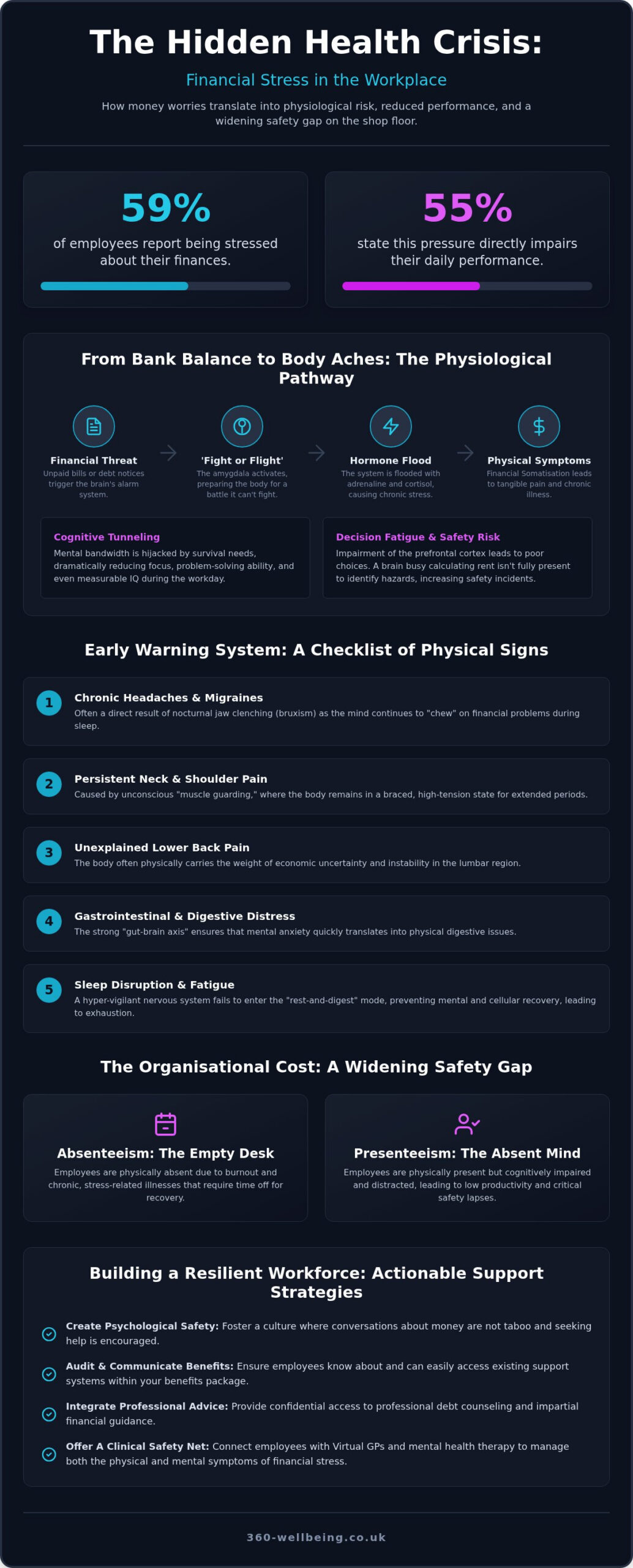
Did you know that 59% of employees now report being stressed about their finances, with 55% stating this pressure directly impairs their daily performance? Financial stress in the workplace isn’t just a private worry; it’s a physiological event that manifests in rising absenteeism and increased safety incidents on the shop floor. You’ve likely noticed your team struggling with concentration or reporting vague physical complaints, leaving you feeling powerless to help when significant, unsustainable pay rises aren’t a viable option.
We understand that supporting your people requires more than just a financial fix; it demands a panoramic approach to wellbeing. This guide empowers you to identify the physical warning signs of financial anxiety before they lead to burnout or chronic illness. You’ll discover how to provide holistic support that protects both individual health and collective productivity. We’ll share a practical checklist to validate employee stress levels and outline actionable steps to integrate professional debt advice and mental health therapy into your existing benefits. By the end, you’ll have a clear, structured path to fostering a durable, focused, and truly supported workforce.
Key Takeaways
- Understand how the body processes financial pressure as a persistent physical threat, triggering a “fight or flight” response that impairs focus and long-term health.
- Identify the specific physiological warning signs of financial stress in the workplace using a structured checklist to catch issues before they lead to burnout.
- Distinguish between absenteeism and presenteeism to better understand how financial anxiety creates a “safety gap” on the shop floor.
- Learn actionable steps to audit your existing benefits and create a culture of psychological safety where money worries aren’t a taboo subject.
- Discover how integrating Virtual GPs with professional debt advice provides a comprehensive, clinical safety net for your team’s durability and wellbeing.
The Physiology of Financial Pressure: How Money Worries Manifest
Financial stress in the workplace isn’t merely a spreadsheet problem; it’s a profound physiological event. When an employee faces mounting debt or a final demand notice, their brain doesn’t distinguish between a financial threat and a physical predator. This triggers the amygdala, activating a chronic “fight or flight” response that floods the system with adrenaline and prepares the body for a battle it cannot physically fight. Understanding The Physiology of Chronic Stress helps us see how these persistent money worries prevent the autonomic nervous system from returning to a balanced state, leaving the individual in a state of constant, exhausting readiness.
Over time, this constant state of alert leads to elevated cortisol levels throughout the body. While cortisol is useful for short-term survival, its persistent presence acts as a slow-release toxin that creates systemic inflammation, weakens the immune system, and increases the risk of chronic illness. This process is known as financial somatisation, which is the manifestation of money-related anxiety into physical ailments such as tension headaches, digestive distress, or chronic muscle pain. For many employees, the pain they feel in their back or shoulders is often the physical echo of a bank balance in the red.
The Adrenaline Loop of Debt
Checking a bank balance or receiving a notification about a missed payment can trigger immediate, sharp physiological spikes. For many workers, the “always-on” nature of financial news and the ongoing cost-of-living crisis keep the autonomic nervous system in a state of hyper-vigilance. The body simply fails to return to its natural “rest-and-digest” mode, which is essential for cellular repair and mental recovery. This leaves your team members physically drained before they’ve even started their shift, contributing to the rising absenteeism currently seen across UK industries.
Cognitive Load and Decision Fatigue
Chronic financial stress effectively “tunnels” the brain, consuming significant mental bandwidth that would otherwise be used for complex tasks. When an individual is preoccupied with survival, their cognitive capacity is hijacked by immediate needs, which reduces focus and overall IQ. This impairment of the prefrontal cortex often leads to “decision fatigue” and poor choices during the working day. In high-risk environments like a shop floor or warehouse, this mental distraction directly correlates with increased workplace safety incidents. When the brain is busy calculating rent, it isn’t fully present to identify hazards, making financial stress in the workplace a critical health and safety concern rather than just a HR talking point.
A Checklist of Physical Signs of Financial Stress
Identifying financial stress in the workplace requires a panoramic view of employee health. Often, the first signs of trouble aren’t found in a bank statement but in the way a person carries themselves or the frequency of their “minor” health complaints. These physical symptoms serve as a vital early warning system, appearing long before total mental burnout takes hold. This biological feedback loop is supported by research on financial stress and burnout, which highlights how emotional exhaustion often begins with these tangible physical complaints. For managers, the key is to look for clusters of these symptoms rather than isolated incidents, as a pattern of physical decline often points to a deeper root cause.
Musculoskeletal and Neurological Warning Signs
The body frequently mirrors the tension of a tight budget through the musculoskeletal system. You might notice employees frequently rubbing their temples or complaining of migraines; these are often triggered by nocturnal jaw clenching, or bruxism, as the mind continues to “chew” on financial problems during sleep. Persistent neck and shoulder pain are also common, resulting from “muscle guarding” where the body stays in a braced position. Financial anxiety often presents as unexplained lower back pain, as the body carries the weight of economic uncertainty in the lumbar region. Encouraging employees to speak with a 24/7 Virtual GP can provide a confidential first step in managing these symptoms before they become debilitating.
Gastrointestinal and Sleep Disruptions
The “gut-brain axis” ensures that financial worry quickly translates into digestive distress. Employees may experience frequent nausea, bloating, or sudden flare-ups of conditions like IBS when financial pressure intensifies. This is often accompanied by the “3 AM wake-up call,” where restorative sleep is interrupted by intrusive financial calculations, leading to visible exhaustion during the working day. Significant changes in appetite, whether it’s stress-eating for comfort or a complete loss of interest in food, will further impact energy levels and productivity on the shop floor.
Dermatological and Immune Responses
When cortisol levels remain high due to persistent money worries, the immune system is significantly suppressed. This often manifests as a revolving door of minor illnesses, such as colds or flu, that seem to linger longer than usual. Stress-induced skin conditions, including hives, eczema, or psoriasis flare-ups, can also appear as the body’s largest organ reacts to internal turmoil. Crucially, you may notice that employees take longer to recover from minor physical injuries, as the body lacks the resources to heal efficiently while under the constant shadow of financial stress in the workplace. Providing a safe, confidential environment for employees to report these health issues ensures they receive support without the fear of judgement.
The Impact on the Organisation: Absenteeism and Presenteeism
When financial stress in the workplace goes unaddressed, its impact ripple through the entire organisation, manifesting in two distinct but equally damaging ways. Absenteeism is the most visible sign, where employees are physically away from their roles due to the health complaints discussed in the previous section. However, presenteeism, the act of being physically present but mentally and functionally absent, often carries a heavier burden. In the current UK economic landscape, employees frequently feel they cannot afford to take time off, leading them to work while unwell or preoccupied. This “ghost at the desk” phenomenon drains productivity and creates a culture of exhaustion rather than vitality.
For many teams, the cumulative effect of a multi-year economic downturn has led to a high Allostatic Load. This is the “wear and tear” on the body that accumulates when an individual is exposed to repeated or chronic stress. As this load increases, the physiological systems that manage stress begin to fail, leading to significant cognitive decline. Organisations that fail to recognise this shift risk losing their most valuable talent to competitors who prioritise comprehensive financial support as a cornerstone of their retention strategy.
The Hidden Cost of Presenteeism
Presenteeism is often significantly more expensive for UK SMEs than total absence. This is driven by “money-tunnelling,” where an employee’s mental bandwidth is hijacked by immediate financial survival calculations. At the desk, this manifests as uncharacteristic errors, missed deadlines, and a general sense of disengagement that can be mistaken for “quiet quitting.” The physical fatigue accompanying this mental drain makes it impossible for staff to perform at their peak, leading to a slow but steady decline in departmental output and morale.
Workplace Safety and Physical Risks
The “safety gap” created by financial anxiety is a critical concern for any business involving manual handling or machinery. Chronic sleep deprivation caused by money worries has been shown to impact reaction times and cognitive function on a level comparable to alcohol impairment. This creates a direct correlation between financial stress and workplace accidents. By following ISO 45003 standards, which provide guidance on managing psychosocial risks, employers can begin to treat financial wellbeing as a fundamental safety requirement. Protecting your team from the physical risks of distraction is not just a benefit; it is an essential part of your duty of care.
Practical Strategies for Employers to Alleviate Stress
Creating a culture of psychological safety is the foundation of a resilient workforce. When money remains a taboo topic, the physiological pressure on your team builds in silence, leading to the physical decline we’ve explored. You can break this cycle by actively normalising conversations about economic wellbeing. This doesn’t mean you need to offer unsustainable pay rises; instead, it’s about auditing your existing benefits to identify financial wellness gaps. Small, thoughtful changes in how you deliver support can have a massive impact on an employee’s nervous system, providing the reassurance they need to stay focused and healthy.
Effective support relies on clear signposting to confidential, external professional help. Employees are often hesitant to disclose financial struggles directly to their employer for fear of appearing “unstable” or “risky.” By providing a dedicated Financial Support & Debt Advice service, you offer a confidential safety net that bypasses this fear. This proactive approach helps lower cortisol levels across your organisation, ensuring that financial stress in the workplace doesn’t become a permanent fixture of your company culture.
Normalising Financial Wellbeing Conversations
Training your managers to spot the physical signs of stress is a compassionate first step. They don’t need to be financial advisors, but they should be equipped to offer a supportive ear and guide employees toward available resources. Use your internal communications to regularly highlight debt and legal helplines so the information is always at hand. Mental Health Champions can also play a pivotal role here, acting as a trusted bridge between staff members and the formal support programmes you have in place.
Implementing Holistic Support Tools
Practical tools that provide immediate “breathing room” for household budgets can significantly reduce daily anxiety. A discount marketplace helps essentials like the weekly shop or utility bills feel more manageable. Beyond direct savings, offering complimentary will writing and legal support removes the “life-admin” stress that often keeps people awake at night. We also advocate for “Body First” interventions; encouraging movement or providing access to physiotherapy helps regulate the body’s stress response. When the body feels supported, the mind is better equipped to handle the challenges of financial stress in the workplace.
The Clinical Solution: Virtual GPs and Integrated Support
Addressing the physical toll of financial stress in the workplace requires more than just empathy; it requires immediate, accessible clinical intervention. When an employee is suffering from the tension headaches or digestive issues we’ve identified, they shouldn’t have to wait weeks for a local surgery appointment. A 24/7 Virtual GP removes the primary barrier to care by offering consultations at a time that suits the individual, whether that’s during a lunch break or late in the evening. This rapid access ensures that physiological warning signs are caught early, preventing minor complaints from evolving into long-term sickness absence.
By positioning the Employee Assistance Programme (EAP) as a confidential shield, you create a space where employees feel safe seeking help without fear of professional repercussions. Taking these physical signs seriously isn’t just a compassionate gesture; it’s a strategic investment in staff durability and long-term retention. When people feel that their physical health is protected alongside their financial stability, their loyalty to the organisation deepens. It’s about moving from a reactive stance to a proactive partnership in their health journey.
Removing Friction from Healthcare
Employees often ignore persistent physical symptoms because the logistics of traditional healthcare feel overwhelming during a busy week. GP waiting times and the difficulty of securing an appointment during working hours often lead to “health procrastination.” The reassurance provided by a clinical consultation from the comfort of home can be the turning point in an individual’s recovery journey. Physical symptoms are often the body’s final plea for the support found in an EAP, signalling that the internal stress response has reached its limit.
A 360-Degree Approach to Recovery
Recovery is rarely a linear path, which is why a panoramic viewpoint is essential for modern businesses. Combining debt advice with life coaching and Mental Health Support creates a unified front against the root causes of anxiety and their physical echoes. For the employer, utilising integrated platforms reduces the administrative burden of managing multiple vendors while ensuring a seamless, supportive experience for the user. A healthy workforce in 2026 requires a strategy that treats financial health as physical health, recognising that the two are inextricably linked and equally vital for workplace harmony.
Building a Resilient Workforce for 2026
Money worries aren’t just mental burdens; they’re physical triggers that impact every level of your organisation. By identifying these physiological warning signs early and moving beyond taboo conversations, you can protect your team from the long-term damage of chronic cortisol exposure. Addressing financial stress in the workplace requires a panoramic strategy that treats physical health and financial stability as two sides of the same coin. This approach ensures your people feel supported in every sense of the word, fostering a culture of durability and focus that benefits everyone.
You don’t have to navigate this transition alone. Our platform provides a comprehensive safety net for your employees, offering 24/7 Virtual GP access to check physical symptoms, integrated financial support and debt advice helplines, and clinical mental health therapy for a truly holistic recovery. By integrating these clinical tools, you move from a reactive stance to a proactive partnership in your team’s vitality.
Explore how our 360 Wellbeing platform supports your team’s financial and physical health. It’s time to turn these challenges into a positive vision for workplace harmony; your team’s durability is your business’s greatest strength.
Frequently Asked Questions
Can financial stress cause genuine physical pain?
Yes, financial stress can manifest as genuine physical pain through a process called somatisation. When the brain stays in a chronic “fight or flight” mode, it leads to persistent muscle tension, particularly in the neck, shoulders, and lower back. These aren’t imaginary pains; they’re the result of the body’s natural response to perceived threats, which can eventually lead to chronic musculoskeletal conditions if the underlying financial pressure isn’t addressed.
How can I tell if an employee is stressed about money without asking directly?
You can identify financial stress in the workplace by observing patterns of physical and behavioural changes. Look for clusters of symptoms such as uncharacteristic fatigue, frequent minor illnesses, or a sudden decline in concentration. While you shouldn’t ask about their bank balance, noticing if an employee seems distracted or is complaining of persistent tension headaches can provide a helpful opening to discuss the holistic support tools available through your company’s benefits platform.
Does financial stress affect workplace safety and accident rates?
Financial anxiety has a direct and measurable impact on workplace safety and accident rates. When an employee is preoccupied with debt, their cognitive bandwidth is “tunnelling,” which significantly impairs reaction times and situational awareness. This mental distraction is particularly dangerous in roles involving manual handling or machinery. By treating financial wellbeing as a safety priority, you reduce the risk of incidents caused by the physical exhaustion and sleep deprivation that money worries often produce.
What are the most common physical symptoms of debt-related anxiety?
The most common physical symptoms include insomnia, digestive distress, and tension-related ailments. Debt-related anxiety often triggers the “3 AM wake-up call,” where restorative sleep is interrupted by intrusive thoughts. This exhaustion is frequently accompanied by gut issues like nausea or IBS flare-ups due to the gut-brain axis. Additionally, many people experience bruxism (jaw clenching) and migraines, which are clear physiological markers that the body is struggling to process persistent economic pressure.
How does a Virtual GP help with financial stress?
A Virtual GP serves as a vital first port of call for checking the physical symptoms driven by financial worry. Because these GPs are available 24/7, employees can seek clinical reassurance without the stress of navigating traditional surgery waiting times. A GP can validate that physical pain is stress-related and then signpost the individual toward integrated support, such as mental health therapy or professional debt advice helplines, ensuring a panoramic approach to recovery.
Is an employer legally responsible for an employee’s financial wellbeing?
While UK employers aren’t legally responsible for an employee’s personal bank balance, they do have a duty of care to manage psychosocial risks under the Health and Safety at Work Act 1974. Modern standards like ISO 45003 emphasise that financial stress is a workplace hazard that can lead to physical and mental injury. Proactively providing support isn’t just a benefit; it’s part of a robust strategy to protect employees from foreseeable harm caused by chronic stress.
What is the fastest way for an employer to reduce staff financial stress?
The fastest way to alleviate pressure is to provide immediate access to confidential, professional support tools. Implementing a platform that includes a debt advice helpline and a discount marketplace like 360 Rewards gives employees instant “breathing room” for their household budgets. These tools help lower cortisol levels by replacing a sense of powerlessness with actionable solutions. Signposting these services effectively ensures that employees know they have a confidential safety net available whenever they need it.
Can financial stress cause long-term cardiovascular issues?
Yes, sustained financial stress is a known contributor to long-term cardiovascular issues. Chronic activation of the stress response leads to persistent elevations in heart rate and blood pressure, which can damage arteries over time. The systemic inflammation caused by high cortisol levels further increases the risk of heart disease and stroke. This is why addressing financial stress in the workplace is a professional necessity; it is a fundamental part of protecting the long-term physical durability of your workforce.