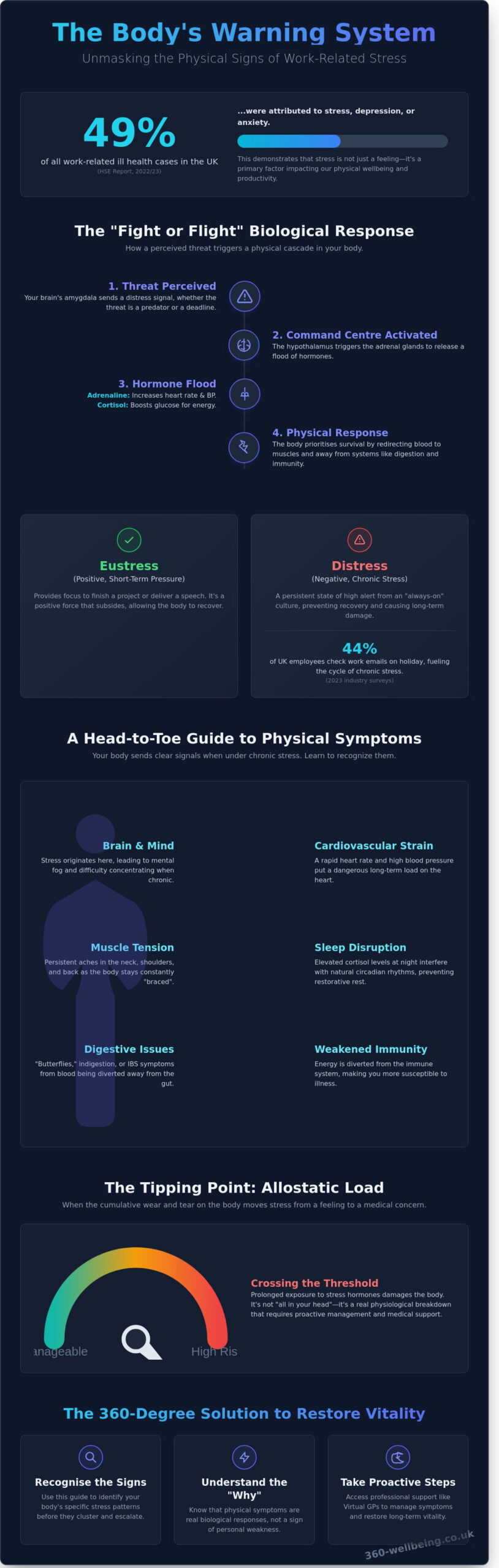
What if that nagging tension in your neck or the recurring digestive upset isn’t a random ailment, but actually your body’s way of sounding an internal alarm? In the UK, the Health and Safety Executive reported that stress, depression, or anxiety accounted for 49% of all work-related ill health cases in 2022/23. It’s incredibly frustrating to feel physically unwell while your GP finds no obvious cause. This often leaves you confused and worried about your health. You’re not alone in this; the physical symptoms of stress are real physiological responses that can significantly impact your daily productivity and long-term vitality.
This guide will empower you to recognise these early warning signs and discover proactive ways to manage their impact on your health and professional life. We’ll provide a clear checklist of symptoms to watch for and actionable steps to resolve them. This ensures you maintain a balanced, 360-degree perspective on your resilience and see your wellbeing as a fundamental right rather than a luxury.
Key Takeaways
- Understand why stress is a biological survival mechanism and how the “fight or flight” response fundamentally impacts your physical health.
- Use our head-to-toe guide to identify your specific patterns of the physical symptoms of stress before they cluster and escalate.
- Learn to recognise the tipping point where “allostatic load” becomes a medical concern, moving beyond the misconception that stress is not a real illness.
- Gain practical strategies for supporting team members to reduce the impact of stress-related absenteeism and presenteeism on your UK business.
- Discover how proactive 360-degree support and Virtual GP access can remove barriers to medical advice and help restore your long-term vitality.
What are the physical symptoms of stress and why do they happen?
Stress isn’t merely a state of mind or a fleeting mood. It is a sophisticated biological survival mechanism designed to keep us alive in the face of danger. When we talk about feeling “under pressure,” we’re actually describing a complex physiological event where the body prioritises immediate survival over long-term health. Understanding that the physical symptoms of stress are tangible, biological reactions is the first step for any leader looking to manage their own wellbeing or support a team.
The “Fight or Flight” response is an evolutionary legacy from our ancestors. In the past, this surge of energy helped humans escape physical predators. Your heart rate increases to pump blood to your limbs, your breath quickens to oxygenate your muscles, and your senses sharpen. While we rarely face sabre-toothed tigers in a modern office, our bodies haven’t yet learned to distinguish between a physical threat and a high-stakes budget review. Consequently, the physical symptoms of stress are actually your body’s way of communicating that its resilience is being tested to its limit.
The science of the stress response
The process begins in the brain. When you perceive a threat, the amygdala sends a distress signal to the hypothalamus. This command centre triggers the adrenal glands to release a flood of hormones, primarily adrenaline and cortisol. Adrenaline increases your pulse and blood pressure, while cortisol boosts glucose in the bloodstream. To maximise efficiency, the body redirects blood flow away from “non-essential” systems like digestion and the immune system, sending it instead to the large muscle groups. This is why you might experience a dry mouth, “butterflies” in your stomach, or cold hands during a difficult meeting. Your body is literally preparing for a physical battle that never comes, leaving those chemicals to circulate without a physical outlet.
From acute pressure to chronic physical strain
It’s helpful to distinguish between “eustress” and “distress.” Eustress is short-term pressure that provides the focus needed to finish a project or deliver a speech. It’s a positive force that subsides once the task is complete, allowing the body to return to its natural baseline. However, the UK’s “always-on” culture, where 44% of employees check work emails while on holiday according to 2023 industry surveys, often prevents this reset. When the pressure never lets up, we enter a state of Chronic stress.
The Health and Safety Executive (HSE) reported that in 2022/23, stress, depression, or anxiety accounted for 49% of all work-related ill health in Great Britain. This persistent state of high alert is what causes lasting damage. Because the body doesn’t get the chance to recover, the constant presence of cortisol can lead to a variety of issues:
- Muscle tension: Persistent aches in the neck, shoulders, and back as the body stays “braced” for impact.
- Sleep disruption: Elevated cortisol levels at night interfere with the natural circadian rhythm, preventing deep, restorative rest.
- Digestive issues: Because blood is diverted from the gut, long-term pressure often results in irritable bowel symptoms or chronic indigestion.
- Cardiovascular strain: Consistent high blood pressure and a rapid heart rate put unnecessary load on the heart over time.
For a leader, recognising these signs isn’t just about health; it’s about maintaining the strategic asset of your own vitality. When you understand the biological “why” behind these feelings, you can move away from self-criticism and toward a proactive, science-based approach to recovery.
A head-to-toe guide to common physical signs of stress
Stress isn’t just a state of mind; it’s a full-body experience that manifests in tangible, physiological ways. Leaders often overlook these signs, dismissed as minor aches or temporary tiredness, but they’re the body’s primary alarm system. When we talk about the 360-degree perspective of health, we must recognise that physical symptoms of stress are real biological responses to perceived threats. In 2022/23, the Health and Safety Executive (HSE) reported that stress, depression, or anxiety accounted for 49% of all work-related ill health in the UK. This equates to 875,000 workers struggling with conditions that have deep roots in their physical wellbeing.
These symptoms don’t usually arrive in isolation. They appear in clusters, creating a compounding effect that can quickly degrade a person’s ability to lead or perform. By categorising these signs, you can start to identify specific patterns in yourself and your team, moving away from the idea that these issues are “imagined” or purely psychological.
Neurological and musculoskeletal symptoms
The most immediate signs of pressure often appear as tension headaches and migraines. These aren’t just random pains; they’re caused by the scalp and neck muscles contracting in a defensive reflex. You’ll often see colleagues subconsciously rubbing their temples or the back of their necks during high-stakes meetings. This muscle guarding extends to the jaw, leading to bruxism, or teeth grinding. Many people don’t even realise they’re doing it until they wake up with a sore jaw or a dull headache. Over time, this constant state of “bracing” results in persistent back and shoulder pain. The body is effectively stuck in a protective posture, which drains energy and creates chronic discomfort.
Cardiovascular and respiratory indicators
When the nervous system triggers a stress response, the heart is the first to react. You might experience palpitations or a racing heart as adrenaline floods your system. It’s a distressing sensation that often mimics a cardiac event, which only serves to increase anxiety levels. This is frequently accompanied by shallow breathing or a feeling of “chest tightness.” When we breathe shallowly, we reduce the oxygen exchange in our lungs, making it harder to think clearly and maintain composure. Long-term, this isn’t just an occasional flutter. Chronic stress is a documented contributor to high blood pressure, putting a sustained strain on the entire cardiovascular system that can lead to serious health complications if the underlying pressure isn’t addressed.
Gastrointestinal and systemic effects
The connection between the brain and the digestive system is so strong it’s often called the “Gut-Brain Axis.” This is why stress leads so quickly to nausea, bloating, or IBS flare-ups. Cortisol diverts energy away from digestion to focus on immediate survival, which disrupts the natural balance of the gut. Beyond the stomach, the immune system takes a significant hit. You’ll notice that when a team is under sustained pressure, they catch more colds and take longer to recover from minor bugs. This systemic exhaustion also leads to disrupted sleep patterns. Even if you aren’t doing anything physically demanding, the internal “revving” of a stressed nervous system leads to chronic fatigue, leaving you feeling depleted before the workday has even begun.
Recognising these physical symptoms of stress is the first step toward building a more resilient workplace. Understanding how these clusters affect performance allows for a more compassionate and effective management style. If you’re noticing these patterns within your organisation, it might be time to consider a tailored wellbeing strategy that addresses the root causes of physical strain before they lead to long-term absence.
When do physical signs of stress become a medical concern?
Stress isn’t just a mental state or a temporary feeling of being overwhelmed; it’s a biological process that can cause measurable damage to your internal systems. While a busy week might lead to a tension headache, chronic pressure often results in more severe physical symptoms of stress that require professional intervention. The Health and Safety Executive (HSE) reported that 914,000 workers in the UK suffered from work-related stress, depression, or anxiety in 2022/23. This isn’t a minor issue. It’s a significant health risk that accounts for 49% of all working days lost due to ill health across the country.
Identifying the tipping point
Distinguishing between a demanding project and a genuine health crisis is vital for long-term vitality. Temporary stress usually dissipates once the deadline passes, but chronic stress lingers, leading to systemic wear. Allostatic load is the cumulative cost of chronic stress on the body. When this load becomes too heavy, the body’s ability to regulate itself fails. This transition often manifests as persistent hypertension or recurring digestive issues. Research indicates that prolonged exposure to high cortisol levels can increase the risk of cardiovascular disease by 40% in high-stress occupations. You shouldn’t wait for a total breakdown to take action. Identifying these shifts early allows for a tailored wellbeing strategy that protects your health before it reaches a point of no return.
- Persistent chest pain, palpitations, or shortness of breath.
- Chronic digestive distress or unexplained, sudden weight changes.
- Severe, recurring tension headaches that don’t respond to over-the-counter care.
- An inability to sleep for more than 4 hours a night for 14 consecutive days.
- Consistent numbness or tingling in the extremities.
The importance of clinical validation
It’s tempting to dismiss a racing heart or a tight chest as “just work stress,” but this approach is dangerous. Self-diagnosis often masks underlying conditions that need immediate clinical attention. If you experience these red flags, you must consult a GP to rule out serious pathology. A medical professional provides a comprehensive assessment that looks beyond the surface symptoms. They use objective tools like blood tests to check your HbA1c levels for diabetes risk or lipid profiles for heart health. These tests offer a clear, data-driven picture of how your body is coping under pressure. In the UK, private health assessments or NHS screenings can identify 75% of early-stage lifestyle-related illnesses before they become chronic.
A medical consultation also validates your experience, moving it from a subjective feeling to a clinical reality. This partnership with healthcare providers ensures that your physical symptoms of stress are managed through a scientifically grounded approach. It’s about building resilience through evidence rather than just endurance. By taking a proactive stance, you treat your health as a strategic asset. This shift in perspective ensures that you remain capable of leading your team without sacrificing your long-term physical integrity.
Managing stress symptoms in the workplace
Leaders often view productivity through the lens of output and deadlines, yet the physical state of a team is the true engine of any organisation. Recognising the physical symptoms of stress before they escalate into long term illness is a vital skill for modern managers. When a colleague is struggling, their body often speaks before they do. By observing these cues, you can foster a culture of mental health and wellbeing in the workplace that prioritises the person behind the professional.
Spotting the signs in your staff
Detecting distress requires a keen eye for subtle behavioural physical markers. You might notice a team member frequently rubbing their temples, indicating tension headaches, or visible fatigue that doesn’t resolve after a weekend. Frequent desk breaks or restless fidgeting can signal a nervous system in overdrive. When you see these signs, start a conversation with empathy rather than clinical assessment. Try a soft opening: “I’ve noticed you’ve been looking a bit tired lately; is there anything I can do to support your workload?” This approach feels supportive, not intrusive. Physical comfort is the foundation of mental resilience. An ergonomic assessment isn’t just about posture; it’s about removing the physical friction that depletes a person’s emotional energy.
The impact on UK businesses
Ignoring these signals carries a heavy price for British industry. Deloitte’s 2024 Mental Health Report reveals that poor mental health costs UK employers approximately £51 billion every year. While absenteeism is easy to track, presenteeism, where staff show up but cannot function effectively, is often more damaging. The 2023 CIPD Health and Wellbeing at Work report found that 76% of professionals observed presenteeism in their organisations. This quiet struggle often stems from the physical symptoms of stress, such as chronic pain or digestive issues, which drain focus and creativity. Addressing these issues early prevents a temporary dip in performance from becoming a permanent exit from the workforce.
Proactive workplace interventions
Effective support doesn’t need to be expensive. Small, structural changes can help the body’s nervous system de-escalate throughout the day. Encourage movement breaks every 90 minutes to help staff dissipate the physical buildup of adrenaline and cortisol. Clear boundaries are equally essential. When a manager sends emails at 9pm, it keeps the recipient’s body in a state of high alert, preventing the rest required for recovery. Providing tools like a Virtual GP service is another transformative step. It removes the stress of getting help by bypassing the typical two-week wait for a local appointment. This immediate access to clinical advice ensures that minor physical complaints are treated before they spiral into complex mental health challenges.
Support your team’s health with a proactive strategy. Explore our comprehensive wellbeing solutions today.
The 360-degree solution: Professional support for physical stress
Addressing the physical symptoms of stress requires more than a standard health policy; it demands a proactive, 360-degree partnership. At 360 Wellbeing, we bridge the gap between clinical intervention and compassionate support. We ensure your team members don’t have to choose between their health and their career. By integrating physical and mental recovery into one seamless journey, we provide a safety net that protects both the individual and the business.
Rapid access to UK-registered GPs
Waiting for a medical appointment shouldn’t be a source of extra tension. Recent NHS data indicates that many patients wait over 14 days for a routine consultation. Our Virtual GP service removes this barrier entirely. Employees can speak with a UK-registered GP 24/7 via video or phone from the comfort of their home. This rapid intervention is critical. It stops a minor stress headache from escalating into a complex, long-term absence. When a professional gets medical reassurance within hours rather than weeks, their anxiety levels drop instantly, preventing the cycle of worry from worsening their physical state.
Holistic support: Mental health and life coaching
We look beyond the immediate pain to find the source. While a GP might treat a tension migraine, our therapists and life coaches address the underlying triggers. According to Deloitte’s 2024 report, mental ill-health costs UK employers approximately £51 billion every year. Investing in holistic care isn’t just a kind gesture; it’s a sound financial strategy. Our approach focuses on two key pillars:
- Clinical Therapy: This targets the emotional roots of physical symptoms of stress, such as digestive issues or chronic muscle tension, through evidence-based practices like CBT.
- Life Coaching: Our coaches help employees re-organise their workloads and personal priorities. This practical support reduces the daily load that leads to burnout in the first place.
The 360 Wellbeing promise is simple: we provide a comprehensive net for every employee. We don’t just treat symptoms; we build resilience. This creates a workplace culture where people feel seen, heard, and valued. When your team knows that professional help is just a click away, they perform with greater confidence and focus.
Your people are the most valuable asset your business will ever own. Protecting their health is a strategic necessity that pays dividends in loyalty, productivity, and innovation. Don’t wait for burnout to become a statistic in your HR reports. Take a proactive step today to safeguard your workforce with a tailored wellbeing strategy that covers every angle. Contact 360 Wellbeing to discover how we can help you build a resilient, healthy, and thriving organisation for the long term.
Taking a Proactive Approach to Your Team’s Vitality
Your body often communicates its limits long before your mind acknowledges them. Recognising the physical symptoms of stress, from persistent muscle tension to disrupted sleep patterns, is a vital skill for maintaining both personal health and professional productivity. According to the Health and Safety Executive, 875,000 workers suffered from work-related stress, depression, or anxiety in 2022/23. This significant impact costs the UK economy billions each year, making proactive intervention essential for every business owner. By monitoring these early warning signs, you can foster a culture of resilience and prevent burnout before it starts.
We’ve designed our services specifically for UK SMEs and sole traders who need reliable, expert care without the wait. Our platform offers 24/7 access to UK-registered GPs and combines integrated mental health support with professional physiotherapy. It’s about providing a complete circle of care that treats the whole person, not just the symptom. You don’t have to navigate these health challenges alone; the right support makes all the difference for your workforce. Protect your team’s health with our 360-degree wellbeing platform and build a more resilient, healthier future today.
Frequently Asked Questions
Can stress cause actual physical pain in the body?
Yes, stress creates tangible physical pain by triggering constant muscle tension and systemic inflammation. The Health and Safety Executive (HSE) 2023 report highlights that musculoskeletal disorders account for 27% of all work-related ill health in the UK. When your body stays in a high-alert state, your muscles don’t get the chance to relax, leading to chronic backaches, neck pain, and tension headaches.
What is the most common physical symptom of stress in the UK?
Fatigue and disrupted sleep patterns are the most prevalent issues reported by British workers. A 2021 study by the Mental Health Foundation revealed that 74% of UK adults felt so stressed they were overwhelmed, with 51% specifically reporting that it negatively impacted their sleep. This exhaustion creates a cycle where the body cannot recover, making other physical symptoms of stress feel much more intense during the working day.
How long do physical symptoms of stress last after the stressor is gone?
Recovery times vary, but the physiological “cortisol hangover” typically lasts between 20 to 60 minutes after a minor incident. For long-term workplace pressure, it can take several weeks of proactive rest for the nervous system to return to a baseline state. Research suggests that chronic elevation of stress hormones requires a structured recovery period to prevent permanent changes to your metabolic or immune health.
Can stress cause symptoms that feel like a heart attack?
Stress can cause chest pains, palpitations, and shortness of breath that closely mimic cardiac events. NHS England data shows that many A&E admissions for chest pain are eventually diagnosed as panic attacks or acute stress reactions rather than heart disease. While these symptoms are often benign, it’s vital to seek professional medical advice to rule out underlying conditions and gain peace of mind.
Why does stress affect my stomach and digestion so much?
The gut and brain are constantly communicating through the nervous system, often called the gut-brain axis. When you’re under pressure, your body diverts blood flow away from the digestive tract to your limbs for a “fight or flight” response. This shift can lead to IBS symptoms, which Bupa reports affect up to 20% of the UK population at some point in their lives.
Is it possible to have physical symptoms of stress without feeling “mentally” stressed?
It’s very common for the body to register pressure before the conscious mind acknowledges it. This process, known as somatisation, means you might experience physical symptoms of stress like skin rashes or digestive upset while feeling mentally “fine.” A 2022 study in The Lancet indicates that roughly 30% of UK primary care consultations involve physical symptoms that are actually rooted in subconscious psychological pressure.
How can a Virtual GP help with stress-related physical issues?
A Virtual GP provides immediate clinical reassurance and tailored treatment plans without the wait times of a traditional surgery. Since average GP wait times in many UK regions now exceed 10 days, our 24/7 service allows employees to speak with a doctor within minutes. This rapid access helps identify whether physical issues are stress-related or require further specialist investigation, ensuring a proactive approach to recovery.
What should I do if I think my employee is suffering from physical stress?
You should initiate a private, empathetic conversation to discuss their wellbeing and review their current workload. The HSE Management Standards suggest that early intervention is key to reducing the 17.1 million working days lost annually in Great Britain due to stress and anxiety. Offering a 360-degree support system, including access to occupational health or mental health first aiders, shows you’re invested in their long-term health.